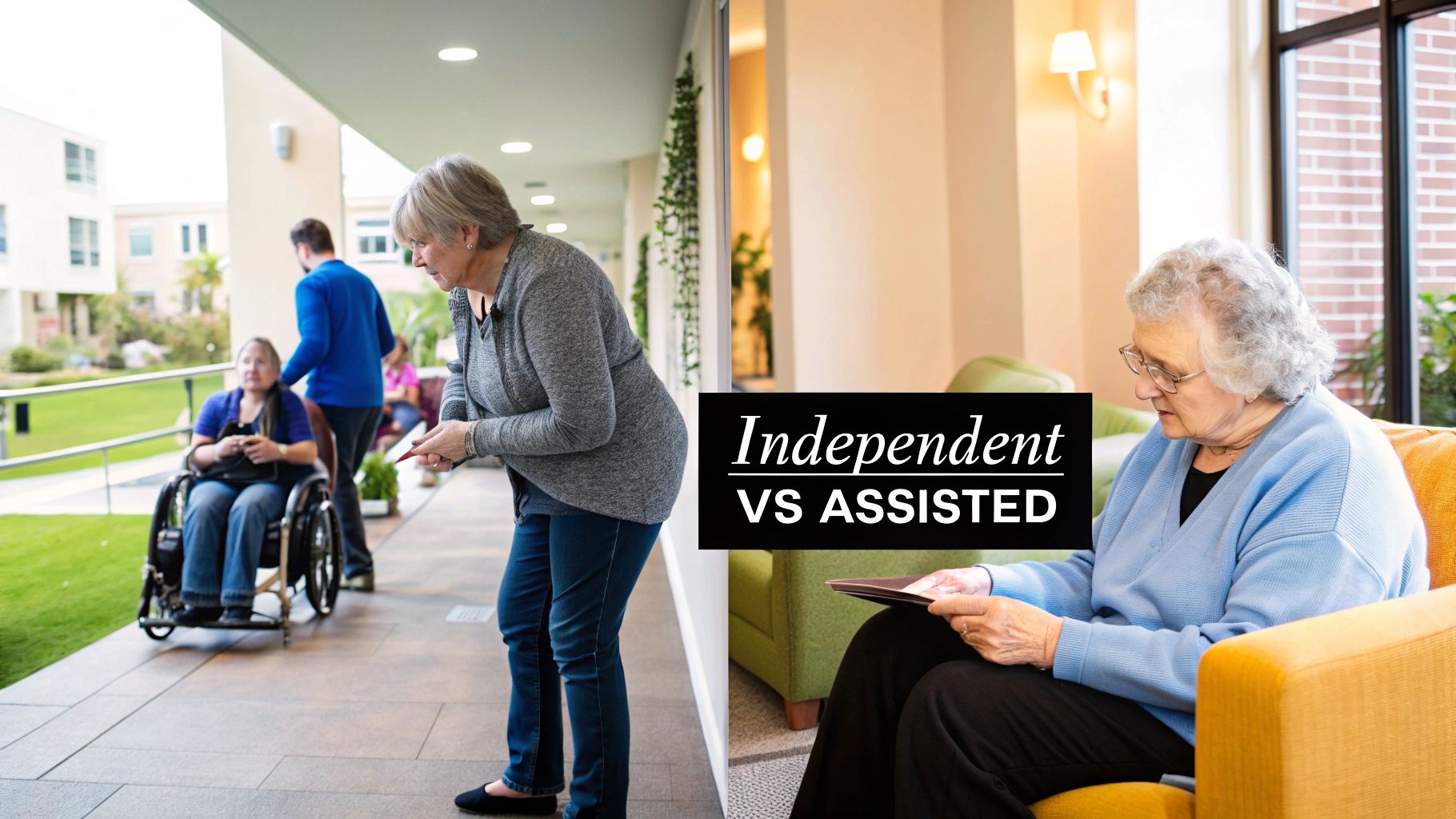
When you boil it down, the difference between independent living and assisted living is simple: independent living is a lifestyle choice for active seniors who want convenience and community. On the other hand, assisted living is a needs-based option for those who could use a hand with daily activities.
The right path for you or your loved one really depends on one key question: are you looking for freedom from chores, or do you need hands-on daily support?
Comparing Senior Living Options
Choosing a senior living community is a huge decision. It’s not just about the list of services they offer, but about finding a place whose core philosophy matches your current needs—and what you might need down the road. This first look will help you see which option makes the most sense for this next chapter of life.
Key Distinctions at a Glance
Think of independent living communities as being for adults who can manage all their personal care just fine but are ready to ditch the burdens of home maintenance. It's about gaining a vibrant social life, great amenities like dining and housekeeping, and a neighborhood of peers without giving up your autonomy.
In contrast, assisted living provides that crucial layer of support for what we call Activities of Daily Living (ADLs). This includes help with things like bathing, getting dressed, and managing medications.
This distinction is clearly shaping the senior housing market. We're seeing new construction lean heavily toward care-based models, with 44.8% of new units being assisted living. This reflects a growing demand for environments that offer that extra support.
The real differentiator is the level of care. Independent living is all about a maintenance-free lifestyle. Assisted living is fundamentally about getting personalized support to stay independent, safely.
The table below gives you a quick, high-level summary of these core differences. At Forest Cottage Senior Care, we offer various living options designed to meet these distinct needs perfectly.
Quick Comparison Independent Living vs Assisted Living
| Feature | Independent Living | Assisted Living |
|---|---|---|
| Primary Focus | Lifestyle, convenience, and social engagement | Personal care, safety, and daily support |
| Ideal Resident | Active, self-sufficient seniors needing no daily help | Seniors requiring assistance with ADLs |
| Care Level | None provided; services are often a la carte | Personalized care plans and 24/7 staff support |
| Cost Structure | Typically an all-inclusive monthly fee | Tiered pricing based on the level of care needed |
| Staff Role | Hospitality and amenity-focused | Caregivers, nurses, and wellness staff |
Understanding the Core Philosophy of Each Community
To really understand the difference between independent living and assisted living, you have to look past the lists of services and amenities. Each one is built around a completely different philosophy, and that philosophy shapes everything about what it feels like to live there.
The choice isn't just about fun versus function; it's about finding a community whose entire reason for being lines up with your own goals for this next chapter. One is all about enhancing your lifestyle, while the other is focused on supporting your wellness. Getting clear on which one feels right is the key to making a choice you can feel good about.
Independent Living: The Hospitality Model
Think of independent living communities as operating on a hospitality model—much like an upscale resort or a cruise ship. The main goal here is to make life easier, more convenient, and more social. It's about freeing you from the headaches of owning a home so you can focus on what you actually enjoy.
This approach is all about addition. It adds social events, great amenities, and maintenance-free living to a life you're already leading independently.
- Convenience: All the chores you don't want to do anymore—like housekeeping, yard work, and even some transportation—are handled for you.
- Social Connection: You're instantly part of a community of peers, with a packed calendar of events and activities designed to keep isolation at bay.
- Freedom: You're completely in the driver's seat. Your daily schedule, healthcare choices, and personal care are entirely up to you.
Essentially, you're outsourcing the tedious parts of daily life. The staff isn't there to provide care; they're there to deliver top-notch service and create a vibrant environment. You run your own life, just with a full-service support system ready when you need it.
The hospitality model asks, "How can we make your life more enjoyable and fulfilling?" It's focused on taking away daily hassles to maximize your personal freedom and social life.
Assisted Living: The Care Model
Assisted living, on the other hand, is built on a care model. This approach is rooted in creating a safe, supportive environment where residents get personalized help to stay as independent as possible, for as long as possible. The focus shifts from pure convenience to a more holistic sense of wellness.
It’s about making sure you have the help you need with the Activities of Daily Living (ADLs), so you can live confidently and comfortably.
This model is defined by its core commitments:
- Personalized Support: Care plans are created just for you, covering everything from managing medications to getting a little help with bathing or dressing.
- Safety and Security: With staff available 24/7 and emergency response systems in place, it provides tremendous peace of mind for both residents and their families.
- Dignified Independence: The goal is never to take over. It’s to provide just enough support to empower residents to live full lives on their own terms.
Here, the staff are trained caregivers. Their primary job is to look after the health and well-being of every single resident. Social activities and amenities are still a big part of the picture, but they exist within a larger framework of comprehensive support.
The care model asks a fundamentally different question: "What support do you need to live safely and comfortably?" This is the most critical distinction to understand when you're deciding which path is right for you.
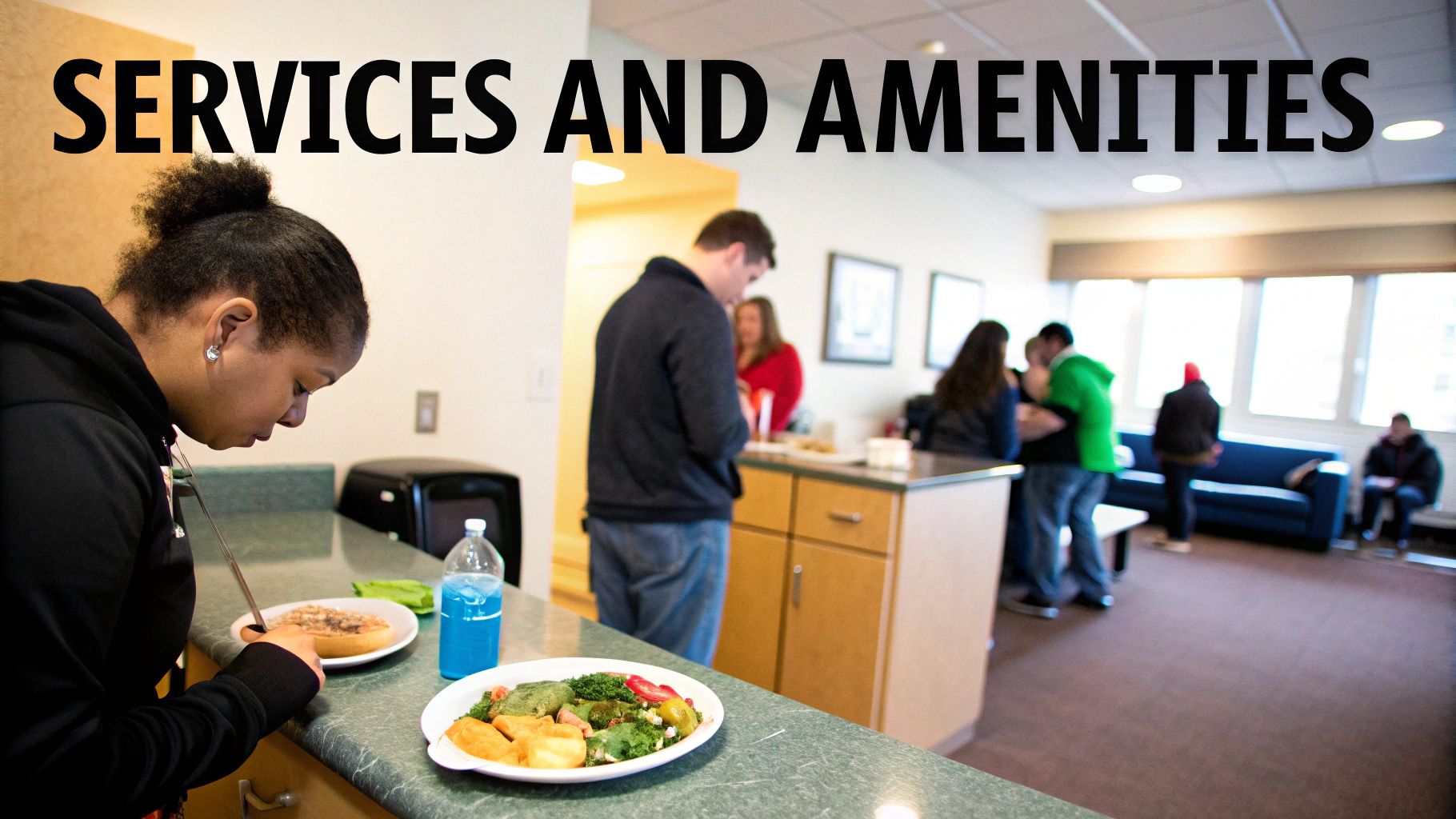
Comparing Services, Amenities, and Daily Life
The real difference between independent living and assisted living snaps into focus when you look at the day-to-day experience. While both offer a sense of community and freedom from chores like mowing the lawn, the services and support levels are built for two very different people.
Think of it this way: one is a lifestyle upgrade, while the other is a framework designed to support ongoing wellness. Getting this distinction right is the key to finding the best fit.
Side-by-Side Services and Support Levels
Let's break down what you can typically expect in each setting. The table below offers a clear, side-by-side look at how the support structures differ, from daily meals and housekeeping to critical medical oversight.
| Service Category | Independent Living | Assisted Living |
|---|---|---|
| Personal Care | None provided. Residents handle their own daily routines. | Staff available 24/7 for help with bathing, dressing, grooming (ADLs). |
| Medical Support | Emergency call systems are standard. Residents manage their own medications. | Medication management and administration. Wellness checks by nurses. |
| Housing | Private apartments, cottages with full kitchens. | Safety-focused apartments, often with kitchenettes. |
| Meals & Dining | Flexible dining plans available, but cooking at home is an option. | Three daily meals in a communal dining room are standard. |
| Housekeeping | Weekly housekeeping, linen service, and maintenance are typical. | Housekeeping, laundry, and maintenance are included. |
| Social Life | Resident-driven clubs, travel groups, and robust social calendars. | Staff-organized activities designed for accessibility and inclusion. |
As you can see, the core difference is the level of proactive support. Independent living is there when you need it, but assisted living is there to anticipate and meet daily needs.
Housing, Meals, and Personal Freedom
In an independent living community, residents often have private apartments, cottages, or even small homes with full kitchens. Sure, a dining plan might be part of the package, but you always have the choice to cook for yourself. Housekeeping is a welcome perk, but personal care isn't on the menu.
Assisted living, on the other hand, builds support right into the environment. Apartments are designed with safety and accessibility in mind, often featuring kitchenettes instead of full kitchens to encourage residents to eat in the communal dining rooms.
- Independent Living: You might host friends for dinner in your apartment on Tuesday and then meet a group in the main dining room on Wednesday. The schedule is completely yours to command.
- Assisted Living: Meals are almost always served in a shared dining area. This isn't just about convenience—it's a vital social hub and a way to ensure everyone is getting proper nutrition.
Personal Care and Health Oversight
This is where the two paths really diverge. Independent living provides a safety net—usually an emergency call system—but no one is there to offer hands-on help. You manage your own doctor's appointments, prescriptions, and daily health routines.
Assisted living is built from the ground up to provide personalized care. A registered nurse often oversees the wellness program, and trained caregivers are on-site 24/7 to help with Activities of Daily Living (ADLs) like bathing, dressing, and medication management. This model of care is in huge demand; the global assisted living market hit roughly USD 157.28 billion in 2023 and is only expected to climb.
The core difference lies here: Independent living is hands-off, while assisted living is hands-on. One offers peace of mind through an emergency button; the other provides it through consistent, proactive support.
The services in assisted living are designed to be comprehensive. You can learn more about the specific assisted living services that make daily life safer and more enjoyable.
Social Activities and Community Engagement
Both environments put a huge emphasis on a vibrant social life, but they get there in different ways.
Independent living activities often feel more like a resort or country club. You'll find resident-led groups like book clubs, golf leagues, and travel committees. The programming is fantastic, but it assumes everyone is fully independent.
In assisted living, activities are thoughtfully planned and run by staff to be accessible for people with varying physical and cognitive abilities. Think gentle yoga, art therapy sessions, sing-alongs, and guided outings where staff provide a helping hand. The goal is to make sure every single resident can participate, feel included, and stay engaged.
Navigating the Costs and Payment Options
Let’s talk about the financial side of things, which is a big piece of the puzzle for every family. The way costs are structured for independent and assisted living is completely different. This really comes down to their core focus: one is about hospitality and lifestyle, while the other is centered on personal care. Getting a handle on these differences is key to planning for the long term.
The main financial distinction is what your monthly payment actually gets you. Independent living usually works on a predictable, almost all-inclusive model. Assisted living costs, on the other hand, are directly tied to the level of care a person needs.
Independent Living Pricing Models
Independent living is almost always a private pay situation. Because it’s seen as a lifestyle choice and not a medical necessity, programs like Medicare or Medicaid won’t cover the costs. Your monthly fee typically bundles everything—rent, utilities, meals, housekeeping, and access to all the community amenities—into a single payment.
This setup makes budgeting pretty straightforward, much like living in an upscale apartment complex. You're paying for convenience, community, and freedom from the hassles of home maintenance.
Assisted Living Cost Structures
Assisted living costs are more layered. There’s a base monthly rate that covers room, board, and standard services, but the final price is customized to each resident's care plan. Most communities use a tiered system, placing residents into levels based on how much daily support they need.
This pricing model makes sure you only pay for the services you actually use. That could be anything from simple medication reminders to significant hands-on help with daily activities. As a result, the monthly cost can look very different from one resident to the next, even if they live right down the hall from each other.
The key takeaway here is pretty simple: independent living costs are static and based on lifestyle, while assisted living costs are dynamic and based on care. From a financial perspective, this is the most important difference between the two.
Exploring Payment and Funding Options
While independent living relies on private funds like savings, pensions, or the sale of a home, assisted living opens up more payment options because of its health-related services.
For assisted living, families often pull from a few different sources:
- Long-Term Care Insurance: Policies created specifically to cover personal care services are a common way to fund assisted living.
- Veterans Benefits: The Aid & Attendance benefit can provide a significant monthly stipend to eligible veterans and their surviving spouses.
- State Medicaid Waivers: For low-income seniors who qualify, some state Medicaid programs can help cover the care portion of assisted living costs.
Looking at the market, it’s clear that the demand for care-focused communities is growing. Assisted living communities are filling up faster than independent living ones. This reflects a major demographic shift toward needs-based support, which is also pushing rental rates up across the board. You can discover more insights about these senior living trends and what they mean for future costs. This just goes to show how important it is to understand every financial path available as you plan ahead.
Determining the Right Fit for Your Needs
Choosing between senior living options goes beyond a simple checklist. It's about taking an honest look at your current life and what you might need down the road. The real difference between independent living and assisted living snaps into focus when you picture the day-to-day. One is about elevating an already active life, while the other provides a gentle support system to keep you independent, but safe.
The key is figuring out which of these descriptions truly resonates with you or your loved one. This isn't about getting stuck on labels; it's about finding an environment where you can genuinely thrive.
Who Is Independent Living Best For?
Independent living is a perfect fit for older adults who are handling their daily lives just fine but are more than ready for an upgrade. They don't need help with personal care, but they are absolutely finished with the never-ending demands of owning a home—the yard work, surprise repairs, and property taxes.
Here’s a situation we see all the time:
A couple in their late 70s is healthy and always on the go. They love to travel and meet up with friends, but their big family home has started to feel like more of a burden than a blessing. They want to downsize and simplify, freeing up their time and energy for hobbies instead of chores. For them, independent living is a lifestyle choice centered on convenience and community.
Who Is Assisted Living Best For?
Assisted living is built for individuals who could really benefit from a helping hand with what we call Activities of Daily Living (ADLs). While they're still largely independent, they might need a little support with tasks like managing medications, bathing, or getting dressed. Often, this move comes after a minor health scare or when family members start to worry about their safety living alone.
Think about this familiar scenario:
A woman in her 80s lives by herself and recently had a small fall. She wasn’t seriously hurt, but it was enough to worry her adult children. She’s also finding it harder to cook nutritious meals every day and sometimes forgets to take her medication. Assisted living provides a care-based solution, giving her the safety net and personalized support she needs to live comfortably and securely.
This quick guide can help you visualize which financial and care path makes the most sense.
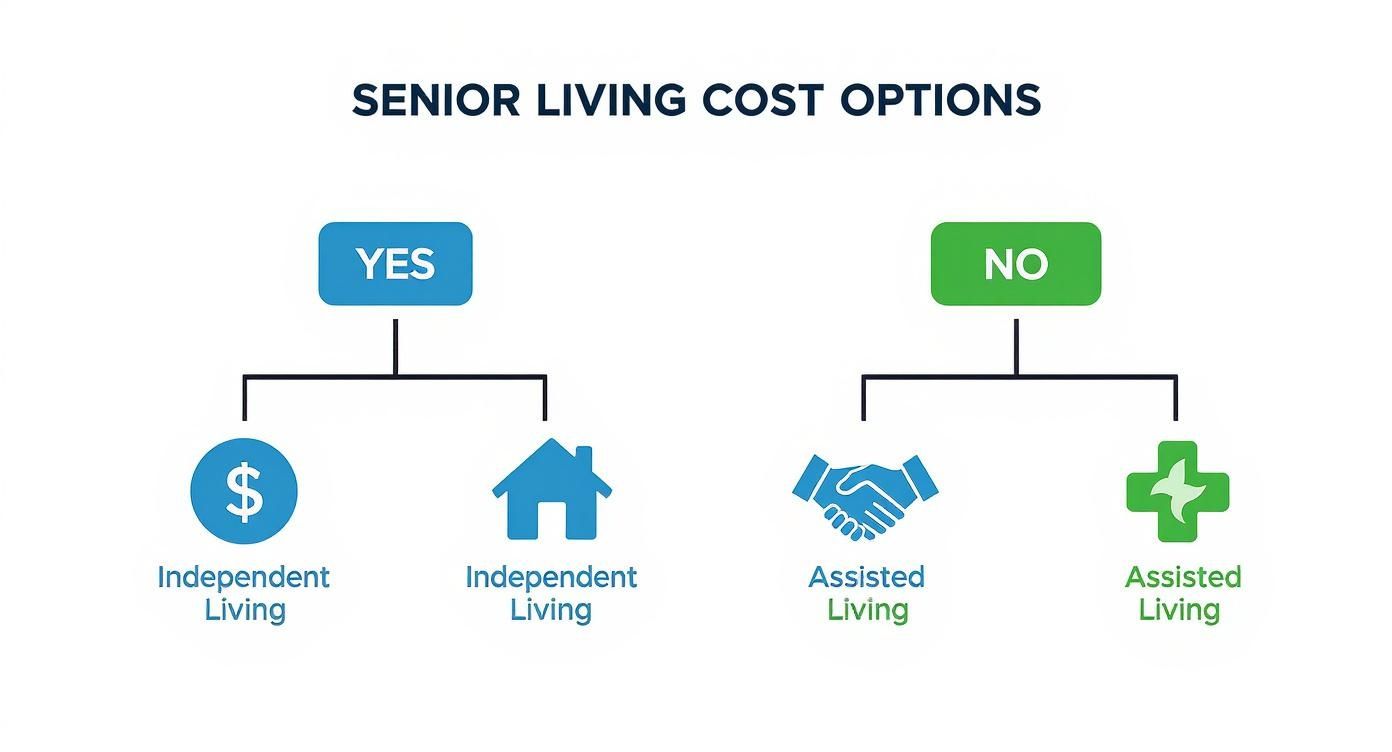
Ultimately, the choice often boils down to whether the primary need is for lifestyle convenience (typically self-funded) or for daily support, which can open the door to different types of aid.
The most crucial question to ask is: "Am I looking for freedom from things, like home maintenance, or am I looking for help with things, like daily personal care?" Your answer will point you in the right direction.
It’s also smart to think ahead. Many seniors start in one setting and eventually find they need more support. Understanding when to move from independent to assisted living is a huge part of long-term planning. Taking this proactive approach ensures a much smoother transition when needs change, allowing for continuous care without leaving a familiar community. The wisest path forward is always a choice based on today's realities and tomorrow's possibilities.
How to Choose the Right Senior Living Community
Making the final call between independent and assisted living isn't just about today; it's about planning for tomorrow. The process really needs to start with an honest look at your current needs and a practical eye toward what the future might bring. A community that seems perfect now has to be able to flex if health needs change down the road.
Thinking ahead like this helps you avoid making stressful, rushed decisions in the middle of a crisis. When you tour a community, you're not just checking out the dining room or the fitness center. You're really investigating its ability to provide lasting security and support. Asking the right questions is what separates a temporary fix from a place you can truly call home for the long haul.
Key Questions to Ask During Your Tour
You have to get past the glossy brochures and dig into the details that shape everyday life and care. Go in armed with a list of specific questions to make sure you get the full story on what each community truly offers.
Here are a few essential questions to get your conversations started:
- What does the process look like for a resident to move from independent to assisted living if their needs change?
- Could you tell me the staff-to-resident ratio, both during the day and overnight?
- How do you develop personalized care plans, and how often do you review and update them?
- What kind of specific training does your care staff have, especially for things like memory care?
- Is everything included in one monthly fee, or are some services billed separately?
The most telling question you can ask is, "How do you help residents stay as independent as possible, even as their care needs grow?" A truly great community will have a thoughtful, detailed answer that's all about respecting dignity and providing personalized support.
Asking these kinds of strategic questions empowers you. It helps you move beyond the marketing materials and make a solid decision based on what really counts: finding a supportive, adaptable, and enriching home for yourself or someone you love.
Frequently Asked Questions
Working through the specifics of senior living brings up a lot of practical questions. Getting solid answers to these common concerns is the key to moving from a stressful decision to a confident one.
Can Someone Move From Independent To Assisted Living?
Yes, and it’s one of the most important features to look for. Many of today’s senior living communities are designed as Continuing Care Retirement Communities (CCRCs), which let residents age in place.
This setup makes it possible to move from independent living to a higher level of care without leaving a familiar community. It preserves friendships, routines, and that feeling of home. When you tour a facility, always ask how that transition process works and what costs are involved. It’s a critical piece of the long-term puzzle.
What Is A Common Mistake Families Make?
One of the biggest mistakes I see is waiting for a health crisis to force a decision. When you’re up against the clock, it’s nearly impossible to make a thoughtful choice. Rushed decisions often lead to regret.
Another common slip-up is getting fixated on one thing—like the beautiful dining room for independent living—while overlooking the quality of care services for future needs. You have to consider the whole picture: the culture, the social fit, and how the community will adapt as your loved one's needs change.
The best decisions are made when you have time to weigh all aspects of a community—from the staff and residents to the care philosophy—rather than being forced to choose under pressure.
How Should I Start The Conversation With A Parent?
Gently. Approach the topic with empathy and keep the focus on the benefits, not on what they might be losing. Frame it in terms of positives like “more freedom from yard work,” “greater safety and peace of mind,” or “a built-in social life with friends just down the hall.”
Involve them from the very beginning by asking what their ideal new home would look like. It's so much more effective to treat this as a collaborative plan for the future, rather than an emergency reaction.
At Forest Cottage Senior Care, we know these conversations aren't easy, but they are essential. We're here to answer every single question and offer personalized guidance to help your family find that perfect balance of independence and support. Learn more about our compassionate approach to senior living.
Article created using Outrank