
Assisted living services are designed to be a supportive bridge, filling the gap between living completely on your own and needing the round-the-clock medical care of a nursing home. In a nutshell, they typically cover essentials like personal care assistance, medication management, daily meals, and housekeeping—all within a supervised, community-oriented home.
Understanding Core Assisted Living Services

When families start looking into assisted living, the first real question is always, "So, what’s actually included?" The best way to think about it isn't as giving up independence, but as gaining a reliable co-pilot for the journey of aging. It’s for seniors who are still very much in control of their lives but could use a dependable safety net for certain daily tasks.
This kind of environment allows residents to hold onto their autonomy while letting go of the burdens that come with homeownership, like endless cooking and cleaning. It’s all about striking that perfect balance between freedom and support. For a deeper look at the whole concept, feel free to explore our detailed guide on what assisted living is.
Here’s a quick overview of the core services you can almost always expect to find.
Core Assisted Living Services At a Glance
| Core Service | What It Means for Residents | Primary Benefit for Families |
|---|---|---|
| Personal Care (ADLs) | Dignified help with bathing, dressing, and moving around safely. | Peace of mind knowing a loved one is safe and cared for daily. |
| Medication Management | Trained staff ensure all medications are taken correctly and on time. | Eliminates worry about missed doses or dangerous medication errors. |
| Housekeeping & Laundry | A clean, tidy living space without the physical strain of chores. | Confidence that the living environment is hygienic and well-maintained. |
| Community Dining | Three nutritious, chef-prepared meals a day in a social setting. | Assurance of proper nutrition and opportunities for social engagement. |
| 24/7 Staff & Security | Around-the-clock supervision and emergency response systems. | Security in knowing help is always available, day or night. |
Let's break down exactly what these services look like in day-to-day life.
Daily Personal Care Assistance
One of the most essential services is hands-on help with Activities of Daily Living, or ADLs. These are just the routine self-care tasks we all do, but they can become surprisingly challenging as we get older.
Our caregivers are there to offer respectful, dignified assistance with things like:
- Bathing and Showering: Making sure residents are safe in what can be a slippery environment.
- Dressing and Grooming: Helping folks look and feel their very best every single day.
- Mobility: Simply offering a steady arm for the walk to the dining room or a community activity.
The goal isn't to take over. It’s about providing support exactly when and where it's needed, freeing up a resident's energy for the things they truly enjoy.
Consistent Medication Management
For many seniors, juggling multiple prescriptions with different schedules is more than a hassle—it's a real health risk. That’s why medication management is such a critical piece of the assisted living puzzle. It takes the guesswork and stress out of the equation.
Trained staff can handle everything from gentle reminders to directly administering medications, making sure everyone stays on their prescribed health plan. In fact, studies show that medication management makes up about 28% of all healthcare services used in assisted living. That consistent oversight provides an incredible amount of peace of mind for both residents and their families.
Housekeeping and Maintenance Services
Imagine all the benefits of a clean, comfortable home without any of the work. That’s another huge plus of assisted living. The community team handles all the physical chores of keeping a home safe and pleasant.
This is about more than just cleaning. It's about creating a truly worry-free lifestyle where residents can focus on their health, hobbies, and friendships instead of vacuuming, doing laundry, or calling a plumber for a leaky faucet.
Regular housekeeping, trash removal, and laundry service are pretty much standard. It not only frees up time but also removes the physical strain and safety risks that come with trying to maintain a house.
Community Dining and Nutrition
Good nutrition is the bedrock of good health, especially for seniors. Assisted living communities ensure residents get delicious, well-balanced meals every single day—no grocery shopping, cooking, or cleanup required.
Most communities offer three daily meals served in a restaurant-style dining hall. This space doubles as a vital social hub, where friendships are formed over a good meal. Plus, the chefs can almost always accommodate special dietary needs, whether it's a low-sodium, diabetic-friendly, or soft-food diet. It’s a service that nourishes the body while also fighting the social isolation that so often comes from eating alone.
Exploring Optional and Specialized Services
While the core services create a solid foundation for daily life, many assisted living communities also offer a whole menu of optional and specialized services. I like to think of the core plan as a well-built, comfortable house. These extra services are the custom finishes and upgrades that make it the perfect home for someone's unique needs and tastes.
This ability to tailor the experience is a huge reason the industry keeps growing. The global assisted living market was valued at around USD 157.28 billion in 2023 and is expected to hit USD 271.50 billion by 2032. That growth is all about seniors wanting solutions that blend independence with just the right amount of support. You can see more about this growing market on fortunebusinessinsights.com.
These à la carte options let families build a support system that truly works, tackling specific challenges and making life better.
On-Site Health and Wellness Support
One of the biggest reliefs for families is when a community brings vital health services directly to residents. It completely removes the hassle of scheduling and traveling to outside appointments, which is a game-changer.
Common on-site services you'll find include:
- Physical Therapy: To help someone get their strength and mobility back after an illness or injury.
- Occupational Therapy: This focuses on helping residents safely manage daily activities to stay as independent as possible.
- Speech Therapy: To assist with any communication or swallowing issues that might arise.
- Visiting Physicians and Specialists: It's common for podiatrists, dentists, and even primary care doctors to make regular rounds.
When these services are right there in-house, therapy just becomes a normal part of the day instead of a major, disruptive chore.
Lifestyle and Convenience Amenities
Beyond healthcare, many optional services are all about convenience and helping residents maintain their sense of self. These are the little things that make life easier and more enjoyable.
These often include:
- Scheduled Transportation: For personal errands like banking, shopping, or visiting friends. This is so important for staying connected to the world outside the community.
- Beauty and Barber Shops: Having an on-site salon for haircuts, styling, or manicures is a huge boost for self-care and confidence.
- Guest Meals and Accommodations: Many places encourage family connections by allowing loved ones to join for meals or even stay overnight for a small fee.
These touches are what transform a facility into a true home, filled with the simple comforts we all cherish.
Specialized Memory Care Programs
For anyone living with Alzheimer’s or other forms of dementia, a standard assisted living setup might not be enough. That's where memory care comes in. It's a highly specialized service, usually located in a dedicated, secure part of a larger community.
Memory care is so much more than just a locked wing. It’s a complete approach with specially trained staff, dementia-friendly activities, and a physical environment built to reduce confusion and keep residents safe. The real goal is to create a calm, structured, and engaging world for those with cognitive decline.
These programs have unique features like secure gardens to prevent wandering, visual cues to help residents find their way, and activities designed to engage the senses and spark memories. The staff get extensive training in dementia care to provide compassionate, effective support. To really dig into this, you can learn more about what memory care assisted living involves in our detailed guide.
Choosing these specialized services ensures your loved one gets the precise level of support they need to not just live, but thrive.
How Levels of Care Determine Support and Cost
One of the most common questions I hear from families is about cost, and it's completely understandable. The good news is that assisted living isn't a one-size-fits-all expense. Communities recognize that not everyone needs the same level of support, so they use "levels of care" to tailor services—and the price tag—to each individual.
Think of it like a subscription service. You wouldn't pay for a premium movie package if you only watch local news, right? It's the same principle. This tiered approach ensures that a fairly independent resident who just wants the peace of mind of having meals and housekeeping handled isn't paying the same as someone who needs daily, hands-on help. You only pay for what you need.
Understanding the Assessment Process
So, how does a community determine the right level of care? It all starts with a thorough assessment, usually conducted by a nurse or wellness director before a new resident moves in.
Let me be clear: this isn't a test! It's simply a conversation. The goal is to get a complete and honest picture of a person's abilities, challenges, and daily routines. The assessment will look closely at what are known as Activities of Daily Living (or ADLs)—things like bathing, dressing, eating, and mobility. The more assistance someone requires with these tasks, the higher their care level will be.
A Look at Typical Care Tiers
Every community has its own specific structure, but most follow a similar framework. Getting familiar with this general model will help you ask the right questions when you start touring different types of assisted living facilities.
To give you a clearer idea, here’s a simple breakdown of what these tiers often look like:
- Level 1 (Low Support): This is for a resident who is mostly independent. They might need gentle medication reminders and appreciate the convenience of prepared meals and housekeeping, but they can handle most of their personal care on their own.
- Level 2 (Moderate Support): Someone at this level might need some hands-on help. This could be assistance with getting dressed in the morning or having a caregiver nearby during showers just to ensure safety.
- Level 3 (High Support): This level is for individuals who need significant, consistent help with multiple ADLs. This might include assistance transferring from a bed to a wheelchair and more involved medication management.
This structure helps visualize how care is layered, starting with the essentials and adding more specialized support as needed.
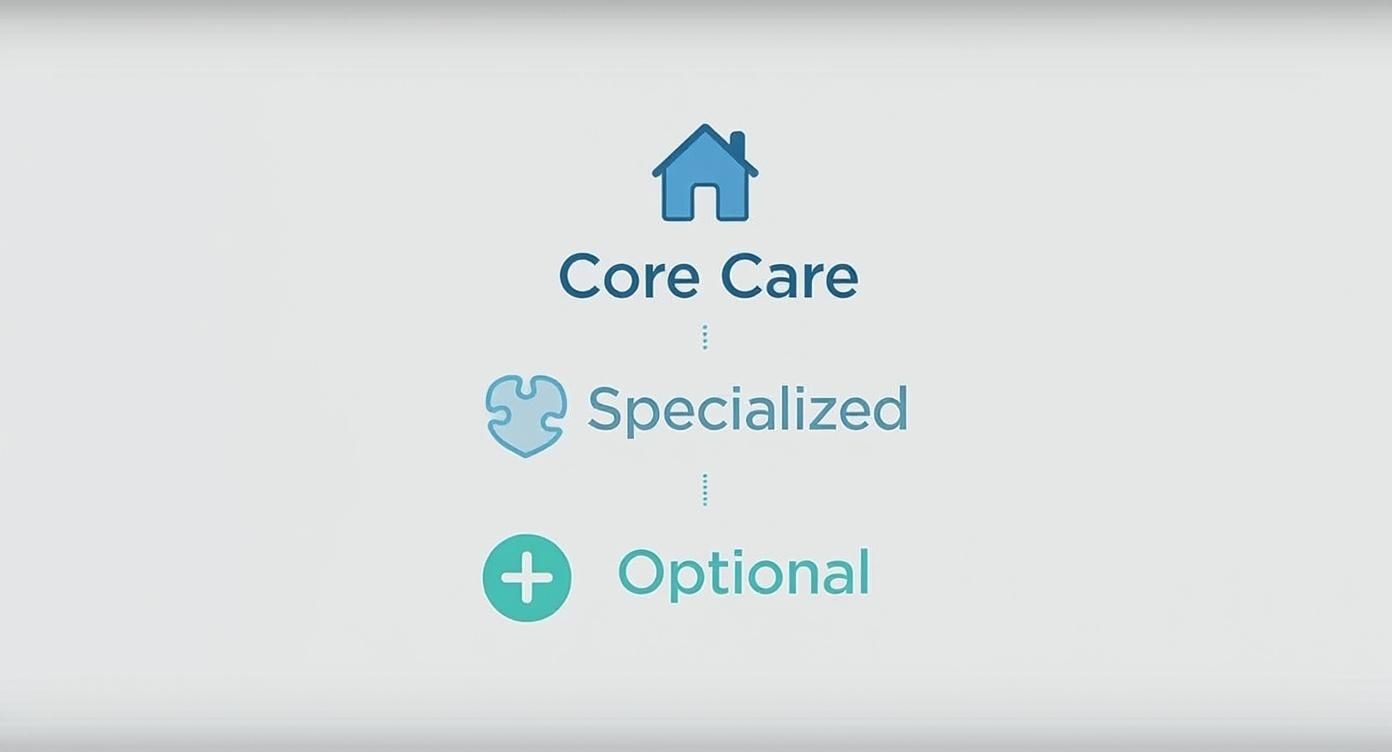
As you can see, the foundational services form the core of the plan, with other services layered on top to create a truly personalized support system.
To help you understand how this works in practice, this table breaks down what you might expect to see at different tiers.
Example Levels of Care in Assisted Living
| Level of Care | Typical Resident Profile | Example of Included Services |
|---|---|---|
| Basic/Independent | Mostly independent, needs minimal help. Wants the social benefits and convenience. | Core services like meals, housekeeping, activities, and emergency call system. Perhaps medication reminders. |
| Moderate/Standby | Needs some reminders or standby assistance for safety. | All basic services, plus hands-on help with one or two ADLs, like dressing or shower setup. |
| High/Extensive | Requires significant hands-on help with multiple daily activities. | All other services, plus extensive help with bathing, transferring, incontinence care, and complex medication management. |
This tiered approach provides a clear roadmap for families, making it easier to understand how care is delivered and budgeted for.
Evolving Needs and Adjusting Costs
Life isn't static, and neither are a person's care needs. The initial assessment is a snapshot in time, but it’s not set in stone.
The real beauty of this model is its flexibility. If a resident recovers well from an illness and finds they need less help, their care level and costs can actually decrease. On the flip side, if their needs increase over time, their support plan can be adjusted to make sure they're always safe, comfortable, and well-cared for.
This adaptability is a core strength of assisted living. Communities conduct regular reassessments—often quarterly, annually, or whenever there’s a noticeable change in health—to ensure the care plan is always a perfect fit. For families, this provides incredible peace of mind, knowing their loved one will get the right support at the right time.
Breaking Down Your Monthly Assisted living Bill

Let's talk about one of the biggest sources of stress when choosing an assisted living community: the bill. Getting a handle on the costs is absolutely critical. It prevents those nasty surprises down the road and gives you the confidence that you're making a sustainable choice for your family.
An assisted living bill isn't just "rent." It's an all-encompassing fee that covers housing, care, meals, and all the little services that make life safer and more enjoyable. Most communities use one of two main pricing structures, and knowing the difference is the first step to comparing your options fairly.
All-Inclusive vs A La Carte Pricing
The two most common models you'll run into are all-inclusive and a la carte. Think of an all-inclusive model as a fixed-price buffet. You pay one predictable monthly fee that covers the apartment, meals, utilities, activities, and a specific level of care. For families who need a stable, easy-to-predict budget, this is often the way to go.
On the other hand, an a la carte model is more like ordering off a menu. You start with a base rent that covers the essentials—the apartment, meals, and basic amenities. From there, you add on and pay for individual care services as you need them. This can be a great, cost-effective option for residents who are still highly independent, but it does mean the monthly bill can change.
There's no single "best" model; it's all about what fits your unique situation. All-inclusive offers stability, while a la carte provides flexibility. The most important thing is to ask for a detailed list of what's included in each so you can make a true apples-to-apples comparison.
What Is Usually Included in the Base Fee
No matter which pricing model a community uses, the base monthly fee usually bundles together the core necessities. This is the foundation of your loved one's day-to-day life and care.
You can almost always expect these services to be covered:
- Housing: The cost of the private or semi-private room or apartment.
- Utilities: Electricity, heat, air conditioning, water, and trash services are typically rolled in.
- Meals: Three meals a day served in a dining room setting, plus snacks.
- Basic Housekeeping: Regular cleaning of the living space, plus laundry and fresh linens.
- Activities: Full access to the community's calendar of social events, fitness classes, and wellness programs.
- 24/7 Staffing: The incredible peace of mind that comes from knowing trained staff are on-site around the clock.
Common Extra Costs and Add-On Fees
This is where you need to pay close attention. Beyond the base rate, some services and supplies will almost always cost extra. These are the variables you need to ask about upfront to get a realistic picture of the total monthly expense.
Here are some common extra costs to look out for:
- Levels of Care Fees: If a community uses a tiered care system, you'll pay an additional fee for personal assistance that goes beyond the basic package.
- Incontinence Supplies: The cost of adult briefs and related supplies is usually billed separately to the resident.
- Specialized Therapies: On-site physical, occupational, or speech therapy sessions are typically billed to insurance or paid for privately.
- Guest Meals: It's wonderful when family can join for a meal, but there's often a small charge for each guest.
- Transportation: While scheduled group outings might be free, personal trips to a doctor's appointment or a family event often come with an extra charge.
- Salon Services: Haircuts, styling, and manicures at the on-site salon are billed just like they would be at any other salon.
Many families look for ways to manage these expenses. For example, knowing the ins and outs of long-term care insurance coverage for assisted living can be a game-changer when planning for both recurring and unexpected costs. Before signing anything, always ask for a complete fee schedule.
How Forest Cottage Creates a Supportive Environment

It’s one thing to understand what services are included in assisted living on paper, but it’s something else entirely to see how a community truly brings those services to life. At Forest Cottage Senior Care, our philosophy is simple. The core services are just the foundation; a genuinely supportive home is built with personal touches that you’ll never find on a checklist.
We’ve made it our mission to create a place that feels like family. That means focusing on unique programs that care for the whole person—mind, body, and spirit—not just their immediate needs. It’s about combining professional, top-tier care with real compassion, turning a list of amenities into a lived experience of comfort, dignity, and joy.
Specialized Support for Our Veterans
Serving the veterans in our community is one of our deepest commitments. We know from experience that navigating benefits can be a tough, confusing process for families. That's why we offer dedicated support to help them access the resources they’ve earned through their service.
Specifically, our team helps families with the VA’s Aid and Attendance benefit, a crucial pension program that can help cover the costs of assisted living. The paperwork and eligibility rules can feel like a maze, so we guide families through every step. By championing our veterans, we help make exceptional care more accessible for those who have served our country.
The Unconditional Love of Pet Therapy
Anyone who has ever had a dog knows the incredible comfort of their companionship. It’s a special kind of magic. That’s why our Goldendoodle pet therapy program is such a huge part of daily life here at Forest Cottage. These gentle, affectionate dogs offer so much more than a wagging tail; they bring proven therapeutic benefits to everyone they meet.
The impact our therapy dogs have is just remarkable:
- Reduces Stress and Anxiety: The simple act of petting a dog can lower blood pressure and release calming endorphins. You can almost feel the stress melt away.
- Combats Loneliness: Our dogs give unconditional affection and companionship, brightening even the toughest days.
- Sparks Connection: They are a wonderful excuse for residents to start conversations and interact with each other, helping build those all-important community bonds.
This program is a perfect example of how we add layers of warmth and connection to our care. It’s a service that nourishes the spirit and brings an irreplaceable sense of home and happiness to our residents.
Flexible Respite Care for Peace of Mind
Being a caregiver is an incredibly demanding role, and everyone needs a break to rest and recharge. Our respite care program offers a flexible, reliable solution, providing short-term stays for seniors in a safe, welcoming, and fully supported environment.
This service is a lifeline for caregivers who need to travel, recover from an illness, or simply take some well-deserved time for themselves. Respite guests get to enjoy all the benefits our full-time residents do, including delicious meals, engaging activities, and personalized care. It gives families total peace of mind, knowing their loved one is in capable and compassionate hands. To see how these special offerings fit into our community, feel free to explore our signature programs.
Empowering Independence with Complimentary Transportation
Staying connected to the wider world is vital for a fulfilling life. We help our residents stay active and independent by offering complimentary local transportation. This isn't just a convenience; it's a direct line to the people and places they love.
Whether it’s a doctor's appointment, a trip to the pharmacy, or an outing to a favorite shop in Willis, our transportation service makes sure residents can get where they need to go safely and without any hassle. This commitment reflects our core belief that assisted living should support a person's freedom, not limit it. By removing transportation as a barrier, we help our residents hold on to their independence and continue living a vibrant, engaged life.
Common Questions About Assisted Living Services
Even after you've learned about the core services and have a handle on the pricing, it's completely normal to have more questions bubbling up. Choosing an assisted living community is a huge step, and you need clear, honest answers to feel confident about the path forward.
This last section is dedicated to the most common questions we hear from families just like yours. We'll get into the practical stuff—what happens when health needs change, how to really judge the staff, and what truly separates assisted living from a nursing home. My goal here is to give you the real-world insights you need to navigate this journey with clarity.
What Happens if My Loved One Needs More Care Later?
This is probably the single most important question families ask, and for good reason. It gets right to the heart of what makes assisted living so valuable. The simple answer is: the care plan grows and adapts right along with them. A good community is designed from the ground up to be a flexible home that can handle changing needs over time.
When a resident's health shifts, maybe after a hospital stay or as a condition progresses, the community’s wellness team simply conducts a reassessment. This isn't some scary, formal evaluation. It’s a collaborative chat between the resident, their family, and the nursing staff to figure out what the new care plan should look like.
This ensures the right support is always there. It could mean:
- Adjusting the level of care to include more hands-on help with daily activities.
- Bringing in specialized services like physical or occupational therapy to rebuild strength.
- Sometimes, it might mean a smooth transition to a dedicated memory care neighborhood if cognitive support becomes the priority.
The beauty of this is that most of these changes happen right there, within the same community. It avoids the stress and emotional upheaval of having to pack up and move to a whole new facility just because a bit more help is needed. It provides a stable, familiar home where your loved one can comfortably age in place.
How Can I Evaluate Staffing at a Community?
The staff is the absolute lifeblood of any assisted living community. They're the ones delivering on every promise, from managing medications to providing compassionate personal care. So, how can you really get a feel for the quality of the team?
First, look past the simple staff-to-resident ratios. While those numbers are a piece of the puzzle, they don't paint the whole picture. The quality of the interactions you see during a tour is far more telling.
Pay close attention to how staff members talk to residents. Do they make eye contact? Address them by name? Is the conversation warm and respectful? These little moments tell you everything about the community's culture of dignity and compassion.
Also, don't be shy about asking direct questions about staff training and how long they've been there. High turnover can be a red flag, whereas a team full of long-term employees usually signals a positive, supportive work environment. Ask specifically about their ongoing training in key areas like dementia care, first aid, and emergency protocols. A well-trained, happy staff is one that provides excellent, consistent care.
What Is the Real Difference Between Assisted Living and a Nursing Home?
So many people use these terms interchangeably, but they are fundamentally different models of care. Getting this distinction right is critical to finding the best fit for your family.
Here's the easiest way to think about it: assisted living is a residential, social setting that includes healthcare support, while a nursing home is a medical facility that includes residential services.
Let's break down the key differences:
- Level of Care: Assisted living is for seniors who need help with daily routines but don’t need round-the-clock skilled medical care. Nursing homes provide constant medical supervision from licensed nurses for people with complex, chronic health conditions.
- The Vibe: Assisted living communities are built to feel like home, with private apartments, lively dining rooms, and a focus on independence and social life. Nursing homes, by necessity, have a more clinical, hospital-like feel focused on medical treatment.
- Who Lives There: A typical assisted living resident is mostly independent but needs a safety net for things like medications or getting dressed. A nursing home resident usually has serious health challenges that demand 24/7 medical attention.
The choice really boils down to the primary need. If the main goal is support for daily living in a vibrant, social community, assisted living is the right answer. If the central need is for intensive, ongoing medical care, a nursing home is the more appropriate choice.
What Should I Look for During a Tour?
Your tour is your best chance to see beyond the glossy brochure and get a genuine feel for a community. Of course, you’ll check out the apartments and common areas, but I always tell families to focus on the dining room and the activity calendar—that’s where life really happens.
When you're in the dining room, look for more than just what's on the menu. Feel the energy. Are residents chatting and laughing with each other? Is the staff engaging with them in a friendly, personal way? A social, bustling dining experience is a powerful sign of a happy, connected community.
Next, ask to see their monthly activity calendar. A great calendar is packed with a wide variety of events that appeal to different interests and abilities—it’s not just wall-to-wall bingo. Look for a healthy mix of:
- Physical Activities: Like chair yoga, walking clubs, or light fitness classes.
- Creative Outlets: Things like art classes, music programs, or gardening clubs.
- Social Gatherings: Including happy hours, holiday parties, and group outings to local spots.
- Lifelong Learning: Opportunities like guest lectures, book clubs, or discussion groups.
A robust and diverse activity schedule shows a real commitment to keeping residents engaged, active, and connected, which is absolutely fundamental to their overall well-being.
We hope this guide has cleared things up and given you the confidence to take the next step in your search. If you're exploring options here in the Willis, Texas, area, the team at Forest Cottage Senior Care is here to help you find that perfect balance of support and independence.
Schedule your personal tour today to learn more about our welcoming community.