
Finding the right assisted living community isn't something you can rush. It really starts with a clear, honest plan that looks at your loved one’s specific needs, what you can realistically afford, and what to keep an eye out for when you start visiting potential homes. If you break the search down into manageable pieces, you can move forward confidently and find a place that doesn't just provide care, but also a great quality of life.
Starting Your Search for the Right Community
The thought of finding the perfect assisted living community can feel like a massive undertaking, but it doesn't have to be. The secret is to start with a solid framework that keeps your search organized from the very beginning.
This first phase isn’t about jumping in the car and touring a dozen places. It’s about doing the foundational work first—building a clear, detailed profile of what your loved one truly needs to thrive. Think of it as creating a personalized blueprint for success. This approach ensures you're comparing communities like Forest Cottage Senior Care in Willis, TX, on what really matters: the genuine quality of life they offer, not just the price tag.
This simple decision tree shows the three core pillars of a successful search: assessing needs, checking your finances, and then, finally, touring the facilities that make the cut.
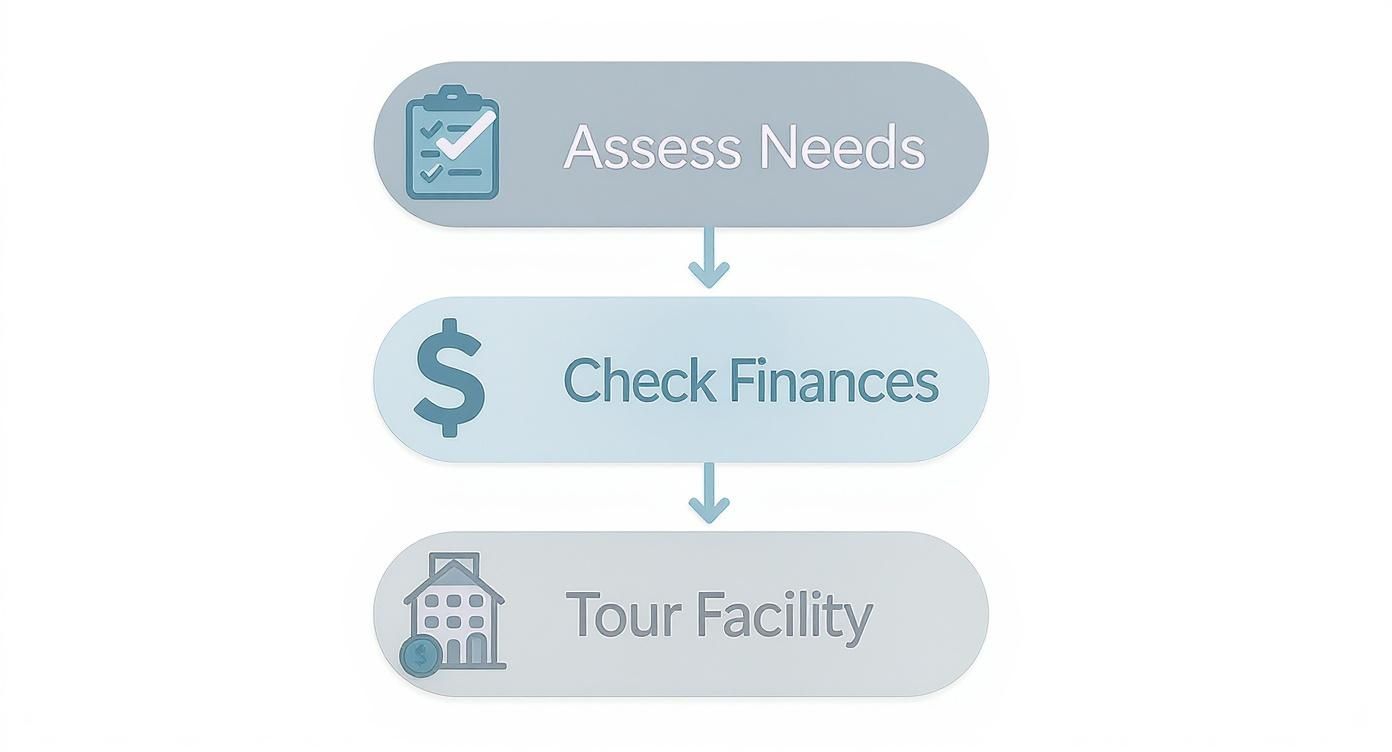
Sticking to this sequence helps families stay focused and prevents that all-too-common feeling of being completely overwhelmed by all the options out there.
Clarifying Your Starting Point
One of the first things to get straight is the difference between various types of senior living. It's incredibly common for families to mix up assisted living with independent living or a nursing home, but they each serve very different needs.
Independent living is for active seniors who don't need much daily help, whereas assisted living is there to provide support with things like medication management, dressing, and bathing. We break it all down in our article about the difference between independent living and assisted living.
Getting this right from the start is critical. It immediately narrows your search to the right kind of care, saving you a ton of time and wasted effort looking at places that aren't a good fit.
The goal isn't just to find a place for your loved one to live. It's to find a community where they can truly flourish. That means looking beyond the basic services to find an environment that supports their social, emotional, and physical well-being.
The demand for these kinds of supportive communities is exploding. The global assisted living market was valued at around USD 166.09 billion and is expected to nearly double by 2034. North America alone accounts for over 43% of that revenue. This growth isn't just a statistic; it shows a real shift in how we view senior care and recognize the growing need for support among family caregivers.
To help you get started, we've put together a simple table that summarizes the core pillars of the decision-making process. Think of it as your high-level checklist to reference as you move forward.
Quick-Start Decision Framework for Assisted Living
| Decision Pillar | Key Questions to Ask | Why It Matters |
|---|---|---|
| Needs Assessment | What daily activities does my loved one need help with? What are their medical, social, and emotional needs? | This defines the required level of care and ensures the facility can genuinely support their well-being. |
| Financial Review | What is our monthly budget? Will we use private funds, insurance, or VA benefits like Aid and Attendance? | A clear budget narrows down options and prevents financial strain down the road. |
| Community Evaluation | Does the staff seem caring and engaged? Is the facility clean? Are the current residents happy and active? | This goes beyond the brochure to gauge the real, day-to-day environment and quality of life. |
By the time you finish this guide, you’ll have a structured plan to navigate this process with clarity. You'll know exactly what questions to ask and what to look for, right from the very beginning.
Getting Clear on Your Loved One's Needs and Wants

Before you even start looking at brochures or scheduling tours, the most important step is to create a truly honest picture of your loved one’s life. This isn't just about medical diagnoses; it's about understanding their day-to-day reality, what frustrates them, and what brings them joy.
Think of this profile as your compass. It becomes an incredibly powerful tool that helps you cut through the noise, instantly filtering out communities that won't work and shining a light on those that feel right. Suddenly, an overwhelming search becomes a manageable, focused process.
The best way to do this is by creating a personalized checklist. I suggest splitting it into two parts: the non-negotiable "needs" tied to health and safety, and the personal "wants" that are crucial for happiness and a good quality of life.
Taking Stock of Daily Activities
The bedrock of any assessment starts with what professionals call Activities of Daily Living (ADLs). These are the basic, essential self-care tasks that really determine how much hands-on support a person needs.
When you're figuring out how to choose an assisted living community, a frank look at ADLs is the most critical first step. This will tell you exactly what level of care is required from day one. Be specific and realistic here—it helps no one to downplay the struggles.
- Bathing and Grooming: Can they manage a shower on their own safely? Do they need reminders or help with things like shaving or combing their hair?
- Dressing: Has choosing appropriate outfits or the physical act of getting dressed become a challenge?
- Mobility: How steady are they? If they use a walker or cane, can they still get from the bed to a chair without help?
- Toileting: Is incontinence a concern, or do they struggle to get to and from the bathroom in time?
Looking at Instrumental Activities
Next up are the Instrumental Activities of Daily Living (IADLs). These are the more complex tasks necessary for living alone, but they aren't basic self-care. For many families, seeing a parent struggle with IADLs is the first red flag that more support is needed.
Difficulties here can cause a lot of stress and worry. For example, a single missed medication dose can have serious consequences, while unpaid bills can quickly spiral into a much bigger problem.
- Medication Management: Are they remembering to take the right pills at the right times? Is a pill organizer with seven different medications becoming too confusing to manage?
- Meal Preparation: Are they eating well-balanced meals, or have they started relying on toast and tea because cooking feels like too much work?
- Housekeeping: Can they keep their home reasonably clean and sanitary? Is laundry piling up for weeks?
- Transportation: Is it still safe for them to drive? Can they easily arrange rides to doctor's appointments or the grocery store?
A thorough assessment isn't about listing what your loved one can't do anymore. It’s about building a complete picture so you can find a community that empowers them to live their best possible life with just the right amount of support.
This whole process helps clarify exactly what assisted living is and how its services are designed to fill the gap between total independence and needing round-the-clock medical care. You can get a much deeper explanation in our guide, "What is Assisted Living?," which can help you understand how communities are structured to meet these specific needs. Knowing this is crucial before you start touring facilities.
Uncovering What Makes a Place Feel Like Home
Once you have the essentials down, it's time to shift focus to the details that make a house a home. This is where you move from clinical needs to human wants. A community could have the best care in the world, but if the social environment doesn't match your loved one's personality, it will never be a good fit.
Asking these questions helps you find a place where they won't just live, but truly thrive.
Social and Lifestyle Preferences
- Community Vibe: Would they feel more comfortable in a small, cozy setting like Forest Cottage where it’s easy to know everyone, or do they prefer the energy of a larger, bustling community?
- Daily Activities: Is your dad an avid bingo player? Does your mom love gardening? Take a close look at the actual activity calendar to see if it lines up with their hobbies.
- Dining Style: Is a formal, restaurant-style dining room a must-have, or would they prefer more casual, family-style meals?
- Pet Policy: Is bringing their small dog or cat a non-negotiable? Many places are pet-friendly, but they all have their own rules.
- Outdoor Spaces: How important is it for them to get fresh air? Look for well-maintained walking paths, gardens, or a sunny patio where they can sit.
When you combine the "needs" and the "wants," you create a complete roadmap. This document will be your north star as you start exploring communities here in the Willis, TX area, ensuring you make a decision based on the whole person, not just a checklist of services.
Navigating Costs and Financial Options

Let's be honest: for most families, the financial conversation is the toughest part of choosing an assisted living community. It can feel like a massive hurdle, but breaking it down makes it manageable. The goal is to get a crystal-clear picture of the costs so you can build a sustainable plan for your loved one's care.
When you start looking, you’ll run into a couple of different ways communities price their services. Some use an all-inclusive model, where one monthly payment covers everything—rent, meals, activities, and a set amount of care. Others prefer a tiered or à la carte approach, where you pay a base rent and then add on fees for specific services like medication management or help with bathing.
There’s no "better" option here. It really just depends on your parent's situation. If they need consistent, predictable help, an all-inclusive plan can make budgeting a lot simpler. But for a senior who is still fairly independent and just needs a little support, an à la carte model could be a more affordable starting point.
Decoding the Different Pricing Models
When you’re comparing facilities, always ask for a line-by-line breakdown of what's included. A lower initial price can be tempting, but hidden fees can pile up faster than you’d think. You need to play detective a bit and know what to look for.
Here are a few common charges that can catch families by surprise:
- Level-of-Care Fees: This is a big one. Many communities will assess a resident's needs and assign them a "care level." Each jump to a higher level means a higher monthly bill. You need to ask how often they do these assessments and what exactly triggers a price increase.
- Entrance or Community Fees: Think of this as a one-time move-in fee. It's often non-refundable and can be anywhere from a few thousand to tens of thousands of dollars.
- Medication Management: Even if your loved one just needs a reminder to take their pills, this service almost always costs extra.
- Specialized Services: Things like memory care support, incontinence supplies, or special dietary plans usually come with their own price tags.
It also helps to understand what's happening in the local market. The entire senior living industry is growing—it's expected to expand by USD 130.9 billion globally between 2025 and 2029. In areas like ours near Willis and the greater Houston region, that growth means more competition, which can lead to better pricing and higher standards for families.
Exploring Payment Sources Beyond Private Funds
While many families tap into savings or use proceeds from selling a home, don't stop there. Several other resources can help ease the financial strain, and it’s absolutely worth checking to see if your loved one qualifies.
Thinking creatively about financing is key. Many families are surprised to find they have access to benefits or financial tools they never knew existed, significantly easing the financial burden of quality care.
Before you assume it's all out-of-pocket, look into these common payment sources. A little research here can go a long way.
Common Payment Sources for Assisted Living
Here’s a quick comparison of the different ways families often cover the cost of senior care, along with what to keep in mind for each.
| Payment Source | Description | Key Considerations |
|---|---|---|
| Long-Term Care Insurance | An insurance policy purchased in advance to cover future care needs. | Review the policy's "elimination period" (waiting time before benefits start) and confirm it covers assisted living specifically. |
| Reverse Mortgage | A loan for homeowners 62+ that converts home equity into tax-free cash. | Allows the senior to pay for care without selling the home, but the loan must be repaid when the home is sold or the owner moves out. |
| Life Insurance Conversion | A process that converts an existing life insurance policy into a benefit plan for long-term care. | Provides a lump sum or monthly payments, but the death benefit for beneficiaries will be reduced or eliminated. |
| Annuity | A financial product purchased with a lump sum that provides a guaranteed monthly income for life or a set period. | Can offer a predictable income stream for care, but the initial investment can be substantial. |
| VA Benefits | Pensions like "Aid and Attendance" for wartime veterans and surviving spouses who need daily assistance. | Requires specific military service, medical need, and financial criteria. The application process can be lengthy. |
| Medicaid Waivers | State-specific programs that can help low-income seniors pay for care in an assisted living setting. | Eligibility is strict and based on income and assets. Not all facilities accept Medicaid, and waiting lists can be long. |
As you can see, there are more options than just writing a check from a savings account. It's also worth noting that while standard Medicare doesn't cover long-term residency in assisted living, some state Medicaid programs offer waivers that can help. For a deeper dive, check out our guide on whether assisted living is covered by Medicaid.
A Special Focus on Veterans Benefits
One of the most powerful—and often overlooked—resources is the VA Aid and Attendance pension. This isn't for a service-related disability. It’s a monthly payment specifically for wartime veterans (or their surviving spouses) who need help with daily activities, making it a perfect fit for assisted living.
To be eligible, a few boxes need to be checked:
- Military Service: The veteran must have served at least 90 days of active duty, with at least one of those days falling during a wartime period.
- Medical Need: An applicant needs to prove they require assistance with daily living activities, are bedridden, or have significant vision impairment.
- Financial Limits: The VA has income and net worth limits, but—and this is important—medical expenses like assisted living costs can be deducted to help meet the criteria.
The application can feel intimidating, but the support it provides can be a game-changer for affording great care. At Forest Cottage Senior Care, we feel strongly that our veterans should get every benefit they've earned. That’s why we help families navigate this process and will even cover the legal fees to make it happen.
What to Look for During an In-Person Tour
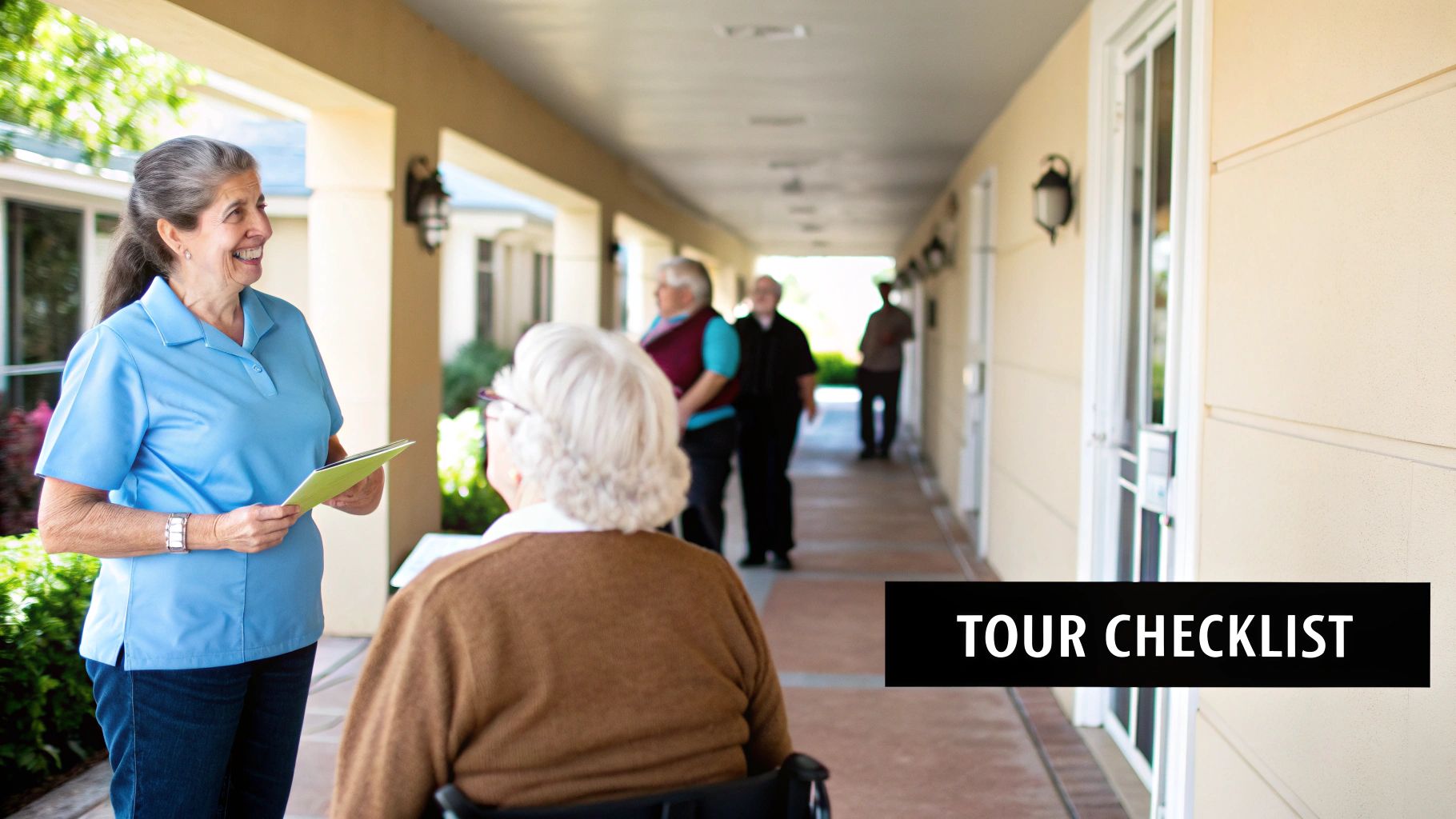
After you’ve done your research online and narrowed down your list, it’s time for the most important step: the in-person tour. This is where a community’s true character comes to life. It’s your chance to see past the polished website photos and perfectly manicured lawns to understand what daily life is really like.
Think of it less as a passive walkthrough and more as a friendly investigation. You're trying to get a feel for the culture, the quality of care, and the overall atmosphere. A beautiful building is nice, but it means nothing if the environment feels cold or the staff seems disconnected.
My best advice? Go in with a plan. Know what you’re looking for and what you need to ask. The goal is to observe the little interactions that reveal the heart of the community.
Observe the Community in Action
To get a real, unfiltered look, I always suggest timing your visit strategically. Don't just go when it's quiet. Try to schedule your tour during a mealtime or a planned activity. This gives you a front-row seat to the daily routine and shows you how the community operates when it's buzzing with life.
As you walk the halls, pay close attention to the residents. Do they seem happy and engaged? Are people gathered in common areas chatting, or are they mostly isolated in their rooms? A lively, social atmosphere is a fantastic sign that the staff is doing a great job fostering connections.
Here’s a quick checklist of things to keep your eyes peeled for:
- Cleanliness and Odors: The community should be clean, of course. But be mindful of overpowering air fresheners or cleaning scents—sometimes they’re used to mask underlying issues. Check out common areas, dining rooms, and resident hallways.
- The Dining Experience: If you have the chance, sample the food! Does it look and taste good? Watch how the dining room operates. Is it a social hub where people enjoy their meals together? Notice how staff help residents who might need a little extra assistance.
- Resident Engagement: Grab an activity calendar and then see if those activities are actually happening. Are residents participating and enjoying themselves? A room full of bored, disengaged residents can be a major red flag.
The real heart of a community isn’t found in its brochure—it's in the unplanned moments. It's the caregiver kneeling to speak with a resident in a wheelchair, the sound of laughter from a common room, and the genuine smiles exchanged between staff and families.
Ask the Right Questions
Your tour guide will have a script, but your job is to go beyond the sales pitch. Don't be afraid to ask direct, specific questions. The answers are critical for making an informed decision and figuring out how to choose assisted living that truly meets your family's needs.
I recommend bringing a written list so you don’t forget anything in the moment. You'll want to cover staffing, safety protocols, and how they communicate with families.
Key Questions for Management and Staff
- Staffing Levels: What is your staff-to-resident ratio during the day versus evenings and overnight? High staff turnover can really disrupt the quality of care, so ask about their average turnover rate. Anything below 25-30% is generally considered good for the industry.
- Emergency Protocols: How do you handle a medical emergency, like a fall or sudden illness? Is there a nurse on-site or on-call 24/7?
- Care Planning: How often are care plans for residents reviewed and updated? Crucially, how are families involved in that process? This is key to making sure your loved one’s changing needs will always be met.
For a place like Forest Cottage, it's also smart to ask about the different levels of care available. Before you even visit, you can get a head start by reviewing the Forest Cottage Senior Care assisted living services. Coming prepared helps you ask much more specific and meaningful questions during the tour itself.
Spotting Potential Red Flags
Just as you're looking for positive signs, you need to be aware of potential warnings. Sometimes, what a community doesn't show you or tell you is the most revealing part of the tour.
Keep an eye out for these subtle but important red flags:
- Rushed or Evasive Answers: If the staff seems too busy to answer your questions or gives you vague, roundabout responses, it could signal disorganization or a lack of transparency.
- Poor Maintenance: Look at the small details. Things like worn-out carpets, scuffed walls, or burned-out lightbulbs might suggest the facility isn't being properly maintained.
- Limited Access: Be cautious if the tour feels overly controlled and you’re only shown specific "showcase" areas. You should be able to see what a typical resident's room looks like, not just a staged model.
At the end of the day, a good tour should leave you feeling confident, informed, and comfortable. Trust your gut. If a community just feels right—if it's clean, vibrant, and filled with people who genuinely seem to care—it’s probably a place where your loved one can truly flourish.
How Technology Enhances Modern Senior Care
When people think of technology in assisted living, they might picture flashy, complicated gadgets. That’s really not what it’s about. It's about smart, practical tools that improve safety, help residents stay independent, and keep them connected to the people they love.
Honestly, a community’s investment in modern tech tells you a lot about their approach to care. It’s a sign that they're forward-thinking. These systems often work quietly in the background, but they provide enormous peace of mind for both the residents and their families.
Core Technologies for Safety and Independence
The most critical pieces of tech are the ones that directly support a resident’s health and freedom. These are the tools that prevent accidents and make sure help is available at the push of a button. When you’re touring a community, these should be on your non-negotiable list to ask about.
- Personal Emergency Response Systems (PERS): You've probably seen these. They're wearable pendants or bracelets with a button that a resident can press if they fall or need help. It sends an immediate alert to staff, which is crucial for a fast response.
- Automated Medication Dispensers: This is a lifesaver for anyone managing a complex medication schedule. These machines dispense the right pills at the right time and can even notify staff if a dose is missed. It dramatically cuts down on the risk of medication errors.
It’s important to remember that these tools don’t replace human caregivers. They actually enhance the care. They free up the staff from doing routine reminders so they can focus on more meaningful, personal time with the residents.
A community that thoughtfully integrates technology is one that values both safety and dignity. It empowers residents to live as independently as possible while ensuring a safety net is always in place.
Keeping Families Connected
Nothing is more important for a resident's spirit than staying connected to family. Good assisted living communities get this. They use technology to bridge the physical distance, which is especially important when family members live far away.
For instance, many communities now have dedicated resident portals. These are secure websites where family can log in to check out activity calendars, see what’s on the menu for dinner, or even get updates from the care team.
Something as simple as easy access to video chat can make a world of difference. A community that offers good Wi-Fi and helps residents use apps like FaceTime or Skype makes it easy for them to see their grandkids' faces or be part of a virtual family party.
The Growing Role of Smart Technology
Technology in senior care is a huge and growing field. In fact, the market for assisted living technologies is expected to jump from USD 9.26 billion to a staggering USD 43.26 billion by 2034. That surge shows a clear demand for smarter, more responsive care environments. You can read more about the growth of the assisted living technology market to understand the trend.
When you tour a place like Forest Cottage Senior Care, don’t be shy about asking specific questions. Do they use electronic health records to coordinate care better? Are there motion sensors in apartments that can discreetly alert staff to a potential fall or a major change in routine? A community’s willingness to invest in these tools shows they’re serious about meeting the needs of today's seniors and are ready for the future of care.
Answering Your Key Questions
Even after you’ve done the research, toured a few places, and run the numbers, it's completely normal to have a few questions still nagging at you. This is a huge life decision. Of course you want to be sure about every last detail before you move forward.
Let’s walk through some of the most common questions we hear from families right here in the Willis, TX, area. Sometimes, getting a straight answer is the final piece you need to feel confident you're making the right choice for your mom or dad.
What Is the Real Difference Between Assisted Living and a Nursing Home
This is probably the question I get asked most often, and the answer is crucial. The main difference boils down to the level of medical care provided.
An assisted living community is for seniors who need a hand with daily activities—things like bathing, getting dressed, or remembering to take their medications—but don't need intensive, round-the-clock skilled nursing. The feel is residential and social. The goal is to help residents stay as independent as possible for as long as possible.
A nursing home, on the other hand, is a clinical setting. It’s for individuals with complex, chronic health conditions who need constant medical monitoring from licensed nurses. Think of it this way: assisted living is a supportive home, while a nursing home is a medical facility.
How Can We Make the Transition to Assisted Living Easier
A smooth transition comes down to three things: communication, personalization, and a whole lot of patience. This move can be an emotional rollercoaster, so how you approach it can make all the difference in helping your parent feel optimistic about this new chapter.
Involving your loved one in the decision is always the best place to start. If they are able, let them tour communities with you and pick out their own apartment. Giving them that sense of control is incredibly empowering.
Here are a few other things that really seem to help:
- Personalize Their New Space: Make their new room feel like theirs right away. Bring familiar furniture, cherished photos, their favorite books, and that one cozy blanket they love. These little touches are what turn a generic room into a personal sanctuary.
- Don’t Overwhelm Them: On move-in day, help them get settled, but don’t feel like you have to push them into a dozen activities right off the bat. Maybe just encourage them to join a table for dinner. It's a great, low-pressure way to start making connections.
- Listen and Validate: Just listen. Acknowledge their feelings, whether it's sadness about leaving their home, anxiety about the unknown, or even excitement. Your presence and frequent visits show them they aren’t being left behind.
A successful transition isn't something that happens overnight. It's a gradual process of building new routines, forming friendships, and rediscovering a sense of purpose and community.
What Happens If My Loved One’s Care Needs Increase
This is such an important question to ask because it’s about planning for the future. A person’s needs will change over time, and a good assisted living community is prepared for that. We often call this "aging in place."
Many communities, including Forest Cottage Senior Care, offer what's known as a continuum of care. This means we can increase the level of support a resident receives without them having to move to an entirely different facility. That might look like adjusting their care plan for more hands-on help or transitioning to a dedicated memory care wing on the same campus.
When you tour, make a point to ask about their specific process. How often do they reassess a resident's needs? Who is involved in those conversations? And what’s the plan if, down the road, a resident needs a level of care the community isn't licensed to provide? A transparent, well-defined plan is the sign of a high-quality community that truly puts its residents first.
This is just a starting point, of course. For more detailed answers to other common concerns, you can explore our comprehensive assisted living FAQ page for additional guidance.
At Forest Cottage Senior Care, we believe that an informed decision is the best decision. If you have more questions or would like to see how our community in Willis, TX, can support your family, we invite you to schedule a personal tour. Visit us online at https://www.forestcottageseniorcare.com to learn more.