Welcome to your comprehensive guide on transformative assisted living activities for seniors. In today’s dynamic senior living communities, the focus has shifted from simple pastimes to purposeful engagement that nurtures the mind, body, and spirit. The right activities do more than just fill time; they are foundational to a resident's overall well-being, fostering social connections, maintaining cognitive function, and boosting physical health. A well-rounded activities calendar is a hallmark of a high-quality assisted living facility, demonstrating a commitment to holistic, person-centered care.
This roundup moves beyond generic suggestions to provide a detailed look at ten impactful activity categories. We will provide practical implementation strategies, safety considerations, and real-world adaptations suitable for varying levels of mobility and cognitive ability. Whether you are an activities director aiming to enrich your community's calendar, a family member exploring options for a loved one, or a senior considering a move to assisted living, this guide offers actionable insights. We'll explore how thoughtfully designed programs create a vibrant, supportive, and fulfilling environment where every resident can thrive.
This article is designed to be a practical resource. Inside, you will find not just what activities to offer, but how to execute them effectively. We’ll cover everything from materials and staffing needs to measuring engagement and tailoring programs for individual residents. Let's delve into the specific assisted living activities for seniors that are redefining wellness and happiness, ensuring a rich and meaningful experience for every individual.
1. Reminiscence Therapy and Memory Sharing
Reminiscence therapy is a powerful activity that goes beyond simple conversation; it is a structured approach to discussing past events, life experiences, and personal memories. This therapeutic process helps seniors connect with their personal history, reinforcing their sense of identity and self-worth. By sharing their life stories, residents feel valued and heard, which can significantly improve their mood and emotional well-being.
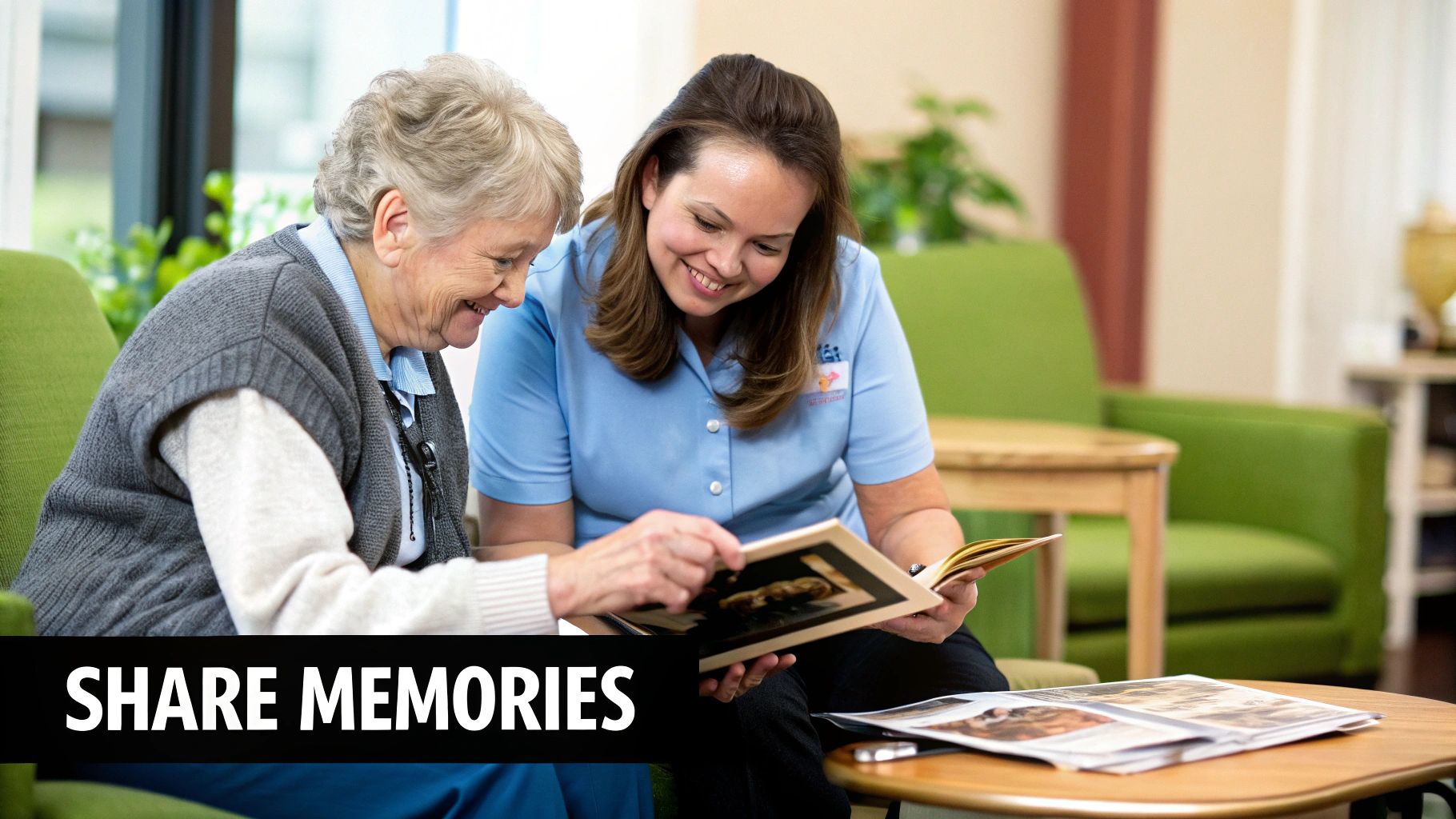
This activity is especially beneficial for cognitive engagement, as it encourages the recall of long-term memories. It fosters social bonds among residents who may discover shared experiences, creating a strong sense of community. For individuals experiencing memory changes, this process can be particularly comforting and grounding. You can explore how these techniques are integrated into specialized programs and learn more about memory care assisted living to understand its broader benefits.
How to Implement Reminiscence Therapy
Successful memory-sharing sessions are well-planned and thoughtfully facilitated. The goal is to create a safe, comfortable space where seniors feel encouraged to open up without pressure.
- Use Sensory Prompts: Incorporate items that trigger memories. This could include photo albums, music from a specific decade, vintage objects like an old rotary phone, or even familiar scents like baking bread or fresh-cut grass.
- Create Themed Discussions: Structure sessions around specific themes. Examples include "First Jobs," "Favorite Family Vacations," "School Day Memories," or "Music of Our Youth." This helps focus the conversation and makes it easier for everyone to participate.
- Establish a Comfortable Setting: Choose a quiet, well-lit room free from distractions. Arrange seating in a small circle to encourage interaction and ensure everyone can see and hear each other clearly.
- Train Facilitators: Staff leading the sessions should be trained in active listening and how to gently guide conversations, especially when sensitive or emotional topics arise. Compassion and patience are key.
2. Gentle Yoga and Stretching Classes
Gentle yoga and stretching classes are low-impact physical activities specifically designed for the mobility and strength levels of older adults. These sessions prioritize safety and accessibility, often incorporating seated postures or using chairs and other props for support. The focus is on improving balance, flexibility, and joint health, which are crucial for maintaining independence and preventing falls. This form of exercise enhances circulation, can reduce chronic pain, and promotes a sense of calm and mental clarity through mindful breathing.
As one of the most adaptable assisted living activities for seniors, gentle yoga provides significant physical and mental benefits without the high risk of injury associated with more strenuous workouts. It fosters a non-competitive, supportive group atmosphere where residents can move at their own pace. This mindful movement is a key component of a holistic approach to well-being, and you can explore more about comprehensive health and wellness programs for seniors to see how it fits into a larger care plan.
How to Implement Gentle Yoga and Stretching
Creating a successful and safe yoga program requires careful planning and consideration for participants' diverse needs. The environment should feel welcoming, encouraging residents to participate regardless of their fitness level.
- Hire Certified Instructors: Engage instructors with certifications in senior or chair yoga. They possess the expertise to modify poses safely and understand the common physical limitations of older adults.
- Provide Proper Equipment: Ensure a supply of sturdy, armless chairs for seated poses and stability. Other helpful props include yoga blocks, straps, and soft blankets to enhance comfort and support proper alignment.
- Conduct Pre-Class Screenings: Before residents join, perform a basic health and mobility screening. This helps the instructor understand individual limitations and offer personalized modifications during the class.
- Create a Relaxing Atmosphere: Use a quiet, spacious room with soft, ambient music playing in the background. A calm setting helps participants focus on their breathing and movement, enhancing the mindfulness benefits of the practice.
3. Art and Craft Workshops
Art and craft workshops offer seniors a meaningful outlet for creativity, self-expression, and cognitive engagement. Activities like painting, pottery, knitting, or quilting provide a therapeutic way to reduce stress and improve mood. Engaging in these hands-on projects also helps maintain fine motor skills and hand-eye coordination, offering both physical and mental benefits. The sense of accomplishment that comes from creating something new can significantly boost self-esteem and provide a renewed sense of purpose.

These workshops are wonderful assisted living activities for seniors because they are highly adaptable to various physical and cognitive abilities. They foster a social, non-competitive environment where residents can work alongside one another, share ideas, and build friendships. The focus is on the creative process rather than the final product, allowing everyone to participate comfortably. These kinds of engaging sessions are a core part of a well-rounded activity schedule, and you can see how they are integrated into daily life by exploring various signature programs at Forest Cottage Senior Care.
How to Implement Art and Craft Workshops
Creating an inclusive and inspiring art workshop involves thoughtful planning and the right materials to ensure every resident can participate fully and safely.
- Provide Adaptive Tools: Offer materials designed for ease of use, such as large-handled paintbrushes, easy-grip scissors, and pre-threaded needles. This ensures that residents with arthritis or limited dexterity can join in.
- Offer Varied Projects: Plan a range of activities that cater to different skill levels and interests. Offer simple projects like watercolor painting or beaded jewelry alongside more complex options like quilting or pottery for those seeking a challenge.
- Celebrate and Display Artwork: Create a gallery wall or display case in a common area to showcase the residents' finished pieces. This public recognition validates their efforts and adds beauty to the community space.
- Ensure a Safe Environment: Use non-toxic, washable materials and provide aprons or smocks to protect clothing. Ensure the workspace is well-lit, ventilated, and free of clutter to prevent accidents.
4. Intergenerational Programs
Intergenerational programs are structured activities designed to bring seniors and younger generations together for mutual enrichment and connection. These powerful initiatives combat loneliness and social isolation in older adults by fostering meaningful relationships with children, teens, and young adults. For younger participants, these interactions provide invaluable life lessons, mentorship, and a deeper appreciation for the experiences of their elders.
These assisted living activities for seniors create a vibrant, dynamic community atmosphere, bridging generational gaps and promoting a sense of purpose. Seniors can share their wisdom and skills, while younger people can introduce new perspectives and energy. The benefits are profound, boosting cognitive function, improving emotional health, and creating lasting bonds that enrich the lives of everyone involved.
How to Implement Intergenerational Programs
Creating a successful intergenerational program requires careful planning to ensure the experience is positive and rewarding for all age groups. The key is to facilitate activities where both seniors and youth can contribute equally.
- Partner with Local Youth Groups: Collaborate with local schools, scout troops, or youth community centers. Establish a formal partnership to create recurring events, such as a weekly reading club with elementary students or a monthly tech support session with high school volunteers.
- Structure Collaborative Projects: Organize activities with a shared goal. This could be planting a community garden, creating a collaborative art mural, putting on a play or talent show, or recording oral histories where students interview residents about their lives.
- Provide Clear Guidelines and Orientation: Before the first meeting, hold separate orientation sessions for both seniors and the youth group. Set clear expectations for behavior, outline the activity's goals, and offer conversation starters to ease initial interactions.
- Focus on Shared Interests: Match participants based on common hobbies like knitting, baking, chess, or a love for music. A shared interest provides a natural foundation for building a genuine connection and makes conversation flow more easily.
5. Gardening and Horticultural Therapy
Gardening and horticultural therapy is a therapeutic activity that engages seniors in plant care, fostering a deep connection with nature. This hands-on process offers a unique blend of physical activity, cognitive stimulation, and sensory engagement. By nurturing plants and watching them grow, residents can experience a profound sense of purpose and accomplishment, which directly contributes to their emotional and psychological well-being.
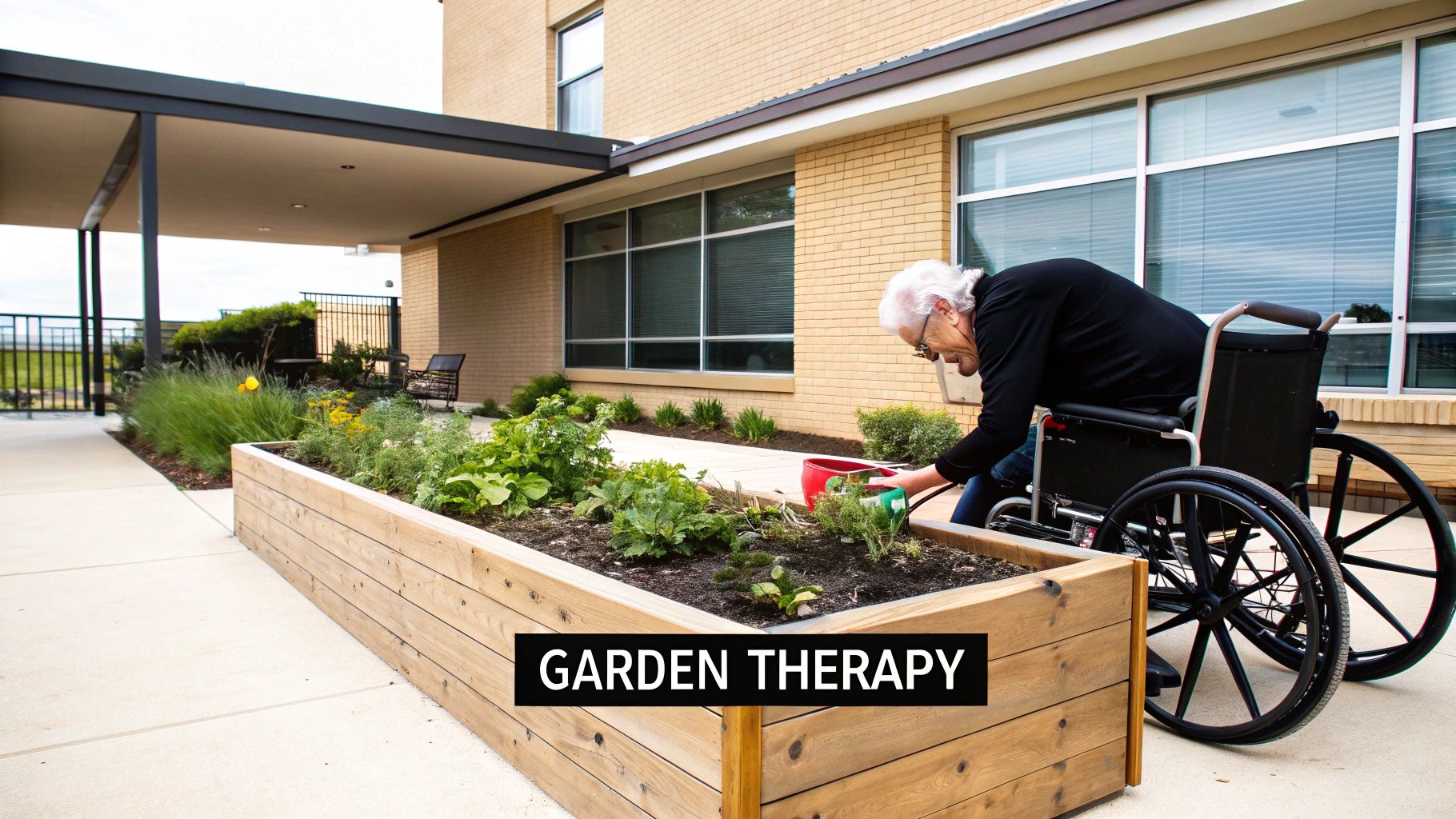
This type of therapy provides gentle physical exercise through tasks like planting, watering, and pruning, which helps maintain mobility and dexterity. It also stimulates the mind by requiring planning, problem-solving, and remembering plant care routines. The sensory experience of touching soil, smelling flowers, and seeing vibrant colors is calming and can reduce stress and anxiety. These assisted living activities for seniors create a living, changing environment that residents can take pride in.
How to Implement Gardening and Horticultural Therapy
Creating an accessible and engaging gardening program involves thoughtful planning to accommodate residents with varying physical abilities and interests. The key is to remove barriers and maximize enjoyment.
- Use Accessible Garden Beds: Install raised garden beds at waist height to eliminate the need for bending or kneeling, making them accessible to individuals in wheelchairs or with limited mobility. Container gardening on patios or balconies is another excellent alternative.
- Provide Adaptive Tools: Offer lightweight, ergonomic gardening tools with easy-grip handles. Long-handled tools can also help residents who have difficulty reaching.
- Create a Sensory Experience: Design a sensory garden with a variety of plants. Include fragrant herbs like mint and lavender, soft-textured plants like lamb's ear, and brightly colored flowers to engage all the senses.
- Start with Easy-to-Grow Plants: Choose low-maintenance plants that offer a high success rate, such as herbs, cherry tomatoes, or marigolds. This helps build confidence and ensures participants see tangible results from their efforts.
6. Music Therapy and Singing Groups
Music is a universal language that deeply impacts mood, memory, and overall well-being. Music therapy and singing groups are structured assisted living activities for seniors that use music to achieve therapeutic goals. These sessions can range from group singalongs and live performances to individualized music therapy, engaging multiple brain regions to improve cognitive function, reduce anxiety, and foster a joyful sense of community.
The power of music is particularly evident in seniors with dementia or Alzheimer's, as familiar melodies can often trigger vivid memories and emotions that were otherwise difficult to access. This activity provides a powerful outlet for self-expression and social connection, even for residents who may be non-verbal. Engaging in music together creates shared positive experiences, strengthening bonds and significantly enhancing the quality of daily life within the community.
How to Implement Music Therapy and Singing Groups
Creating a successful music program involves more than just playing songs; it requires thoughtful planning to maximize engagement and therapeutic benefits for every resident.
- Curate Nostalgic Playlists: Select music primarily from the residents' young adult years (teens and twenties). These tunes are often deeply encoded in long-term memory and evoke strong positive feelings, making participation more enthusiastic.
- Provide Accessible Materials: Use large-print lyric sheets so everyone can easily follow along. For instrumental groups like drum circles, ensure the instruments are lightweight and easy to handle.
- Create Themed Musical Events: Host events like a "50s Sock Hop," "Big Band Afternoon," or "Classical Music Appreciation Hour." Pairing the music with themed snacks and decorations enhances the immersive experience.
- Incorporate Live Performances: Invite local musicians, school choirs, or even talented staff members to perform. Live music offers a dynamic and engaging energy that recorded music cannot replicate, creating memorable assisted living activities for seniors.
7. Fitness and Aquatic Exercise Programs
Structured physical activity is a cornerstone of health and well-being in assisted living, with programs designed to enhance mobility, strength, and cardiovascular health. Fitness and aquatic exercise programs offer safe, effective, and enjoyable ways for seniors to stay active. Aquatic exercise, in particular, is highly beneficial as the water's natural buoyancy reduces stress on joints while providing gentle resistance, making it an ideal environment for those with arthritis or mobility challenges.
Regular participation in these activities helps improve balance, which can reduce the risk of falls, and supports overall independence in daily tasks. Beyond the physical benefits, group fitness classes foster social interaction and create a fun, motivational atmosphere. These programs are a key part of a holistic approach to wellness, ensuring residents have access to the resources they need to thrive. You can see how these offerings are integrated by exploring the various amenities available in a modern community.
How to Implement Fitness and Aquatic Programs
Creating a successful fitness program requires careful planning to ensure safety, accessibility, and engagement for all residents, regardless of their physical abilities.
- Adapt Exercises for All Levels: Offer a variety of classes, such as chair yoga, seated strength training, and gentle water walking. Instructors should be skilled in providing modifications for different fitness and mobility levels.
- Prioritize Safety in Aquatic Environments: Ensure the pool area has non-slip surfaces, secure handrails, and easy-to-use entry and exit points like stairs or a hydraulic lift. Maintain a warm water temperature (ideally 86-90°F) for comfort.
- Use Appropriate Equipment: Provide supportive tools like water noodles, flotation belts, and lightweight resistance bands. Ensure all equipment is regularly inspected and maintained.
- Hire Certified Instructors: Staff leading fitness sessions should be certified and have specific training in senior fitness and aquatic exercise. They should be able to create a positive, encouraging environment while monitoring for safety.
8. Educational Classes and Lifelong Learning Programs
Engaging in lifelong learning is a cornerstone of maintaining cognitive vitality and a sense of purpose. Educational classes provide structured opportunities for seniors to explore new subjects, develop skills, and stay connected with the world around them. These programs go beyond simple entertainment; they offer meaningful mental stimulation that can improve memory, critical thinking, and overall brain health.
These structured assisted living activities for seniors are excellent for fostering social connections, as residents bond over shared interests and collaborative learning. Whether it's a history lecture, a creative writing workshop, or a class on using tablets, these programs empower residents with new knowledge and confidence. Offering diverse educational opportunities is a key component of comprehensive care, similar to the structured engagement found in specialized day programs. You can discover more about these engaging environments and learn about our adult day care services to see how learning is integrated.
How to Implement Lifelong Learning Programs
Creating an effective educational program involves understanding residents' interests and removing barriers to participation. The goal is to make learning accessible, enjoyable, and rewarding for everyone.
- Survey Resident Interests: Before launching a program, survey residents to find out what they are most interested in learning. Popular topics often include history, technology, creative writing, foreign languages, and current events.
- Bring in Guest Experts: Invite local historians, university professors, artists, or tech experts to lead sessions. Guest speakers can provide fresh perspectives and deep knowledge that energizes residents.
- Adapt for All Learners: Ensure the learning environment is accommodating. Use large-print handouts, ensure the room has excellent lighting and acoustics, and use microphones so everyone can hear clearly.
- Offer Diverse Formats: Mix up the format to keep things interesting. Offer single-session lectures, multi-week courses, and interactive workshops. Provide options for different skill levels, such as "iPad for Beginners" and more advanced digital photography classes.
9. Pet Therapy and Animal Companionship Programs
Pet therapy and animal companionship programs offer structured interactions with trained animals, providing comfort, reducing stress, and combating feelings of loneliness. These assisted living activities for seniors leverage the innate human-animal bond to deliver powerful therapeutic benefits. The simple act of petting an animal can lower blood pressure, release endorphins, and encourage physical movement, making it a holistic activity that supports both emotional and physical health.
This type of program is especially valuable for seniors who may have had to leave beloved pets behind when moving into a community. It provides a unique form of non-verbal communication and unconditional affection that fosters social interaction and gives residents a renewed sense of purpose. At Forest Cottage, we see firsthand how our resident Goldendoodle brightens days and creates a warm, homelike atmosphere for everyone.
How to Implement Pet Therapy Programs
A successful and safe animal companionship program requires careful planning, coordination with professional organizations, and attention to resident needs. The primary goal is to create positive, predictable, and safe interactions for both seniors and animals.
- Partner with Certified Organizations: Work with established groups like Pet Partners or Therapy Dogs International. These organizations ensure animals are properly trained, screened for temperament, and healthy, which is crucial for safety and effectiveness.
- Screen Residents First: Before a visit, discreetly check with residents and their families about any allergies, phobias, or past negative experiences with animals. This ensures the activity is a positive experience for all participants.
- Establish a Safe and Controlled Environment: Supervise all interactions closely. Visits should take place in a designated common area where staff can monitor and assist. Provide hand sanitizer and ensure residents practice gentle handling.
- Create a Consistent Schedule: Regular, scheduled visits allow residents to anticipate and look forward to the interaction. Consistency helps build a bond between the residents and the visiting animals, enhancing the therapeutic benefits over time.
10. Spiritual and Faith-Based Activities
Spiritual and faith-based activities are essential for addressing the holistic well-being of residents, providing comfort, purpose, and a sense of community. These programs honor diverse spiritual beliefs and practices, creating opportunities for worship, reflection, and connection. For many seniors, faith is a cornerstone of their identity, and continuing these practices within their assisted living community offers stability and profound emotional support.
Engaging in spiritual activities helps seniors cope with life changes, find meaning in their experiences, and reduce feelings of anxiety or isolation. These gatherings also foster deep social bonds among residents who share similar values. Whether through a formal service, a quiet meditation circle, or a discussion group, these assisted living activities for seniors nurture the spirit and affirm residents’ deeply held beliefs.
How to Implement Spiritual and Faith-Based Activities
Creating an inclusive and respectful spiritual program requires thoughtful planning and sensitivity to the diverse needs of the community. The goal is to provide meaningful opportunities for all residents, regardless of their specific faith or beliefs.
- Offer Diverse Programming: Cater to a range of spiritual needs by hosting various events. This could include on-site religious services, Bible study groups, meditation sessions, spiritual music hours, or discussion circles that explore universal themes of hope and gratitude.
- Partner with Local Faith Communities: Invite leaders from local churches, synagogues, temples, and mosques to lead services or provide spiritual counsel. This strengthens community ties and ensures authentic guidance. Offering transportation to off-site services is also a valuable service.
- Create a Dedicated Space: Designate a quiet, peaceful area as a multi-faith chapel or reflection room. This space should be accessible at all times for private prayer, meditation, or quiet contemplation.
- Respect Individual Beliefs: Conduct a survey to understand residents' spiritual preferences and needs. Ensure that activities are optional and that those who are not religious feel just as welcome and respected within the community. Train staff to be sensitive to various traditions and accommodations.
Top 10 Assisted Living Activities Comparison
| Activity | 🔄 Implementation complexity | ⚡ Resource requirements | ⭐ Expected effectiveness | 📊 Expected outcomes | 💡 Ideal use cases / tips |
|---|---|---|---|---|---|
| Reminiscence Therapy and Memory Sharing | Medium — requires trained facilitators and sensitive handling | Low–Medium — photos, music, recording tools; quiet space | ⭐⭐⭐⭐ — strong for mild–moderate cognitive engagement | Improved mood, social bonds, preserved life stories, reduced depression | 💡 Best for mobile/moderately impaired seniors; record sessions with permission |
| Gentle Yoga and Stretching Classes | Medium — needs certified instructor and health screening | Low — chairs, mats, light props | ⭐⭐⭐⭐ — effective for balance, flexibility, pain reduction | Better balance, reduced fall risk, improved joint mobility and calm | 💡 Offer seated options and certified senior instructors |
| Art and Craft Workshops | Medium — instructor skill and adaptive techniques needed | Medium — materials, adaptive tools, drying/storage space | ⭐⭐⭐⭐ — strong for fine motor skills and self-expression | Enhanced dexterity, creativity, socialization, sense of achievement | 💡 Use easy‑grip tools and display finished work to boost pride |
| Intergenerational Programs | High — coordination, matching, and scheduling complexity | Low–Medium — partners (schools), facilitator time, transport | ⭐⭐⭐⭐ — high social/emotional impact when well matched | Reduced isolation, renewed purpose, mutual learning across ages | 💡 Start structured short sessions and match by interests |
| Gardening and Horticultural Therapy | Medium — setup (raised beds) and seasonal planning | Medium — raised beds, tools, plants, weather access | ⭐⭐⭐⭐ — effective for multisensory engagement and mild exercise | Improved mood, light physical activity, sensory stimulation, produce | 💡 Use raised beds and adaptive tools; plan easy‑to‑grow plants |
| Music Therapy and Singing Groups | Medium–High — trained music therapist ideal; licensing considerations | Low–Medium — instruments, sound system, therapist time | ⭐⭐⭐⭐⭐ — especially effective for dementia and emotional health | Memory recall, mood lift, reduced anxiety, social connection | 💡 Use era‑specific music; employ trained therapists for clinical goals |
| Fitness and Aquatic Exercise Programs | High — pool facilities, safety protocols, certified instructors | High — warm pool, maintenance, flotation devices, staffing | ⭐⭐⭐⭐ — excellent for strength, balance, cardiovascular health | Improved strength, balance, reduced joint stress, greater independence | 💡 Maintain warm water (86–90°F) and provide non‑slip supports |
| Educational Classes and Lifelong Learning Programs | Medium — qualified instructors and accessible materials needed | Low–Medium — classroom space, printed/tech materials, guest speakers | ⭐⭐⭐⭐ — strong for cognitive maintenance and engagement | Preserved mental acuity, social connections, renewed purpose | 💡 Offer large‑print handouts, good acoustics, and varied levels |
| Pet Therapy and Animal Companionship Programs | Medium — animal certification, handler training, health screening | Medium — certified animals, scheduling, sanitation, possible vet costs | ⭐⭐⭐⭐ — high emotional/physiological benefits for many seniors | Reduced stress, lower blood pressure, increased social interaction | 💡 Screen for allergies/fears; consider robotic pets if needed |
| Spiritual and Faith‑Based Activities | Medium — need inclusive planning and access to faith leaders | Low — meeting spaces, volunteers/chaplains, transport for off‑site | ⭐⭐⭐⭐ — strong for meaning, coping, emotional support | Increased resilience, comfort, community bonds, spiritual well‑being | 💡 Survey resident preferences and provide multi‑faith options |
Creating a Vibrant and Fulfilling Life at Forest Cottage
Choosing the right assisted living activities for seniors is about far more than simply filling a calendar. As we've journeyed through the diverse world of engagement, from the gentle movements of Chair Yoga to the joyful barks of a therapy dog, a central theme has emerged: purpose. A thoughtfully designed activities program is the cornerstone of a fulfilling life, nurturing the mind, body, and spirit in equal measure.
The goal isn't just to keep residents busy, but to foster connection, spark curiosity, and preserve a strong sense of identity. By weaving together activities that cater to different needs and abilities, we create an environment where every individual can thrive.
Synthesizing the Core Principles of Engagement
Throughout this guide, we've explored ten powerful avenues for enrichment. Let's revisit the key takeaways that tie them all together:
- Holistic Wellness is Key: A truly effective program addresses multiple dimensions of well-being. It balances physical activities like aquatic exercise with cognitive stimulation from lifelong learning classes, and creative expression from art workshops with emotional connection through intergenerational programs.
- Adaptation and Personalization Matter: There is no one-size-fits-all solution. The best assisted living activities for seniors are those that can be adapted for varying mobility and cognitive levels, ensuring everyone feels included and successful. The focus should always be on what residents can do.
- Community is the Goal: While individual hobbies are important, the most impactful activities are often those that build relationships. Whether it's a group singing session, a collaborative gardening project, or a shared memory in a reminiscence circle, these moments of connection are what transform a facility into a home.
Key Insight: The ultimate measure of an activities program is not the number of events offered, but the quality of life it inspires. It's about empowering residents to continue their life's story with dignity, joy, and a sense of belonging.
Putting It All into Action: Your Next Steps
Mastering this approach to senior living activities is invaluable for families and caregivers. It equips you to ask the right questions when touring a community and to advocate for the kind of engaging lifestyle your loved one deserves. When evaluating options, don't just look at the calendar on the wall. Ask how activities are tailored to individual residents, how success is measured, and how the community’s unique amenities support the program.
For instance, at Forest Cottage Senior Care, our commitment to this philosophy is woven into our very fabric. Our Goldendoodle pet therapy program isn't an occasional event; it's a daily source of comfort and companionship. Our complimentary transportation services don’t just handle medical appointments; they empower residents to attend local educational seminars or their preferred faith-based services, keeping them connected to the wider Willis community.
By thoughtfully combining diverse activities with supportive services like on-site beautician care and dedicated VA support, a community can create an environment where seniors don't just reside, they flourish. It is this intentional, integrated approach that makes all the difference, providing a foundation for a vibrant, purposeful, and joy-filled chapter of life.
Ready to see how a rich and personalized activities program can make a difference for your loved one? Discover the warm, engaging, and supportive community at Forest Cottage Senior Care, where we specialize in creating a fulfilling lifestyle tailored to each resident. Visit us online at Forest Cottage Senior Care to learn more about our unique approach and schedule a personal tour today.