Stumbles and falls in assisted living are far more than just minor mishaps—they are serious events that can drastically change a resident's life. Preventing falls requires a thoughtful, proactive strategy that looks at individual risks, environmental hazards, and how well the staff is prepared. This isn't about a simple checklist; it's about building a comprehensive safety system to protect residents before a crisis ever happens.
Understanding the Gravity of Fall Risks
For most families, choosing an assisted living community is a decision rooted in finding a safe, supportive home for a loved one. And while these communities offer tremendous benefits, the risk of a fall is a real concern that demands constant vigilance. A fall can be a life-altering event for an older adult, often leading to severe injuries, a loss of independence, and a sharp decline in their confidence.
Think of a solid fall prevention plan like a building's fire safety system. You wouldn't rely on just one fire extinguisher, would you? Of course not. You'd have smoke detectors, clearly marked exit routes, sprinkler systems, and regular fire drills. In the same way, an effective fall prevention strategy is a combination of interconnected efforts, not just a single action.
The Core Pillars of Prevention
A successful program for preventing falls in assisted living facilities is built on several key pillars that work together to foster a true culture of safety. These foundational elements include:
- Individual Risk Assessment: Pinpointing which residents are most vulnerable by looking at their health, mobility, and medication history.
- Environmental Design: Modifying the physical space to get rid of hazards, improve lighting, and add support exactly where it's needed.
- Staff Training and Education: Giving caregivers the knowledge to spot risks and respond the right way.
- Resident Engagement and Empowerment: Getting residents and their families involved in the safety plan to encourage them to take an active role.
It all comes down to a human-centric approach. The goal is to protect a resident's dignity and independence while creating a strong safety net that can adapt as their needs change.
The Unique Challenge in Assisted Living
Unlike nursing homes, assisted living communities don't have federal regulations for fall prevention. This puts a much greater responsibility on individual facilities to create and enforce their own strict safety protocols. The statistics really highlight how urgent this is; in the United States, fall rates actually grew by an average of 1.5% annually between 2016 and 2019, even with prevention programs in place. You can find more insights on this trend and how facilities can better respond at ECRI.org.
For families weighing their options, understanding what is assisted living and its regulatory environment is a critical first step. By focusing on these core prevention strategies, facilities can build a genuinely safer community for everyone who calls it home.
Identifying At-Risk Residents Through Proactive Assessment
Genuine fall prevention doesn't start when a resident stumbles. It begins long before that, with a deep, personal understanding of who is most vulnerable. A cookie-cutter approach just doesn't cut it; the real work lies in creating a detailed ‘personal safety profile’ for every individual in your care.
Think of it like a detective gathering clues to solve a case before it even happens. By systematically screening residents the moment they arrive and performing regular check-ins, staff can pinpoint specific risk factors that might otherwise fly under the radar. This proactive stance is the absolute bedrock of preventing falls in assisted living facilities.
A huge part of this is using proven, evidence-based tools. Instruments like the Morse Fall Scale aren't complicated medical charts—they're more like straightforward checklists. They give us a structured way to look at a resident's history of falls, other health diagnoses, whether they use a cane or walker, and their mental state.
This simple flowchart breaks down the core process of moving from that initial assessment to a solid, protective plan.
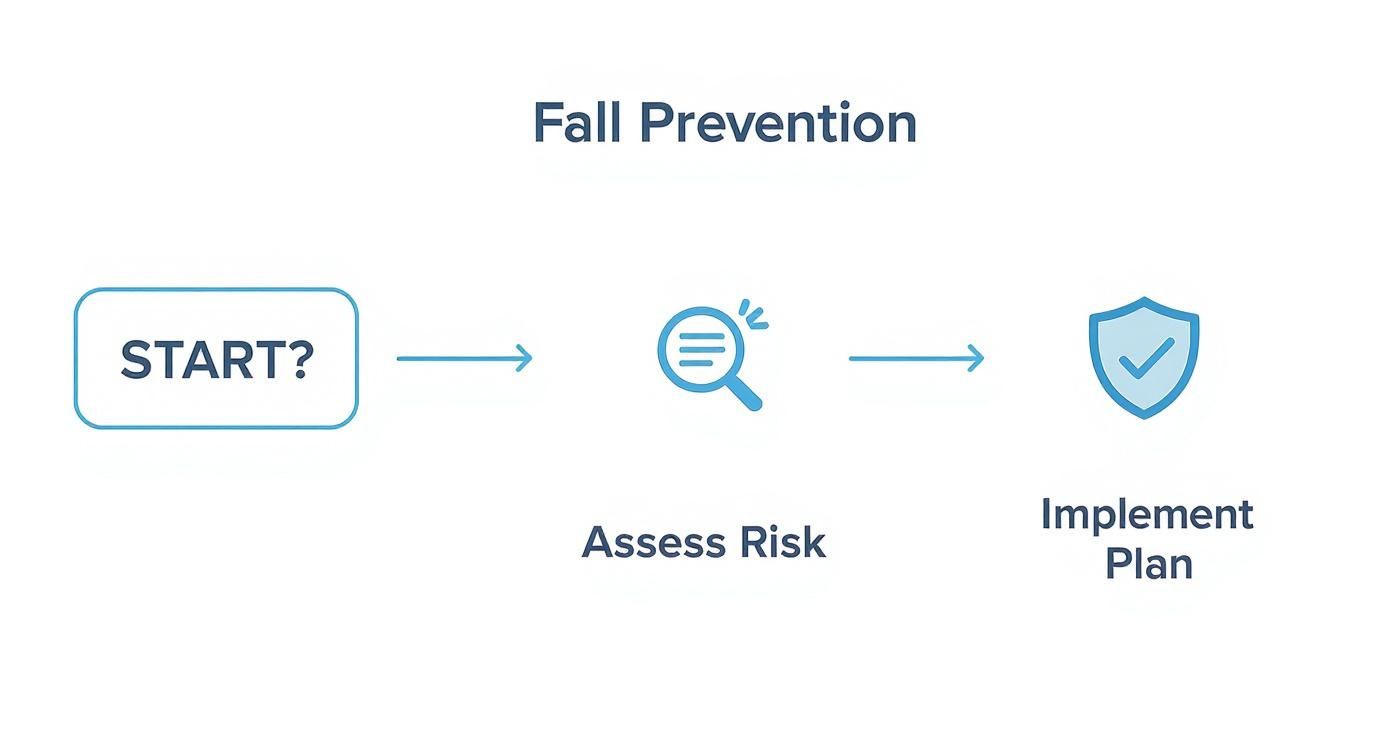
As you can see, a successful strategy is a logical journey. It all starts with that careful risk assessment before you can put a truly tailored safety plan into motion.
Key Risk Factors to Monitor Closely
A thorough assessment digs deeper than just the obvious. It means taking a hard look at several connected areas that all play a part in a resident's stability and safety. If you miss even one piece of the puzzle, you can leave a dangerous gap in their care plan.
Here are the critical risk factors that demand close attention:
- Medical and Fall History: A previous fall is one of the biggest red flags for a future one. Knowing the why and how of past incidents gives us invaluable clues.
- Gait and Balance Issues: Conditions like Parkinson’s, arthritis, or the after-effects of a stroke can directly impact how steadily a resident walks. Even simple muscle weakness from not getting enough exercise is a major contributor.
- Vision Impairment: It's simple—if you can't see well, you can't spot hazards like a rumpled rug, a small object on the floor, or a poorly lit step.
- Cognitive Function: Residents living with dementia or other cognitive challenges might not recognize a risky situation or could forget to use their walker.
- Medication Side Effects: This is a big one that often gets overlooked. So many common medications can cause dizziness, drowsiness, or confusion, which directly dials up the risk of a fall.
A proactive risk assessment isn't about limiting a resident's freedom. It’s about understanding their specific challenges so you can provide the right support to maintain their independence safely.
The Importance of Individualized Care Plans
Once those risk factors are on the table, the next move is to turn that information into action. This means creating a truly individualized care plan that tackles each resident's unique needs. For example, a resident with poor balance might get a targeted exercise program, while someone on a new medication may need more frequent check-ins.
This personalized strategy is a cornerstone of any quality senior health and wellness programs, making sure the care fits the person, not the other way around.
Medication Review: A Critical Component
Getting a pharmacist or physician to regularly review a resident's medications is non-negotiable. Certain drugs—like sedatives, antidepressants, and some blood pressure meds—are well-known culprits for increasing fall risk.
The goal isn't always to get rid of medications, but to get them right. Sometimes, a simple tweak in the dosage, the time of day it's taken, or the specific drug itself can make a world of difference. This collaborative review process makes sure a resident's medication list is helping, not hurting, their overall safety. It's this continuous cycle of assessing and adjusting that really builds a culture of safety.
Designing a Safer Living Environment
Think of a resident's physical surroundings as a silent, 24/7 partner in fall prevention. Much like you would child-proof a home for a toddler, "fall-proofing" an assisted living facility is one of the most fundamental steps we can take to create a truly secure space. It’s all about a thoughtful examination of every room and common area to spot and remove potential hazards before they ever cause an accident.
This proactive approach is a huge part of what makes preventing falls in assisted living facilities so effective. The environment itself should be designed to support mobility and independence, not create frustrating obstacles. By making smart, strategic modifications, a facility can dramatically cut down on the risk of trips, slips, and stumbles for every single resident.
A Safety Walkthrough of Key Areas
The best place to start is with a safety walkthrough. You have to learn to see the space through the eyes of a resident who might be struggling with mobility or vision challenges. This simple exercise helps pinpoint those subtle hazards that are all too easy to overlook in the rush of day-to-day operations.
Let's break down the most critical areas to inspect:
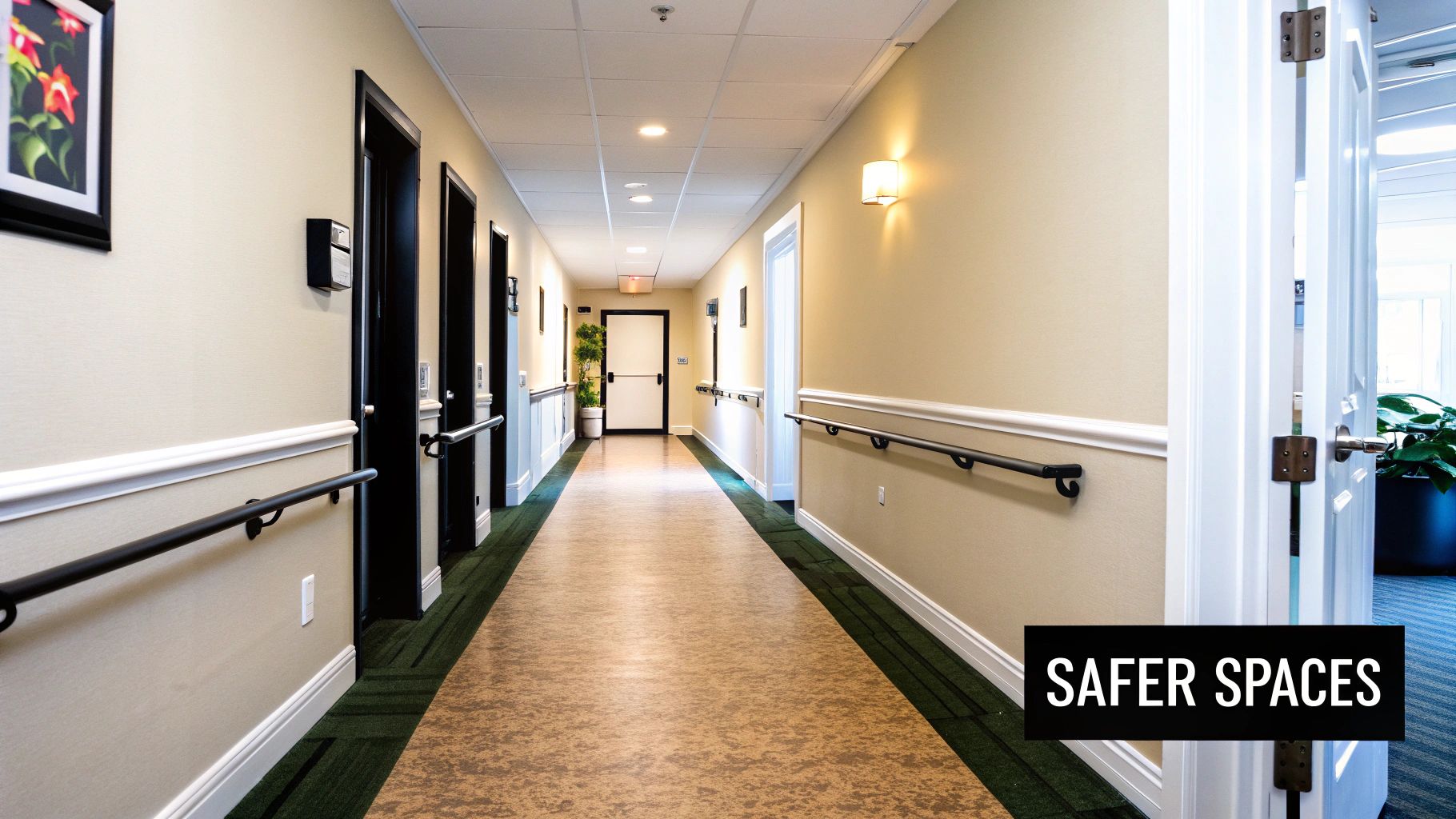
- Resident Rooms and Bathrooms: This is where a surprising number of falls happen. Check for clutter, make sure furniture placement allows for clear, wide pathways, and confirm that grab bars are securely installed in the bathroom near the toilet and inside the shower.
- Hallways and Stairwells: These are the main arteries of the community. Hallways need to be wide, completely free of obstructions like carts or equipment, and feature sturdy handrails on both sides. Every stairwell should have excellent lighting and non-slip treads. No exceptions.
- Common Areas (Dining Rooms, Lounges): Furniture should be arranged to create obvious, accessible pathways. Chairs need to be sturdy and at a height that allows residents to sit down and get up with minimal effort.
A successful environment is really a blend of thoughtful design and resident-focused care. You can learn more about how a well-designed space contributes to a resident's overall well-being by exploring the amenities offered in a modern senior community.
Optimizing Lighting and Flooring
Two of the most powerful—and often overlooked—tools in environmental fall prevention are lighting and flooring. They are truly the unsung heroes of a safe facility.
Good lighting isn't just about brightness; it's about consistency. The goal is to minimize shadows and glare, both of which can distort perception and hide tripping hazards on the floor. It's also non-negotiable to have nightlights in resident rooms and hallways for safe navigation after dark.
Flooring choices are just as critical. While plush, deep-pile carpeting might seem cozy, it can be a real struggle for residents using walkers or wheelchairs. Low-pile carpeting or non-slip, non-glare surfaces like matte-finish vinyl are often much better choices. Above all, floors must be kept dry and free of spills at all times.
The Importance of Routine Checks
Creating a safe environment isn't a "one-and-done" project. It requires constant attention. A room that was perfectly safe yesterday could have a new hazard today—a spilled drink, a rumpled rug, or a chair that's been moved out of place.
That’s why implementing a schedule for regular environmental safety checks is so important. It ensures that high standards are maintained and that any new issues are dealt with right away. When you empower all staff, from housekeeping to caregivers, to spot and report hazards, you create a culture where everyone is responsible for maintaining a safe home. This ongoing vigilance turns the physical environment from a potential risk into a reliable asset for resident safety.
Empowering Staff and Residents Through Education
A beautifully designed, hazard-free environment is a critical piece of the puzzle, but it’s only half the story. The real secret sauce is the human element—the daily interactions, knowledge, and watchfulness of both staff and residents. This is what truly brings a fall prevention strategy to life.
Think of it like this: You can own the best fire extinguisher in the world, but if you don't know how to use it, it's just a red decoration on the wall. The same goes for preventing falls in assisted living facilities. Empowering people with the right knowledge is what makes every other safety measure actually work.
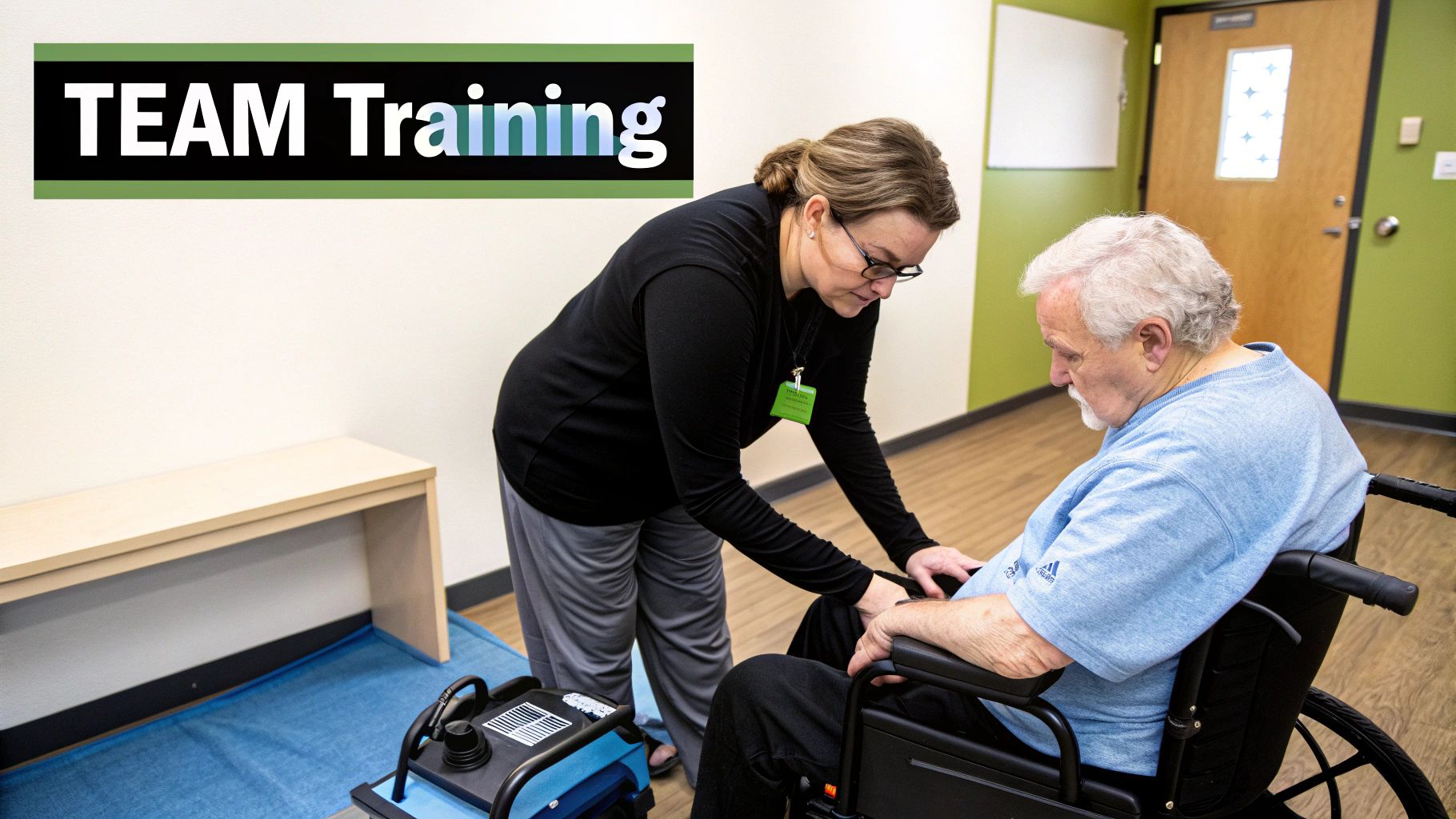
This turns fall prevention from a list of rules on a clipboard into a shared, living culture where everyone feels a sense of ownership.
Essential Training Modules For Staff
A well-trained staff is your first line of defense. Their education has to go way beyond basic safety checklists. It's about equipping them with the skills to be proactive, observant, and genuinely compassionate.
Here are the non-negotiables for staff training:
- Mastering Risk Assessment Tools: Staff need to be fluent in using tools like the Morse Fall Scale. This isn't just about checking boxes; it's about understanding what a score means and how to turn that number into a concrete action plan for an individual resident.
- Safe Transfer and Mobility Techniques: Knowing the right way to help a resident move—from a bed to a chair, or in and out of the bathroom—is absolutely essential. This protects the resident from a fall and the staff member from a serious injury.
- Recognizing Subtle Warning Signs: Great caregivers are trained to spot the small things. A new unsteadiness, a complaint of dizziness, or even a resident who seems more withdrawn than usual can all be early warning signs of an increased fall risk.
- Post-Fall Response Protocols: Knowing exactly what to do after a fall is just as important as preventing one. This means immediate injury assessment, proper notification procedures, and compassionate communication—all while thoroughly documenting what happened to prevent it from happening again.
By investing in this kind of deep-dive education, a facility builds a team of vigilant safety advocates. They aren't just reacting; they're empowered to act decisively, creating an environment where residents can thrive safely.
Empowering Residents and Their Families
Education is a two-way street. It's also a powerful tool for bringing residents and their families into the fold as active partners in safety. When residents understand the why behind a recommendation, they are far more likely to get on board.
The goal is always to maintain independence, not restrict it. Key topics to cover include:
- The Importance of Proper Footwear: Simply explaining how sturdy, non-slip shoes create a stable foundation can be enough to encourage residents to ditch the loose, backless slippers.
- Correct Use of Assistive Devices: So many residents are handed a walker or a cane with zero instruction. Demonstrations and regular check-ins ensure these tools are actually helping, not becoming a new trip hazard.
- Reporting Dizziness or Weakness: It’s vital to create a culture where residents feel comfortable saying, "I feel a little dizzy," without fear of being a bother. This allows the team to investigate potential causes—like dehydration or medication side effects—before they lead to a fall.
- Understanding Medication Side Effects: A simple conversation about how a new pill might affect their balance can make a world of difference. It makes residents more mindful and encourages them to report any new or unusual feelings.
The following table highlights how staff training and resident education work together, covering similar ground but from different, complementary perspectives.
Staff Training Checklist vs Resident Education Topics
| Focus Area | Key Training for Staff | Key Education for Residents/Families |
|---|---|---|
| Mobility Aids | Proper fitting and maintenance of walkers/canes; safe transfer techniques. | How to use their specific device correctly; importance of regular checks. |
| Environment | Conducting room safety audits; identifying and removing trip hazards. | Keeping pathways clear; using grab bars; reporting spills immediately. |
| Health Changes | Recognizing subtle signs of weakness, confusion, or vision changes. | Understanding their own risk factors; reporting dizziness or feeling unwell. |
| Footwear | Assessing resident footwear for safety; recommending appropriate shoe types. | Why non-slip, supportive shoes are crucial for preventing falls. |
Ultimately, a commitment to ongoing education for everyone is what transforms a good facility into a great one.
This focus on partnership is a cornerstone of many successful signature programs designed to boost resident well-being. By working together, the facility, residents, and their families create a robust safety net that makes the community a safer home for everyone.
Leveraging Technology for Advanced Fall Prevention
Modern tools add a powerful layer of safety to any fall prevention strategy, acting as a sort of digital guardian angel for residents. These technologies aren't about replacing the essential, human touch of caregivers. Instead, they’re a powerful supplement, offering an extra set of eyes and ears that can catch risks our senses might miss.
By bringing smart technology into daily routines, facilities can shift from simply reacting to falls to proactively preventing them. This approach helps in preventing falls in assisted living facilities by delivering real-time data and instant alerts, allowing staff to step in before an incident ever happens.
Smart Sensors and Wearable Devices
Some of the most effective tools out there are personal alert systems and environmental sensors. These devices have come a long way from the simple "push a button for help" pendants of the past.
Today’s solutions include a whole range of options:
- Wearable Alert Systems: Many new wearables automatically detect a fall and send an immediate alert to staff, even if the resident can’t push a button. Some also track location within the facility, helping caregivers get there faster.
- Bed and Chair Sensors: You can place pressure-sensitive pads on a resident’s bed or their favorite chair. These sensors notify staff the moment a high-risk resident tries to get up without assistance, giving them time to offer a helping hand.
- Motion Detectors: When placed strategically in a resident's room, these can detect unusual movement patterns or a lack of activity. For example, a sensor can alert staff if a resident hasn't returned to bed after a certain time at night.
These tools provide invaluable data that helps build a clearer picture of a resident's daily habits and risks. They empower staff with the information needed to anticipate needs rather than just reacting to emergencies.
The Rise of AI-Powered Monitoring
Beyond simple alerts, artificial intelligence (AI) is opening up new frontiers in fall prevention. AI-powered systems can analyze information in ways that go far beyond basic sensors, offering predictive insights into a resident’s fall risk.
Think of it like a weather forecast for fall risk. An AI system can analyze video feeds (while protecting privacy by turning people into stick figures, for example) to detect tiny changes in a resident’s gait. It might notice a shorter stride, increased swaying, or a slower walking speed. These almost imperceptible changes are often early warning signs of declining mobility and a higher chance of falling.
By spotting these trends early, the clinical team can intervene with physical therapy, a medication review, or other targeted support long before a fall occurs. It’s a powerful way to personalize care and stay one step ahead.
Balancing Innovation with Privacy
Of course, using monitoring technology brings up important questions about resident privacy and dignity. An ethical, transparent approach is absolutely essential. Residents and their families must be fully informed about what technology is being used, how it works, and what data is being collected.
The focus should always be on safety and well-being, not surveillance. Many advanced systems use privacy-protecting features, like turning video into anonymous silhouettes or only flagging specific events for review. Finding the right balance ensures that technology supports, rather than intrudes upon, a resident's life. This thoughtful integration is a key component of high-quality assisted living services.
Nationwide efforts have shown just how powerful structured safety programs can be. In the United States, initiatives like the CDC’s STEADI program and toolkits such as the AHRQ-funded Fall TIPS have been instrumental. Hospitals using these evidence-based frameworks have seen fall rates drop by approximately 25%, proving that a systematic approach gets real results. You can read more about the journey to prevent patient falls and see the impact these programs have had.
Mastering Post-Fall Protocols and Response
Even with the very best prevention plan in place, falls are still a reality. The true test of a facility isn't just in preventing every fall, but in how you respond when one inevitably happens. A well-rehearsed, compassionate, and analytical post-fall protocol can turn an unfortunate event into a powerful learning opportunity, ultimately making your entire community safer. It’s a core part of preventing falls in assisted living facilities.
The minutes right after a fall are absolutely critical. Your number one priority is the resident's immediate safety and well-being. Staff need to be trained to stay calm, assess the resident for injuries without moving them unless necessary, and provide immediate first aid.
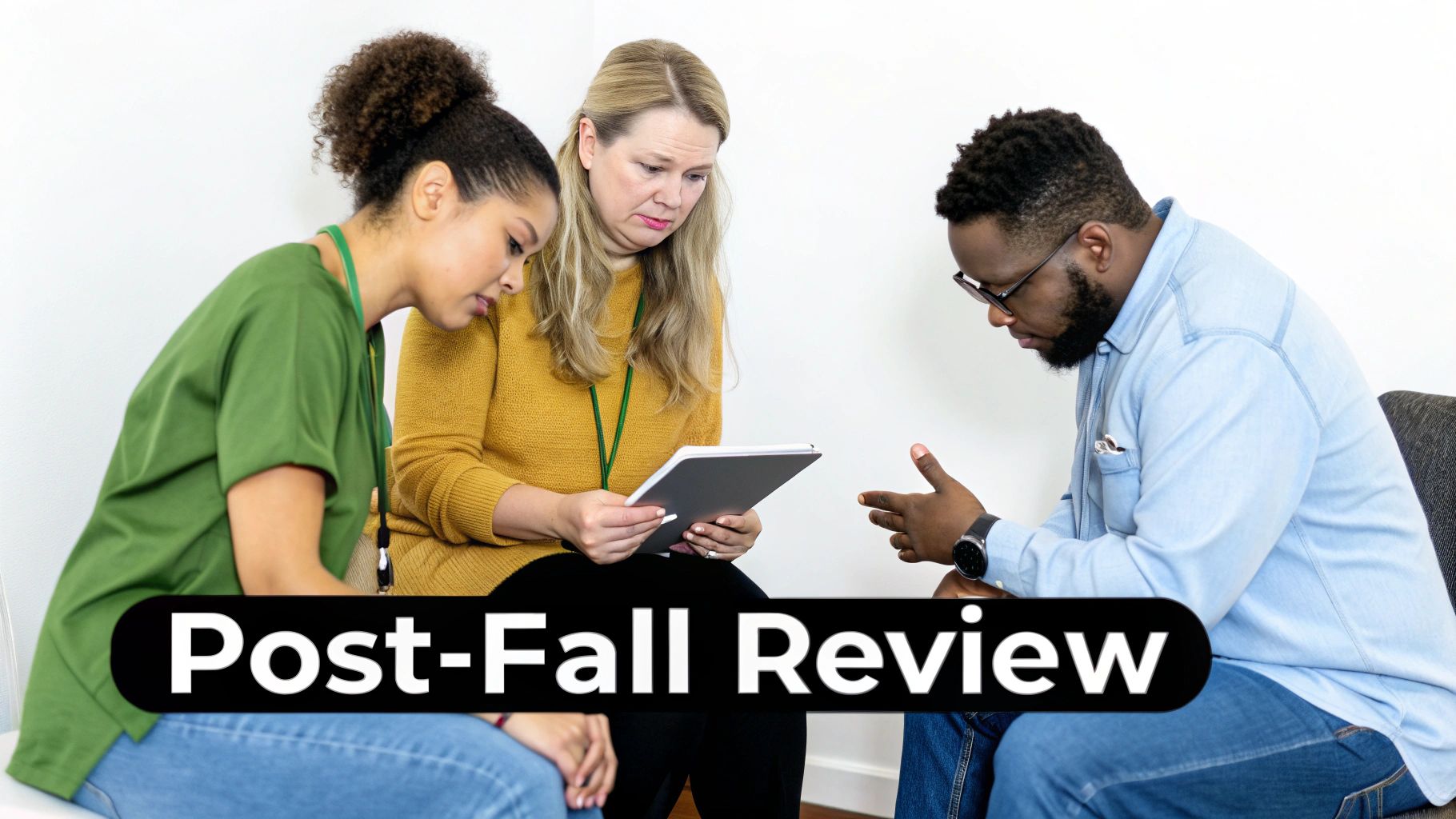
This initial response really sets the tone for everything that comes next. It’s all about making sure the resident feels supported and secure in a moment of vulnerability.
The Immediate Response Checklist
When a fall occurs, every team member should instinctively know what to do. Having a clear checklist eliminates guesswork in a high-stress situation and ensures both the resident and their family are kept in the loop.
A solid response protocol should always include these steps:
- Assess the Resident: First things first, check for consciousness, pain, and any obvious injuries like cuts, bruises, or signs of a fracture. If you suspect a serious injury, do not move the resident.
- Notify Medical Staff: Get the on-duty nurse or medical supervisor involved immediately for a thorough clinical assessment.
- Contact Family and Physician: As soon as the resident is stable, promptly call their emergency contact and primary doctor to inform them about what happened.
- Document Everything: Write it all down. The time, location, what was happening right before the fall, the resident’s condition, and every action you took. This detailed record is gold for the review process later.
The goal of the immediate response is twofold: provide excellent care to the resident while meticulously gathering the facts. This information becomes the raw material for understanding the root cause and preventing a recurrence.
The Power of the Post-Fall Huddle
After the immediate crisis is managed, the most important step is the post-fall huddle. This isn't about pointing fingers; it's a blame-free investigative meeting. Think of it like a detective's debrief, where caregivers, nurses, and anyone involved come together to analyze what happened.
During this huddle, the team needs to ask some probing questions:
- Was the resident recently put on a new medication?
- Could an environmental hazard, like a rug or poor lighting, have played a part?
- Has there been a recent change in their health or mobility?
- Did the fall happen during a particular activity or at a specific time of day?
By dissecting the incident, the team can usually pinpoint the root cause. This analysis leads directly to specific, targeted changes in the resident's care plan. Maybe a medication needs to be reviewed, or perhaps they need a walker instead of a cane. This process ensures that every fall, while unfortunate, serves as a crucial lesson that leads to real improvements, reinforcing the safety of the entire community.
Your Questions About Fall Prevention, Answered
When you're navigating the world of senior care, questions about safety come up all the time. Getting clear answers on preventing falls in assisted living facilities is one of the best ways for families, staff, and residents to create a safer environment together. Here’s a straightforward look at some of the things people ask most often.
How Big of a Role Does Exercise Play?
It plays a massive role. This isn't just about staying active; it's about targeted movements that build the exact physical skills needed to stay on your feet. Think of it as building a "stability savings account"—the more you put in through regular exercise, the more physical resources a resident has to draw from if they stumble.
It boils down to a few key areas:
- Strength Training: Building up the leg and core muscles gives someone the power to get out of a chair without a struggle or to catch themselves if they trip.
- Balance Exercises: Things like Tai Chi or even simple standing exercises are like practice runs for the body, training it to maintain its center of gravity.
- Flexibility Work: When ankles, hips, and the back are flexible, it gives a resident a much better range of motion to handle uneven ground or an unexpected step.
What Can Families Do to Help Prevent Falls?
Your involvement is a huge advantage. One of the most important things you can do is keep the lines of communication wide open with the care team about any changes you see in your loved one.
You’re often the first to notice the small shifts. Reporting things like new complaints of dizziness, a bit more forgetfulness, or a change in how steady they seem on their feet gives the care team vital, real-time information they can use right away.
Beyond that, simple things make a big difference. Make sure your loved one has proper, non-slip shoes. Help keep their personal space tidy and free of tripping hazards. Showing up for care plan meetings is also a fantastic way to stay in the loop and be a strong advocate for their safety.
Are Certain Medical Conditions a Higher Risk?
Yes, definitely. Certain health conditions can unfortunately stack the deck against a resident when it comes to fall risk. Things like Parkinson’s disease, the after-effects of a stroke, arthritis, and diabetes all impact strength and balance. Vision problems, like macular degeneration or cataracts, also make it harder to see obstacles.
This is exactly why a thorough health history and continuous monitoring are non-negotiable parts of a solid fall prevention plan.
At Forest Cottage Senior Care, we don't just talk about safety—we build our entire environment around it. If you have more questions or want to see firsthand how our team puts these strategies into action every day, we’d love to show you.
Visit us at http://44.202.110.106 to learn more and set up a tour. Let's start the conversation.