

Starting the conversation about downsizing is often the toughest hurdle. But when you frame it as a choice for a simpler, safer life, it can make all the difference. This isn't just about getting rid of stuff; it's about matching your living space to your current needs and future plans. Think of it as a proactive step toward more freedom and less maintenance.
Why Downsizing Is a Positive New Chapter
For most seniors, the decision to downsize goes way beyond simply reducing square footage. It’s a smart move toward a lifestyle that puts well-being, financial security, and personal connection first. Instead of seeing it as a massive, daunting chore, think of it as designing the next chapter of your life exactly the way you want it.
The reasons for a change are always deeply personal, but they often hit on similar themes. So many people are just plain tired of the endless upkeep that comes with a larger home—the yard work, the surprise repairs, and the constant cleaning that just gets heavier over time. Others want to unlock the equity in their home to beef up their retirement savings or finally fund those travel plans.
For a great all-in-one resource that offers both practical tips and emotional support for this journey, check out this compassionate guide to downsizing help for seniors.
Assessing Your Current Home and Future Dreams
Taking an honest look at your current living situation is the first real step. Are the stairs becoming more of a challenge? Is the yard work more than you want to deal with? Answering these kinds of questions helps you nail down the "why" behind a potential move.
From there, you can start dreaming about what an ideal future really looks like. This is the fun part where you explore different living arrangements and get a feel for your options. A great place to start is learning about the difference between independent living and assisted living to see what level of support feels right.
To help you and your family think through this decision, here’s a quick checklist of key areas to consider.
Downsizing Decision Checklist Key Considerations
| Consideration Area | Questions to Ask Yourself | Potential Benefits of Downsizing |
|---|---|---|
| Home Maintenance | Is the upkeep (yard, repairs, cleaning) becoming a physical or financial burden? | Reduced chores, lower maintenance costs, and more free time. |
| Physical Accessibility | Are stairs, narrow hallways, or other features becoming difficult or unsafe to navigate? | Single-level living, wider doorways, and built-in safety features. |
| Financial Goals | Could you benefit from the equity in your home for retirement, travel, or medical costs? | Increased financial flexibility and a more secure retirement fund. |
| Social Connection | Do you feel isolated or wish you had more opportunities for social engagement? | Built-in community, planned activities, and easier access to neighbors. |
| Future Health Needs | What level of support or care might you need in the next 5-10 years? | Access to on-site care, wellness programs, and peace of mind. |
Looking at these factors can make it much clearer whether downsizing aligns with your long-term goals for a comfortable and fulfilling life.
This shift isn't just a trend; it's a movement toward practical, community-focused living. The senior housing market reflects this, with occupancy rates rebounding to 88.1% in Q2 2025, matching pre-pandemic levels. This shows just how attractive the financial flexibility and built-in services of these communities are to today's retirees.
Ultimately, starting the conversation is about empowerment. It’s about taking control of your future to make sure it’s safe, comfortable, and full of joy, not chores.
Creating a Realistic Downsizing Plan
A great downsize doesn't happen overnight; it’s the result of thoughtful planning, not last-minute scrambling. When you approach this process with a flexible timeline, what feels like a monumental task becomes a series of small, manageable steps. The real secret is to start early and give everyone plenty of breathing room.
This roadmap breaks the journey into phases, so you can tackle one piece at a time without that constant feeling of being rushed. A generous timeline not only reduces stress but also leads to much better decisions, whether you're sorting through precious heirlooms or interviewing real estate agents.
To help you get started, here's a look at the crucial first steps of the downsizing process.
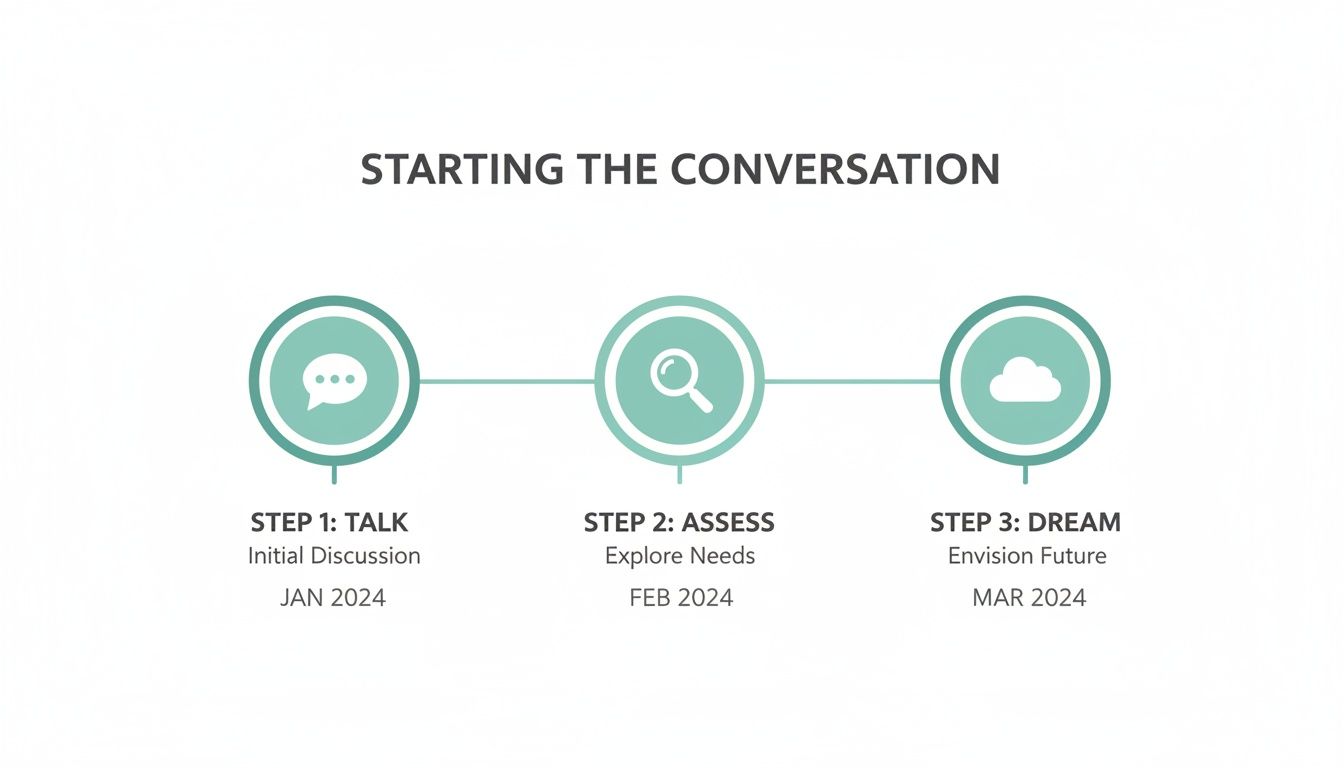
As you can see, the first few months are all about conversation and exploration, not just packing boxes. This lays the emotional groundwork for a much smoother transition down the road.
The Long-Term View: One Year Out
Ideally, the downsizing journey begins about a year before you plan to move. This is the perfect time for big-picture financial planning and some initial research without any immediate pressure.
- Financial Consultation: Sit down with a financial advisor. You'll want to understand the implications of selling the home, like capital gains tax, and how the proceeds will fit into the retirement income plan.
- Explore Living Options: Start researching senior living communities and maybe even schedule a few casual tours. This helps you get a real feel for different environments and what they offer.
- Initial Sorting: Pick one non-essential area to start with, like the attic, basement, or a spare closet. The goal isn't to purge everything at once but simply to begin flexing those decluttering muscles.
This early phase is all about gathering information and planting seeds for the changes ahead.
Gaining Momentum: Six Months Before Moving
With half a year to go, your plans will start to feel more concrete. This is when you shift from dreaming to doing, making key decisions and beginning the real physical work of sorting through the home. To keep everything organized, you might find an ultimate estate cleanout checklist helpful for tracking your progress.
Now's the time to get professional opinions on your home’s value and start interviewing real estate agents. It's also smart to begin the room-by-room sorting process in earnest. A simple system works best: create piles or use colored stickers for items you plan to keep, sell, donate, or gift to family.
The most common mistake we see is families waiting for a crisis to force a move. Starting early puts you in control of the process, ensuring your decisions are thoughtful and proactive rather than rushed and reactive.
The Final Stretch: Three Months to Moving Day
The last few months are all about logistics. You’ll be finalizing your new living arrangements and coordinating the professional help needed for a seamless move.
- Book Your Movers: Good moving companies, especially those specializing in senior moves, can get booked up months in advance. Get this on the calendar early.
- Notify Important Parties: Start the process of changing your address with the post office, banks, doctors, and any subscription services.
- Finalize Packing: Focus on packing non-essential items first. Be sure to clearly label each box by room—it makes unpacking in the new home so much easier.
Sometimes, a gap exists between the move-out and move-in dates. In these situations, exploring options for https://www.forestcottageseniorcare.com/temporary-senior-care/ can provide a safe, comfortable, and stress-free bridge during that in-between period.
How to Declutter a Lifetime of Memories
Sorting through a lifetime of belongings is probably the most emotionally charged part of downsizing. Every teacup, every photograph, every piece of furniture tells a story, making this process about so much more than just “stuff.” A compassionate, room-by-room strategy can turn this overwhelming task into a meaningful journey of reflection.

The secret is to start small and focus on one space at a time. Trying to tackle the entire house at once is a recipe for burnout. Instead, pick a single drawer, a small closet, or one bookshelf to begin. This approach helps build momentum and confidence as you go.
A Practical Sorting Method
As you get started, a simple sorting system is your best friend. Get four large bins or use colored labels to mark out clear categories for every single item you touch. This method takes the guesswork out of it and helps make those tough decisions a little more concrete.
- Keep: These are the non-negotiables that will make the move. This includes daily essentials, cherished furniture that you know will fit in the new space, and sentimental items you simply can't imagine living without.
- Donate: Items in good condition that you no longer need can find a new life with someone else. Local charities, shelters, and thrift stores are often grateful for these contributions.
- Sell: Valuable items like antiques, collectibles, or quality furniture could bring in some extra cash through consignment shops, estate sale services, or online marketplaces.
- Family Heirloom: Set aside items you'd like to pass on to children, grandchildren, or other relatives. This is a wonderful way to share your history and legacy with the people you love.
This sorting process isn't just logistical; it's a chance to share the stories behind your possessions. When family is involved, take the time to explain why an item is meaningful. This sharing can make letting go easier and really enriches the family members who are receiving the heirlooms.
"We encourage our clients to tell the stories behind the ‘stuff,’ and then let family members decide what they want… This sharing process can make it easier to let the ‘stuff’ go."
For those deeply sentimental items that just won't fit in your new space, think about creative solutions. You could create a digital photo album of beloved objects or assemble a small memory box with a few treasured trinkets. Sometimes, honoring the memory is more important than keeping the physical item.
Tackling High-Clutter Hotspots
Certain areas of the home—we all know them—like the attic, garage, and kitchen, tend to accumulate more clutter and memories, making them feel especially overwhelming. The key is to approach these spaces with a specific plan.
When you're decluttering the kitchen, for example, be realistic about your new needs. You likely won't require service for twelve or multiple sets of specialty bakeware. Keep your favorite daily-use items and maybe one set of dishes for special occasions.
The garage and attic often hold onto things "just in case." If you haven't used an item in over a year, it's a strong candidate for donation or sale.
Knowing When to Ask for Help
Providing downsizing help for seniors is a delicate task, and sometimes an objective third party can make all the difference. If you and your family find yourselves stuck or overwhelmed, hiring a professional senior move manager can be invaluable. These specialists are trained to navigate the emotional and practical challenges of this process with both compassion and efficiency.
The urgency to start this process is highlighted by what's happening in the senior housing market. The supply-demand imbalance has reached critical levels, with inventory growth in 2025 projected at just 1%—the lowest since 2006. With the 75+ population set to grow by over 4 million by 2030, acting sooner gives you better choices and pricing in a very competitive landscape. You can learn more about these senior living trends that will define 2025 and beyond.
Managing the Financial Side of Your Move
Downsizing is as much about your finances as it is about your physical space. To do it right, you need to handle your financial and legal paperwork with the same care you'd use to pack your treasured belongings. This is how you make sure the money from your home sale really works for you, whether that's to pad your retirement savings or cover future living expenses.
Let’s be honest: for many people, the equity in their home is their biggest financial asset. With the median retirement savings for Baby Boomers sitting at only $202,000—and a shocking number of people having no savings at all—downsizing becomes a powerful move for long-term financial security.
Handling Home Sale Proceeds and Taxes
Once your house sells, the big question is: what do you do with the profit? Before you make a single move, you have to understand the tax side of things. The good news is that many longtime homeowners can take advantage of the capital gains tax exclusion. This lets individuals exclude up to $250,000 of profit from their taxes, and that number jumps to $500,000 for married couples.
This is not a DIY situation. Sitting down with a financial advisor is a non-negotiable step. They can help you map out a clear plan to:
- Invest Strategically: Put the funds where they can generate income or grow for the future.
- Cover Future Care Costs: Earmark money specifically for assisted living or other health needs down the road.
- Manage Debt: Wipe out any lingering mortgages, credit card balances, or other loans.
Planning this out is more important than ever when you look at the rising costs. Senior housing entrance fees are projected to climb by 5% in 2026. That’s a real number you have to weigh against the ever-increasing expense of just maintaining a large home. You can discover more insights about these retirement financial trends on ainvest.com.
Updating Essential Legal Documents
A move is the perfect excuse to dust off your legal documents and get them up to date. Your life is changing, and your paperwork needs to reflect that. An old will or an outdated power of attorney can create a world of confusion and stress for your family when they’re already dealing with a difficult time.
An organized legal file is one of the greatest gifts you can give your loved ones. It removes guesswork during emotional times and ensures your wishes are clearly understood and followed.
Make it a priority to review and, if needed, update these key documents:
- Will or Living Trust: Does it still reflect how you want your assets handled?
- Power of Attorney (Financial and Healthcare): Are the people you designated years ago still the right ones for the job?
- Beneficiary Designations: Double-check your retirement accounts and insurance policies to make sure the right people are listed.
Special Considerations for Veterans
For veterans and their surviving spouses, there are benefits available that can make a huge difference in affording assisted living. The VA Aid and Attendance benefit, for instance, provides a monthly pension to help cover care for those who need a hand with daily activities.
At Forest Cottage Senior Care, we make it a point to honor our veterans. We cover the legal fees involved in applying for this support, making it simpler to access the benefits you’ve rightfully earned.
It's also crucial to understand how different payment options fit together. Getting a clear picture is vital, which is why it's so helpful to learn more about long-term care insurance coverage for assisted living and see how it slots into your overall financial plan.
Building Your Professional Support Team
Trying to tackle a downsize all by yourself is a recipe for burnout. The physical and emotional weight of this kind of move is huge, which is why putting together a trusted team of professionals is one of the smartest things you can do. When you have experts in your corner, you get essential downsizing help for seniors, freeing you up to focus on the personal side of things while they handle the heavy lifting.

Think of this team as your project manager. They take the stress out of the logistics so you can navigate the emotional parts of this journey with more energy and a clearer head.
Finding the Right Experts for Your Move
Your professional support team can include a few key players, each bringing something valuable to the table. You might not need every single one, but knowing who does what helps you figure out where you need the most support.
Here are the core pros to think about bringing on board:
- Senior Move Managers: These folks are your downsizing quarterbacks. They’ll help create a move plan, assist with sorting and packing, and coordinate all the other services. They’re an incredible resource.
- Real Estate Agents (SRES): Try to find an agent with a Seniors Real Estate Specialist (SRES) designation. They’ve gone through special training to understand the unique financial and emotional needs of seniors selling a family home they've lived in for decades.
- Estate Sale Services: If you have a lot of items you need to sell, an estate sale company can manage that whole process for you—from pricing and advertising to running the sale and clearing out whatever is left.
When you start talking to potential partners, always ask for their references and proof of insurance. Any reputable professional will have no problem providing them.
"Having a relocation service takes the stress and emotion out of the senior living transition process. It gives families peace of mind knowing there’s a plan and that they don’t have to do it alone."
Questions to Ask Potential Team Members
Before you hire anyone, it’s really important to ask the right questions to make sure they’re a good fit. This isn’t just about finding the lowest price; it's about finding people you genuinely trust during a vulnerable time.
For any professional you're considering, make sure to ask:
- Experience with Seniors: How long have you specialized in working with older adults and their families? Can you share a few references from recent clients?
- Scope of Services: What, exactly, is included in your standard fee? Are there any services that would be considered an add-on?
- Communication Plan: How will you keep me and my family in the loop? What’s the best way to get in touch with you?
These questions will give you a good feel for their experience, how transparent they are, and their communication style. You need a team that not only gets the job done but also makes you feel comfortable and respected through it all. As you look ahead, finding excellent elder care facilities near me is often a big part of the plan, and your professional team can be a huge help in coordinating that transition smoothly.
Common Questions About Downsizing for Seniors
Even with a great plan, the downsizing journey is full of questions and, let's be honest, a few worries. Having straightforward answers makes navigating these tricky spots so much easier. Here are some of the most common concerns we hear from seniors and their families.
One of the first hurdles is simply starting the conversation, especially with a parent who might be a little resistant. The key here is empathy, not pressure. Try framing the discussion around the benefits that matter most to them—like better safety, less home maintenance, and more freedom to actually enjoy their retirement. A series of small, gentle chats will almost always work better than one big, overwhelming discussion.
What Is the Biggest Mistake Families Make?
Without a doubt, the biggest misstep is waiting for a crisis to happen. A fall, a sudden illness, or another emergency forces the whole family into making rushed decisions under a ton of stress. When you're reacting to a crisis, your options become severely limited, and the transition is almost always harder for everyone.
Starting the conversation early, long before it’s an absolute necessity, is the best gift you can give your loved one and yourself. It creates the breathing room needed to thoughtfully explore different communities, make empowered choices, and find the right fit without a ticking clock in the background. It's also vital to acknowledge the emotional side of things; giving everyone the space to process feelings of grief or loss is a crucial part of a healthy adjustment.
A pitfall we see all the time is underestimating the emotional attachment people have to their "stuff." It's rarely about the armchair itself, but the memories made in it. Acknowledging this emotional weight is the first step toward moving forward with compassion.
How Much Does Professional Downsizing Help Cost?
The cost for professional downsizing help really depends on where you live and exactly what services you need. It's always a good idea to get detailed, written estimates from a few different providers before making a choice.
Here's a general breakdown of what you can expect:
- Senior Move Managers: These specialists are fantastic for managing the whole process. They often charge an hourly rate, anywhere from $50 to over $150. Some also offer flat-fee packages for the entire project.
- Estate Sale Companies: If selling belongings is part of the plan, these companies typically work on commission. They’ll take a percentage of the total sales, which is usually between 30% and 50%.
- Full-Service Moves: For a truly hands-off experience, a comprehensive service that includes packing, moving, and unpacking can range from $2,000 to more than $7,000, depending on the size of the home and the distance of the move.
What if My Loved One Can't Decide?
Decision fatigue is very real, and it’s incredibly common during a move this significant. When a loved one gets stuck, try changing the question. Instead of asking, "Do you want to keep this?" you could ask, "Where will this go in your new home?" This simple tweak reframes the choice around their future space, not just letting go of the past.
For those deeply sentimental items that just don't have a practical place, suggest creating a beautiful photo album or a small memory box. Sometimes, the best thing to do is bring in a neutral third party, like a professional organizer. They can help guide decisions without all the emotional baggage that family members carry.
These moments of indecision can also be a signal that more support is needed overall. If you're seeing this, it might be a good time to review our guide on how to know when your parents need assisted living.
Navigating the downsizing process is a journey, and you don't have to do it alone. The team at Forest Cottage Senior Care is here to help you and your family every step of the way, from initial tours to coordinating a smooth transition. Learn more about our supportive community at https://www.forestcottageseniorcare.com.