
When you start exploring senior care options, you'll hear the term "Activities of Daily Living," or ADLs, come up a lot. Simply put, these are the essential self-care tasks we all do to live independently—things like bathing, dressing, and eating.
Think of them as the fundamental building blocks of personal freedom. Understanding these activities is the first real step in recognizing when a loved one might need a little extra support to stay safe and healthy.
The Foundation of Independent Living
At their core, Activities of Daily Living are all about the skills needed to manage one's own basic physical needs. It's like building a house; before you can hang pictures or choose paint colors, you have to pour the foundation and put up the walls. ADLs are that foundation. They are the non-negotiable tasks that support a person's safety and well-being.
Without the ability to perform these tasks, a person's independence can become shaky. To get a clear picture of someone's abilities, healthcare professionals and senior care providers divide these skills into two distinct groups. This helps families and caregivers pinpoint exactly where help is needed.
This diagram breaks down the two main categories that cover the full scope of daily living activities.

As you can see, there's a clear separation between Basic ADLs, which are the most fundamental self-care tasks, and Instrumental ADLs (IADLs), which are more complex and involve interacting with the wider community.
Two Key Categories of ADLs
Knowing the difference between these two types of activities is critical. It clarifies the level and type of assistance a senior might need to live safely and comfortably.
Here’s a simple breakdown of the two main classifications:
- Basic Activities of Daily Living (ADLs): These are the most essential skills tied directly to personal care. They include tasks like bathing, dressing, eating, and being able to get out of bed and into a chair (also known as transferring).
- Instrumental Activities of Daily Living (IADLs): These activities require more complex thinking and organizational skills. They are the tasks needed to live independently within a community, such as managing finances, preparing meals, shopping, and arranging transportation.
An easy way to remember the difference is that Basic ADLs are about fundamental self-care (surviving), while IADLs are about maintaining a household and living independently in the community (thriving). Often, challenges with IADLs start to appear before difficulties with basic ADLs become obvious.
To make this even clearer, let's look at them side-by-side.
ADLs vs IADLs at a Glance
This table offers a quick summary, comparing the core self-care tasks (ADLs) with the more complex tasks required for living independently in the community (IADLs).
| Category | Activities of Daily Living (ADLs) | Instrumental Activities of Daily Living (IADLs) |
|---|---|---|
| Focus | Fundamental self-care and mobility. | Managing a household and living in a community. |
| Examples | Bathing, dressing, eating, toileting, transferring. | Cooking, cleaning, shopping, managing money, transportation. |
| Skill Level | Basic physical functions. | Complex cognitive and organizational skills. |
| Timing | Difficulties often appear in later stages of decline. | Difficulties often appear earlier on. |
| Mnemonic | Think "surviving." | Think "thriving." |
Understanding this distinction is the key to identifying the right level of care for yourself or a family member. It helps you ask the right questions and find a community that provides the specific support needed.
Breaking Down the Six Essential ADLs
The term "Activities of Daily Living" simply refers to the handful of essential tasks we all do to care for ourselves. These six core activities are the clearest measure of a person's ability to live independently and safely. Think of them as the fundamental building blocks of self-care—the difference between just getting by and truly living with dignity.
But let's go deeper than a simple definition. When a senior starts to struggle with one of these tasks, it tells a story. Each challenge offers a glimpse into their overall well-being and where they might need a little extra support.

Core Physical Functions
These first three ADLs are all about personal care and nourishment. They're things we often take for granted, but they require a surprising amount of strength, balance, and coordination.
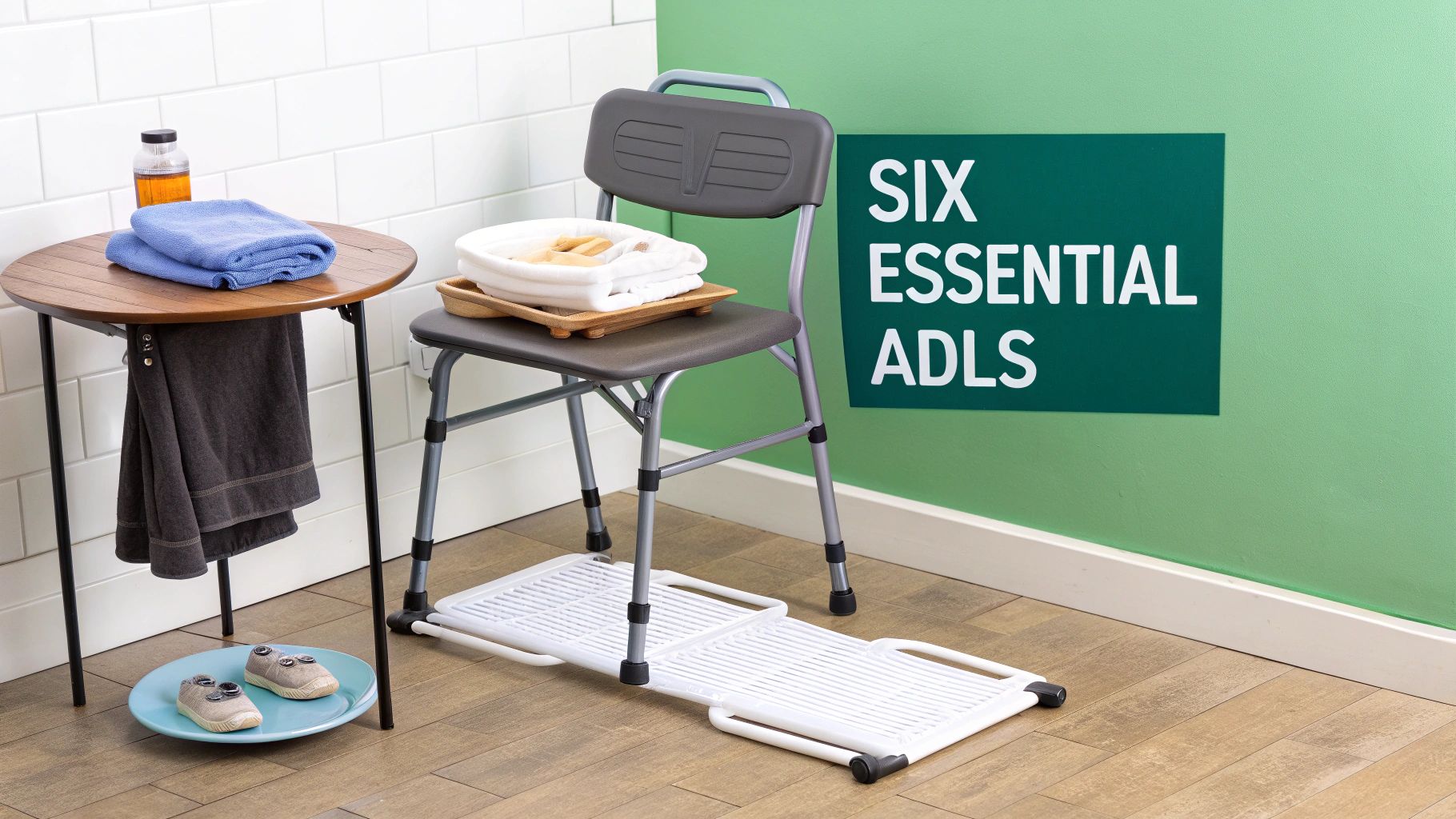
Bathing and Hygiene: This is so much more than staying clean—it’s a major safety issue. Imagine trying to keep your balance on a slippery, wet surface or stepping over a high tub wall when you're feeling unsteady. It's a recipe for disaster. A decline here often leads to a much higher risk of slips, falls, and even skin infections.
Dressing: Getting dressed involves both the body and the mind. You have to choose clothes that make sense for the weather, then manage tricky buttons, zippers, and shoelaces. It requires clear thinking and dexterity that can fade over time.
Eating: This ADL isn't about cooking a meal, but the physical act of getting food from the plate to your mouth. Can Mom or Dad still use a fork and knife properly? Are they able to chew and swallow without difficulty? Problems in this area can quickly spiral into poor nutrition, dehydration, and concerning weight loss.
These tasks are so foundational that even a small change can be a red flag. In fact, long-term studies show that bathing is often the very first ADL to become a problem for older adults. One fourteen-year study revealed that 11.1% of participants eventually needed help with bathing, followed by 6.8% with dressing. You can read the full research about these age-related changes to see how these patterns typically emerge.
Mobility and Continence
This next set of ADLs is all about moving safely and managing the body's most basic functions. They are absolutely critical for preventing accidents and helping a senior maintain their sense of control and self-respect.
Transferring: This sounds simple, but it's about having the core strength and balance to move from one position to another—like getting out of bed, standing up from a sofa, or using the toilet. When transferring becomes a struggle, it's a huge risk factor for falls, which can lead to devastating injuries.
Toileting: This refers to the whole process: getting to the bathroom, getting on and off the toilet, and cleaning oneself afterward. It’s an intensely private act, and needing help can feel like a profound loss of independence.
Continence: This is the ability to control one's bladder and bowels. Maintaining continence is absolutely essential for personal hygiene, comfort, and the confidence to be around other people.
When a loved one starts having trouble with one or more of these six activities, it’s not a sign of failure. It’s a sign that their current environment isn't meeting their needs anymore. And that’s precisely where dedicated support can change everything.
This is why thoughtful solutions—like walk-in showers, strategically placed grab bars, and the peace of mind of 24/7 staff—can transform a dangerous space into a safe, supportive one. This kind of help allows seniors to manage their what are activities of daily living with confidence, preserving both their safety and their dignity.
Understanding Instrumental ADLs for Independent Living
If the basic ADLs we just discussed are the foundation of self-care, think of Instrumental Activities of Daily Living (IADLs) as the next layer—the skills needed to live a full, independent life out in the community.
These are the more complex tasks that require a higher level of thinking, like planning and organizing. While not as immediately critical as eating or bathing, a person's ability to handle their IADLs is what truly lets them thrive on their own.
Often, struggles with IADLs are the very first, subtle signs that a loved one might need a bit more support. These small cracks can appear long before you notice any issues with their basic personal care. A growing pile of unopened mail, a fridge that's always a little too empty, or repeatedly missed doctor's appointments—these aren't just minor oversights. They can be red flags pointing to deeper difficulties.
Key Examples of Instrumental ADLs
Learning to spot these activities helps families figure out where a little extra help might make the biggest difference. The most common IADLs include:
- Meal Preparation: This is so much more than just eating. It means planning what to eat for the week, making a grocery list, navigating the store, and then safely using the stove and other appliances to cook healthy meals.
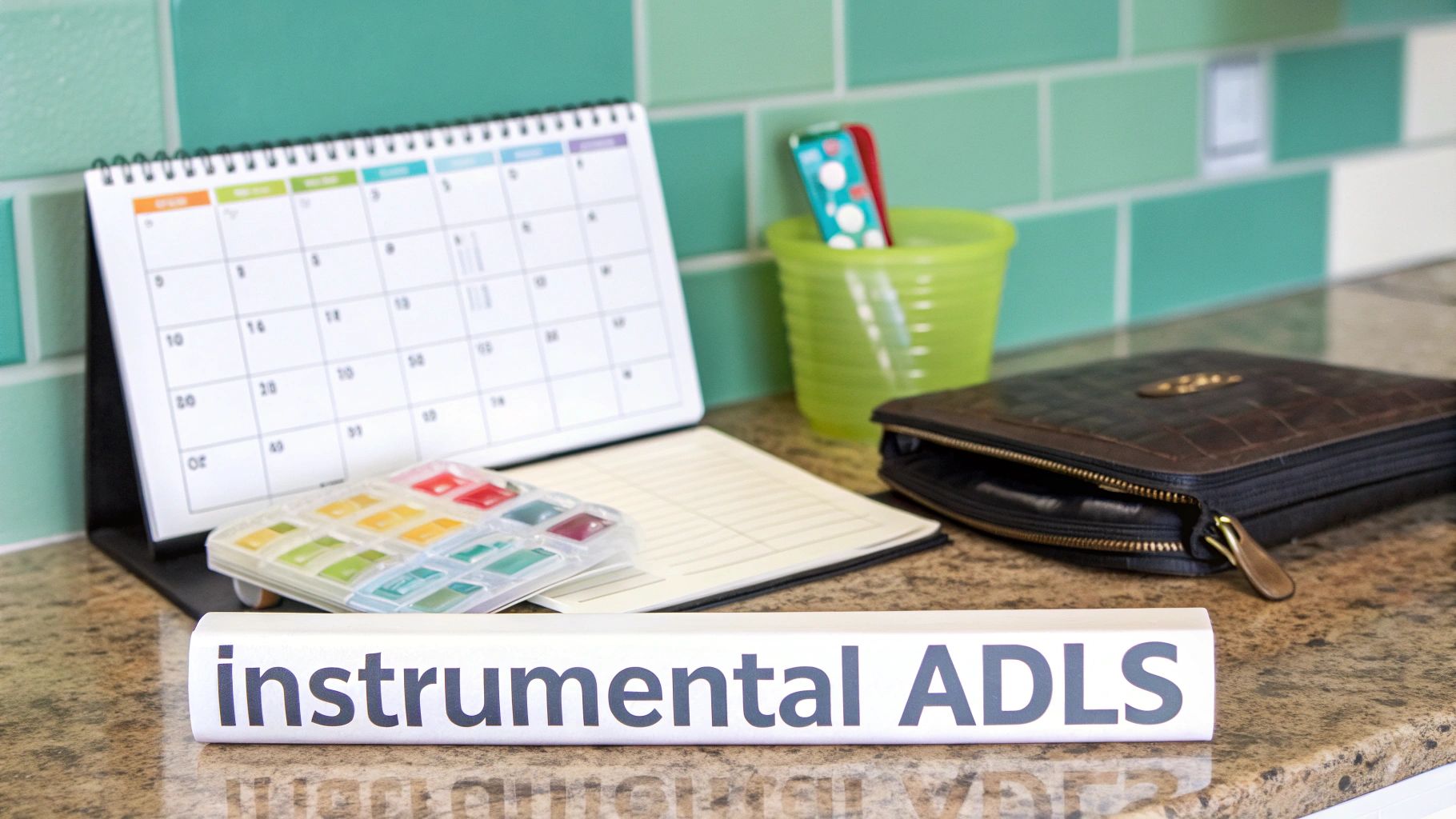
- Managing Medications: A huge one. This involves remembering to take the right pills at the right times, keeping track of when refills are needed, and understanding what each medication is for.
- Housekeeping and Home Maintenance: This is all about keeping a living space clean, safe, and comfortable. Think tasks like doing laundry, vacuuming, taking out the trash, and knowing who to call for minor home repairs.
- Managing Finances: Paying bills on time, balancing a checkbook, and spotting potential phone or mail scams all require sharp cognitive skills that can sometimes fade with age.
- Transportation: Whether it’s driving their own car or figuring out bus schedules, the ability to get to appointments, the grocery store, and social events is absolutely vital for staying connected to the world.
How Assisted Living Supports IADLs
When managing these IADLs becomes too much, it can quickly lead to stress, declining health, and even social isolation for a senior trying to handle it all alone. This is exactly where a community like Forest Cottage Senior Care steps in to provide a crucial safety net. We help bridge the gap by taking care of these complex tasks, freeing up residents to simply enjoy their days.
For many families, the constant, low-level worry over a parent's IADLs creates a huge emotional burden. Assisted living lifts that weight by providing reliable, built-in support for these daily necessities.
For example, our services are designed specifically to address common IADL challenges. We offer:
- Prepared Meals: Our chef-prepared, nutritious meals take the risk and hard work out of cooking and grocery shopping.
- Housekeeping and Laundry: We handle these chores to ensure every resident has a clean, comfortable, and hygienic home.
- Medication Management: With nursing staff available 24/7, we make sure all medications are taken correctly and right on schedule, providing immense peace of mind.
- Arranged Transportation: We provide rides to local appointments, making it easy for residents to stay on top of their health and connected to the wider community.
Ultimately, understanding both ADLs and IADLs is all about finding the right level of support for your loved one. For some, learning how personalised home care supports independent living might be the perfect first step. For others who would benefit from more daily social connection and consistent support, a service like our Willis, TX adult day care can offer a wonderful blend of professional care and vibrant community life.
How Senior Care Assessments Create a Personalized Plan
When you start looking into assisted living, it's natural to worry about a "one-size-fits-all" approach. But the journey to finding the right support always begins with a thoughtful, collaborative conversation called a senior care assessment. This isn’t some test with a pass or fail grade; it's a careful evaluation used to build a perfectly suited care plan.
Think of it like having a custom suit made. A good tailor takes precise measurements to ensure a perfect fit. In the same way, a senior care advisor assesses an individual's specific needs with their Activities of Daily Living. This process makes sure a resident only pays for the support they truly need, while also guaranteeing their safety and well-being.
A Deeper Look into the Assessment Process
The assessment is a comprehensive review, usually led by a trained professional like a nurse or care manager. They'll sit down with the potential resident and their family to discuss each ADL and IADL, asking gentle questions to understand their daily routine, what they do well, and where they face challenges.
The goal is to paint a complete picture of what that person is capable of. It often involves observing their mobility, talking about personal care habits, and getting a handle on any difficulties with tasks like managing medications or preparing meals. This first step is absolutely crucial for building a plan that supports independence while providing a reliable safety net. For a closer look at the signs that might lead to an assessment, check out our guide on how to know when your parents need assisted living.
The Critical Role of Assessments in Memory Care
This personalized approach becomes even more vital for individuals living with memory conditions. Dementia can profoundly disrupt a person's ability to perform ADLs, turning routine tasks like eating and dressing into major hurdles as cognitive abilities decline.
The number of Americans aged 65 and older with Alzheimer's is projected to jump from 7.2 million today to nearly 13.8 million by 2060. This sharp increase highlights the urgent need for specialized care that can adapt to a person's changing needs.
A thorough assessment for someone with memory loss is much more than a simple checklist. It helps identify triggers for confusion or agitation and finds ways to structure the day that promote calm, dignity, and a sense of accomplishment, even as their needs evolve.
By starting with a detailed and compassionate evaluation, communities like Forest Cottage Senior Care build a foundation of trust. This initial conversation ensures the care plan isn't just a list of services but a dynamic roadmap designed to honor each resident's unique journey, giving peace of mind to both the senior and their family.
Matching Senior Care Services to ADL Needs
Once you have a clear picture of a loved one’s struggles with Activities of Daily Living, the next step is finding a place that can meet them where they are. This is where an assisted living community’s services become a bridge to a safer, more fulfilling life. The goal isn't to take over, but to offer a steady hand right where it's needed most.
This support can be scaled perfectly. For a senior who is mostly independent but finding Instrumental ADLs draining, the solution can start with simple, practical help.
- Nutritious Meal Preparation: Takes the physical strain and risk out of cooking and grocery shopping.
- Regular Housekeeping and Laundry: Guarantees a clean, safe living space without the tough physical work.
- Scheduled Transportation: Offers reliable rides to appointments and errands, making it easy to stay connected.
As needs change and more help with basic ADLs is required, the level of care can grow right along with them. This is when personalized, hands-on assistance becomes absolutely vital for maintaining both dignity and safety.
Creating a Secure and Supportive Environment
When someone needs more direct help with personal care, the physical design of the community and the round-the-clock presence of staff are non-negotiable. It’s all about creating a space where a person feels confident and secure, even when they’re feeling their most vulnerable.
For instance, communities like Forest Cottage Senior Care are built from the ground up with safety and accessibility in mind. Think about features like safety-equipped bathrooms with grab bars and walk-in showers, which dramatically lower the risk of falls during bathing—one of the most common spots for accidents. With staff available 24/7, help is never more than a few moments away, whether it's for getting dressed in the morning or needing assistance in the middle of the night. The peace of mind this brings is truly priceless. Our full range of assisted living services is designed to provide this very combination of a safe environment and personal support.
Fostering Dignity Beyond Physical Care
But true well-being is about more than just physical help. A person’s emotional and social health has a huge impact on their willingness and ability to engage in their own daily care. When someone feels isolated or sits all day, it can kickstart a downward spiral, weakening both their body and their motivation.
Physical inactivity is a major threat to performing Activities of Daily Living, as everything from mobility to self-care relies on regular movement. A recent analysis revealed that a shocking 31% of adults worldwide—nearly 1.8 billion people—failed to meet recommended activity levels in 2022. You can learn more about these global physical activity findings, but the bottom line is that this trend raises the risk for conditions that chip away at a person’s ability to manage their ADLs.
By actively promoting engagement and movement, a senior living community can directly combat this decline. Wellness programs and social activities aren't just amenities; they are essential tools for preserving independence.
This is why a vibrant community life is so critical. Structured activities, from gentle exercise classes to social events, lift spirits and restore a sense of purpose. When residents feel connected and have something to look forward to, they are often more motivated to participate in their own care, helping them maintain their strength and feel a profound sense of dignity and accomplishment.
Taking the Next Steps in Your Senior Care Journey
Realizing a loved one is struggling with their daily activities is the first step. But figuring out what to do next? That can feel like a mountain to climb. The goal isn't to take away their independence, but to add a layer of safety and support so they can live with more confidence and dignity.
Starting the conversation is often the hardest part. It’s best to approach it with love and genuine concern, focusing on their well-being, not their limitations. A gentle opener like, "I've noticed you seem tired lately, and I want to make sure you have all the support you need," can make all the difference.
Observing with Compassion
As you think about what’s next, try to look for consistent patterns, not just one-off incidents. Anyone can forget to pay a bill. A growing pile of unopened mail, however, tells a different story.
Here are a few signs that might point to a growing need for help:
- Changes in Appearance: Are they losing weight? Wearing clothes that aren't clean? Is personal grooming being neglected?
- A Declining Home Environment: Is a once-tidy home now cluttered or messy? Is the refrigerator often empty? Are there scorched pans on the stove?
- Shifts in Social Behavior: Have they withdrawn from hobbies they once loved? Are they missing appointments or avoiding friends and family?
Planning this journey can be easier with the right information. Resources like a comprehensive guide to caring for elderly at home can offer valuable perspectives as you weigh your options.
When you're ready to explore local solutions, our team at Forest Cottage Senior Care is here for families in Willis, TX. We invite you to schedule a tour to see our community firsthand and talk through our different senior living options. A friendly, no-obligation assessment with our care advisors can give you a clear, professional perspective, helping you build a plan that truly supports your loved one’s long-term safety and happiness.
Frequently Asked Questions About ADLs and Senior Care
It’s completely normal to have questions when you start digging into the world of senior care and Activities of Daily Living. Let's clear up a few of the most common things families ask.
How Can I Tell if My Parent Needs Help With Their ADLs?
Often, the signs are small at first. You have to look for subtle but consistent changes in their daily life and even their home environment.
Are they wearing the same outfit for days in a row (dressing)? Have you noticed some unexplained weight loss (eating/meal prep)? Do they struggle to get up from their favorite armchair (transferring)? These are big clues. You might also notice a decline in personal hygiene (bathing) or see that their once-tidy home has become cluttered and messy. These aren't just quirks; they can be early warnings that basic daily tasks are becoming a real struggle.
What Is the Difference Between Assisted Living and a Nursing Home?
The biggest difference comes down to the level of medical care. Think of assisted living as the right choice for seniors who need a hand with some ADLs or IADLs but don't need a nurse looking over their shoulder 24/7. It’s all about supporting independence in a warm, residential setting that feels like home.
A nursing home, on the other hand, is a clinical environment. It provides a much higher level of medical care for people with complex, chronic health issues that demand constant monitoring by licensed medical staff.
Can My Parent’s ADL Needs Change Over Time?
Yes, absolutely. A person's ability to perform what are activities of daily living isn't set in stone. Needs can change gradually with aging, or sometimes very suddenly after an illness or injury. That’s exactly why it’s so important to find a community with flexible care plans that can adapt right along with them.
The best senior living communities don't use a "set it and forget it" approach. They regularly reassess each resident's needs to make sure the care plan is always a perfect fit, ensuring they get the right support without paying for services they no longer need.
For even more answers, feel free to check out our complete senior care frequently asked questions page.
At Forest Cottage Senior Care, we don't believe in one-size-fits-all. We build personalized care plans that grow and change with each resident. Schedule a tour today and see for yourself how we support a life of dignity and well-being.