
Before you can manage caregiver stress, you have to do one simple, powerful thing: admit that it’s real. This isn't just about feeling tired after a long day; it's about recognizing the subtle shifts in your mood, health, and general outlook as legitimate signals that you need support. Learning to spot these signs is your first line of defense against burnout.
Recognizing The Hidden Signs Of Caregiver Stress
Being a caregiver is an act of love, but it carries a silent, heavy weight. Beyond the obvious exhaustion, stress often creeps in in ways that are all too easy to dismiss as just a "bad day." But these patterns are your body and mind telling you that your tank is running on empty.
Did you snap at your spouse over something tiny, like a spilled glass of water? Have you started turning down invitations from friends, not because you don't want to go, but because getting ready and making conversation just feels like too much effort? Those flashes of irritability and the slow withdrawal from your social life are classic, yet often overlooked, symptoms of stress piling up.
Beyond Just Being Tired
It's so important to look past the general feeling of being "tired" and start identifying specific changes in your day-to-day life. The constant pressure of managing someone else's well-being can take a direct toll on your own physical and emotional health.
Ask yourself if any of these scenarios sound familiar:
- Your Sleep Is a Mess: Are you struggling to fall asleep, waking up constantly through the night, or sleeping way more than usual but never feeling rested?
- Your Appetite Has Changed: Have you noticed a big swing in your weight, up or down? Stress can either send you running to the fridge for comfort or kill your appetite completely.
- Your Own Health Is on the Back Burner: When was your last check-up? A huge red flag for caregiver stress is when you keep pushing off your own appointments because you’re completely wrapped up in your loved one's needs.
- You've Lost Your Spark: Hobbies and activities that used to bring you joy now feel like a chore. That's not laziness—it's a sign of emotional depletion.
Spotting these signs isn't about failure. It's the natural result of being in such a demanding role. Acknowledging them is the first, most crucial step toward getting a handle on the stress and getting your own well-being back on track. This is about self-awareness, not self-criticism.
Early Warning Signs Of Caregiver Stress
To make it easier to spot the signs, think of them in three buckets: emotional, physical, and behavioral. Here’s a quick-reference table to help you identify what to watch for.
| Emotional Signs | Physical Signs | Behavioral Signs |
|---|---|---|
| Feeling overwhelmed or constantly worried | Headaches or body aches that won't go away | Withdrawing from friends and family |
| Irritability, mood swings, or impatience | Frequent exhaustion, even after sleeping | Losing interest in hobbies you once enjoyed |
| Feelings of sadness, hopelessness, or anxiety | Changes in appetite or weight | Changes in sleep patterns (too much or too little) |
| Difficulty concentrating or feeling "foggy" | Getting sick more often than usual | Increased use of alcohol or sleep medications |
| Feeling resentful toward your caregiving role | Worsening of chronic health problems (like high blood pressure) | Neglecting your own needs (diet, exercise, appointments) |
Seeing yourself in this table is completely normal. The key is to notice these patterns early so you can take action before they become overwhelming.
The Staggering Reality of Caregiver Strain
If you're feeling overwhelmed, you are far from alone. This is a widespread reality for caregivers. The data shows that caregiver stress is the norm, not the exception.
Here in the United States, the CDC reports that a staggering 14.5% of caregivers had 14 or more mentally unhealthy days in the last month. A 2023 study found that only 23% of caregivers would describe their mental health as "good," while 40% said their duties directly make their stress levels worse. This chronic strain isn't just mental; over 53.4% of caregivers over age 65 are managing two or more chronic diseases themselves.
The infographic below really puts the impact of these responsibilities into perspective.
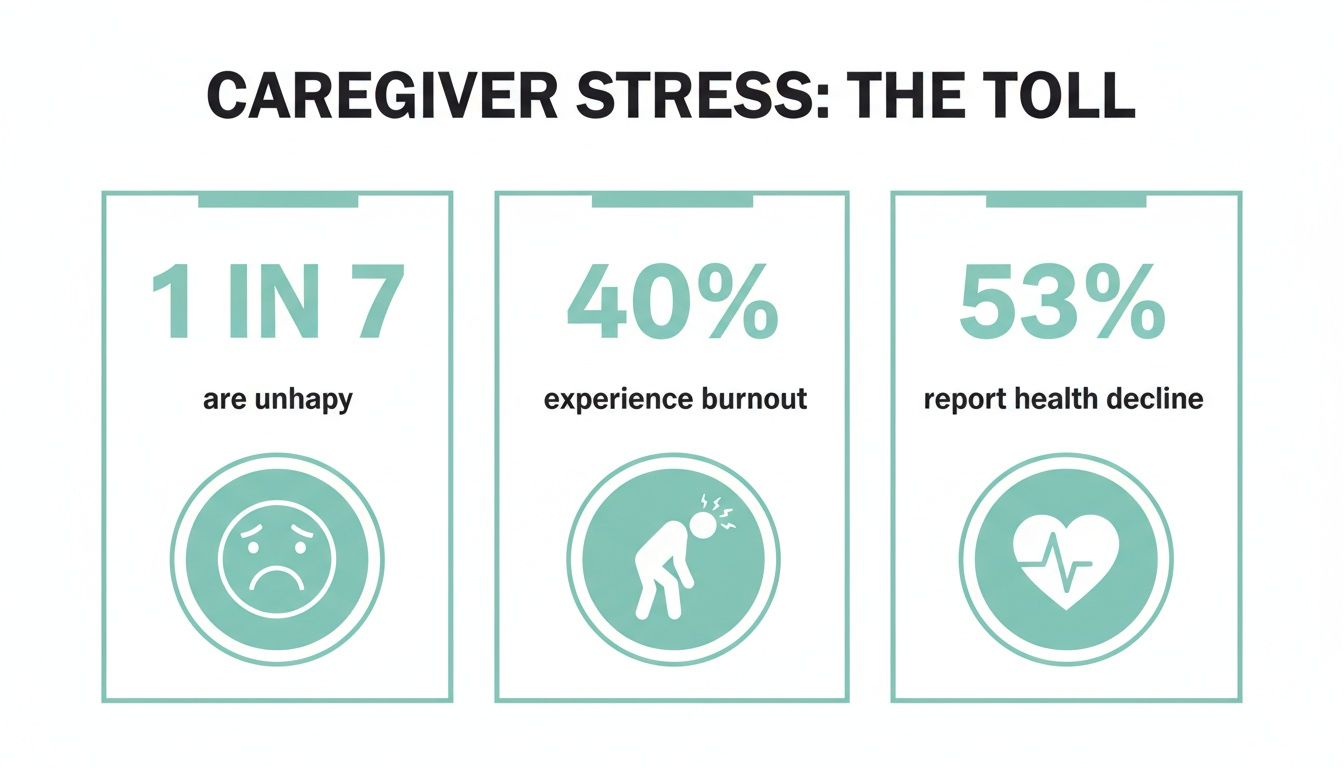
These numbers aren't meant to scare you. They're here to validate what you're feeling. Seeing your health decline under this pressure is a shared struggle, not a personal failing.
The symptoms of caregiver strain often look a lot like what people experience in other high-stress roles. For a deeper dive into the warning signs, it can be helpful to read about recognizing job burnout, as the same principles of emotional exhaustion and feeling detached definitely apply. This is especially true when you're helping a loved one with complex needs; understanding https://www.forestcottageseniorcare.com/what-are-activities-of-daily-living/ can help you grasp the full scope of what your role entails.
Building Your Practical Self-Care Toolkit
When you're deep in the trenches of caregiving, the whole idea of "self-care" can feel like a cruel joke. Who has time for a spa day or a weekend getaway? The real key to managing caregiver stress isn't about finding huge blocks of time you don't have. It's about strategically weaving small, restorative moments into the fabric of your day.
Think of it as building a toolkit of practical, "micro-care" techniques. These are small, repeatable habits that don't feel like another chore but genuinely replenish your energy and build your resilience over time.

Find Your Five-Minute Sanctuaries
Your first goal is to hunt down those little pockets of time you can claim for yourself, even if they only last a few minutes. These tiny breaks are powerful—they disrupt the cycle of stress and give your nervous system a much-needed chance to reset.
Think about the small gaps in your routine. Is it the five minutes while the coffee is brewing? The ten minutes you spend in the car after a grocery run before going back inside? These moments are golden opportunities.
Here are a few simple ways to use them:
- Mindful Breathing: Instead of scrolling on your phone, just close your eyes and take five slow, deep breaths. Focus only on the air moving in and out. This simple act can lower your heart rate and quiet your racing mind.
- A Quick Stretch: Stand up and reach for the ceiling, then bend over and touch your toes. Roll your neck and shoulders. Releasing physical tension has a surprisingly powerful impact on your mental state.
- Sensory Grounding: Pull yourself into the present moment by focusing on your senses. Name five things you can see, four things you can feel, three things you can hear, two things you can smell, and one thing you can taste. It’s a fantastic way to derail anxious thoughts.
Fuel Your Body to Fight Fatigue
When you're exhausted, it's so tempting to reach for sugary snacks or another cup of coffee. But what your body truly needs is consistent, quality fuel to sustain your energy. Neglecting your own nutrition is a fast track to burnout.
Making healthy eating feel manageable is crucial. You don't need to become a gourmet chef overnight. Focus on small, sustainable changes that make a big difference in how you feel.
Self-care isn’t selfish; it’s essential maintenance for the most important tool you have in your caregiving journey—yourself. Neglecting your own health while focusing on a loved one's needs is an unsustainable equation that eventually leads to burnout for everyone involved.
For instance, a little meal prep can save you from making poor food choices when you're tired. Cook a big batch of brown rice or quinoa, roast a tray of vegetables, and grill some chicken breasts on a Sunday. This gives you easy mix-and-match components for quick, healthy meals all week. And please, keep a large water bottle with you at all times. Dehydration is a major—and often overlooked—cause of fatigue and brain fog.
Technology That Helps, Not Hinders
While technology can certainly add to our stress, it can also be a powerful ally. There are countless apps designed to support mental well-being in just a few minutes a day. A guided meditation app can talk you through a calming exercise, or a simple journaling app can be a great place to offload worries before bed so they aren't swirling in your head all night.
Sometimes, peace of mind also comes from knowing your loved one is safe. Exploring options like senior monitoring systems can alleviate a huge source of background anxiety, allowing you to relax more fully during your breaks.
It's vital for caregivers to remember that they need to prioritize their well-being, too. As many resources point out, this journey takes a significant toll, underscoring the importance of self-care for cancer caregivers and others in similar roles. Building this toolkit isn't a luxury; it's a profound act of self-preservation that enables you to continue providing loving, effective care for the long haul.
Mastering Time and Setting Healthy Boundaries
One of the quickest ways to burn out as a caregiver is feeling like you’re constantly on-call. When you're trying to manage the immense stress of this role, getting a handle on your own schedule isn't just a nice idea—it's a critical survival skill. It's about moving from a reactive mode, where you're always putting out fires, to a proactive one that carves out space for your own well-being.
Let's be honest, the logistics alone can feel like a full-time job stacked on top of your other responsibilities. Juggling doctor visits, medication schedules, and daily needs doesn't leave much room for anything else, which is why smart, practical time-management strategies are so essential.

Taking Back Your Calendar
Instead of letting the day's demands pull you in a million directions, it's time to implement a system. A really effective method I've seen work wonders is task batching. Rather than running to the pharmacy on Monday, the grocery store on Tuesday, and the bank on Wednesday, try grouping all your errands into one specific block of time. You’d be surprised how much mental and physical energy this simple shift can save.
Another game-changer is a shared digital calendar. Using something like Google Calendar allows other family members to see what’s coming up at a glance. It turns a vague, often ignored plea for "help" into a clear, visible schedule where others can see exactly where and when they can step in. No more excuses.
The Art of Setting Kind Boundaries
Of course, managing your time is only half the battle. The other, and often much harder, piece is setting and holding firm to healthy boundaries. This isn't about pushing people away. It’s about protecting your own energy so you can continue to show up as the compassionate caregiver you want to be.
It really comes down to learning the power of a kind but firm "no." This is a skill so many caregivers grapple with, usually because of overwhelming guilt. But protecting your personal time is absolutely crucial if you're going to make this journey sustainable for the long haul.
Setting a boundary is not a sign of weakness or a lack of love. It is an act of self-respect and a strategic decision to prevent burnout, ensuring you can provide better, more patient care in the long run.
Think about what you truly need to recharge. Is it one evening a week all to yourself? A quiet hour in the morning to read a book? Whatever it is, schedule it. Put it on that calendar and guard it just as fiercely as you would a doctor's appointment for your loved one.
Practical Scripts for Saying No
Communicating your limits can feel really awkward at first, especially if you're not used to it. Having a few phrases ready to go can make all the difference.
Here are a few examples you can adapt:
- When a relative asks for more than you can give: "I appreciate you thinking of me, but my plate is completely full right now. I just can't take on anything else at the moment."
- When your loved one makes an unreasonable request: "I understand you'd like me to do that, but I'm not able to right now. Let's figure out another solution together."
- When protecting your personal time: "Thanks so much for the invitation! Tuesdays are my night to recharge, so I won't be able to make it."
Notice how these statements are simple and direct. They don't require long-winded apologies or justifications. You are stating your limit, not asking for permission.
For those times when you need a more structured, reliable break, exploring professional options can be a lifeline. Learning more about the benefits of an adult day care program can show you how these services offer a safe, engaging environment for your loved one while giving you that essential, predictable time to yourself. This isn't about giving up; it's about strategically building a support system that benefits everyone involved.
Learning To Delegate And Accept Help
As a caregiver, the instinct to do everything yourself is powerful. It usually comes from a good place—love, a sense of duty, or maybe the feeling that you're the only one who can do things "the right way." I've seen it time and time again.
But that mindset, as noble as it is, is the fastest way I know to burn out. The truth is, managing caregiver stress isn't just about bubble baths and meditation. It’s about building a real, sustainable support system around you.
The very first step is challenging that impulse to handle every single task alone. You have to reframe your thinking. Delegation isn't a sign of failure; it's a strategic necessity. Think of yourself as the manager of your loved one's care team. A good manager knows how to build that team and give everyone a role. Accepting help is a sign of strength.
You don't have to start by handing over major medical decisions. Just start small. Get out a piece of paper and make a list of everything you do in a typical week, from the big stuff down to the smallest errands.
Identifying What You Can Delegate
Once you see it all written down, it becomes much easier to spot the specific, manageable tasks that other people can realistically take on. This makes asking for help feel less like a huge, vague burden and more like a concrete request. People often want to help but have no idea how. Give them a clear task, and you make it easy for them to say yes.
Think about breaking things down into categories:
- Errands: Picking up prescriptions, grabbing a few things from the grocery store, or returning library books. These are perfect for a friend or neighbor who is already going to be out and about.
- Household Chores: Could a sibling take over mowing the lawn? Maybe a niece or nephew could come by once a week to help with laundry or prep a few meals.
- Companionship: This is a big one. Ask a trusted friend to just sit with your loved one for an hour so you can take a walk or run an errand without feeling rushed. Their job isn't to provide medical care, just to be present.
- Administrative Tasks: Is there a tech-savvy family member who could take over scheduling appointments or researching insurance questions online?
The goal here is to offload the tasks that eat up your time and mental energy but don't absolutely require your specific skills. Every small task you delegate buys you a little more breathing room.
How to Ask for Help Effectively
Let's be honest—overcoming the emotional hurdles of asking for help is often the hardest part. The guilt, the feeling of being a burden… it's real. The key is to be specific, direct, and appreciative. A vague cry for help like "I'm so overwhelmed" is easy for people to shy away from. A specific request is actionable.
Try framing it like this: "Would you be able to pick up Mom's prescription from the pharmacy on your way home from work tomorrow? It would be a huge help." It’s clear, has a defined timeframe, and shows the person exactly how they can make a difference.
Accepting help isn't admitting defeat; it's recruiting a team. The most resilient caregivers are those who recognize that sharing the load makes everyone stronger, including the person receiving care.
For many, the pressure is even greater because they're juggling a job. An estimated 61% of the 48 million family caregivers in the U.S. are also employed. One major report found that a staggering 67% of these working caregivers struggle to balance their job and their caregiving duties.
It gets so intense that about 27% have had to cut their work hours, and 16% have even turned down a promotion. When you see numbers like that, you realize asking for help isn't just reasonable—it’s essential for survival.
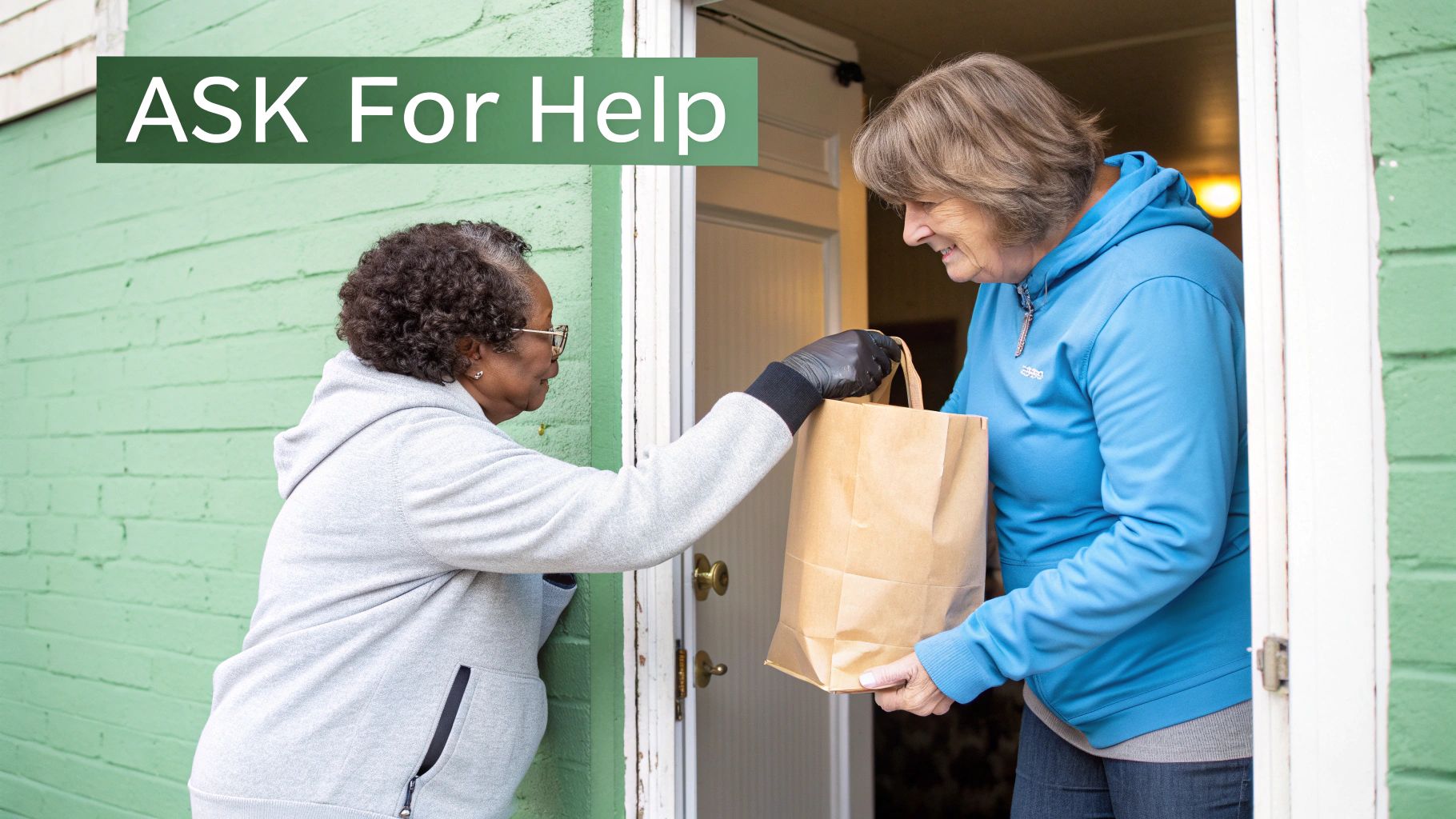
Building a "care team" of family, friends, and even professional services can completely change your experience. Sometimes, the most valuable help is giving yourself a structured, guilt-free break. This is where options like professional respite care for family caregivers can be an absolute lifeline, offering you a chance to rest and recharge knowing your loved one is in expert hands. By strategically delegating and accepting support, you're not just managing stress; you're creating a sustainable, loving environment for everyone involved.
Finding Professional Support And Respite Care
You can build a fantastic toolkit of personal strategies for managing caregiver stress, master your schedule, and even learn to delegate—but sometimes, that still isn't enough.
Acknowledging this isn't a sign of failure; it’s a sign of profound awareness and love. Recognizing when the demands have surpassed what you can safely or sustainably manage on your own is a responsible, courageous step.
This moment often arrives not with a sudden crisis but as a slow, creeping realization. The physical and emotional weight simply becomes too much to carry alone. At that point, the well-being of both you and your loved one depends on bringing in professional support.
When To Seriously Consider More Help
Knowing when to make the call can be the hardest part. It’s so easy to tell yourself, "I can handle one more thing," until you suddenly can't. Certain signs, however, are clear indicators that care needs have evolved beyond what one person can manage at home without significant support.
Consider if you are facing any of these scenarios:
- Increasing Safety Concerns: Are there more frequent falls or close calls? Is your loved one wandering or leaving appliances on? When you constantly worry about their safety the moment you're out of the room, it's a signal that round-the-clock awareness may be necessary.
- Complex Medical Needs: Managing multiple medications, wound care, or specialized equipment can be incredibly stressful. If the medical tasks become too complex or frequent, professional oversight is crucial to prevent dangerous errors.
- Declining Personal Health: Look at your own warning signs. Are you experiencing chronic exhaustion, getting sick constantly, or feeling symptoms of severe depression and anxiety? Your health is a critical part of the caregiving equation.
- Advanced Mobility Issues: If lifting or transferring your loved one has become physically difficult for you, it poses a risk of injury to both of you. This is a major sign that assistance from trained professionals is needed.
- Severe Memory Loss Challenges: When dementia progresses, it can bring behavioral changes like aggression, paranoia, or sundowning that are incredibly difficult to handle without specialized training and a secure environment.
If these situations sound familiar, it’s time to explore your options. This isn’t about giving up; it’s about upgrading the level of care to match your loved one’s evolving needs.
Demystifying Your Support Options
Exploring professional care can feel overwhelming, but understanding the primary types of support makes the path forward much clearer. These services are designed not to replace you, but to support you and provide a higher level of safety and engagement for your loved one.
Seeking professional help is a loving, responsible decision. It ensures your loved one receives the expert care they need while allowing you to preserve your own health and transition back to being a spouse, son, or daughter first, and a caregiver second.
Let’s break down the most common solutions.
- Respite Care: Think of this as a short-term solution designed to give you a break. It can be for a few hours, a full day, or even a few weeks. A professional caregiver comes to your home, or your loved one has a short stay at a facility like Forest Cottage Senior Care. This is the perfect way to recharge, take a vacation, or simply catch up on your own life without worry.
- Senior Day Programs: These programs offer a safe, structured, and social environment for your loved one during the day. This provides them with valuable engagement and gives you a predictable block of time to work, run errands, or rest. It’s a wonderful intermediate step.
- Assisted Living: This is a long-term residential option for those who need help with daily activities but don't require intensive, 24/7 medical care like in a nursing home. It provides a supportive community, professional staff, meals, and social activities, offering peace of mind for everyone. Our guide on how to choose assisted living can help you navigate this important decision: https://www.forestcottageseniorcare.com/how-to-choose-assisted-living/
The stress of caregiving isn't just about the physical tasks. In fact, a staggering 70% of dementia caregivers report that just coordinating care is stressful, and 66% struggle to find resources. Communities with dedicated staff effectively absorb these logistical burdens. Choosing one of these options is an act of love—for your family member and for yourself.
Got Questions About Caregiver Stress? You're Not Alone.
Even with the best plan in the world, caregiving brings up tough questions. These are the worries that creep in during the quiet moments, the ones you might hesitate to say out loud. Let's tackle them head-on with some straight talk and practical advice.
"How Do I Stop Feeling So Guilty When I Take Time for Myself?"
This is the big one. Guilt is practically a shadow for most caregivers, whispering that any time you spend on yourself is time you’re stealing from your loved one. The key is to completely flip that script.
Self-care isn’t selfish—it's a non-negotiable part of being a good caregiver. You can't pour from an empty cup. When you're running on fumes, stressed out, and irritable, the quality of care you provide takes a nosedive. Burnout doesn’t help anyone. Taking a break isn't just for you; it's what allows you to keep being the patient, loving person your family member needs.
If it feels impossible, start small.
- Put a 15-minute break on your calendar every single day.
- Treat it like a doctor's appointment you absolutely cannot miss.
- Use that time for something that has nothing to do with caregiving.
Once you start feeling the difference in your own energy and patience, the guilt will slowly start to fade. You aren't shirking your duty; you're sharpening your ability to handle it.
"What Are Some Affordable Respite Options Around Willis, TX?"
Cost is a huge hurdle for so many families, but you might have more options than you realize. Finding budget-friendly help means looking for smart, local solutions right here in our community.
For regular, daytime relief, Senior Day Programs are a fantastic option. A place like Forest Cottage Senior Care offers a safe, social environment for your loved one that costs far less than full-time residential care. It can be a perfect fit if you work or just need a guaranteed block of time to run errands and recharge.
Need a longer break? Look into these:
- Short-Term Respite Stays: Many assisted living communities let residents stay for just a few days or a week. It's a lifesaver if you need to travel or, heaven forbid, get sick yourself.
- Area Agency on Aging: Get in touch with the agency that serves Montgomery County. They are a goldmine of information on grants or subsidized programs that can help with care costs.
- Veterans' Benefits: If your loved one served in the military, don't overlook VA benefits. They often have programs specifically designed to cover respite care and support for caregivers.
The goal isn't just to find the cheapest option. It's about finding the right solution that delivers the best value for your loved one's well-being and your own sanity.
"My Family Doesn't Help. How Can I Get Them on Board?"
This one is incredibly frustrating and, sadly, all too common. Here's the hard truth: vague cries for help like, "I just need more support!" are easy for people to ignore. To get results, you have to switch from making emotional pleas to presenting a clear, business-like plan.
Call a family meeting—in person or over Zoom—and come prepared. I mean really prepared. Make a detailed list of every single thing you do in a week. Don't leave anything out, from managing medications and cooking meals to doing laundry and scheduling appointments.
Seeing the sheer volume of tasks laid out in black and white is often a huge wake-up call. Then, you can shift to delegating specific, concrete, and manageable tasks. Try asking like this:
- "Can you be in charge of all the pharmacy pickups each month?"
- "Could you take over paying the bills online? You can do it from your own home."
- "Would you be able to sit with Mom every Saturday from 10 a.m. to 1 p.m. so I have a guaranteed break?"
People are much more likely to say yes to a specific job with a clear time commitment. By breaking down the overwhelming concept of "caregiving" into bite-sized pieces, you make it so much easier for others to finally step up.
At Forest Cottage Senior Care, we know that managing caregiver stress is a journey, not a destination, and you shouldn't have to walk it alone. From our supportive Senior Day Program to flexible respite stays, we are here as a resource for families in and around Willis, TX. If you’re feeling overwhelmed, let’s talk. We can help find a solution that provides compassionate care for your loved one and restorative peace for you. Find out more about our services at https://www.forestcottageseniorcare.com and schedule a visit today.