One of the greatest concerns for families and caregivers of older adults is the risk of falls. A fall can lead to serious injury, a loss of confidence, and a significant decline in independence. While this risk is a serious consideration, the encouraging truth is that most falls are preventable. By taking a proactive, multi-faceted approach, we can create safer environments and empower seniors to live with greater security and peace of mind.
This guide provides a detailed roundup of the 10 most effective, evidence-based fall prevention strategies for elderly individuals. We move beyond generic advice to offer actionable insights, practical examples, and specific steps you can implement immediately. From simple yet crucial home modifications and targeted strength exercises to comprehensive health assessments and medication management, these strategies form a robust safety net.
Each point in this list is designed to be a practical tool for seniors, families, and caregivers. Whether you are adapting a home environment or seeking comprehensive support, these strategies are foundational to ensuring safety. In dedicated communities like Forest Cottage Senior Care in Willis, TX, these principles are integrated into the fabric of daily life, demonstrating a deep commitment to compassionate, person-first safety. This article will equip you with the knowledge needed to reduce fall risks and protect the well-being of your loved ones.
1. Home Environmental Modifications and Hazard Removal
One of the most effective and immediate fall prevention strategies for elderly individuals involves a systematic assessment and modification of their living environment. This foundational approach focuses on identifying and eliminating physical hazards that can lead to trips, slips, and falls. By proactively altering the home, you create a safer, more navigable space that significantly reduces risk.
The process begins with a thorough walkthrough of all living areas, from bedrooms and bathrooms to kitchens and hallways. The goal is to spot potential dangers that may have been overlooked during daily routines. This isn't just about cleaning up; it's about re-engineering the space for safety.
Why This Strategy is Critical
A familiar environment can breed complacency, making it easy to ignore growing risks like a loose rug or a poorly lit staircase. Environmental modifications are crucial because they address the direct, physical causes of many falls. At communities like Forest Cottage, spaces are designed from the ground up with safety in mind, featuring non-slip flooring, optimal lighting, and grab bars in key areas. These built-in features remove the burden of modification from residents and their families.
Actionable Tips for Hazard Removal
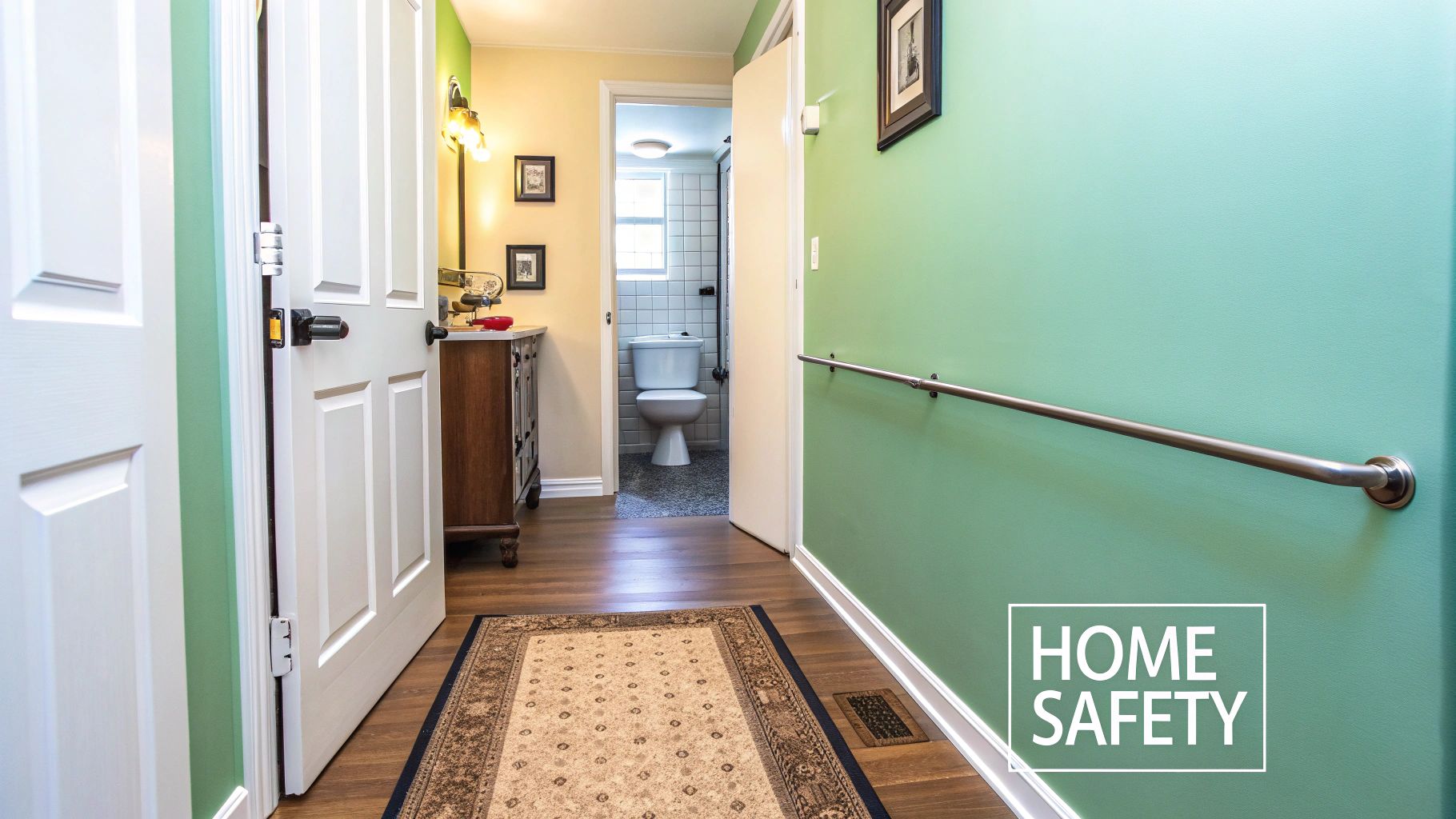
- Clear the Pathways: Remove clutter, electrical cords, and small pieces of furniture from all walkways. Ensure there is a clear, wide path from the bed to the bathroom.
- Secure Rugs and Runners: Remove throw rugs entirely or secure them firmly to the floor with double-sided tape or non-slip backing.
- Improve Lighting: Replace dim bulbs with brighter, higher-wattage ones. Add nightlights in hallways, bedrooms, and bathrooms for safe navigation after dark.
- Install Safety Equipment: Add grab bars in bathrooms, both inside and outside the shower and next to the toilet. Install sturdy handrails on both sides of all stairways. For a detailed guide on bathroom safety, explore these insights on bathroom remodeling for older adults on forestcottageseniorcare.com.
- Check Furniture Stability: Ensure all furniture, especially items used for support when standing up, is stable and will not tip over.
2. Balance and Strength Training Programs
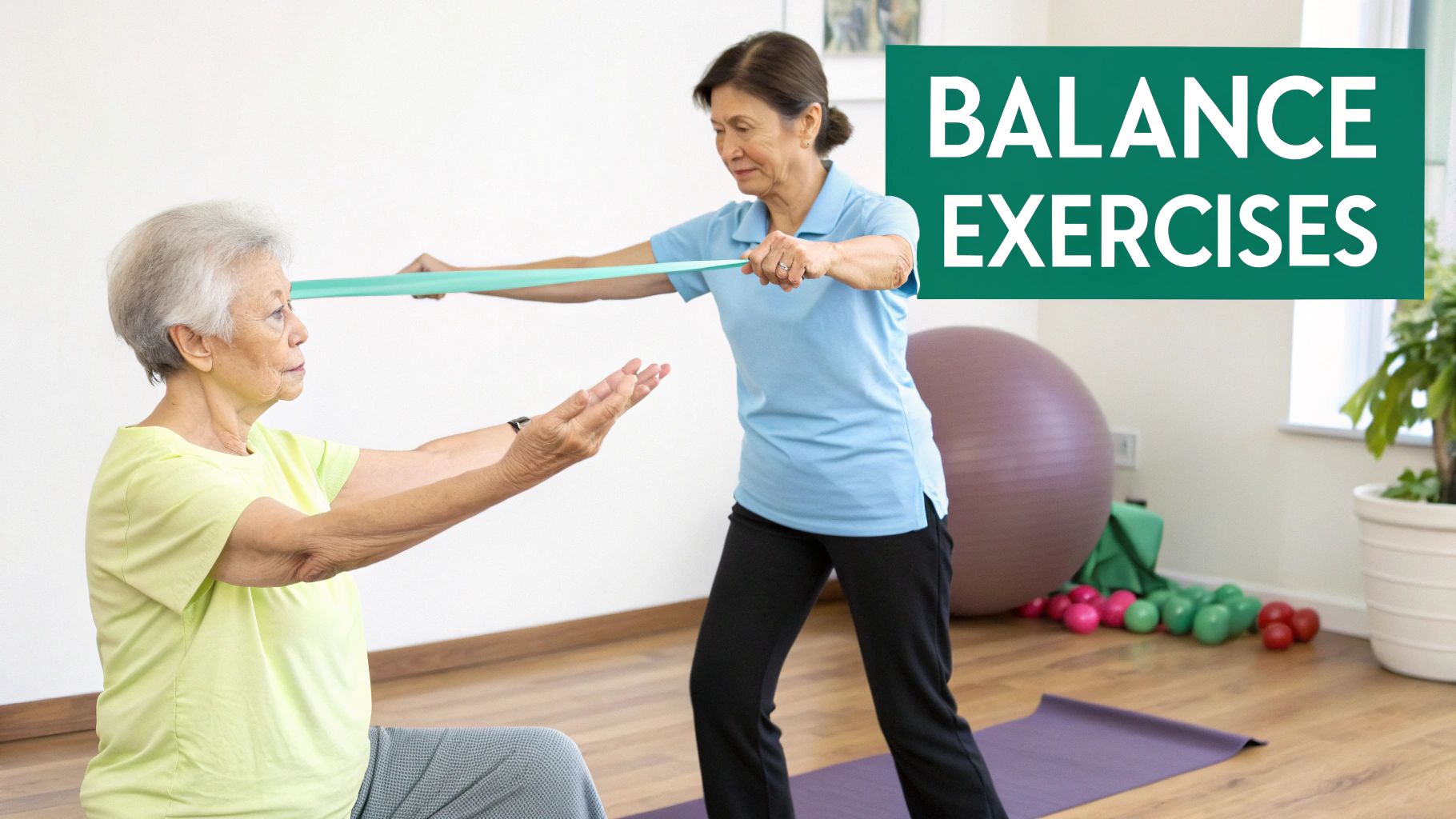
Beyond modifying the environment, another cornerstone of fall prevention strategies for elderly adults involves strengthening the body itself. Structured exercise programs focused on improving balance, flexibility, and muscular strength are essential for enhancing stability and reducing the risk of falls. These programs directly address the physical declines that can make falls more likely, such as weakened leg muscles, poor core strength, and diminished proprioception, which is the body's awareness of its position in space.
Regular participation in these targeted activities helps seniors maintain functional independence, allowing them to perform daily tasks with greater confidence and safety. The goal is not just to build muscle but to improve the body's ability to react to sudden shifts in balance, correct its posture, and move with stability.
Why This Strategy is Critical
Physical frailty and muscle loss are significant contributors to fall risk. Balance and strength training directly counteracts these issues by improving the body’s neuromuscular coordination and strengthening the key muscle groups needed for walking, standing, and getting up from a chair. At Forest Cottage, we integrate engaging physical activities into our daily routines, understanding that consistent, guided exercise is fundamental to resident well-being and safety.
Actionable Tips for Balance and Strength Training
- Start Slowly and Progress Gradually: Begin with simple exercises and increase the duration and intensity over time to prevent injury. A physical therapist can help create a safe starting point.
- Focus on Functional Movements: Incorporate exercises that mimic daily activities, such as chair stands (practicing getting up from a seated position) and heel-to-toe walking.
- Incorporate Proven Programs: Consider evidence-based programs like Tai Chi, which has been shown to reduce falls by up to 45%. Water aerobics is another excellent option as it builds strength with minimal stress on joints. For older adults seeking to enhance their mobility and independence, consider exploring the benefits of Pilates for Seniors specifically designed for their needs.
- Stay Consistent: Aim for balance and strength exercises at least three to four times per week for optimal results. Consistency is more important than intensity, especially when starting out.
- Join a Group Class: Exercising with others provides social engagement and motivation. Learn more about the engaging assisted living activities for seniors available in a supportive community setting.
3. Medication Review and Management
Another essential component of comprehensive fall prevention strategies for elderly individuals is the regular and thorough review of all medications. What is intended to help can sometimes inadvertently increase risk, as many common prescriptions and over-the-counter drugs have side effects like dizziness, drowsiness, or orthostatic hypotension (a sudden drop in blood pressure upon standing).
This strategy involves a proactive partnership between the older adult, their family, and their healthcare providers. The goal is to systematically evaluate all medications, including supplements and vitamins, to identify and manage those that could impair balance or cognitive function. This process, often called medication reconciliation or deprescribing, aims to optimize the regimen for maximum benefit and minimum risk.
Why This Strategy is Critical
As people age, their bodies metabolize drugs differently, and they often accumulate multiple prescriptions from various specialists. This polypharmacy can lead to dangerous drug interactions and compounded side effects that directly contribute to falls. A scheduled medication review is critical because it provides a dedicated opportunity to assess the ongoing need, dosage, and side effects of each drug in the context of the individual’s overall health and fall risk.
Actionable Tips for Medication Management
- Maintain a Master List: Keep an up-to-date, comprehensive list of all medications, including prescription drugs, over-the-counter products, and herbal supplements. Note the dosage, frequency, and reason for taking each one.
- Schedule Regular Reviews: Ask a primary care physician or pharmacist to conduct a full medication review at least once a year, or any time a new medication is added or a fall occurs.
- Monitor for Side Effects: After starting a new medication, carefully watch for any new symptoms like dizziness, confusion, or unsteadiness. Report these to the prescribing doctor immediately.
- Coordinate All Prescribers: Ensure that every doctor involved in care is aware of all medications being taken to prevent harmful interactions.
- Understand Medication Timing: Ask how medications should be taken in relation to meals and daily activities to minimize side effects. For instance, a drug that causes drowsiness should not be taken before a planned walk.
At Forest Cottage, medication management is a core service. Our team coordinates with residents' physicians to ensure regimens are optimized for safety and efficacy. To understand how this is integrated into daily care, you can explore the comprehensive services included in assisted living on forestcottageseniorcare.com.
4. Vision and Hearing Assessment and Correction
Another cornerstone of effective fall prevention strategies for elderly individuals is the regular assessment and correction of sensory impairments. Our senses of sight and hearing are fundamental to maintaining balance, navigating environments, and being aware of potential hazards. When these senses decline, the risk of a fall increases dramatically.
Proactively managing vision and hearing health involves more than just noticing a problem; it requires scheduled, professional evaluations to detect and correct issues early. Impaired vision can obscure trip hazards like cords or steps, while hearing loss can affect spatial awareness and the ability to hear important auditory cues, such as someone approaching from behind.
Why This Strategy is Critical
Sensory decline is often gradual, making it difficult for an older adult to recognize the extent of their impairment. Addressing these issues is critical because it directly restores an individual's ability to perceive their environment accurately. At Forest Cottage, we coordinate with trusted local healthcare providers to facilitate routine vision and hearing screenings for our residents, ensuring that correctable issues like outdated prescriptions or impacted earwax are managed promptly to maintain safety and independence.
Actionable Tips for Sensory Health
- Schedule Annual Exams: Book yearly appointments with an ophthalmologist and an audiologist. Fundamental to effective fall prevention is proactive vision care, and a comprehensive guide to annual eye exams for vision health highlights their importance for detecting and correcting issues early.
- Ensure Proper Use of Devices: Encourage consistent use of prescribed eyeglasses and hearing aids. Check that devices are clean, in good repair, and have fresh batteries.
- Address Correctable Conditions: Follow through with treatments for conditions like cataracts. Cataract surgery is a common procedure that can significantly improve vision and subsequently reduce fall risk.
- Optimize Home Lighting: Ensure all rooms are well-lit to complement visual aids, eliminating shadows and dark corners where hazards can hide.
- Educate and Support: Gently address any resistance to using glasses or hearing aids by explaining how they are vital tools for staying safe and independent.
5. Assistive Devices and Mobility Aids
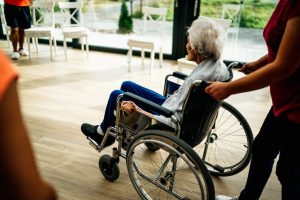
Utilizing the correct assistive device is another powerful component of comprehensive fall prevention strategies for elderly adults. Mobility aids like canes, walkers, and wheelchairs are not signs of weakness; they are tools that empower individuals to maintain their independence and navigate their surroundings with greater confidence and stability. Selecting and using the right device can dramatically improve balance and reduce the energy needed to walk, directly lowering fall risk.
The key is individualization. A device that is perfect for one person may be unsuitable or even dangerous for another. The selection process must consider an individual’s specific strength, balance limitations, cognitive function, and daily mobility requirements. It’s about matching the tool to the user's unique needs to provide optimal support.
Why This Strategy is Critical
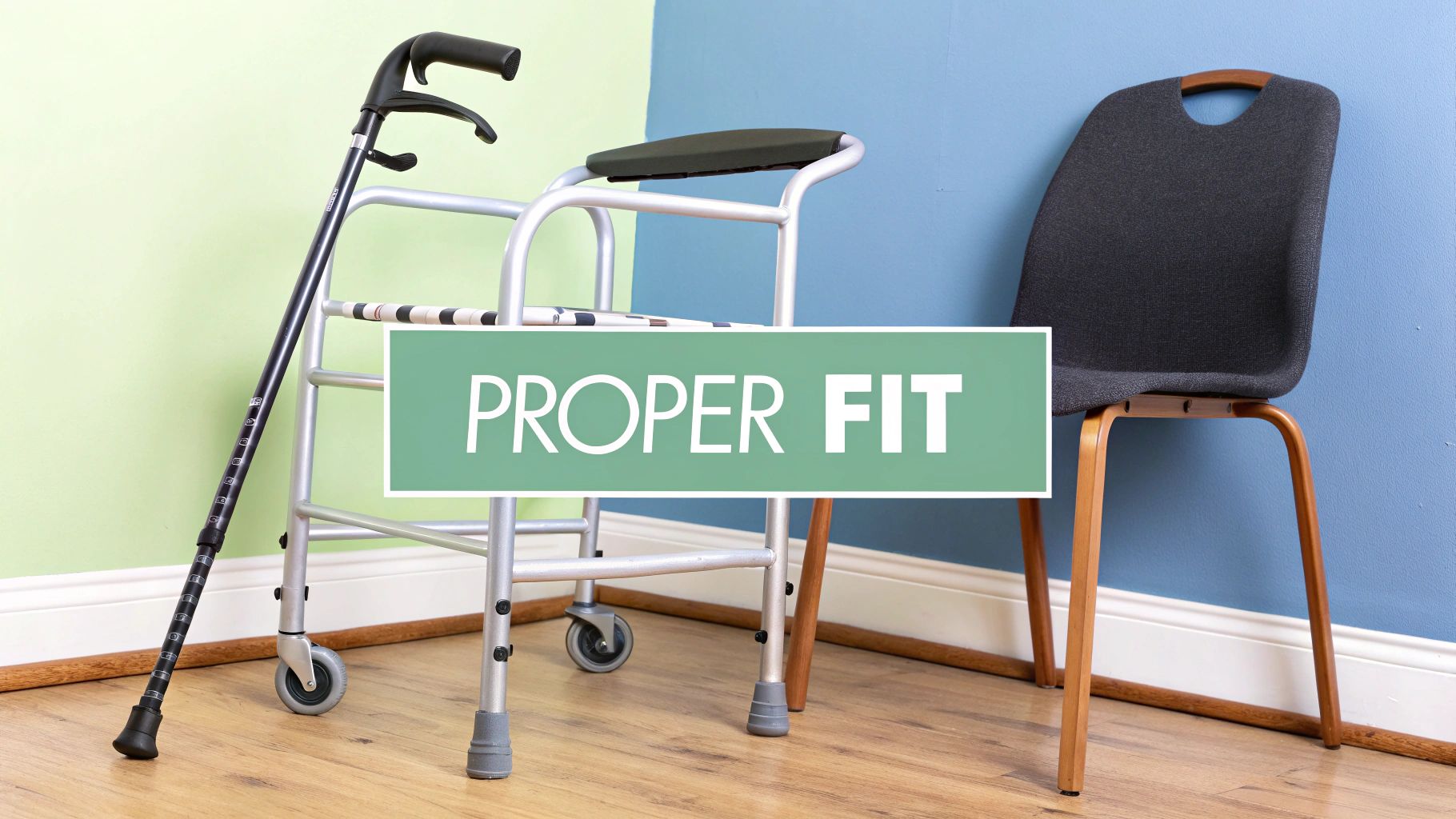
An improperly fitted or incorrectly used mobility aid can create a false sense of security and may even increase the risk of a fall. A cane that is too tall can strain the shoulder, while a walker that is too short can cause poor posture and instability. This strategy is critical because it emphasizes professional guidance and proper technique, ensuring the device serves its intended purpose. At Forest Cottage, our team works closely with residents and their physical therapists to ensure any assistive device is perfectly suited and used correctly, promoting safe movement throughout our community.
Actionable Tips for Using Mobility Aids
- Seek Professional Fitting: Always have a physical or occupational therapist recommend and fit the device. They will ensure it is the correct height, with the handgrip level with the wrist crease when the arm is hanging naturally.
- Receive Proper Training: Before independent use, learn the correct way to walk with the device, navigate turns, and manage different surfaces like ramps or doorways.
- Ensure Consistent Use: Use the aid for all walking, even for short trips to the bathroom or kitchen. Inconsistency is a major contributor to falls.
- Inspect Equipment Regularly: Check rubber tips, wheels, and grips for wear and tear. Replace worn parts immediately to maintain stability and function.
- Choose the Right Type: A quad cane offers more stability than a single-point cane. A rolling walker with a seat provides a place to rest, which is ideal for individuals with lower endurance.
6. Footwear and Foot Care Management
An often-overlooked yet vital component of fall prevention strategies for elderly adults is the combination of proper footwear and diligent foot care. The foundation of our stability starts at our feet, and issues like ill-fitting shoes, worn-out soles, or painful foot conditions can directly impair balance, alter gait, and significantly increase fall risk. This strategy focuses on selecting supportive footwear and maintaining foot health to ensure a stable base.
Choosing the right shoe goes beyond comfort; it's a critical safety decision. Similarly, addressing foot problems like bunions, corns, or nerve pain prevents compensatory movements that can lead to unsteadiness. This two-pronged approach ensures the body's primary point of contact with the ground is as secure and healthy as possible.
Why This Strategy is Critical
Foot pain is not a normal part of aging, and inappropriate footwear is a modifiable risk factor that is easy to address. Shoes that are loose, backless, or have slippery soles can cause an older adult to shuffle or lose their footing. At Forest Cottage, we understand this connection and encourage residents to wear appropriate, non-slip footwear. Our team also assists in coordinating with podiatrists to ensure residents receive regular foot health assessments and care.
Actionable Tips for Footwear and Foot Care
- Choose the Right Shoes: Opt for footwear with firm, non-slip soles, a low heel, and good ankle support. Ensure shoes fit well and are not too tight or too loose. Avoid walking in socks, loose slippers, or backless shoes.
- Regularly Inspect Footwear: Check shoes for wear and tear, especially on the soles. Replace them when they no longer provide adequate support or grip.
- Prioritize Daily Foot Checks: Inspect feet daily for any blisters, sores, swelling, or redness, especially for those with diabetes. Addressing minor issues early can prevent major mobility problems.
- Maintain Foot Hygiene: Keep feet clean and dry, and ensure toenails are trimmed straight across to prevent ingrown nails. A podiatrist can assist if self-care is difficult.
- Seek Professional Podiatric Care: Schedule regular checkups with a podiatrist. They can treat conditions like bunions, corns, and hammertoes, and can assess gait and recommend specialized footwear or orthotics if needed.
7. Cognitive Assessment and Dementia Care Planning
Addressing cognitive health is a sophisticated yet essential component of modern fall prevention strategies for elderly individuals. Cognitive decline, whether from dementia, delirium, or other impairments, significantly elevates fall risk. This is because it can affect judgment, environmental awareness, memory, and the ability to process and follow safety instructions. A comprehensive cognitive assessment and a specialized care plan are vital for mitigating these specific risks.
The process involves more than just a memory test; it's a deep dive into an individual's cognitive functioning to understand their unique challenges. Based on this assessment, a person-centered care plan is developed that uses environmental cues, consistent routines, and behavioral strategies to create a safe and supportive setting. This proactive approach helps manage risks that physical modifications alone cannot address.
Why This Strategy is Critical
Falls in individuals with cognitive impairment often happen because they forget their physical limitations, misinterpret their surroundings, or become agitated or disoriented. A standard safety plan might not be effective. Specialized care planning is critical because it tailors interventions to the person's cognitive abilities, promoting safety without compromising their dignity or autonomy.
At Forest Cottage, our memory care program is designed around this principle. We create a structured, secure environment with consistent daily routines and trained staff who understand how to communicate effectively and redirect residents safely, addressing the root cognitive factors that contribute to falls.
Actionable Tips for Cognitive Support
- Schedule Regular Cognitive Screenings: Use validated tools like the Mini-Mental State Examination (MMSE) or Montreal Cognitive Assessment (MoCA) to establish a baseline and monitor for changes over time.
- Establish Consistent Routines: A predictable daily schedule for waking, meals, activities, and bedtime can reduce confusion, anxiety, and wandering.
- Use Environmental Cues: Employ visual aids like signs with pictures on doors (e.g., a toilet on the bathroom door) or colored lines on the floor to guide residents to key areas.
- Provide Appropriate Supervision: Tailor the level of supervision to the individual's cognitive state, ensuring closer monitoring during times of high risk, such as sundowning or in unfamiliar environments.
- Simplify the Environment: Reduce clutter and excessive stimulation, which can be overwhelming and lead to confusion or agitation. Ensure pathways are clear and simple to navigate.
- Engage in Meaningful Activities: Provide activities that are tailored to their abilities and interests to promote engagement and reduce restlessness.
- Involve Family in Care Planning: Educate family members on effective communication techniques and involve them in creating a consistent care approach. Understanding the differences is a key first step, so you can learn more about memory care vs. assisted living on forestcottageseniorcare.com.
8. Orthostatic Hypotension Management and Monitoring
A frequently overlooked but significant factor in fall prevention strategies for elderly individuals is the management of orthostatic hypotension. This condition, characterized by a sudden drop in blood pressure when moving from a lying or sitting position to standing, can cause dizziness, lightheadedness, and fainting, leading directly to falls. It is particularly common in older adults due to age-related circulatory changes, dehydration, and side effects from various medications.
The core of this strategy is proactive monitoring and intervention. It involves regularly checking for blood pressure changes with postural shifts and educating both seniors and caregivers on how to manage the symptoms. By addressing this physiological response, you can prevent falls that seem to happen "out of nowhere."
Why This Strategy is Critical
Orthostatic hypotension is a hidden danger because its symptoms can be mistaken for simple unsteadiness or a momentary "head rush." However, it is a measurable medical condition that requires a specific plan. Ignoring it leaves an individual vulnerable to sudden, unpredictable falls, often during routine movements like getting out of bed or a chair. At communities like Forest Cottage, regular wellness checks often include monitoring for signs of orthostatic hypotension, ensuring that care plans are adjusted to mitigate this specific risk.
Actionable Tips for Management and Monitoring
- Change Positions Slowly: Always encourage seniors to move gradually. For example, sit on the edge of the bed for a minute before standing up fully.
- Stay Hydrated: Ensure adequate fluid intake throughout the day, unless a medical condition restricts it, as dehydration is a primary cause.
- Perform Leg Exercises: Simple exercises like ankle pumps or leg lifts before standing can help improve blood flow and reduce the sudden drop in pressure.
- Medication Review: Work with a physician or pharmacist to review all medications, as some (especially for blood pressure or depression) can cause or worsen orthostatic hypotension.
- Consider Compression Stockings: For some individuals, a doctor may recommend compression stockings to help prevent blood from pooling in the legs.
- Elevate the Head of the Bed: Slightly raising the head of the bed overnight can help minimize the drastic blood pressure change upon waking.
9. Fall Risk Screening and Assessment Protocols
A proactive approach to fall prevention strategies for elderly individuals is rooted in early and accurate identification of risk. Systematic fall risk screening and assessment protocols are structured methods used to evaluate an individual's likelihood of falling. This isn't a one-time checkup; it's an ongoing process that uses validated tools to analyze a wide range of factors.
These assessments go beyond simply asking if someone has fallen before. They involve a comprehensive evaluation of gait, balance, medication side effects, cognitive function, vision, and home environment. By quantifying these risk factors, caregivers and healthcare providers can move from a reactive to a preventative care model, creating tailored intervention plans before a fall occurs.
Why This Strategy is Critical
Without a formal assessment, underlying risk factors can easily be missed until a serious fall happens. A standardized screening provides an objective baseline, allowing for the tracking of changes in an individual's condition over time. This data-driven approach ensures that interventions are targeted, appropriate, and effective, rather than based on guesswork.
At communities like Forest Cottage, every new resident undergoes a comprehensive assessment to establish their baseline fall risk. This initial evaluation, which includes tools similar to the CDC's STEADI program, forms the foundation of their personalized care plan, ensuring safety measures are implemented from day one.
Actionable Tips for Assessment
- Use Validated Tools: Insist on the use of evidence-based screening tools like the CDC's STEADI (Stopping Elderly Accidents, Deaths & Injuries) initiative or the Morse Fall Scale.
- Schedule Regular Screenings: Conduct an initial assessment at baseline, annually, and after any significant health event, such as a hospitalization or a change in medication.
- Involve a Multidisciplinary Team: Collaborate with physicians, physical therapists, and pharmacists to ensure a holistic assessment that covers all potential risk factors.
- Document and Communicate: Ensure assessment results are clearly documented and shared with the entire care team, including the older adult and their family, to guide care decisions.
- Guide Intervention Selection: Use the specific findings from the assessment to choose the most impactful interventions, whether it's a physical therapy referral for balance or a medication review with a doctor.
10. 24/7 Supervision, Monitoring, and Emergency Response Systems
For many older adults, especially those with higher fall risks, another essential fall prevention strategy for elderly individuals is the implementation of a robust monitoring and emergency response system. This approach provides a crucial safety net, ensuring that if a fall does occur, help can be dispatched immediately. This combination of continuous oversight and rapid response technology minimizes the time an individual is left vulnerable and can significantly reduce the severity of fall-related injuries.
This strategy involves more than just having someone nearby; it's a systematic approach that integrates trained staff, advanced technology, and well-defined protocols. The goal is to create an environment where assistance is always just a button-press or a sensor-trigger away, providing peace of mind for both residents and their families.
Why This Strategy is Critical
While proactive prevention is key, no strategy can eliminate the risk of falls entirely. The critical window after a fall can determine the outcome, and lying helpless for an extended period can lead to serious complications like dehydration, hypothermia, or pressure sores. A rapid response system is vital because it addresses the "what if" scenario head-on. At communities like Forest Cottage, this is a core component of resident safety, with 24/7 staff presence and integrated alert systems ensuring immediate aid is always available.
Actionable Tips for Emergency Response
- Implement Personal Alert Systems: Equip individuals with wearable devices like pendants or wristbands (e.g., Life Alert, Medical Guardian) that can summon help with a single button press.
- Establish Clear Protocols: In a care setting, ensure a rapid response protocol is in place and all staff are trained on exactly what to do when an alarm is triggered.
- Regularly Test Equipment: Routinely check that all alert systems, including call buttons and sensors, are fully functional and that batteries are charged.
- Keep Information Updated: Maintain an easily accessible and current list of emergency contacts, medical history, and physician information for each resident.
- Balance Safety with Privacy: Use monitoring technology like motion sensors or bed alarms judiciously, focusing on high-risk areas while respecting personal autonomy. For more on this, you can explore our overview of senior monitoring systems on forestcottageseniorcare.com.
10-Point Comparison of Fall-Prevention Strategies for Older Adults
| Intervention | Implementation Complexity 🔄 | Resource Requirements ⚡ | Expected Outcomes ⭐📊 | Ideal Use Cases | Key Advantages 💡 |
|---|---|---|---|---|---|
| Home Environmental Modifications and Hazard Removal | Moderate 🔄 — professional assessment + installations | Moderate ⚡ — one‑time capital, contractors, occasional maintenance | ⭐⭐⭐⭐ 📊 — large reduction in environmental fall causes; durable benefit | Homes/rooms with trip/slip hazards; post‑fall environments | Prevents many fall mechanisms; customizable; non‑pharma |
| Balance and Strength Training Programs | Moderate 🔄 — program design, supervision, progression | Moderate ⚡ — instructors, space, equipment; ongoing participation | ⭐⭐⭐⭐ 📊 — improves strength/balance; evidence (e.g., Tai Chi) for fall reduction | Ambulatory residents able to exercise; deconditioned individuals | Builds strength/confidence; social engagement; functional gains |
| Medication Review and Management | Moderate–High 🔄 — multidisciplinary coordination and monitoring | Moderate ⚡ — pharmacists/physicians time; regular follow‑up | ⭐⭐⭐⭐ 📊 — lowers medication‑related dizziness/falls; reduces polypharmacy risks | Residents on CNS, antihypertensives, or multiple meds | Targets modifiable pharmacologic risks; personalized optimization |
| Vision and Hearing Assessment and Correction | Low–Moderate 🔄 — referrals, fittings, occasional procedures | Moderate ⚡ — specialist visits, devices (glasses/hearing aids), possible surgery | ⭐⭐⭐⭐ 📊 — improved environmental awareness; high impact when correctable | Residents with sensory decline or recent orientation issues | Simple, evidence‑backed fixes that improve safety and engagement |
| Assistive Devices and Mobility Aids | Low–Moderate 🔄 — fitting and user training required | Low–Moderate ⚡ — device costs, PT/OT fitting, maintenance | ⭐⭐⭐ ⭐📊 — immediate stability gains if fitted and used correctly | Individuals with gait instability or limited balance | Immediate functional support; adaptable as needs change |
| Footwear and Foot Care Management | Low 🔄 — education and routine care | Low ⚡ — appropriate shoes, periodic podiatry | ⭐⭐⭐ 📊 — quick improvement in gait and slip prevention | Residents wearing unsafe shoes or with foot pain/deformities | Low‑cost, easy to implement, rapid effect on stability |
| Cognitive Assessment and Dementia Care Planning | High 🔄 — specialized assessment and individualized plans | High ⚡ — trained staff, supervision, behavioral programs | ⭐⭐⭐⭐ 📊 — reduces risk from impaired judgment/wandering; improves safety | Residents with dementia, delirium, or cognitive decline | Addresses root cognitive causes; enables tailored supervision |
| Orthostatic Hypotension Management and Monitoring | Moderate 🔄 — regular vitals, medication and fluid interventions | Low–Moderate ⚡ — nursing time, BP equipment, simple aids | ⭐⭐⭐ 📊 — reduces dizziness‑related falls when identified and treated | Residents with syncope/dizziness or on BP‑lowering meds | Non‑invasive, often low‑cost fixes; prevents sudden drops |
| Fall Risk Screening and Assessment Protocols | Moderate 🔄 — staff training and standardized tools | Low–Moderate ⚡ — staff time, assessment tools, multidisciplinary input | ⭐⭐⭐⭐ 📊 — early identification of high‑risk individuals; guides interventions | Intake/new admissions, post‑fall reviews, periodic monitoring | Standardizes detection; informs targeted prevention strategies |
| 24/7 Supervision, Monitoring, and Emergency Response Systems | High 🔄 — staffing models, tech integration, protocols | High ⚡ — continuous staffing, monitoring tech, maintenance | ⭐⭐⭐⭐ 📊 — rapid response reduces time‑on‑floor and injury severity | High‑risk or frail residents requiring constant oversight | Immediate assistance and reassurance; reduces consequences of falls |
Taking the Next Step Towards a Safer Future in Willis, TX
Navigating the journey of aging safely requires more than just awareness; it demands proactive and consistent action. Throughout this guide, we have explored a comprehensive framework of ten critical fall prevention strategies for elderly individuals, each representing a crucial layer in a holistic safety plan. From the tangible, immediate impact of home modifications and proper footwear to the nuanced, long-term benefits of strength training, medication management, and cognitive care, the path to reducing fall risk is multifaceted. It is a collaborative process that intertwines personal habits, the living environment, and professional healthcare oversight.
The true power of this information lies not in knowing it, but in applying it. Implementing even one or two of these strategies can significantly enhance safety and boost confidence. However, weaving them together into a cohesive, personalized plan creates an ecosystem of support that truly protects and empowers older adults. This integrated approach acknowledges that fall prevention is not a static, one-time fix but a dynamic process that must adapt to an individual’s evolving health and mobility needs.
Key Takeaways for a Proactive Approach
To move from knowledge to action, focus on these essential takeaways:
- A Multi-Layered Defense is Best: Relying on a single strategy is insufficient. True fall prevention combines environmental safety (like removing rugs and adding grab bars), physical wellness (exercise and vision checks), and diligent medical management (medication reviews and orthostatic hypotension monitoring).
- Personalization is Paramount: Every individual's risk factors are unique. A thorough fall risk assessment is the cornerstone of an effective plan, helping to identify and prioritize the most impactful interventions for your specific situation or that of your loved one.
- Consistency is the Goal: A daily balance exercise, a weekly medication check, and a yearly eye exam are not isolated events but ongoing commitments. Integrating these practices into a regular routine transforms them from chores into life-preserving habits.
Your Actionable Next Steps in the Willis Community
Empowerment begins with a single step. Use this guide to initiate crucial conversations and actions. Start by conducting a simple home safety audit this week. Schedule that long-overdue medication review with a pharmacist or primary care physician. Research local fitness programs in the Willis, TX area designed specifically for seniors.
The journey to ensuring safety and maintaining independence is a profound act of care, both for oneself and for loved ones. While these strategies provide a robust roadmap, implementing them comprehensively can be challenging. For many families in the Willis, Texas community, partnering with a dedicated senior care provider offers the structure, expertise, and peace of mind needed to bring this plan to life. It ensures that every detail, from 24/7 monitoring to personalized assistance, is expertly managed, allowing residents to thrive in a secure and nurturing environment. Embracing this journey with determination and the right support system is the most valuable investment you can make in a safe, vibrant, and independent future.
Ready to see how a professional, compassionate environment can seamlessly integrate these fall prevention strategies for elderly loved ones? Discover the secure, homelike setting at Forest Cottage Senior Care, where our dedicated team provides personalized care and 24/7 support right here in Willis, TX. Visit us online at Forest Cottage Senior Care or call us today to schedule a tour and learn more about our comprehensive safety protocols.