
Finding meaningful and engaging activities for seniors in assisted living is fundamental to their overall health and happiness. A well-designed activity schedule does more than just fill time; it enhances physical strength, sharpens cognitive skills, and cultivates the vital social connections that enrich daily life. While traditional pastimes certainly have their place, modern senior living communities are adopting a more holistic and personalized approach to resident engagement, moving far beyond one-size-fits-all programming.
This guide provides a comprehensive look at ten dynamic and purposeful activities designed to cater to a diverse range of interests, physical abilities, and cognitive levels. We will explore innovative programs that go beyond the expected, from the therapeutic benefits of horticultural therapy to the community-building power of intergenerational partnerships. The focus is on creating a thriving, joyful environment where every individual can discover a sense of purpose and genuine connection.
For each of the ten activities, we will detail the specific benefits for residents, offer practical tips for successful implementation, and provide clear examples. This listicle serves as a blueprint for family members, caregivers, and community directors seeking to build a robust activities calendar. It showcases how pioneering, person-centered engagement ensures that every moment is an opportunity for growth, enjoyment, and well-being. Readers will gain actionable insights into creating an environment where residents don't just live, but truly flourish.
1. Gentle Yoga and Stretching Classes
Gentle yoga and stretching classes are among the most beneficial and adaptable activities for seniors in assisted living, designed to enhance physical and mental well-being. These sessions, often chair-based or using props for standing support, focus on modified poses that improve flexibility, balance, and muscle strength. The low-impact nature makes it an ideal choice for residents with arthritis, joint stiffness, or limited mobility, promoting a greater range of motion and reducing the risk of falls.
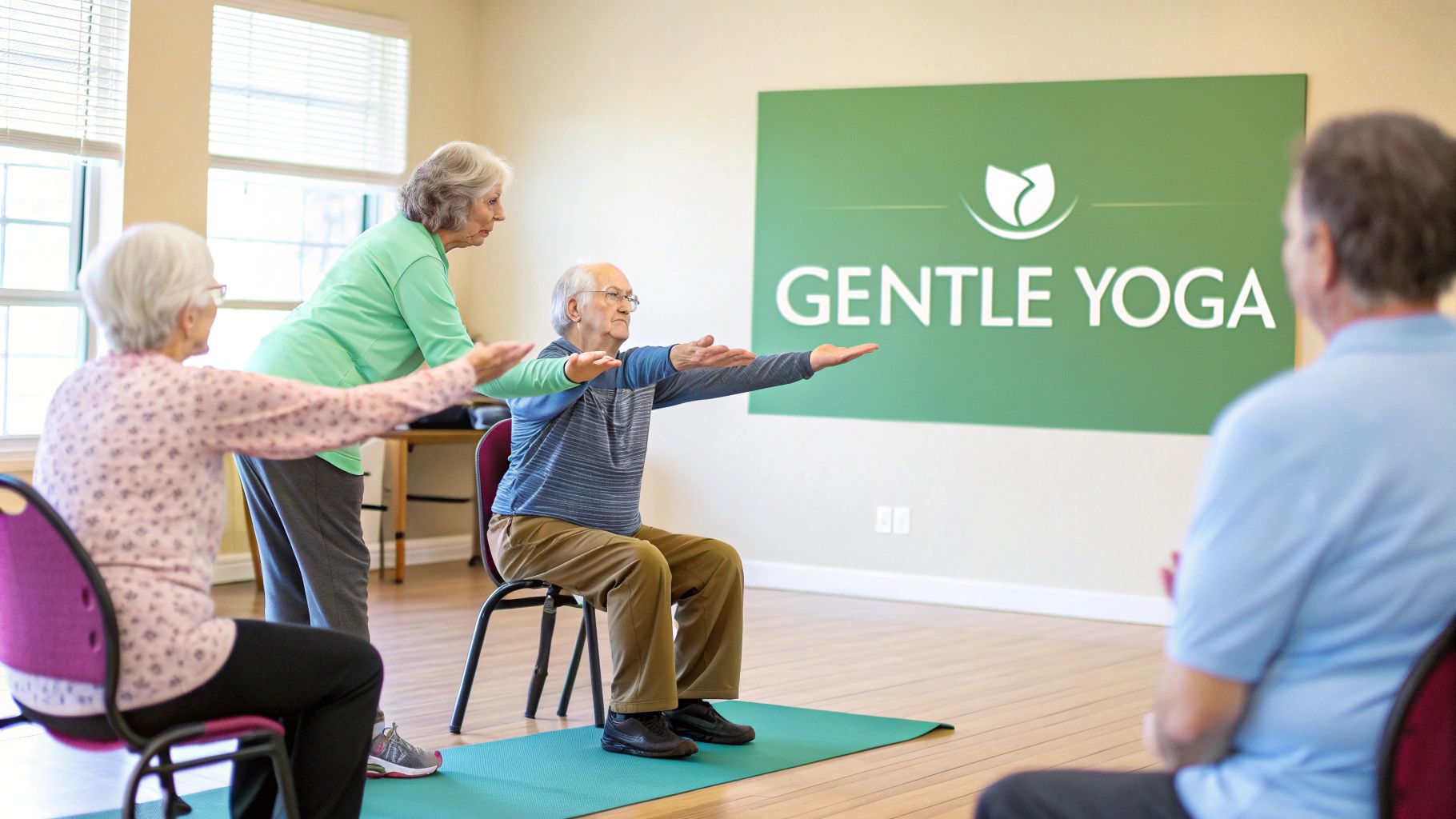
The practice combines gentle movements with controlled breathing exercises, which helps lower stress levels, improve circulation, and foster a sense of calm and mindfulness. By providing a structured yet gentle form of exercise, these classes empower seniors to stay active safely and comfortably within their own capabilities.
How to Implement Gentle Yoga
Successfully integrating a gentle yoga program requires careful planning to ensure safety and resident engagement. The goal is to create an inclusive environment where every participant feels supported.
- Partner with Professionals: Collaborate with certified yoga instructors specializing in senior or chair yoga, like those inspired by Dr. Loren Fishman. Physical therapists can also help design routines that target common mobility issues and align with resident care plans.
- Establish a Routine: Start with 20-30 minute sessions twice a week. A consistent schedule helps residents build strength and flexibility gradually and makes the activity a familiar part of their weekly routine.
- Create a Safe Space: Use a room with ample space for movement. Ensure all chairs are sturdy and without wheels, and provide non-slip yoga mats for any standing poses. Good lighting and a calm atmosphere are essential.
- Offer Tiered Classes: If possible, create separate classes for different mobility levels. A "Beginner Chair Yoga" class can focus entirely on seated poses, while an "Intermediate Gentle Flow" might incorporate standing postures using chairs for support. This customization ensures that activities for seniors in assisted living cater to a diverse range of physical abilities.
2. Memory Care Reminiscence Therapy
Reminiscence therapy is a cornerstone of effective activities for seniors in assisted living, especially for those in memory care. This therapeutic approach uses sensory prompts like old photographs, familiar music, and significant objects to help residents recall and share meaningful life experiences. It is particularly powerful for individuals with mild to moderate dementia, as it accesses long-term memories which often remain intact longer than short-term ones. The goal is to stimulate cognitive pathways and foster emotional connection, improving mood and reducing agitation.
Pioneered by figures like Dr. Bere Miesen and popularized by programs like Dan Cohen's Alive Inside documentary, this therapy validates a senior's life story and reinforces their sense of identity. By creating opportunities for storytelling, it promotes social interaction and provides residents with a profound sense of purpose and self-worth. For those in memory care, targeted programs are crucial; consider exploring effective engaging art activities for seniors with dementia as a complementary approach.
How to Implement Reminiscence Therapy
A successful reminiscence therapy program is built on personalization and sensitivity, creating a safe space for residents to explore their past.
- Create Personalized Memory Boxes: Work with families to gather items unique to each resident, such as wedding photos, treasured trinkets, or a favorite handkerchief. These boxes serve as powerful, individual tools for one-on-one sessions.
- Utilize Themed Sensory Kits: Develop kits based on common themes like "A Day at the Beach" (seashells, sunscreen scent, sounds of waves) or "Baking in the Kitchen" (cinnamon sticks, vintage recipe cards, rolling pin). This works well for group activities.
- Curate Musical Playlists: Music is a potent memory trigger. Create playlists on platforms like Spotify featuring popular songs from residents' teenage and young adult years (1940s-1960s). Note which songs elicit a positive response for future use.
- Train Staff for a Supportive Role: Staff should be trained to guide conversations gently, listen actively, and redirect conversations sensitively if they become distressing. The focus is on the positive emotions evoked, not on factual accuracy.
3. Intergenerational Programs
Intergenerational programs are powerful and enriching activities for seniors in assisted living that connect residents with younger generations, such as schoolchildren, teens, or college students. These structured interactions foster meaningful relationships, combat loneliness, and provide a strong sense of purpose. Seniors can share wisdom and life experiences, while younger participants gain valuable perspective, empathy, and positive role models. The collaboration creates a vibrant, mutually beneficial community link that bridges age gaps.
From reading partnerships to collaborative art projects, these activities stimulate cognitive function, boost self-esteem, and reduce feelings of isolation for everyone involved. By facilitating these connections, assisted living communities offer residents an invaluable opportunity to feel valued and engaged with the wider world, enhancing their overall quality of life.
How to Implement Intergenerational Programs
A successful program relies on clear structure, strong community partnerships, and a focus on creating genuine connections. The goal is to build a sustainable bridge between generations that benefits both seniors and youth.
- Partner with Community Organizations: Reach out to local elementary schools, scout troops, or youth groups to establish a formal partnership. Programs like Experience Corps and The Legacy Project offer excellent models for structuring mentorship and storytelling initiatives.
- Establish a Routine: Begin with monthly or bi-monthly visits to build familiarity and excitement without overwhelming residents or partners. As the program matures, you can increase the frequency based on participant interest.
- Create Structured Activities: Plan specific, collaborative projects rather than allowing for unstructured visits. Ideas include a joint choir, a gardening club, a technology tutoring session where teens help seniors, or shared holiday performances.
- Ensure Proper Safeguards: Develop clear guidelines and protocols for all interactions. This includes conducting background checks for adult volunteers, obtaining parental consent for minors, and ensuring staff supervision during all activities to maintain a safe and positive environment. These structured activities for seniors in assisted living thrive on trust and safety.
4. Horticultural Therapy and Gardening Programs
Horticultural therapy and gardening programs are engaging and therapeutic activities for seniors in assisted living that connect residents with nature. These initiatives involve hands-on gardening adapted for various mobility levels, including raised garden beds, container planting, and sensory gardens filled with aromatic herbs and textured plants. The practice combines gentle physical activity, like planting and watering, with cognitive stimulation, social engagement, and the proven mental health benefits of being outdoors.

This activity provides a sense of purpose and accomplishment as seniors nurture plants from seed to harvest. Working with soil and plants has been shown to reduce stress, elevate mood, and encourage social interaction among residents. Leading organizations like the American Horticultural Therapy Association champion these programs for their profound impact on emotional and physical well-being.
How to Implement Gardening Programs
Creating a successful horticultural therapy program involves thoughtful design and a focus on accessibility, ensuring all residents can participate safely and joyfully.
- Design Accessible Garden Spaces: Install raised garden beds at various heights to accommodate residents who are standing, seated, or in wheelchairs. Ensure pathways are wide, flat, and made of non-slip material. Vertical gardens and container planting on patios are also excellent space-saving options.
- Provide Adaptive Tools: Offer ergonomic gardening tools with long, easy-grip handles to reduce strain on joints. Lightweight watering cans, trowels, and cultivators designed for seniors make the activity more comfortable and enjoyable.
- Choose Appropriate Plants: Select low-maintenance plants that offer sensory stimulation. Focus on herbs like lavender and mint for their scent, marigolds for their bright colors, and cherry tomatoes or leafy greens that are easy to grow and harvest for community meals.
- Partner with Local Experts: Collaborate with local Master Gardener groups or a horticultural therapist to lead sessions. These experts can provide structured guidance, share knowledge, and help tailor activities for seniors in assisted living to match their specific cognitive and physical abilities.
5. Arts and Crafts Creative Expression Programs
Arts and crafts programs are fundamental activities for seniors in assisted living, offering a powerful outlet for creative expression and cognitive engagement. These structured sessions, which can include painting, drawing, pottery, or collage, are designed to stimulate the mind, improve fine motor skills, and provide a deep sense of accomplishment. Engaging in art allows residents to explore their creativity, process emotions, and create tangible items that boost self-esteem and pride.

The benefits extend beyond the individual, as these classes often become vibrant social hubs where residents bond over shared projects and encourage one another. By focusing on the creative process rather than a perfect outcome, these activities are accessible to all skill levels, including those in memory care, making them a truly inclusive and therapeutic option.
How to Implement Arts and Crafts Programs
A successful arts and crafts program prioritizes accessibility, choice, and celebration of each resident's unique creative journey. The key is to foster a supportive, non-judgmental atmosphere.
- Offer Diverse and Adaptive Materials: Provide a wide variety of projects, from watercolor painting and clay sculpting to seasonal wreath making. Use adaptive tools like ergonomic paintbrushes, large-handled scissors, and pre-cut collage materials to accommodate residents with arthritis or limited dexterity.
- Focus on the Process, Not the Product: Emphasize the enjoyment of creating. Instructors should encourage self-expression and remind participants there is no "right" or "wrong" way to make art. This approach reduces pressure and builds confidence.
- Create a Community Gallery: Proudly display finished artwork in a dedicated, well-lit common area. Hosting a small "art exhibition" with refreshments allows residents to share their work with family and staff, fostering a sense of accomplishment and community pride.
- Partner with Local Artists or Groups: Invite local artists to lead workshops or collaborate with organizations like local arts councils to bring fresh ideas and expertise. Some programs, like those inspired by Art Spark Health, focus specifically on the therapeutic benefits of art for older adults.
6. Technology and Digital Literacy Classes
Technology and digital literacy classes are vital activities for seniors in assisted living that bridge the digital divide and empower residents to connect with the modern world. These structured sessions teach essential skills like sending emails, making video calls to family, navigating social media, and using tablets safely. By demystifying technology, these programs combat social isolation, support cognitive health through new learning, and provide access to a wealth of information and entertainment.
The goal is to build confidence and independence, enabling seniors to maintain strong family bonds and engage with their interests online. Offering practical, patient instruction turns what can be an intimidating subject into a tool for connection and lifelong learning, making it one of the most impactful activities available.
How to Implement Technology Classes
A successful digital literacy program prioritizes patience, practical application, and personalized support to ensure residents feel comfortable and capable.
- Partner with Tech Educators: Collaborate with organizations like Older Adults Technology Services (OATS) from AARP or local library tech programs. You can also recruit tech-savvy volunteers or students to provide one-on-one coaching.
- Start with Practical Needs: Begin with high-interest topics like video calling grandchildren, looking up old friends on Facebook, or watching favorite classic films on YouTube. Tying lessons to immediate, tangible benefits generates enthusiasm.
- Create a Supportive Learning Space: Use a quiet room with good lighting and large screens. Provide devices with accessibility features enabled, such as increased font size and simplified interfaces. Printed, large-print reference guides for common tasks are extremely helpful.
- Offer Flexible Formats: Host small group workshops for general topics and schedule one-on-one "tech help" sessions for individual questions. A regular, drop-in style clinic allows residents to get help as needed without the pressure of a formal class structure. This tailored approach makes technology accessible for everyone.
7. Music Therapy and Sing-Along Programs
Music therapy and sing-along programs are powerful activities for seniors in assisted living, using the therapeutic qualities of music to enhance cognitive function, emotional expression, and social connection. These sessions involve listening, singing, playing simple instruments, or moving to music, engaging multiple regions of the brain simultaneously. This approach is particularly effective for residents with dementia, as music can unlock memories and emotions, reducing agitation and improving mood, as famously highlighted in the documentary Alive Inside.
The programs provide a non-verbal outlet for expression, fostering a sense of community and shared joy. Whether it’s a lively sing-along to familiar tunes from their youth or a calming session with a trained music therapist, these activities tap into the deep, emotional core of each resident, promoting overall wellness and a higher quality of life.
How to Implement Music Therapy
A successful music program goes beyond simply playing background music; it requires thoughtful planning to create meaningful and therapeutic experiences for residents. The goal is to make music an interactive and personalized journey.
- Create Personalized Playlists: Work with residents and their families to develop playlists of songs from their formative years (teens and twenties). Initiatives like The Playlist for Life have shown that familiar music can significantly improve memory recall and emotional well-being.
- Hire Certified Professionals: For targeted therapeutic goals, engage a board-certified music therapist (MT-BC). These professionals are trained to use music to address specific physical, emotional, and cognitive needs outlined in resident care plans.
- Schedule Live Performances: Arrange for local musicians, school choirs, or volunteers to perform regularly. Live music offers a vibrant and engaging social event that residents can look forward to, breaking up daily routines.
- Encourage Active Participation: Provide simple percussion instruments like shakers, tambourines, or drums so residents can actively participate rather than just listen. Lead sing-alongs with large-print lyric sheets and choose well-known, beloved songs to encourage everyone to join in without pressure.
8. Wellness and Fitness Programs
Wellness and fitness programs are foundational activities for seniors in assisted living, offering structured exercise tailored to enhance physical health and maintain independence. These programs encompass a variety of options, from walking groups and water aerobics to tai chi and light strength training, all designed to improve cardiovascular health, balance, and muscle tone. By providing safe, supervised, and social exercise opportunities, these programs directly combat mobility decline and boost residents' overall quality of life.
The benefits extend beyond the physical; regular participation improves mood, reduces symptoms of depression, and fosters social connections among residents who share wellness goals. Programs like the nationally recognized Silver Sneakers or local YMCA senior classes provide a framework for creating engaging and effective fitness schedules that empower seniors to stay active and healthy.
How to Implement Wellness and Fitness Programs
A successful fitness program prioritizes safety, variety, and inclusivity to meet the diverse needs of residents. The key is creating an encouraging environment that makes exercise enjoyable and accessible.
- Offer Varied Classes: Provide a mix of activities to appeal to different interests and fitness levels. Include low-impact cardio like walking clubs, balance-focused classes such as tai chi, strength training with light weights or resistance bands, and gentle aquatics if a pool is available.
- Obtain Physician Clearance: Before residents join a new fitness program, ensure they have clearance from their doctor. This step is crucial for tailoring activities to individual health conditions and limitations, making it one of the safest activities for seniors in assisted living.
- Schedule for Peak Energy: Plan fitness sessions in the morning when most seniors have more energy. A consistent weekly schedule, such as "Tai Chi Tuesdays" or "Walking Wednesdays," helps build a routine and encourages regular attendance.
- Track Progress and Celebrate: Motivate residents by tracking their progress and celebrating milestones. Acknowledge achievements like walking a certain distance or mastering a new balance exercise to foster a sense of accomplishment and community support.
9. Book Clubs and Reading Programs
Book clubs and reading programs are fantastic activities for seniors in assisted living that foster cognitive stimulation and social connection. These groups offer a wonderful opportunity for residents to engage with literature, share perspectives, and bond over a shared interest. Discussions can range from classic novels and current bestsellers to non-fiction and poetry, providing intellectual challenges and encouraging meaningful conversations among peers.
These programs support cognitive health by improving memory, concentration, and analytical skills. They also provide a structured social outlet, which helps reduce feelings of isolation and builds a strong sense of community. By exploring different stories and characters, residents can connect with new ideas and relive fond memories, enriching their daily lives.
How to Implement Book Clubs
Creating a successful reading program involves making it accessible and enjoyable for all residents, regardless of their reading ability or cognitive level. The focus should be on participation and shared experience.
- Offer Diverse Formats: Provide large-print editions (18+ point font) and audiobook options to accommodate residents with visual impairments. For memory care units, use simplified classics or short stories to facilitate engagement.
- Establish a Comfortable Routine: Schedule meetings once or twice a month for 45-60 minutes. A consistent schedule helps build anticipation. Serving light refreshments like tea and cookies can create a relaxed, sociable atmosphere.
- Facilitate Engaging Discussions: Prepare a few open-ended questions to guide the conversation, but allow it to flow naturally. Encourage residents to share personal stories related to the book's themes. For those looking to establish a new reading group, consider this guide on how to start a book club for more tips.
- Partner with Local Libraries: Many public libraries offer outreach programs that can provide book sets, including large-print and audio versions, directly to assisted living facilities. Some may even have a librarian available to help facilitate discussions.
10. Pet Therapy and Animal Interaction Programs
Pet therapy and animal interaction programs are deeply impactful activities for seniors in assisted living that foster emotional comfort and reduce feelings of loneliness. These sessions involve visits from certified therapy animals, such as dogs, cats, or even rabbits, offering residents a chance to pet, hold, and connect with a gentle animal companion. The simple act of stroking a soft animal can lower blood pressure, release mood-enhancing endorphins, and provide a non-verbal outlet for affection and care.
This type of interaction taps into the human-animal bond, sparking positive memories and encouraging social engagement among residents who gather for the visit. For individuals living with dementia or cognitive decline, the sensory experience of touching an animal can be particularly calming and grounding, often eliciting smiles and conversation when other activities may not.
How to Implement Pet Therapy
A successful pet therapy program prioritizes the safety and comfort of both residents and animals, creating a joyful and therapeutic experience for everyone involved.
- Partner with Professionals: Collaborate with certified organizations like Pet Partners (formerly the Delta Society) or local humane societies that have established therapy animal programs. Their handlers and animals are trained and vetted specifically for interactions in healthcare settings.
- Screen Residents Thoroughly: Before a visit, identify any residents with allergies, phobias, or a general dislike of animals to ensure their comfort. Create alternative activities for them during pet therapy sessions.
- Create a Safe and Calm Environment: Designate a quiet, comfortable space for the interactions, away from high-traffic areas. This helps keep the animals calm and allows for more meaningful connections. Group sizes should be kept small to avoid overwhelming the animal or residents.
- Establish Clear Guidelines: Set a schedule with sessions lasting 15-30 minutes to prevent fatigue for the animals. Enforce strict hygiene protocols, such as hand washing before and after interaction. Ensure the animal handler is always present to supervise and facilitate a positive experience.
10-Activity Comparison for Assisted Living
| Program | Implementation Complexity 🔄 | Resource Requirements ⚡ | Expected Outcomes ⭐📊 | Ideal Use Cases 💡 | Key Advantages ⭐ |
|---|---|---|---|---|---|
| Gentle Yoga and Stretching Classes | Low–Moderate — certified instructor recommended | Low — chairs, mats, accessible room | Improves balance, flexibility; reduces stress | Assisted living, mobility-limited residents | Low cost; fall‑risk reduction |
| Memory Care Reminiscence Therapy | Moderate — trained facilitators; sensitive handling | Low–Moderate — photos, music, memory items | Improves mood; slows cognitive decline; social engagement | Memory care; mild–moderate dementia | Strong cognitive/social impact; non‑drug intervention |
| Intergenerational Programs | Moderate–High — external coordination and scheduling | Low — staffing time, partner organizations | Reduces loneliness; increases sense of purpose | Community integration, social isolation reduction | Mutual intergenerational benefits; low material cost |
| Horticultural Therapy and Gardening | Moderate — accessibility adaptations and upkeep | Moderate–High — outdoor space, raised beds, tools | Physical activity, mood improvement, cognitive benefits | Outdoor/hand‑on therapy; sensory engagement | Multi‑sensory therapy; tangible outcomes (produce/flowers) |
| Arts and Crafts Creative Expression | Low–Moderate — facilitator and space needed | Low–Moderate — art supplies, storage | Enhances fine motor skills, self‑expression, confidence | Creative engagement, group therapy, exhibitions | Affordable, adaptable, visible resident achievements |
| Technology and Digital Literacy Classes | Moderate — ongoing support and patient teaching | Moderate — devices, internet access, trainers | Increases connection, digital independence, cognitive stimulation | Residents with distant family; independence goals | Enables communication and access to online resources |
| Music Therapy and Sing‑Along Programs | Low–Moderate — best with certified music therapist | Low — playlists, instruments; occasional live performers | Improves mood; enhances memory; reduces behavioral issues | Dementia care, group wellness sessions | High emotional/cognitive impact; low group cost |
| Wellness and Fitness Programs | Moderate–High — qualified instructors, safety protocols | Moderate — space, equipment, possible pool access | Improves strength, balance; reduces fall risk; chronic disease benefits | Residents aiming to maintain independence and mobility | Broad physical health benefits; social accountability |
| Book Clubs and Reading Programs | Low — facilitator and consistent schedule | Low — books, audiobooks, library partnerships | Cognitive stimulation; social discussion; reduced isolation | Intellectually engaged residents; cognitive maintenance | Accessible formats; low cost; flexible delivery |
| Pet Therapy and Animal Interaction | Moderate — handler certification, health protocols | Low–Moderate — therapy animals, handlers, hygiene supplies | Reduces anxiety; improves mood and tactile engagement | Emotional support, social facilitation, tactile therapy | Immediate emotional comfort; strong social catalyst |
Building a Community Centered on Connection and Care
The journey through assisted living is not just about receiving care; it's about continuing a life filled with purpose, joy, and connection. As we've explored, the best activities for seniors in assisted living are not merely items on a calendar. They are the threads that weave together a vibrant community, supporting the holistic well-being of every resident. From the quiet focus of horticultural therapy to the shared laughter of a pet therapy session, each program offers a unique pathway to engagement. The true measure of a successful activity program lies in its ability to adapt, personalize, and resonate with the diverse histories, abilities, and passions of its participants.
The key takeaway is that variety and intentionality are paramount. A robust activities schedule should be a balanced ecosystem of options, catering to different needs and preferences throughout the day and week. It’s about creating opportunities for both quiet reflection and joyful socialization, for physical movement and cognitive stimulation, and for learning new skills while honoring lifelong hobbies.
Key Principles for a Thriving Activities Program
Mastering this approach moves a community from simply housing seniors to truly empowering them. Consider these core principles as you evaluate or build an activities program:
- Person-Centered Planning: The most effective programs begin with the individual. They incorporate resident feedback, honor personal histories, and adapt activities to meet changing physical and cognitive needs. A resident who was a lifelong carpenter may find immense joy in a simple woodworking or model-building craft, connecting them to a core part of their identity.
- Holistic Well-Being: A truly great program nurtures the whole person. This means balancing activities across multiple dimensions of wellness:
- Physical: Gentle yoga, walking clubs, fitness classes.
- Emotional: Pet therapy, music programs, expressive arts.
- Cognitive: Book clubs, reminiscence therapy, technology classes.
- Social: Intergenerational events, group dining, community outings.
- Spiritual: Faith services, meditation, nature appreciation.
- Fostering Autonomy and Purpose: Activities should empower residents by giving them choices and a sense of purpose. Allowing residents to lead a book club discussion, choose the plants for a community garden, or help plan a seasonal event fosters a sense of ownership and contribution that is vital to self-esteem.
Actionable Next Steps for Families and Caregivers
As you navigate the options for senior care, use this comprehensive list of activities as a practical tool. When touring a community or speaking with an activities director, don't just ask what they do; ask how and why.
Probing Deeper: Ask specific questions like, "How do you adapt activities for residents with memory loss?" or "Can you share a story about how a resident's suggestion led to a new program?" The answers will reveal the depth of their commitment to person-centered care.
This proactive approach ensures you find a community that doesn't just provide a schedule, but builds a life. The goal is to find an environment where seniors are not just residents, but active, valued members of a thriving community. The power of a well-designed activities program is transformative; it turns a residence into a home, neighbors into friends, and daily routines into cherished memories.
At Forest Cottage Senior Care, we believe that a rich, engaging life is the cornerstone of exceptional senior living. We build our community around this philosophy, offering personalized activities for seniors in assisted living that nurture the mind, body, and spirit, from our beloved Goldendoodle pet therapy to specialized programs for veterans. Discover how our unique, homelike approach in Willis, Texas, can make a difference for your loved one by visiting us at Forest Cottage Senior Care.