
Finding the right adult assisted living near me isn't about just picking a place from a Google search. It's about having a real plan to find a community that genuinely fits your loved one's needs, personality, and budget. The whole process really begins before you even think about scheduling a tour—it starts with knowing where to look and what to ask.
Starting Your Search for Assisted Living in Willis
The thought of finding the right assisted living community can feel like a monumental task, but it all starts with building a solid initial list of possibilities. Rather than getting lost in generic online searches, a much better approach is to tap into the local, trusted resources right here in the Willis area. This grounds your search in real-world feedback and professional experience from the very beginning.

This first phase is all about gathering options, not making a final commitment. By blending professional advice with personal stories, you can create a well-rounded shortlist of communities that are truly worth a closer look. For a deeper dive into what to look for, check out our guide on how to choose assisted living.
Creating Your Shortlist of Communities
Your first step should be to leverage local knowledge. Healthcare professionals, like a primary care doctor or a hospital case manager, often have direct experience with facilities around Willis and can offer recommendations based on the quality of care they've seen firsthand.
Another incredibly valuable resource is simply word-of-mouth. Talk to friends, neighbors, or folks from local senior groups who have already gone through this process. Their honest experiences can give you insights you’ll never find in a glossy brochure.
When you're gathering these recommendations, try to ask specific questions:
- What did you like most about the staff and the overall atmosphere?
- Do you have an example of how they handled a specific care need?
- Was the communication with your family clear and consistent?
This need for quality senior care is a growing reality everywhere. The global assisted living facility market was valued at an incredible USD 168.54 billion in 2024 and is projected to hit USD 315.3 billion by 2035. That's a huge jump, driven by the increasing demand for supportive senior housing.
As you start your search, it's also smart to understand all the available options, which can include various home care services for seniors. This helps you compare different care models to find what truly works best for your family's situation.
To keep everything organized as you build your list, a simple checklist can be a lifesaver.
Initial Search Checklist for Willis Assisted Living
Keeping track of the basics for each community you're considering is key. A simple table like this can prevent the details from blurring together.
| Community Name | Location/Proximity | Levels of Care Offered (e.g., Independent, Assisted, Memory) | Initial Cost Inquiry (Range) | Notes/First Impression |
|---|---|---|---|---|
| Example: The Oakwood | 15 min from my house | Assisted, Memory Care | $4,500 – $6,000 | Recommended by Dr. Smith. Website looks clean. |
| Example: Pineview | 30 min, near sister | Independent, Assisted | Starts at $4,000 | Friend's dad lived here, said staff was great. |
| Example: Forest Cottage | 10 min, close to shops | Assisted, Respite, Adult Day Care | Call for details | Smaller, homelike setting mentioned on site. |
Jotting down these key points from the get-go gives you an at-a-glance comparison, making it much easier to decide which communities to explore further.
How to Properly Vet Potential Communities
Once you have a shortlist of communities, the real work begins. It’s time to look past the glossy brochures and pretty website photos to see what a community is really like. Properly vetting a potential adult assisted living near me means digging into official records, getting a feel for the staff, and understanding their approach to personalized care.
A great place to start is with the state's licensing and inspection reports. These public documents are a goldmine of objective information. They'll show you any complaints, violations, or citations a facility has received, offering an unfiltered look at its history. Don't be too alarmed by a single minor issue; what you're really looking for are patterns. Repeated problems with resident safety or medication management are serious red flags.
Digging Deeper Than Online Reviews
Online reviews can give you a general sense of a place, but you have to read between the lines. Instead of just glancing at the star rating, look for recurring themes in the comments. Are multiple families praising the compassionate nursing staff? That’s a great sign. Or do you see consistent complaints about slow response times or poor communication?
Think about it this way: Imagine your mother is starting to have some trouble with her mobility. A truly great community won't just react after a fall; they'll proactively adjust her care plan. That might mean coordinating with a physical therapist, adding grab bars to her room, or just providing a bit more hands-on help with daily tasks.
This kind of proactive, forward-thinking approach is a hallmark of excellent care. When you're talking to potential communities, ask them how they handle evolving health needs. You aren't just choosing a place for today; you're finding a partner in care for whatever tomorrow brings. To get a better handle on how facilities assess these needs, check out our article on understanding the activities of daily living.
Staffing: The Heart of Quality Care
At the end of the day, the people who will interact with your loved one every day are the most critical piece of the puzzle. Don't be shy about asking direct questions about the staff.
- Staff-to-Resident Ratios: Get the numbers for different shifts, especially overnight. While a number doesn't tell the whole story, a low ratio can signal that the staff is stretched too thin.
- Staff Training and Qualifications: What kind of ongoing training is required, especially for conditions like dementia or diabetes? Are nurses actually on-site 24/7?
- Emergency Protocols: Ask them to walk you through how the team responds to a medical emergency. What’s their procedure for notifying family?
- Staff Turnover: High turnover can be a real problem. It disrupts the continuity of care and can hint at bigger issues with management or the work environment.
A community that takes pride in its team will be open and transparent with this information. At Forest Cottage Senior Care, we know our dedicated and highly-trained staff is what makes our community feel like a true home. Their competence and compassion are central to providing the person-first care every single resident deserves. Doing this thorough vetting ensures you find a place that is safe, responsive, and genuinely caring.
What to Look for During an On-Site Tour
When you're searching for adult assisted living near me, the on-site tour is where everything comes together. Brochures and websites can only tell you so much; this is your chance to see how a community truly feels and operates day-to-day. It’s time to go beyond the polished presentation and use your senses to get a genuine feel for the place.
Right away, you'll get a sense of the atmosphere. Does it feel lively and welcoming, or is it quiet and institutional? Pay attention to the interactions between the staff and the residents. A caregiver sharing a laugh with a resident or taking a moment to chat is a huge indicator of a positive, caring culture.
Observing Daily Life and Resident Engagement
Look closely at the residents. Do they seem content and engaged with their surroundings? Peek into the common areas, like the dining room or activity spaces. Are people participating in activities and socializing with each other, or are most of them sitting alone in their rooms? An active, friendly environment is a hallmark of a healthy community.
Don't forget to assess the physical space itself. Is the building clean, bright, and free of any off-putting smells? Take a look at the condition of the furniture, carpets, and outdoor areas. A well-kept facility shows that the management team truly cares about creating a comfortable and safe home for everyone who lives there.
This decision guide helps break down the vetting process, covering critical steps you should take before you even schedule a tour.
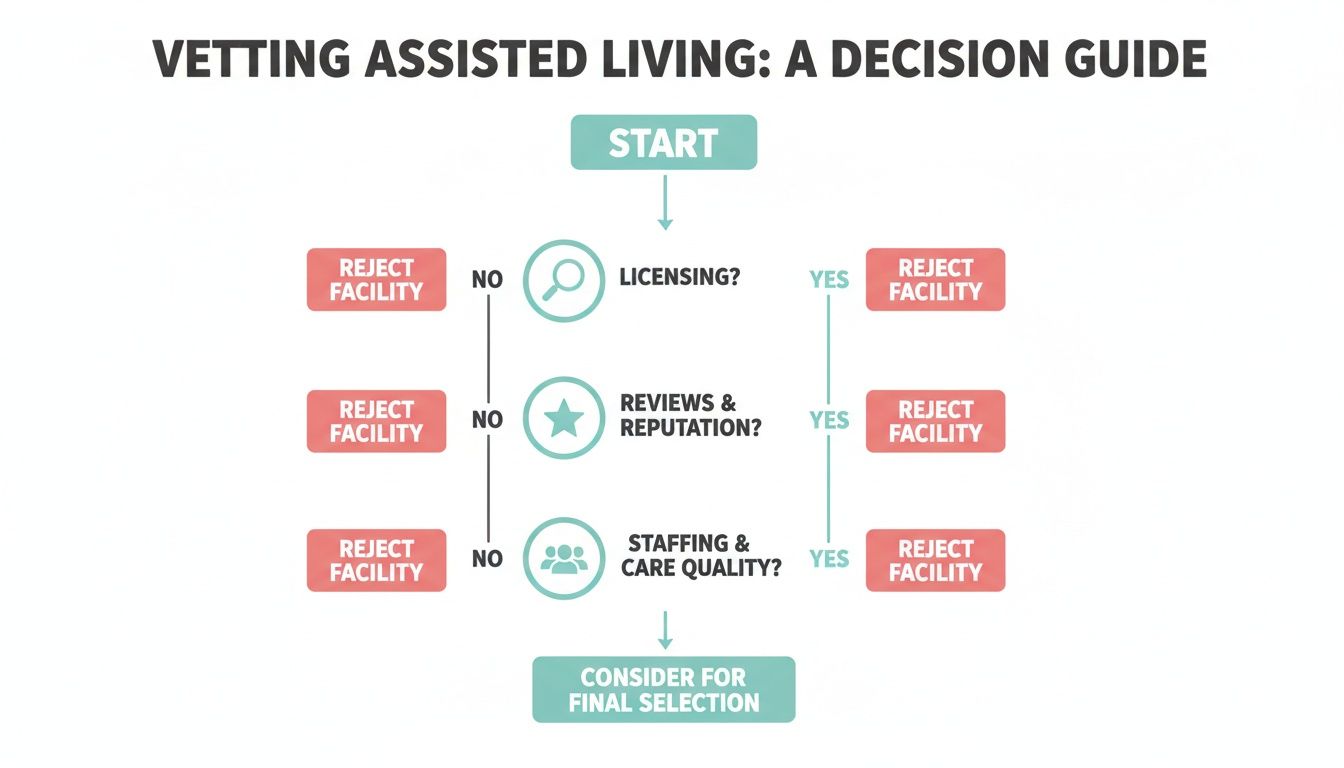
By following these steps, you can ensure that the communities you visit are already high-quality, reputable options that meet your basic criteria.
Key Questions for Your Tour Guide
Your tour is the perfect opportunity to dig deeper with some specific questions. Having a list ready helps you gather the information you need to make a fair comparison between different communities.
- Daily Routines: What does a typical day look like for a resident here? How much freedom do they have to set their own schedules?
- Medical Situations: How do you handle medical emergencies? Is there a nurse on-site 24/7? What's the process for keeping families in the loop?
- Dining Experience: Can I see a sample weekly menu? How do you accommodate special dietary needs? Pro tip: try to schedule your visit during a mealtime to see the food quality and social vibe for yourself.
To help you get the most out of every visit, I've put together a comprehensive checklist. Think of it as your secret weapon for making sure you don't miss any important details.
The Ultimate Assisted Living Tour Checklist
| Category | What to Look For | Questions to Ask |
|---|---|---|
| First Impression & Atmosphere | Cleanliness, lighting, smell. General mood—is it cheerful or somber? Are staff members smiling and interacting warmly with residents? | How would you describe the community's culture? Do residents seem happy here? |
| Resident Rooms & Living Spaces | Size, layout, and cleanliness of private rooms. Accessibility features in the bathroom. Condition of furniture and common areas. | What furniture is included? Can residents bring their own? What are the options for personalization? |
| Staff & Caregivers | Staff-to-resident ratio. How staff speak to and assist residents. Professionalism and friendliness. | What is your staff turnover rate? What kind of ongoing training do caregivers receive? |
| Activities & Engagement | Posted activity calendar with a variety of options. Residents actively participating. Well-maintained activity spaces and outdoor areas. | What are your most popular activities? How do you encourage residents who are hesitant to join in? |
| Dining & Nutrition | Observe a meal if possible. Quality and appeal of the food. Social interaction in the dining room. Availability of snacks and drinks. | How are dietary restrictions and allergies handled? Can residents request alternative meal options? |
| Safety & Medical Care | Handrails, emergency call systems, and clear pathways. Security measures for entry and exit. On-site medical staff availability. | What is your protocol for a medical emergency? How is medication managed and distributed? |
This checklist isn't just about ticking boxes; it's about prompting you to observe and ask the right questions to find a place that feels like a true home.
At the end of the day, trust your gut. If something doesn't feel right during the tour, it’s worth digging into. The goal is to find a community that not only meets your loved one's physical needs but also feels genuinely supportive and comfortable.
The search can feel competitive, and for good reason. In Q1 2025, U.S. assisted living occupancy reached 85.8%, showing just how many families are seeking these supportive environments.
For a complete list of what to cover during your visit, be sure to check out our detailed guide on the most important questions to ask assisted living facilities. It’s a great resource to print out and bring with you.
Navigating Costs and Payment Options
Let’s talk about the money side of things. It's a conversation every family has. Once you’ve toured a few communities near Willis and found a place that feels right, the discussion naturally turns to cost. How can we make this work financially?
It's not as simple as one flat fee. The total cost is a mix of housing, personal care, and all the little amenities. To make it even more interesting, communities use different pricing models, which can feel a bit confusing at first glance.
You'll usually run into one of three main fee structures. Some places have an all-inclusive model, where a single monthly payment covers everything from rent and meals to a specific level of care. Others use tiered pricing, grouping residents by their care needs into different levels, each with its own price tag. Then there's the à la carte model, which starts with a base rent, and you simply add costs for individual services as needed, like medication help or assistance with dressing.
Understanding Common Fee Structures
Breaking down these models makes it much easier to see what you're actually paying for. An all-inclusive plan might look expensive upfront, but it makes monthly budgeting completely predictable. An à la carte plan, on the other hand, gives you more control but could get pricey if care needs suddenly increase.
- All-Inclusive: This is perfect for predictable budgeting, especially if your loved one plans to use a wide range of the services offered.
- Tiered Pricing: A nice middle-of-the-road option that matches the cost to the general level of care someone needs.
- À la Carte (Fee-for-Service): This can be a great fit for more independent seniors who just need a little support. You only pay for what you use.
Figuring out which model a community uses is a huge piece of the puzzle. Always ask for a detailed breakdown of what’s included at every price level. The last thing anyone wants is a surprise charge on the monthly bill. You can get a much deeper look into the specifics in our guide to assisted living costs in Texas.
Exploring Your Payment Sources
Once you have a handle on the costs, the next question is pretty obvious: how are we going to pay for it? Most families pull from a combination of resources, so it’s smart to look at every possibility. The most common sources are private funds, like savings, pensions, or proceeds from selling a home. Many families also use long-term care insurance policies.
As you navigate these options, it's also wise to consider long-term financial strategy. For many Texas families, learning how to protect assets from Medicaid becomes an important part of the conversation. This is definitely an area where getting professional advice can make a world of difference.
Don't forget to look into government programs, either. For veterans and their surviving spouses, the VA's Aid and Attendance pension can be a game-changer. This benefit provides monthly payments to eligible wartime veterans who need help from another person for their daily activities.
It helps to remember that this financial planning is often for a specific chapter in life. The average stay in assisted living is about 22 months. With 48% of residents managing chronic conditions like high blood pressure, the need for a comfortable, home-like environment during that time is paramount.
Here at Forest Cottage Senior Care, we make it a priority to help families understand all their options. We're proud to support our veterans and can help you navigate the application process for benefits that can make exceptional care much more affordable.
What About Respite and Short-Term Stays?
The journey to finding the right assisted living community doesn't have to be a one-way street. Sometimes, the best first step isn't a permanent move at all. This is where respite stays come in, offering a flexible solution that can be a game-changer for both seniors and their families.
Think of a respite stay as a temporary arrangement. A senior can live in an assisted living community for just a few days, a couple of weeks, or even a month or two. This is incredibly helpful in a few key situations. For instance, it provides a safe, professional environment for someone recovering from surgery or a hospital stay who isn't quite ready to manage at home alone.
It’s also an absolute lifeline for family caregivers. Let’s be honest: caring for a loved one is a huge responsibility. A short-term stay gives you a much-needed break to rest, travel, or just catch your breath, all while knowing your family member is in excellent hands.
A Trial Run for Long-Term Living
One of the smartest ways to use a short-term stay is as a trial period. Touring a community is one thing, but actually living there? That’s the real test. A respite stay lets your loved one experience the day-to-day reality of the community.
A short-term stay takes the mystery out of assisted living. It turns an abstract concept into a real, lived experience, giving a senior the chance to decide for themselves if a community truly feels like home before making a huge commitment.
During their stay, they can try the food, join in on social activities, and get a genuine feel for the staff and other residents. This kind of firsthand experience is invaluable. It makes the final decision feel less like a leap of faith and more like a confident, informed choice. It’s the perfect way to test the waters and see if the community is the right fit.
Arranging a Short-Term Stay
Getting a respite stay set up is usually pretty straightforward. It starts with an assessment, just like it would for a long-term resident, so the community can fully understand your loved one's care needs and personal preferences. This makes sure they get the right support from the moment they walk in the door.
Once that's done, the community will cover everything included in the stay:
- Personalized Care: Help with daily routines like bathing, dressing, and managing medications.
- Dining: Full access to all meals and snacks served in the community.
- Social Life: An open invitation to join all scheduled activities, events, and outings.
- Housekeeping: No need to worry about chores like laundry or cleaning—it’s all taken care of.
This all-inclusive approach makes for a smooth and welcoming transition, whether it’s for a week or a whole month. If you want to dive deeper into how this works, you can learn more about respite care for seniors near me and see how it might fit your family’s situation. Here at Forest Cottage, we love welcoming short-term residents and making them feel like they're part of our family from day one.
Making a Confident Choice and Easing the Transition
You’ve done the tours, crunched the numbers, and asked all the right questions. Now comes the moment of truth: making the final decision. This is a huge step, but if you’ve followed a clear process, you can move forward with confidence, knowing you've found the best possible new home for your loved one.

This final choice really boils down to comparing your top two or three communities side-by-side. Pull out your notes and checklists again. Zero in on what truly matters for your family member’s health, personality, and social life. One place might have a fantastic activity calendar, but maybe another has a more experienced nursing staff that’s better equipped for future needs.
A simple pros and cons list for each of your finalists can be a game-changer. Laying it all out visually helps cut through the emotion and focus on the practical details that will shape day-to-day life.
More and more families are navigating this exact process. In the first quarter of 2025, U.S. assisted living occupancy climbed to 85.8%, which shows just how much demand there is for quality senior care. This isn't just a number; it reflects the trust families are placing in assisted living as a supportive model. You can read more about the current nursing facility characteristics and trends on kff.org.
Planning for a Smooth Move
Once you’ve made the call, the next focus is making the move as smooth as possible. It can feel like a mountain of a task, so breaking it down into smaller, more manageable steps is the only way to go. The first step is often downsizing, which is as much an emotional journey as it is a practical one.
Try sorting belongings into a few simple categories:
- Must-Haves: These are the non-negotiables—clothing, crucial documents, medications, and the most treasured personal keepsakes.
- Wants: Think of the favorite recliner, special decorations, or hobby supplies that will make the new space immediately feel like home.
- Donate/Give to Family: These are items that won't fit but can find a new life with someone else.
It's so important to involve your loved one in these decisions. Giving them a sense of control and ownership over what comes with them makes a world of difference. Let them pick out the photos and mementos to put up right away, making their new room feel familiar and comforting from day one.
Remember, the emotional side of this is just as real as the physical move. It’s okay to acknowledge feelings of anxiety or sadness—for both of you. Keeping the lines of communication open and focusing on the positive can truly help ease everyone into this new chapter.
Your Top Questions About Assisted Living Answered
When you start looking into "adult assisted living near me," it’s totally normal for a lot of questions to pop up. For most families, this is brand-new territory, and getting a handle on the basics can make the whole process feel a lot less intimidating.
One of the first things people ask is how assisted living is different from a nursing home. Think of it this way: assisted living is for seniors who are still largely independent but could use a hand with daily activities. A nursing home, on the other hand, provides a much higher level of round-the-clock medical care for those who need it.
So, Who Actually Lives in an Assisted Living Community?
It's a great question, and the answer might surprise you. The data shows us a pretty clear picture: it's mainly for seniors, especially those over 85, who want to keep their independence but also have a solid safety net in place.
In fact, of the 1,016,400 assisted living residents across the U.S., more than half (53%) are 85 or older. They get the benefit of services like housekeeping, meal prep, and an emergency response system, which lets them live more freely without the daily worries. You can dig deeper into these numbers by checking out these assisted living statistics on caring.com.
The biggest takeaway here is that assisted living communities are vibrant homes, not hospitals. They're built around wellness, social connection, and helping residents enjoy a high quality of life with a little extra support.
At Forest Cottage Senior Care, we know you have questions, and we're here to give you clear, honest answers. We want to help you find the perfect fit for your loved one. Schedule a visit to learn more about our compassionate, person-first approach.