A vibrant activities program is the heartbeat of any thriving senior community, transforming daily life into an experience filled with purpose, joy, and connection. It’s about more than just passing the time; it’s about nurturing the mind, body, and spirit. For families exploring care options and for activity directors seeking fresh inspiration, understanding the full scope of what’s possible is the first step toward creating an environment where every resident can flourish. A thoughtfully curated calendar of assisted living facility activities is what separates standard care from a truly exceptional living experience.
This guide moves beyond generic ideas, offering a detailed roundup of innovative and evidence-based activities tailored to diverse needs and interests. We will provide actionable tips, real-world examples, and practical advice for implementing a program that promotes holistic well-being. From the therapeutic calm of pet therapy programs to the cognitive benefits of memory care games and the social joy of intergenerational events, we'll explore 10 key categories of engagement.
Readers will discover how a well-planned calendar can elevate senior living from simple care to a genuinely enriching lifestyle. We'll cover everything from horticultural therapy in a community garden to adapted fitness classes and lifelong learning workshops. Let's explore the specific assisted living facility activities that foster community, stimulate the mind, and bring genuine happiness to residents' daily lives. This comprehensive list is your blueprint for creating or identifying a program that makes every day an opportunity for meaningful engagement and personal growth.
1. Pet Therapy Programs with Goldendoodles
Pet therapy, also known as animal-assisted therapy, is a structured program that incorporates trained animals to improve residents' emotional, social, and cognitive well-being. This therapeutic approach is a cornerstone of many engaging assisted living facility activities, leveraging the powerful bond between humans and animals. These are not simply casual pet visits; they are goal-oriented sessions facilitated by trained handlers.
Goldendoodles, a cross between a Golden Retriever and a Poodle, are particularly well-suited for this role due to their hypoallergenic coats, gentle temperament, and high intelligence. Their friendly, patient nature makes them ideal companions for seniors, including those with mobility or cognitive challenges.
Why It's a Top-Tier Activity
Pet therapy sessions provide multi-faceted benefits that address the whole person. Interacting with a therapy dog can significantly decrease cortisol (a stress hormone) and increase oxytocin, leading to reduced anxiety and lower blood pressure. The simple act of petting a dog or watching it play can lift spirits and combat feelings of loneliness and depression. These interactions also encourage gentle physical movement, such as reaching, petting, and even short walks, which helps maintain mobility.
How to Implement a Successful Program
To ensure a safe and effective pet therapy program, facilities must follow specific protocols. At Forest Cottage Senior Care, our signature Goldendoodle therapy program is built on a foundation of safety, consistency, and resident comfort.
Actionable Steps for Implementation:
- Screening and Preparation: Before introducing a therapy dog, screen all participating residents for allergies, phobias, or general discomfort around animals. Ensure everyone is a willing and enthusiastic participant.
- Professional Certification: Partner with certified therapy animal organizations like Pet Partners (formerly Delta Society) or the American Kennel Club Therapy Dog Program. This guarantees the dogs and handlers have met rigorous training and temperament standards.
- Establish a Routine: Schedule visits at the same time each week. Consistency helps residents build a trusting and affectionate relationship with the therapy animal, making the sessions a cherished part of their routine.
- Facilitate Interaction: Train staff to guide interactions. They can help residents hold a leash, offer approved treats, or gently brush the dog. This ensures the experience is both safe and meaningful for the resident and the animal.
- Monitor and Document: Observe residents during and after sessions. Document any noticeable improvements in mood, social interaction, or physical activity in their care plans to track the program's effectiveness.
2. Memory Care Games and Cognitive Stimulation Activities
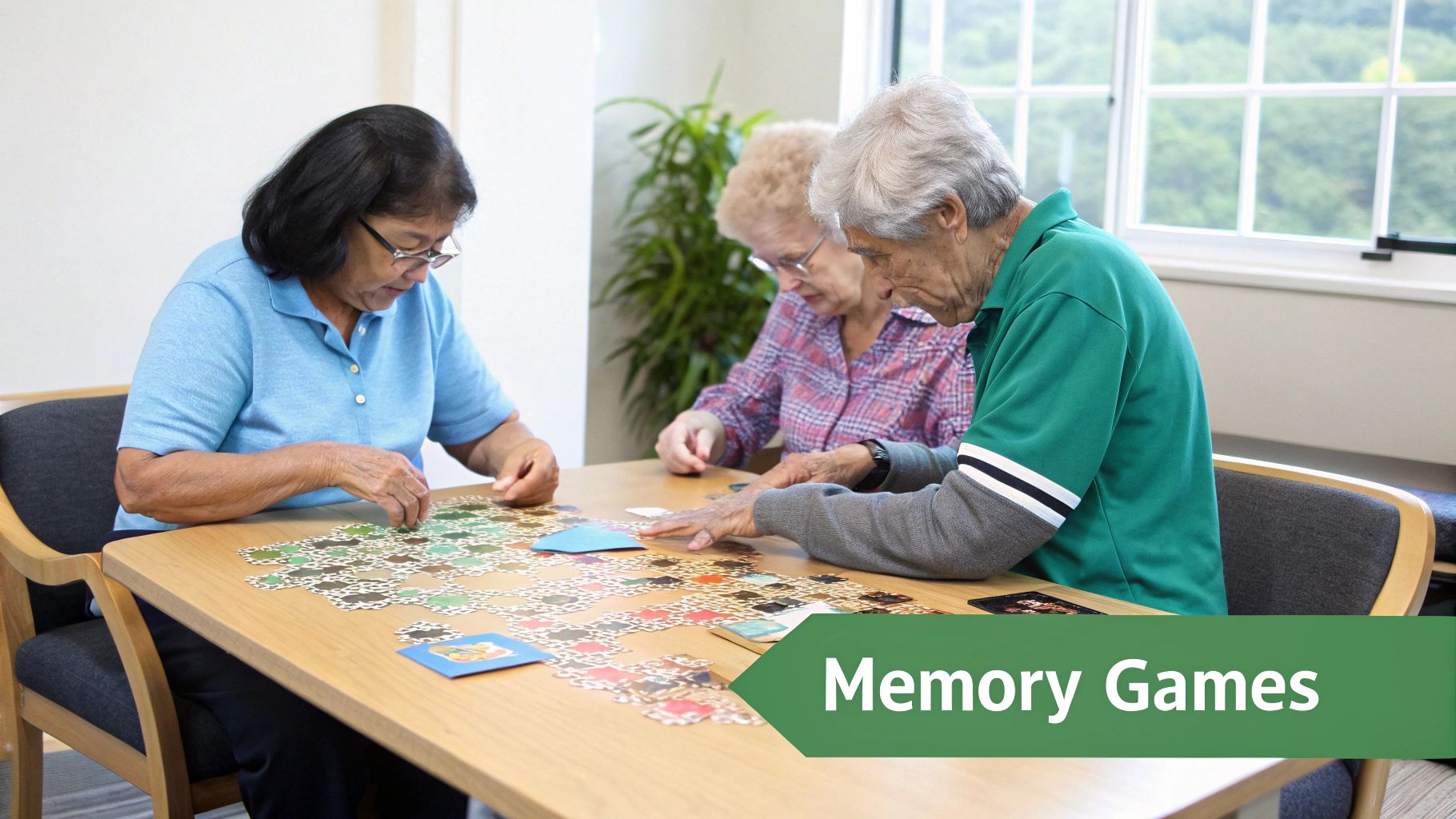
Cognitive stimulation activities are specifically designed games, puzzles, and exercises that engage the mind, support neural pathways, and improve quality of life for residents, particularly those with dementia or memory loss. These structured activities are a vital component of a comprehensive memory care program. They are not just for entertainment; they are therapeutic tools tailored to maintain mental sharpness and provide a sense of accomplishment.
These activities are especially important for residents experiencing cognitive decline. By providing engaging and appropriate challenges, facilities can foster an environment of success and purpose.
Why It's a Top-Tier Activity
Memory-focused games offer profound benefits that go beyond simple cognitive exercise. They can slow the progression of memory loss, reduce agitation, and improve mood by providing a structured, failure-free environment. Activities tied to a resident's life history or interests can trigger positive reminiscence and strengthen their sense of identity. This personalized approach is a cornerstone of modern memory care, which differs significantly from standard assisted living. Understanding these differences is key; you can explore more about specialized memory care vs. assisted living to see why this distinction is so important.
How to Implement a Successful Program
An effective cognitive stimulation program requires careful planning and adaptation to individual needs. At Forest Cottage Senior Care, our memory care activities are built around the principles of Validation Therapy and Montessori methods, ensuring each resident is engaged respectfully.
Actionable Steps for Implementation:
- Assess Cognitive Levels: Regularly evaluate each resident's cognitive abilities to match them with activities that are challenging but not frustrating. The goal is engagement, not perfection.
- Personalize Activities: Use life history questionnaires to incorporate residents' past professions, hobbies, and interests. A former accountant might enjoy number games, while a gardener may prefer sorting flower seeds.
- Create a Calm Environment: Conduct activities in a quiet, well-lit space free from distractions like a loud television. This helps residents focus and reduces potential anxiety.
- Rotate and Diversify: Keep the program fresh by introducing new games weekly. Use a mix of digital tools like senior-friendly cognitive apps and hands-on activities like large-print bingo or sorting tasks.
- Celebrate Effort: Focus on participation and enjoyment rather than correct answers. Offer praise for effort and celebrate small victories to build confidence and self-esteem.
3. Intergenerational Programs and Community Engagement
Intergenerational programs are structured activities that bring seniors together with younger people, such as elementary students, college volunteers, or young families. These initiatives are designed to bridge generational gaps, foster mutual understanding, and create vibrant community connections. Instead of seniors being passive recipients of care, these programs position them as mentors, storytellers, and active participants, providing a deep sense of purpose and combating social isolation.
These powerful assisted living facility activities create reciprocal benefits. Younger participants gain wisdom and historical perspective from seniors, while residents experience renewed energy, learn new skills, and feel more connected to the broader community. Popular models include reading buddy programs with local schools, partnerships with college service-learning courses, and legacy projects where residents share life stories.
Why It's a Top-Tier Activity
Engaging with different generations provides profound emotional and cognitive benefits. These interactions can significantly reduce feelings of loneliness and depression, which are common challenges in senior living. For residents with mild cognitive impairment, teaching a skill or sharing a story can stimulate memory and enhance verbal skills. These programs also affirm a resident’s value and life experience, boosting self-esteem and creating a legacy that extends beyond the facility walls.
How to Implement a Successful Program
A successful intergenerational program requires careful planning, clear communication, and a focus on safety and mutual respect. At Forest Cottage Senior Care, we prioritize creating meaningful connections with our Willis community partners to ensure every event is enriching for both residents and guests.
Actionable Steps for Implementation:
- Start with a Pilot Program: Begin with a small, manageable project, like a monthly pen pal exchange or a single storytelling event with a local classroom. This allows you to test compatibility and work out logistics before launching a larger initiative.
- Establish Clear Partnerships: Formally partner with local schools, universities, or youth organizations. Develop clear guidelines, roles, and safety protocols, including mandatory background checks for all regular adult volunteers interacting with residents.
- Provide Volunteer Training: Prepare younger participants by providing training on how to communicate effectively with older adults, especially those with hearing, mobility, or cognitive limitations. This ensures positive and respectful interactions.
- Create Adaptable Activities: Design activities that accommodate mixed abilities. For example, a gardening project can include tasks like planting seeds at a table for those in wheelchairs and digging for more mobile participants.
- Leverage Technology: To further enhance interaction and participation within your facility, exploring the best tools for community engagement can help streamline communication with partner organizations and families.
- Document and Celebrate: Capture moments through photos and videos (with permission) and share them in newsletters or on a community bulletin board. Celebrating these connections reinforces the program's value and encourages ongoing participation.
4. Horticultural Therapy and Garden Activities
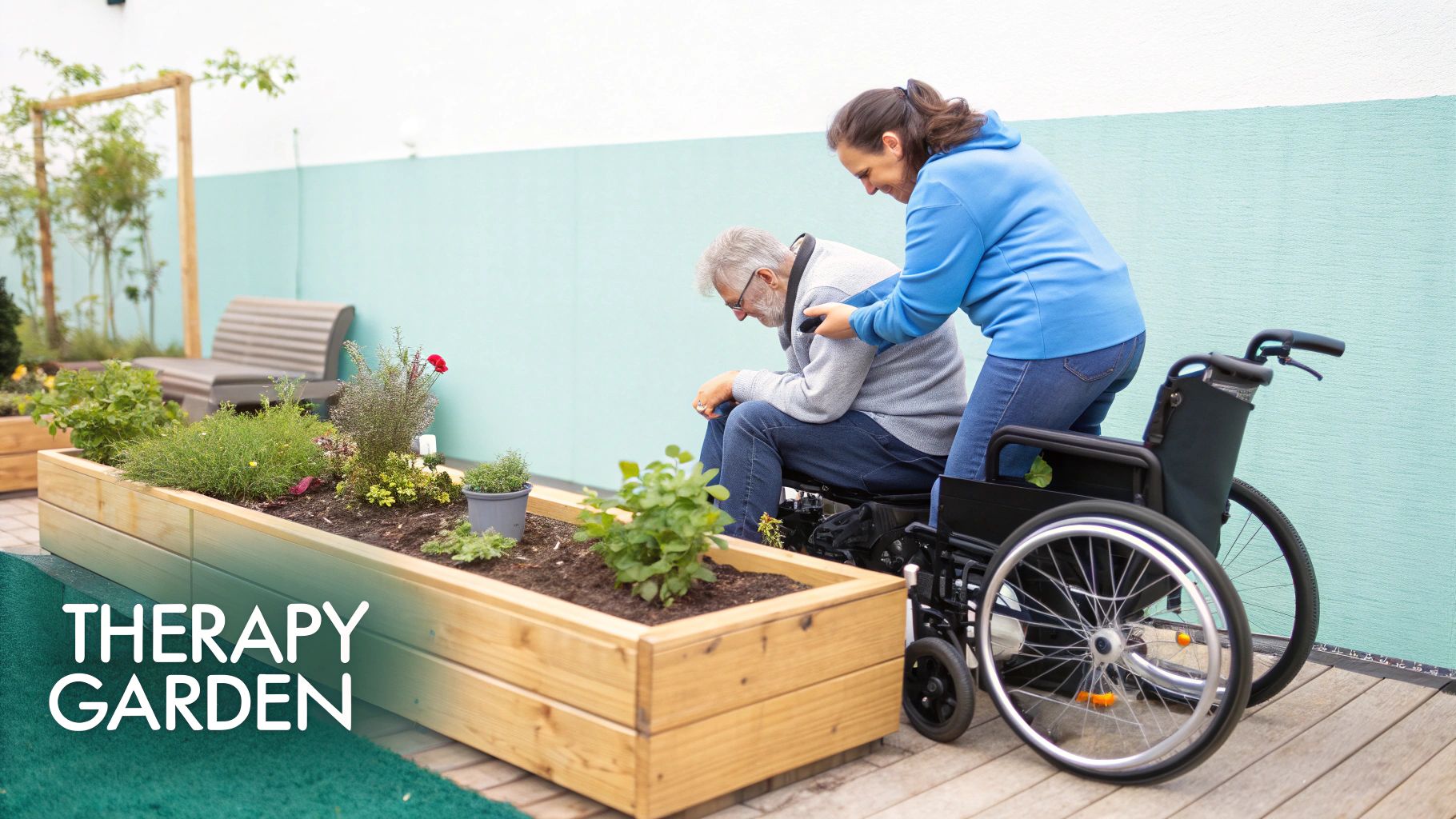
Horticultural therapy is a professionally guided program that uses gardening and plant-based activities to achieve specific therapeutic goals. As one of the most grounding assisted living facility activities, it connects residents with nature, promoting physical and mental well-being. This is more than just casual gardening; it involves structured sessions in specially adapted indoor or outdoor spaces, allowing residents to nurture life and see the tangible results of their care.
The practice leverages the sensory experience of working with soil, plants, and water to improve motor skills, cognitive function, and emotional health. From planting seeds to harvesting vegetables for a community meal, each step offers a sense of purpose and accomplishment.
Why It's a Top-Tier Activity
Gardening provides gentle, low-impact physical exercise that improves strength, flexibility, and coordination. The focus required for tasks like planting and weeding also enhances cognitive function and reduces agitation, particularly for residents with dementia. Being outdoors in the fresh air and sunlight boosts Vitamin D levels and improves mood, effectively combating depression and anxiety. This activity fosters social connection as residents work alongside one another, sharing tips and celebrating their collective harvest.
How to Implement a Successful Program
Creating an accessible and thriving garden space is key to a successful horticultural therapy program. At Forest Cottage Senior Care, we design our garden activities to be inclusive, safe, and deeply rewarding for every resident, regardless of their physical abilities.
Actionable Steps for Implementation:
- Design Accessible Spaces: Build raised garden beds approximately 24-30 inches high to allow comfortable access for residents in wheelchairs or those who cannot bend easily. Ensure pathways are wide, smooth, and free of obstacles.
- Use Adaptive Tools: Provide lightweight, ergonomic gardening tools with large, padded grips. These are easier for individuals with arthritis or limited hand strength to use, promoting independence and reducing strain.
- Select Appropriate Plants: Start with hardy, low-maintenance plants like herbs (mint, lavender), succulents, or vegetables like cherry tomatoes and lettuce. Incorporate sensory elements with fragrant flowers and textured leaves.
- Prioritize Safety and Comfort: Schedule gardening sessions during cooler morning or late afternoon hours. Provide ample shade structures, comfortable seating, and a nearby hand-washing station. Always ensure residents are hydrated.
- Create Purposeful Outcomes: Connect the gardening activity to other aspects of community life. Use harvested herbs and vegetables in the facility's kitchen, arrange flowers for common areas, or host a small farmers' market for families.
5. Wellness and Movement Classes (Adapted Fitness)
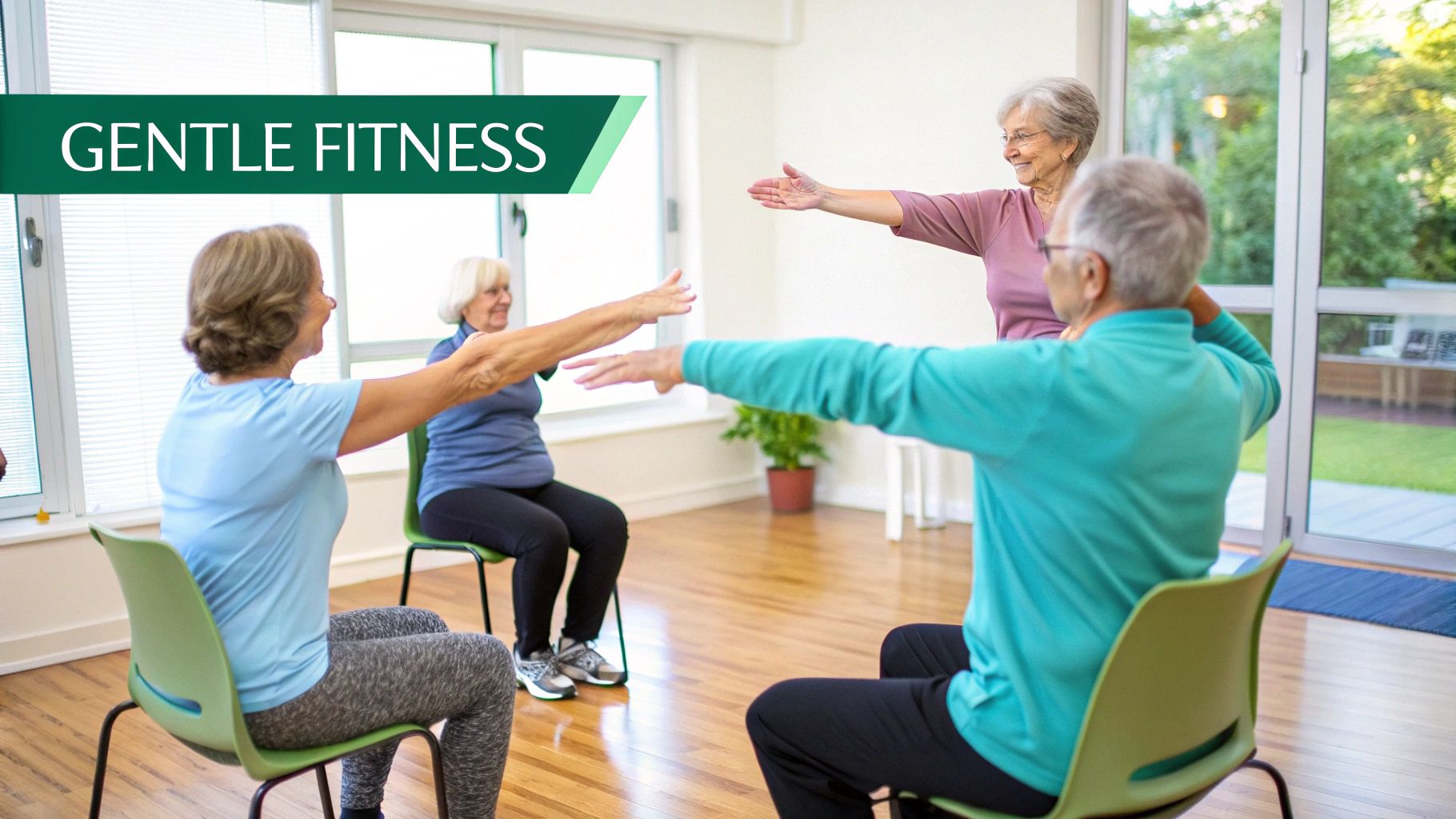
Wellness and movement classes are structured physical activity programs specifically designed and adapted for the varying mobility levels of older adults. As a key component of engaging assisted living facility activities, these sessions go beyond simple exercise; they are tailored to improve balance, strength, flexibility, and cardiovascular health in a safe, supportive group setting. Programs often include seated yoga, tai chi for fall prevention, chair aerobics, and gentle stretching routines.
These classes are led by instructors trained to work with seniors, ensuring that every movement is beneficial and appropriate. By adapting traditional exercises, such as using chairs for support, these programs make the physical and mental benefits of fitness accessible to everyone, regardless of their physical limitations.
Why It's a Top-Tier Activity
Adapted fitness classes are fundamental for promoting physical independence and reducing the risk of falls, a major concern for seniors. Regular participation enhances muscle tone, improves joint mobility, and boosts cardiovascular endurance. Beyond the physical benefits, these group classes foster a sense of community and camaraderie, combating social isolation. The release of endorphins during exercise also serves as a natural mood booster, helping to alleviate symptoms of depression and anxiety while promoting better sleep patterns.
How to Implement a Successful Program
Creating an effective and safe adapted fitness program requires careful planning and professional oversight. At Forest Cottage Senior Care, we prioritize resident safety and enjoyment by collaborating with certified senior fitness experts to develop our wellness curriculum. For a deeper look into our comprehensive approach to activities, you can learn more about our engaging assisted living activities for seniors on forestcottageseniorcare.com.
Actionable Steps for Implementation:
- Partner with Professionals: Hire certified senior fitness instructors or partner with established programs like SilverSneakers. Their expertise ensures exercises are safe, effective, and appropriately modified for participants.
- Obtain Medical Clearance: Before a resident joins any new fitness class, ensure you have medical clearance from their physician. This step is critical for tailoring activities to individual health needs and limitations.
- Offer Variety and Consistency: Provide a diverse schedule with different types of classes (e.g., yoga, tai chi, strength) at various times to appeal to different interests and energy levels. A consistent schedule helps build a routine.
- Create a Positive Environment: Use uplifting music and constant positive reinforcement to motivate participants. Keep classes to a manageable length, typically 30-45 minutes, to prevent fatigue, and always include scheduled water and rest breaks.
- Monitor and Celebrate: Staff should actively monitor residents for signs of overexertion and be prepared to adjust activities as needed. Celebrate milestones and progress, no matter how small, to build confidence and encourage continued participation.
6. Arts, Crafts, and Creative Expression Programs
Arts, crafts, and creative expression programs are structured activities designed to nurture residents' self-expression, cognitive function, and emotional well-being. These programs are far more than simple pastimes; they are therapeutic outlets that celebrate creativity at any skill level. The focus is on the joy of the creative process, offering everything from painting and quilting to sculpture and creative writing.
These programs are inclusive and adaptable, making them a cornerstone of well-rounded assisted living facility activities. Whether a resident is a lifelong artist or picking up a paintbrush for the first time, these sessions provide a non-judgmental space to explore new skills, revisit old hobbies, and create something personally meaningful.
Why It's a Top-Tier Activity
Creative expression offers profound benefits for seniors. Engaging in artistic pursuits can improve cognitive functions like memory and problem-solving, while the fine motor skills required for painting, drawing, or crafting help maintain dexterity and hand-eye coordination. Emotionally, art provides a powerful way to process feelings and communicate experiences, reducing stress and anxiety. Completing a project, no matter how small, delivers a significant sense of accomplishment and boosts self-esteem.
How to Implement a Successful Program
A successful creative arts program is built on variety, accessibility, and celebration. At Forest Cottage Senior Care, we champion artistic exploration by providing the right tools and encouragement, ensuring every resident can participate and feel proud of their work.
Actionable Steps for Implementation:
- Offer Diverse Mediums: Provide a wide range of materials to appeal to different interests, such as watercolors, acrylics, clay, yarn, and fabric. For residents interested in textile arts, an excellent starting point is to understand the fundamentals covered in this guide to cross stitch: What Is Cross Stitch? A Beginner’s Guide to This Relaxing Needlecraft.
- Provide Adaptive Tools: Ensure everyone can participate by offering adaptive equipment like large-grip paintbrushes, spring-loaded scissors, or tabletop easels for those with arthritis or limited mobility.
- Focus on Process, Not Product: Emphasize the enjoyment of creating over the perfection of the final piece. This approach reduces pressure and encourages residents who may feel hesitant about their artistic abilities.
- Create a Resident Gallery: Designate a prominent wall or display case to showcase residents' finished artwork. Hosting small art shows or gallery nights for families and friends celebrates their creativity and hard work.
- Facilitate Group Projects: Organize collaborative projects, like a group quilt or a community mural. These activities foster teamwork, strengthen social bonds, and result in a shared sense of accomplishment.
7. Spiritual and Religious Programs
Spiritual and religious programs are essential assisted living facility activities designed to support the diverse faith traditions and personal beliefs of residents. These activities go beyond simple worship services to include meditation groups, prayer circles, scripture studies, and faith-based discussions that nurture the inner self. This approach recognizes spirituality as a vital component of holistic wellness, offering comfort, purpose, and a sense of community.
These programs are inclusive and respectful, catering to a wide range of beliefs, from various Christian denominations to Judaism, Islam, Buddhism, and secular humanism. The goal is not to promote a single faith but to provide residents with the resources and opportunities to practice their own beliefs in a supportive environment. This can involve partnerships with local faith communities, volunteer clergy visits, and creating dedicated spaces for quiet reflection.
Why It's a Top-Tier Activity
Spiritual and religious programs provide profound emotional and psychological benefits. For many seniors, faith is a lifelong source of strength and comfort, and continuing these practices provides a crucial sense of continuity and stability during a life transition. These activities can reduce feelings of anxiety and isolation, foster hope, and help residents find meaning and peace.
Group activities like Bible study or prayer meetings also strengthen social bonds, creating a community of shared values and support. For residents facing health challenges or end-of-life considerations, spiritual care becomes an invaluable resource for navigating complex emotions and finding solace.
How to Implement a Successful Program
A successful spiritual program is built on respect for diversity and a commitment to meeting individual needs. At Forest Cottage Senior Care, we ensure our spiritual life offerings are resident-driven and inclusive, honoring each person's unique journey.
Actionable Steps for Implementation:
- Document Spiritual Preferences: During intake, respectfully gather information about a resident's spiritual or religious background, preferences, and any specific needs or practices. This ensures care is personalized from day one.
- Forge Community Partnerships: Connect with local churches, temples, mosques, and other faith-based organizations in the Willis, Texas area. Invite volunteer clergy, lay leaders, and choirs to lead services, discussion groups, or provide one-on-one visits.
- Create a Sacred Space: Designate a quiet, peaceful room as a multi-faith chapel or meditation space. Keep it accessible 24/7 and stock it with a variety of religious texts and respectful spiritual symbols.
- Offer Diverse Programming: Schedule a variety of activities to cater to different needs. This could include Catholic Mass, Protestant services, non-denominational spiritual music hours, guided meditation sessions, and discussion groups on universal themes like gratitude and forgiveness.
- Train Staff on Spiritual Sensitivity: Educate staff on the importance of spiritual care and how to respectfully support residents' diverse beliefs. This includes knowing who to contact for spiritual support and how to accommodate rituals or dietary practices.
8. Social Events, Dining, and Entertainment Programs
Regular social events, themed dining, and live entertainment are foundational assisted living facility activities designed to foster a vibrant community spirit and combat social isolation. These programs transform communal spaces into hubs of joy and connection, offering residents shared experiences that build friendships and create lasting memories. These aren't just parties; they are thoughtfully planned events that cater to diverse tastes and support residents' social and emotional health.
From weekly happy hours with live music to themed monthly dinners and holiday celebrations, these gatherings provide a structured yet relaxed environment for interaction. Events like a resident talent show or a New Year's Eve gala give everyone something to look forward to, breaking up daily routines and injecting excitement into community life.
Why It's a Top-Tier Activity
A robust social calendar is essential for preventing the loneliness and depression that can affect seniors. These events encourage residents to leave their apartments, engage with neighbors, and form meaningful bonds. Shared experiences during a fun dinner or a lively performance create common ground and spark conversations, strengthening the social fabric of the community.
Furthermore, these activities provide sensory and cognitive stimulation. Listening to a live musical performance, tasting new foods at a themed dinner, or participating in a holiday sing-along engages the senses and can even evoke positive memories. These programs are a core part of creating a fulfilling, active lifestyle, a key component of what services are included in assisted living.
How to Implement a Successful Program
Creating a dynamic and inclusive events calendar requires careful planning and resident input. At Forest Cottage Senior Care, our social programs are designed to be engaging, accessible, and reflective of our residents' interests.
Actionable Steps for Implementation:
- Create a Diverse Calendar: Develop a monthly activities calendar with a wide variety of events. Mix large-scale parties with smaller, more intimate gatherings, and include different entertainment types like local musicians, magicians, or historical lecturers to appeal to everyone.
- Incorporate Resident Input: Form an activities committee with resident volunteers. Survey residents regularly to ask what entertainers they'd like to see or what dinner themes they would enjoy. This ensures the program reflects their preferences.
- Leverage Themed Dining: Partner with the culinary team to create themed dinners that complement social events. A Hawaiian luau with tropical food and a hula dancer, or an Italian night with pasta and a live accordion player, makes the experience immersive and memorable.
- Promote Events Effectively: Announce events well in advance through newsletters, flyers in common areas, and personal invitations from staff. Build anticipation by sharing photos from past events to encourage participation.
- Ensure Accessibility: Plan events in spaces that accommodate wheelchairs and walkers. For entertainment, ensure clear sightlines and good acoustics. Offer transportation to and from the event space within the facility for those who need it.
9. Educational Workshops and Lifelong Learning Programs
Lifelong learning programs are structured educational opportunities that offer continuous intellectual stimulation through workshops, classes, and guest speakers. These programs are far more than simple pastimes; they are powerful assisted living facility activities designed to honor a resident's desire for personal growth and maintain sharp cognitive function. The focus is on purposeful engagement, providing a platform for seniors to explore new interests or deepen existing knowledge.
These activities can range from art history lectures and current events discussions to practical technology workshops teaching residents how to video call their families. The goal is to create an environment that mirrors the engaging, intellectually vibrant settings found in programs like the Osher Lifelong Learning Institutes (OLLI) or university extension courses.
Why It's a Top-Tier Activity
Educational workshops directly combat cognitive decline by challenging the mind and encouraging active learning. Engaging with new subjects helps create new neural pathways, which can improve memory, problem-solving skills, and overall mental acuity. These programs also provide a profound sense of purpose and accomplishment, boosting self-esteem and fighting feelings of stagnation. Socially, they connect residents with shared interests, fostering deep conversations and building strong community bonds around a common intellectual pursuit.
How to Implement a Successful Program
A thriving educational program requires thoughtful planning and accessibility. At Forest Cottage Senior Care, we integrate lifelong learning into our diverse programming to ensure every resident has an opportunity to engage their mind. These offerings are prominently featured on our assisted living calendars of activities.
Actionable Steps for Implementation:
- Partner with Local Experts: Collaborate with local community colleges, libraries, museums, or historical societies. These organizations often have outreach programs or guest speakers who are eager to present to senior communities.
- Leverage Resident Talent: Survey residents to identify their past professions, skills, and hobbies. A retired professor, artist, or engineer may be thrilled to lead a workshop, adding a personal and meaningful touch to the program.
- Ensure Accessibility: Use large-print materials, ensure proper lighting, and provide assistive listening devices like hearing loops. Recording sessions allows residents who were unable to attend to watch them later.
- Foster Interaction: Design sessions to be interactive rather than passive lectures. Incorporate Q&A segments, group discussions, or hands-on components to keep participants actively engaged.
- Offer Recognition: Provide simple certificates of completion or recognition for finishing a course series. This small gesture validates the effort and learning, providing a tangible sense of achievement.
10. Transportation and Community Outings Programs
Transportation and community outings are vital assisted living facility activities designed to keep residents connected to the world beyond the facility's walls. These organized trips offer a change of scenery and a sense of normalcy, allowing seniors to visit local attractions, restaurants, shopping centers, and cultural events. Far from just a bus ride, these are carefully planned excursions that promote independence, social engagement, and mental stimulation.
These programs rely on safe, accessible transportation and thoughtful planning to ensure every resident can participate comfortably. From a scenic drive to enjoy seasonal foliage to a group lunch at a favorite local diner, these outings provide opportunities for new experiences and cherished memories, reinforcing a resident's connection to their local community.
Why It's a Top-Tier Activity
Community outings directly combat feelings of isolation and confinement that can sometimes arise in a residential care setting. Getting out and about provides crucial mental stimulation by exposing residents to new environments, people, and activities. It also encourages light physical activity, such as walking through a museum or browsing in a shop.
These trips empower residents by giving them choices and a sense of control over their social lives. Regular outings maintain community ties, helping seniors feel like active, engaged members of society, which is fundamental to their overall happiness and well-being.
How to Implement a Successful Program
A successful outings program prioritizes safety, accessibility, and resident interests. At Forest Cottage Senior Care, we understand that maintaining a connection to the local Willis community is essential, and our transportation services are tailored to make these outings seamless and enjoyable. Learn more about our approach to senior transportation.
Actionable Steps for Implementation:
- Survey Resident Interests: Before planning, poll residents to discover where they want to go. Create a list of preferred destinations, such as parks, theaters, local stores, or restaurants, to ensure high participation and enjoyment.
- Assess Needs and Plan Ahead: Evaluate the mobility and health needs of each interested resident. Choose accessible destinations with ramps, elevators, and accommodating restrooms. Plan the route, schedule rest breaks, and confirm arrangements with the venue in advance.
- Prioritize Safety: Ensure the vehicle is equipped with a first-aid kit, emergency contact information, and any necessary medications. Have an appropriate staff-to-resident ratio, pairing individuals who may need extra support with a dedicated companion.
- Maintain a Consistent Schedule: Establish a regular schedule for outings, such as a weekly shopping trip or a monthly lunch event. This predictability allows residents to plan and look forward to participating.
- Capture and Share Memories: Designate a staff member or a resident volunteer to take photos during the outing. Share these images in a community newsletter or on a digital photo frame for all to enjoy, reinforcing the positive experience.
Comparison of 10 Assisted Living Activities
| Program (Item) | 🔄 Implementation Complexity | ⚡ Resource & Staffing | ⭐ Expected Effectiveness | 📊 Expected Outcomes | 💡 Ideal Use Cases |
|---|---|---|---|---|---|
| Pet Therapy Programs with Goldendoodles | Moderate–High — requires certification, protocols, handler coordination | High — certified therapy dogs, handlers, grooming, liability management | ⭐⭐⭐⭐⭐ — very effective for mood and social engagement | 📊 Reduced anxiety/BP, increased social interaction, improved mood (esp. memory loss) | 💡 Memory care, weekly group/individual visits, emotional support |
| Memory Care Games & Cognitive Stimulation | Low–Moderate — activity adaptation and staff training needed | Low–Moderate — games, puzzles, occasional digital apps, staff facilitation | ⭐⭐⭐⭐ — strong for cognitive maintenance when consistent | 📊 Slows cognitive decline, boosts engagement and confidence | 💡 Dementia/memory-loss residents, daily or multiple weekly sessions |
| Intergenerational Programs & Community Engagement | Moderate — scheduling, background checks, coordination with schools/volunteers | Low — volunteer time, staff facilitator, minimal materials | ⭐⭐⭐⭐ — high social and emotional impact | 📊 Reduces isolation, increases sense of purpose and visitation rates | 💡 Community partnerships, storytelling/mentoring, school visits |
| Horticultural Therapy & Garden Activities | Moderate — accessible garden design and safety planning required | Moderate — garden space, raised beds, tools, seasonal supplies | ⭐⭐⭐⭐ — effective for mood, physical activity, sensory engagement | 📊 Improved mood, purposeful activity, possible fresh produce | 💡 Accessible outdoor spaces, sensory gardens, small-group gardening |
| Wellness & Movement Classes (Adapted Fitness) | Moderate — certified senior instructors and medical screening needed | Moderate — instructors, space, simple equipment, scheduling | ⭐⭐⭐⭐⭐ — highly effective for balance, mobility, fall reduction | 📊 Improved strength/balance, reduced fall risk, better sleep | 💡 Fall prevention, chronic condition management, regular classes |
| Arts, Crafts & Creative Expression | Low — material setup and storage, occasional instruction | Low–Moderate — supplies, adaptive tools, space for displays | ⭐⭐⭐⭐ — strong for emotional expression and engagement | 📊 Increased self-esteem, reduced anxiety, social bonding | 💡 Legacy projects, group crafts, diverse mediums to suit abilities |
| Spiritual & Religious Programs | Low–Moderate — must ensure inclusivity and trained spiritual care | Low — volunteer clergy/chaplain, quiet spaces, event coordination | ⭐⭐⭐⭐ — effective for residents who are spiritually engaged | 📊 Enhanced meaning, coping, bereavement support, community belonging | 💡 End-of-life support, grief groups, interfaith services |
| Social Events, Dining & Entertainment | Moderate — event planning, catering, space and staffing needs | Moderate — staff time, entertainers, food service, AV support | ⭐⭐⭐⭐ — very effective for social connection and morale | 📊 Reduced loneliness, improved mood, higher family engagement | 💡 Themed dinners, talent shows, monthly calendars for variety |
| Educational Workshops & Lifelong Learning | Moderate — sourcing instructors and adapting content for seniors | Low–Moderate — guest speakers, materials, AV equipment | ⭐⭐⭐⭐ — effective for cognitive engagement and growth | 📊 Delays cognitive decline, increases digital literacy and purpose | 💡 Lecture series, tech classes, university partnerships |
| Transportation & Community Outings Programs | Moderate–High — accessible vehicles, driver training, scheduling, safety | High — vans with lifts, trained drivers, insurance and logistical support | ⭐⭐⭐⭐ — highly effective for community access and stimulation | 📊 Maintains independence, varied stimulation, supports appointments | 💡 Shopping, cultural outings, medical appointments, regular weekly trips |
Creating a Thriving Community: How Forest Cottage Senior Care Puts These Ideas into Action
The journey through the diverse world of assisted living facility activities reveals a powerful truth: engagement is the cornerstone of a vibrant, fulfilling life at any age. We've explored everything from the calming presence of pet therapy Goldendoodles and the cognitive benefits of memory care games to the social joy of community outings and the creative fulfillment of arts and crafts. A truly exceptional activities program is not merely a schedule of events; it is a dynamic, person-centered framework that supports the physical, mental, emotional, and social well-being of every resident.
The key takeaway is that variety and personalization are paramount. A successful program moves beyond generic offerings and embraces a holistic approach. It understands that one resident may find peace and purpose in a horticultural therapy session, while another thrives on the intellectual stimulation of a lifelong learning workshop. By providing a rich tapestry of options-spanning social, physical, creative, and spiritual domains-a community empowers its residents, fosters meaningful connections, and affirms their individuality.
The Impact of a Thoughtfully Designed Program
Mastering this concept is what separates a good facility from a great one. When activities are designed with intention and implemented with compassion, they become more than just a way to pass the time. They become therapeutic interventions, social catalysts, and sources of profound joy.
- Enhanced Cognitive Function: Activities like memory games and educational workshops directly support brain health, helping to maintain cognitive skills and slow decline.
- Improved Physical Health: Adapted fitness and wellness classes improve mobility, balance, and strength, reducing fall risks and promoting independence.
- Boosted Emotional Well-being: Creative expression, spiritual services, and pet therapy can significantly reduce feelings of anxiety, depression, and loneliness.
- Strengthened Social Bonds: Group outings, shared dining experiences, and intergenerational programs build a strong sense of community and belonging.
This comprehensive approach transforms an assisted living facility from a place of care into a thriving home where residents can continue to learn, grow, and connect with the world around them.
Putting Principles into Practice at Forest Cottage Senior Care
At Forest Cottage Senior Care, located in the heart of Willis, Texas, these principles are not just ideas; they are the foundation of our community life. We believe that a robust and varied calendar of assisted living facility activities is a non-negotiable part of providing exceptional care. Our approach is deeply personal, recognizing that each resident has a unique history, distinct interests, and individual needs. We go beyond the standard checklist to create experiences that resonate.
Our signature Goldendoodle pet therapy program is a perfect example, bringing daily smiles and unconditional affection to our residents. Our no-cost transportation services ensure everyone can remain connected to the Willis community, whether for a doctor's appointment or a leisurely shopping trip. We integrate these diverse activities seamlessly, from quiet moments in our garden to lively social events, ensuring that every day offers opportunities for joy, purpose, and meaningful connection. We don't just fill a calendar; we build a community where every individual is seen, valued, and encouraged to live their best life.
Ready to see how a vibrant activities program can make a difference for your loved one? Discover the compassionate, person-centered approach at Forest Cottage Senior Care in Willis, Texas. Visit our website at Forest Cottage Senior Care to schedule a tour and see our thriving community in action.