
Bathing assistance is all about providing support with personal hygiene, whether that’s just keeping a watchful eye or offering complete hands-on help. This type of care is essential for keeping an older adult safe and healthy while making sure they feel respected and dignified, especially as mobility, balance, or memory changes over time.
Understanding the Need for Bathing Assistance
For most of us, the idea of needing help with something as private as bathing can feel like a huge loss of independence. It's a deeply personal part of our daily routine. The transition can stir up a lot of complicated feelings for both seniors and their families—things like fear, embarrassment, or even a strange sense of role reversal.
Suddenly, the bathroom can feel like the most dangerous room in the house. Slippery surfaces and hard fixtures become genuine hazards. It's no surprise that research shows a staggering 80% of falls among seniors happen in the bathroom.
This fear goes beyond just the physical risk of getting hurt; it's about facing a new reality. A senior might worry about losing their privacy, while an adult child may feel deeply uncomfortable providing such intimate care for their parent.
Shifting the Perspective on Care
Instead of looking at bathing assistance as a loss, it’s much healthier to reframe it as a collaborative partnership. Think of it like having a trusted co-pilot. The senior is still in charge of the flight, but they have skilled support right there with them to navigate any turbulence safely.
This approach keeps dignity at the forefront and focuses on empowerment, not dependence. The goal isn’t to take over, but to provide just the right amount of support to make bathing safe, comfortable, and respectful for everyone.
This diagram shows how that support can be layered.
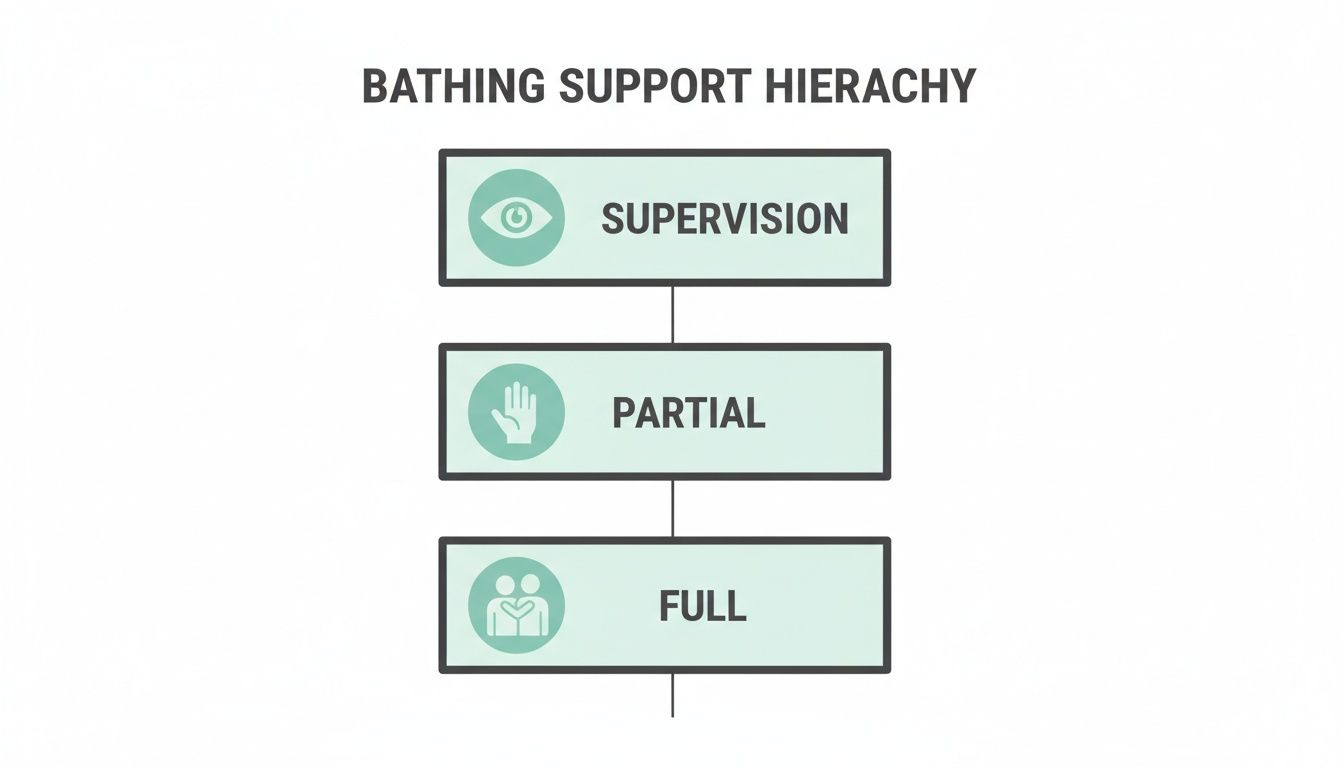
As you can see, help can scale from simple supervision for peace of mind all the way to full assistance for those with significant physical challenges.
Recognizing the Spectrum of Support
Bathing is one of several activities of daily living (ADLs) that can get tougher with age. You can learn more about what are activities of daily living in our detailed guide. Figuring out exactly what kind of help is needed is the first step to finding the right solution.
Assistance really falls along a spectrum:
- Supervision: This is when a caregiver is simply present nearby, ready to step in if needed but not actively involved. It acts as a safety net and can be a huge confidence booster.
- Partial Assistance: This involves help with specific tasks, like washing hard-to-reach places (like the back or feet), getting in and out of the tub safely, or providing a steadying hand.
- Full Assistance: For someone with severe mobility issues or cognitive decline, this means a caregiver handles the entire process—from transferring into the shower to washing, rinsing, and drying.
To help you visualize where your loved one might fit, here’s a quick breakdown of these support levels.
Levels of Bathing Support at a Glance
| Level of Assistance | Description of Support | Ideal For Seniors Who… |
|---|---|---|
| Supervision | A caregiver is present in or near the bathroom for safety but does not physically assist. | …are mostly independent but may have a fear of falling or occasional dizziness. |
| Partial Assistance | The caregiver helps with specific tasks like washing the back, feet, or hair, or helps with transfers. | …can perform most of the bathing themselves but struggle with mobility or reaching. |
| Full Assistance | The caregiver manages the entire bathing process, including washing, rinsing, and drying. | …have significant mobility limitations, cognitive decline, or are recovering from surgery. |
Understanding these distinctions makes it much easier to pinpoint the right level of care.
By recognizing where a loved one falls on this spectrum, families can introduce the right level of support at the right time, making the transition smoother and more dignified for everyone involved.
Why Bathing Becomes a Challenge with Age
What was once a simple, refreshing part of the daily routine can slowly become a source of anxiety and real risk for seniors. The bathroom, with its hard surfaces and slippery floors, often transforms into one of the most hazardous rooms in the house. Understanding why this happens means looking at a combination of physical, cognitive, and even emotional changes that come with getting older.
It’s rarely just one thing. Usually, it's a mix of factors that turns a basic hygiene task into a major hurdle for staying healthy and independent.
The Physical Hurdles of Bathing
The most obvious challenges are physical ones. Years of wear and tear on the body can make the simple act of stepping into a tub or standing steady under running water surprisingly difficult.
These changes happen gradually but have a huge impact on safety:
- Decreased Mobility and Flexibility: Conditions like arthritis can bring on joint pain and stiffness. This makes it tough to lift a leg over the side of a tub or bend down to wash feet.
- Poor Balance: Our sense of balance naturally weakens as we age. Standing on a wet, slippery surface becomes incredibly risky and dramatically increases the danger of a fall.
- Reduced Strength: A loss of muscle mass can make it hard to push up from a sitting position or to catch yourself if you start to feel unsteady.
These physical limits are a huge reason why bathing assistance for seniors is so important. One wobbly moment can lead to a serious injury, which then creates a cycle of fear that makes every future trip to the bathroom even more stressful. For more on this, you can check out our guide on preventing falls in assisted living facilities.
Cognitive and Sensory Changes
Beyond the physical, what’s happening in the mind can also make bathing complicated. For seniors living with dementia or Alzheimer's, the bathroom can become a confusing, even frightening, place.
The sensations of bathing might become overwhelming. The sound of running water, the sudden temperature change on the skin, or the feeling of a shower spray can all cause distress or agitation. Cognitive issues, like those common in Alzheimer's, can make bathing confusing, which is why specialized Alzheimer's care services are so critical. They might forget if they've already washed or simply not understand why it’s necessary, leading them to resist help.
For an individual with cognitive decline, a caregiver’s calm and reassuring presence is just as important as physical support. The goal is to create a peaceful experience, not just a clean outcome.
This challenge is only becoming more common. The World Health Organization projects that by 2030, 1 in 6 people worldwide will be 60 or older. Many of these individuals will need support with daily activities, and bathing assistance is one of the most critical parts of that care.
The Powerful Psychological Factors
Finally, we can't ignore the emotional side of things. The need for bathing assistance often brings up powerful feelings that can be just as big a barrier as any physical limitation.
- Loss of Privacy and Dignity: Bathing is an intensely private activity. Having to ask for help can feel embarrassing and like a major loss of personal dignity, particularly if the help comes from a family member.
- Fear of Falling: A previous fall—or even a close call—can create a deep-seated anxiety about bathing. This fear alone can be enough to make seniors avoid the bathroom entirely.
- Depression or Apathy: Sometimes, a lack of energy or motivation from depression can make the simple act of bathing feel like a monumental and unimportant effort.
These physical, cognitive, and emotional factors are all connected, and they build a strong case for why getting timely and respectful support is so vital. Facing these challenges head-on with the right kind of assistance helps seniors maintain their health, safety, and sense of self.
Creating a Safer Bathroom Environment
Let's face it, the bathroom can be one of the most hazardous rooms in the house for an older adult. But transforming it from a high-risk area into a safe, accessible space is one of the most important steps you can take. We're not talking about a full-scale renovation here; it’s about making smart, targeted changes to tackle the most common dangers.
The whole point is to minimize the risks that come with wet, slippery surfaces and the physical strain of getting in and out of a tub. Think of it as creating a stable, predictable environment where a senior feels secure, whether they’re bathing with supervision or getting help from a caregiver.
Essential Safety Equipment and Modifications
The right tools can make a world of difference. Each piece of equipment plays a specific role, working together to add layers of safety that protect against slips, falls, and overexertion. These aren't just nice-to-have accessories; they are non-negotiables for safe bathing.
Some of the most impactful additions you can make include:
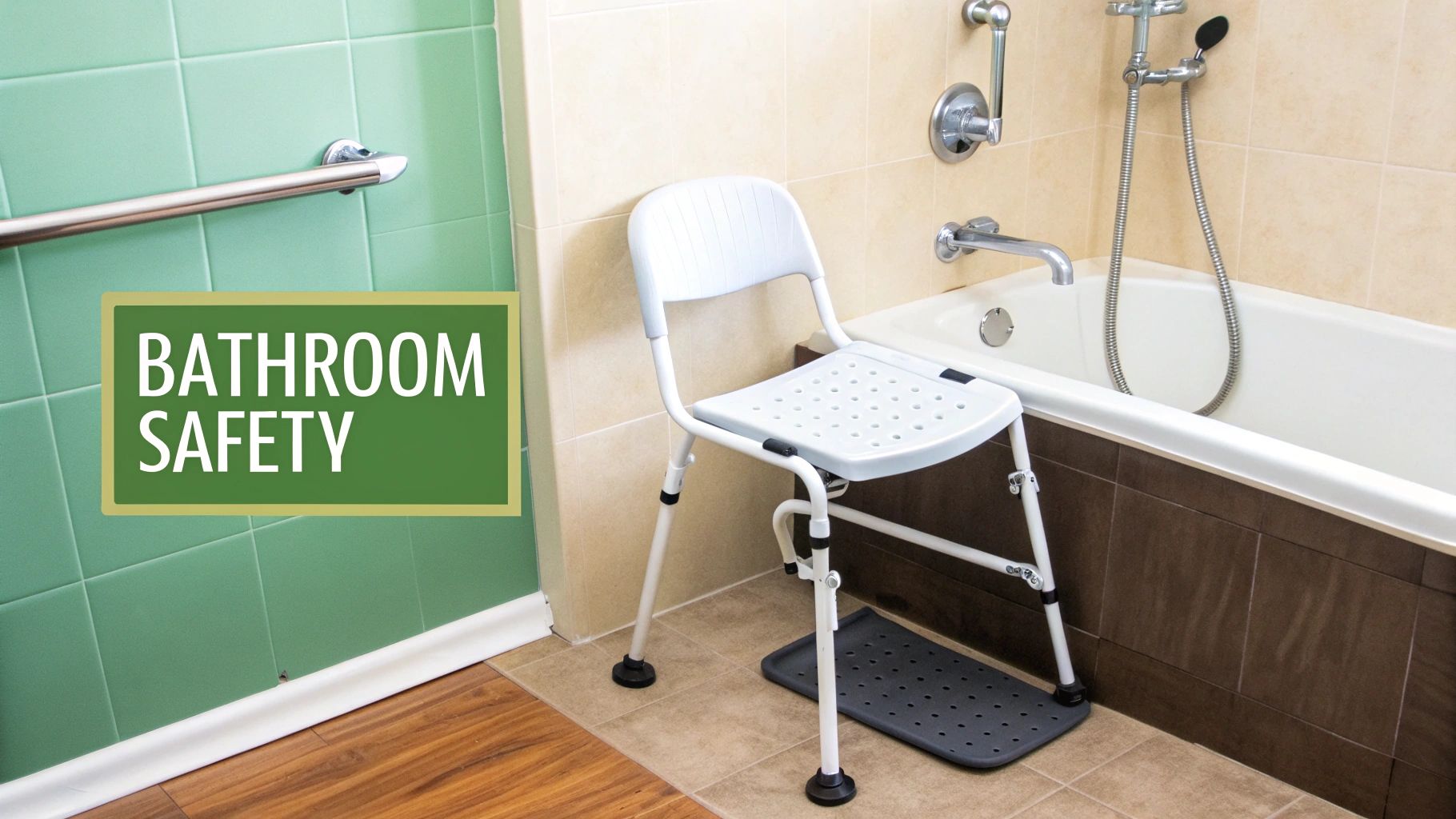
- Professionally Installed Grab Bars: These are the bedrock of bathroom safety. Don’t even think about using towel racks or those flimsy suction-cup handles. Real grab bars are anchored securely into wall studs and can support a person's full body weight, offering a reliable handhold exactly where it's needed.
- Non-Slip Mats or Strips: This is probably the easiest and most effective way to prevent a slip. Placing textured mats or strips both inside the tub or shower and on the floor outside provides that crucial traction on wet surfaces.
- Shower Chairs or Benches: For someone with limited strength or poor balance, standing for an entire shower can be exhausting and downright dangerous. A sturdy shower chair allows them to sit comfortably, saving energy and dramatically cutting down the risk of a fall.
A handheld showerhead is another simple but powerful tool. It gives the user or caregiver total control over the water flow, which is a game-changer for anyone who is seated. It also makes the whole experience feel less overwhelming than a fixed, overhead spray.
Weighing Larger Bathroom Remodels
For some families, more significant changes are the best path forward for long-term safety. While these projects are a bigger investment, they offer a permanent solution that truly adapts the home to evolving needs.
The most effective bathroom adaptations are those that remove barriers entirely. Instead of helping a senior navigate an obstacle, the goal is to eliminate the obstacle itself, making the space inherently safer and more user-friendly.
These major modifications often start with getting rid of the traditional tub, which is a massive trip-and-fall hazard. When you're considering a remodel, looking into dedicated walk-in shower or wet room options can make a huge impact on safety and daily use.
For a deeper dive into this process, our guide on bathroom remodeling for elderly is a great resource.
To help you sort through the bigger projects, here’s a look at the most common solutions.
Comparing Bathroom Safety Solutions
Choosing between major bathroom updates can be tricky. Each option has its own set of benefits, costs, and is best suited for different mobility levels. This table breaks down the key differences to help you decide what might work best for your loved one.
| Solution | Primary Benefit | Best For | Estimated Cost |
|---|---|---|---|
| Tub-to-Shower Conversion | Removes the high threshold of a bathtub, creating a low-entry or zero-entry shower stall. | Seniors with significant mobility challenges who find it difficult to step over a tub wall. | $2,000 – $8,000 |
| Walk-In Tub | Features a swinging door that allows a user to step in over a very low threshold and sit on a built-in seat. | Those who prefer a seated bath but can no longer use a traditional tub safely. | $5,000 – $20,000+ |
While walk-in tubs provide the comfort of a soaking bath, they come with some practical drawbacks. The bather has to sit inside while the tub fills and drains, which can take a long time and often leaves them feeling chilled.
For this reason, a tub-to-shower conversion with a zero-entry threshold is often the most practical and future-proof solution. It easily accommodates a shower chair or even a wheelchair, making it a flexible choice for years to come.
How to Provide Respectful Bathing Assistance
Helping a senior loved one with bathing is one of the most personal things a family caregiver can do. It’s a delicate situation that demands a real balance—you have to ensure their safety while also fiercely protecting their dignity. This isn't just about checking a task off a list; it’s about creating a calm, respectful experience that builds trust.
The best way to handle it is with empathy and a solid plan. By breaking the process down into three simple stages—preparation, communication, and assistance—you can turn a potentially stressful moment into a comfortable routine. This approach helps reduce anxiety for everyone involved.
The Preparation Stage: Creating a Calm Space
The right environment can make all the difference. A cold, sterile-feeling bathroom will only make someone more anxious, but a warm, welcoming space can help them relax. The goal is to get everything ready before your loved one even steps into the room. This makes the whole process feel smooth and uninterrupted.
Before you start, make sure you’ve covered these key steps:
- Gather All Supplies: Get everything within arm's reach. This means mild soap, shampoo, several soft towels (some for washing, some for drying), lotion, and a clean set of clothes.
- Warm the Room: Older adults get cold easily. Use a small space heater to warm up the bathroom ahead of time. And always check the water to make sure it's comfortably warm, not hot.
- Set a Soothing Tone: You could even play some of their favorite calming music. A quiet, peaceful atmosphere can do wonders for reducing stress and making the experience more pleasant.
This simple prep work shows you care about their comfort and have thought ahead to make them feel safe.
The Communication Stage: Guiding with Gentleness
Good communication is everything when it comes to providing respectful bathing assistance for seniors. This is your chance to empower them by keeping them in the loop every step of the way. Never rush or make assumptions. Instead, think of yourself as a gentle guide.
Explain what you’re about to do before you do it. Simple, clear phrases like, "Okay, I'm going to wash your back now," or "Let's get your foot so we can wash it," prevent any surprises and help them feel like they're still in control.
"The most dignified care happens when the person feels like a participant, not a patient. Asking for their preferences—what they want washed first, or if the water temperature feels right—restores a sense of autonomy in a situation where they may feel vulnerable."
Always ask for their input. This simple act of asking permission shows tremendous respect for their personal space and reminds them that you’re there to help, not to take over. It’s a person-centered approach that’s vital for helping them hold on to their sense of self.
The Assistance Stage: Prioritizing Privacy and Safety
When it's time for hands-on help, your focus should be on maximizing both their privacy and safety. The aim is to keep your loved one feeling as covered and secure as possible through the entire bath or shower.
Here are a few practical techniques that really help:
- Use Towels for Draping: Keep parts of the body that aren't being washed covered with a towel. You can place one over their lap and another over their upper body, only uncovering one small area at a time.
- Empower Them to Participate: Encourage them to do as much as they can on their own. Even if it's just washing their own face or arms, this little bit of independence can make a huge difference in their self-esteem.
- Maintain Conversation: Try to keep the focus on a friendly chat rather than the task itself. Talk about their day, a favorite memory, or what the grandkids are up to. This helps normalize the situation and turns a clinical task into a moment of connection.
Following a compassionate process like this highlights the skill that goes into quality personal care. It also shows why trained professionals can be so valuable—they specialize in these sensitive interactions every day, ensuring seniors get the expert and dignified support they deserve.
Knowing When to Seek Professional Care
For most families, caring for an aging parent at home feels like the right thing to do. It’s a loving, natural impulse. But there often comes a tipping point where providing safe, dignified bathing assistance becomes more than a family caregiver can handle alone.
Recognizing that moment isn’t about failure or giving up. It’s about making a clear-eyed, proactive decision to keep your parent safe and preserve their well-being.
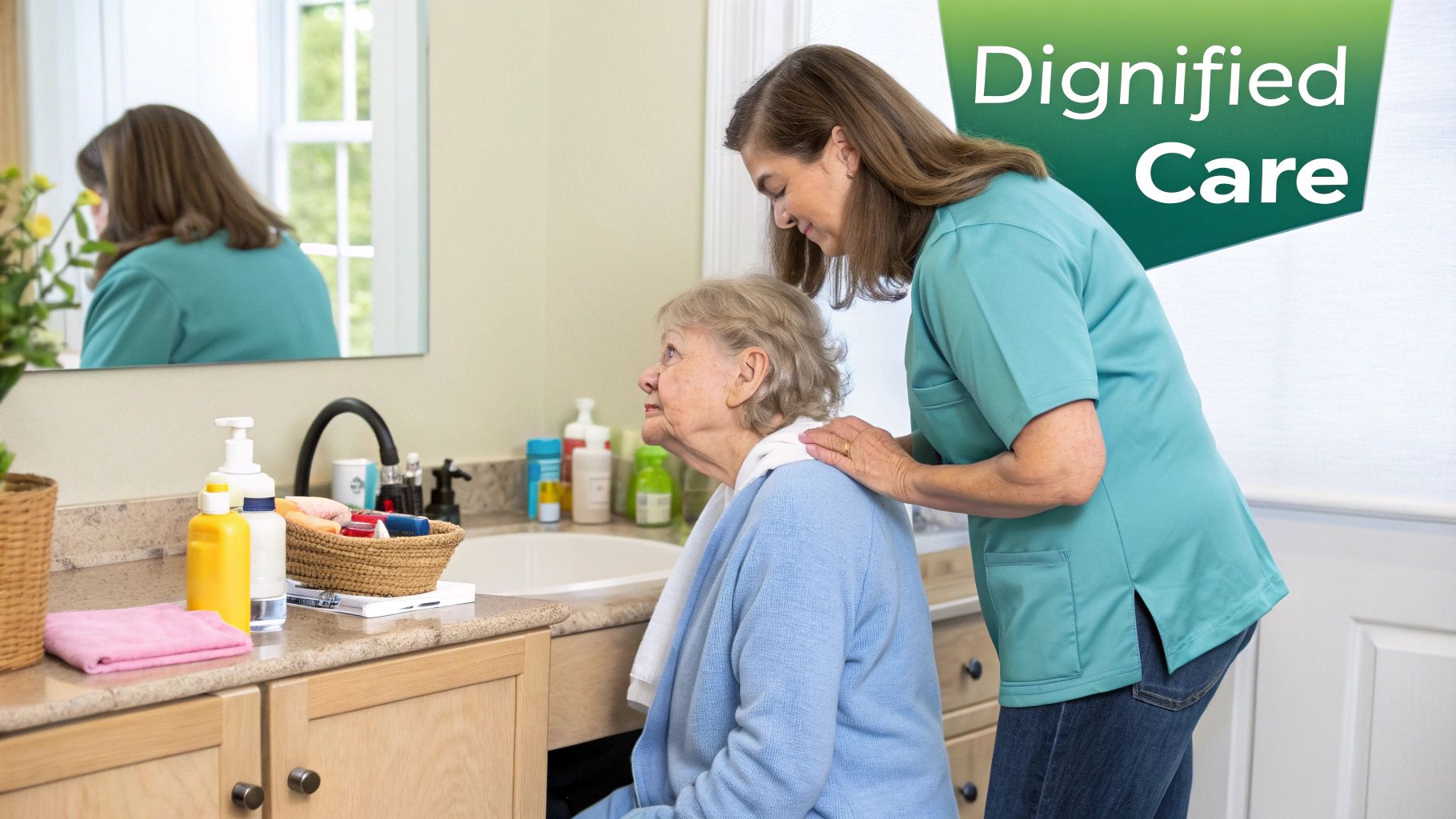
This shift usually happens when a senior’s physical needs change. Maybe their mobility has declined to the point where getting them into the shower is a two-person job. Or perhaps their balance has become so shaky that every trip to the bathroom feels like a high-risk, stressful event for everyone.
Signs It Might Be Time for a Change
Pinpointing the exact moment for a change is tough because it’s usually a slow, gradual process. But there are some clear signals that professional support is the next logical step—signs that revolve around safety, your relationship, and everyone’s overall health.
Ask yourself if you’re seeing any of these red flags:
- Growing Safety Concerns: Are you constantly on edge about falls? Have there been a few close calls in the bathroom? The simple act of helping them is becoming physically demanding and feels unsafe for both of you.
- Caregiver Burnout: You feel completely drained—physically, emotionally, maybe even a little resentful. When caregiving starts to take a toll on your own health and happiness, the situation just isn’t sustainable anymore.
- Increased Resistance from Your Parent: Many seniors feel a deep sense of embarrassment or discomfort receiving such intimate care from their own children. This can lead to arguments, a flat-out refusal to bathe, and a painful strain on your parent-child relationship.
When these challenges surface, just trying to push through can cause more harm than good. It can damage family dynamics and put your loved one in real danger. This is where understanding when is it time for assisted living becomes a vital part of the caregiving journey.
The Loving Choice to Restore Relationships
Let’s be clear: choosing professional care is not a failure. It’s a strategic choice to focus on what truly matters—your loved one’s safety and your relationship with them. Handing over the responsibility of personal care to trained professionals lets you step back from being a caregiver and just be their son or daughter again.
By letting experts manage the physical tasks, you reclaim the time and emotional energy to focus on connection, conversation, and shared moments of joy. It restores balance to the family dynamic.
This decision is backed by some sobering data. One study found that even when 80% of functionally limited older adults lived with family, a shocking 13% of those with bathing disabilities got no help at all. You can learn more about the disconnect between family presence and personal care. This gap highlights why communities like Forest Cottage Senior Care are so essential.
Professional caregivers are trained to handle these sensitive tasks with skill, empathy, and respect. They work in purpose-built environments with accessible showers, grab bars, and 24/7 support, removing the risks inherent in a typical home bathroom. This dedicated support system ensures your parent gets consistent, dignified care, which in turn, gives you priceless peace of mind.
Navigating the Costs of Senior Care
Let's talk about the financial side of things—it’s a critical piece of the puzzle when you're planning for senior care. The cost of safe, consistent bathing assistance can vary quite a bit, and getting a handle on the financial landscape helps families feel confident they're making the right call for their loved one. The choice usually boils down to two main options: hiring an in-home aide or moving to an assisted living community.
Each path has its own financial structure. In-home care is almost always billed by the hour. This can seem like a great deal if you only need a little help, but the costs can balloon quickly as care needs grow. On the other hand, an all-inclusive model in assisted living bundles services like bathing assistance into a single, predictable monthly fee.
In-Home Care Versus Assisted Living Costs
Hiring a private caregiver to help with bathing might run you anywhere from $25 to $45 per hour. If a loved one only needs a hand a few times a week, that's often a manageable expense. But what happens when their needs increase, requiring daily support or supervision for other activities? Those hourly costs can skyrocket, often climbing higher than the monthly rate for an assisted living community.
This is where assisted living communities offer a more predictable, and often more comprehensive, financial model.
The monthly fee for assisted living doesn't just cover bathing assistance. It typically includes meals, housekeeping, 24/7 staffing, medication management, and a full calendar of social activities. This bundled approach often provides far more value and peace of mind, as it eliminates surprise bills and ensures a constant safety net is in place.
This kind of comprehensive support is becoming more important than ever. The global elder care market was valued at a staggering $833.3 billion in 2023 and is expected to hit $1.1 trillion by 2028, all driven by the needs of our aging population. This trend really underscores the value of investing in professional assisted living, which provides reliable, expert care that reduces family stress and genuinely improves a senior's quality of life. You can learn more about the growing elder care market on bccresearch.com.
Financial Resources for Veterans
For veterans and their surviving spouses, there are some incredible financial resources available that can make assisted living much more affordable. The Department of Veterans Affairs (VA) offers a benefit known as the Aid and Attendance pension, designed specifically for this purpose.
This special pension provides a monthly payment to eligible veterans who need help with activities of daily living, including bathing. This money can be used to help pay for the costs of an assisted living community where these essential services are provided.
To qualify, a veteran must meet certain criteria related to their military service, income, and medical needs. The application process can be a bit detailed, but the financial support it provides can be a game-changer for families.
Other Payment and Planning Options
Beyond VA benefits, families have several other avenues to explore for funding senior care. Long-term care insurance is a popular option, as it's designed specifically to cover the costs of services like assisted living. It's crucial to read the policy's fine print to understand its coverage limits and any waiting periods.
As you plan, it's also smart to get a sense of what care costs in your specific area. To get a clearer picture of regional expenses, you can explore our detailed breakdown of assisted living costs in Texas. Building a financial roadmap with these resources helps families prepare effectively, ensuring their loved one gets the dignified bathing assistance they need without causing undue financial strain.
Common Questions About Senior Bathing
Stepping into the world of senior care means asking a lot of questions, especially around personal topics like bathing. Families just want to do what’s best for their loved ones, but it’s tough to know where to start or what’s “normal.” Below, you’ll find some clear, real-world answers to the questions we hear most often.
Getting a handle on these issues helps build your confidence. More importantly, it ensures you’re approaching your loved one’s care with both their safety and their dignity at the front of your mind. It’s all about finding a rhythm that works for everyone.
How Often Should a Senior Bathe?
There’s really no one-size-fits-all answer here. How often an older adult needs to bathe comes down to their health, skin condition, mobility, and even just what they’re used to. For many seniors, a full shower or bath 2-3 times per week is more than enough to stay clean and healthy.
In fact, bathing too often can strip the natural oils from fragile, aging skin, which can lead to dryness, cracking, and irritation. You can easily supplement less frequent baths with daily sponge baths to clean important areas. This keeps them comfortable and helps prevent skin problems. The goal is a consistent routine that keeps them healthy without causing stress.
The best bathing schedule is one that balances medical needs with your loved one's personal comfort and lifelong habits. It's a blend of good hygiene and human dignity.
What if My Parent Refuses Help from Me?
This is an incredibly common challenge, and it's completely understandable. The need for privacy is a powerful, lifelong instinct. Accepting that kind of intimate help from a son or daughter can feel deeply embarrassing and flip the parent-child relationship on its head. It’s a role reversal that’s often uncomfortable for everyone involved.
This is where a professional caregiver can make a world of difference. Seniors are often much more willing to accept help from a trained professional who is seen as a neutral, outside helper. It removes all the emotional baggage from the situation. This allows your parent to get the safe, dignified bathing assistance for seniors they need, while you get to preserve your relationship. It lets you go back to being a son or daughter, not just a caregiver.
How Is Bathing Handled for Someone with Dementia?
Bathing a person with dementia requires a completely different approach—one that’s all about creating a calm, predictable, and reassuring experience. The sensory overload of a shower, from the sound of the running water to the change in temperature, can be genuinely frightening for someone with cognitive decline.
Caregivers who are trained in memory care use a person-centered method.
- Setting a Calm Scene: This means warming up the room ahead of time, using softer lighting, and speaking in a gentle, reassuring voice.
- Ensuring Comfort and Security: They move slowly, explain every single step before it happens, and use towels strategically to keep the person warm and feeling covered.
- Minimizing Fear: A handheld showerhead with a gentle spray is a game-changer. It gives the person a sense of control and is far less startling than water coming from overhead.
The entire focus is on reducing any potential for confusion or distress. The goal is to make bathing a soothing and respectful moment of care, not a source of anxiety.
At Forest Cottage Senior Care, our compassionate team is expertly trained to provide safe, dignified, and personalized bathing assistance for every resident. Learn more about our approach to person-first care and schedule a tour today at http://44.202.110.106.