
A safe, accessible bathroom is truly the cornerstone of aging in place. It's what allows our elderly loved ones to keep their independence and dignity right where they feel most comfortable: at home. A thoughtful bathroom remodel for elderly family members is much more than just a safety upgrade; it's a proactive investment in their long-term well-being and your own peace of mind. Frankly, it often prevents the exact kinds of accidents that can force much bigger, more difficult life changes.
Why a Safe Bathroom Is Essential for Aging in Place
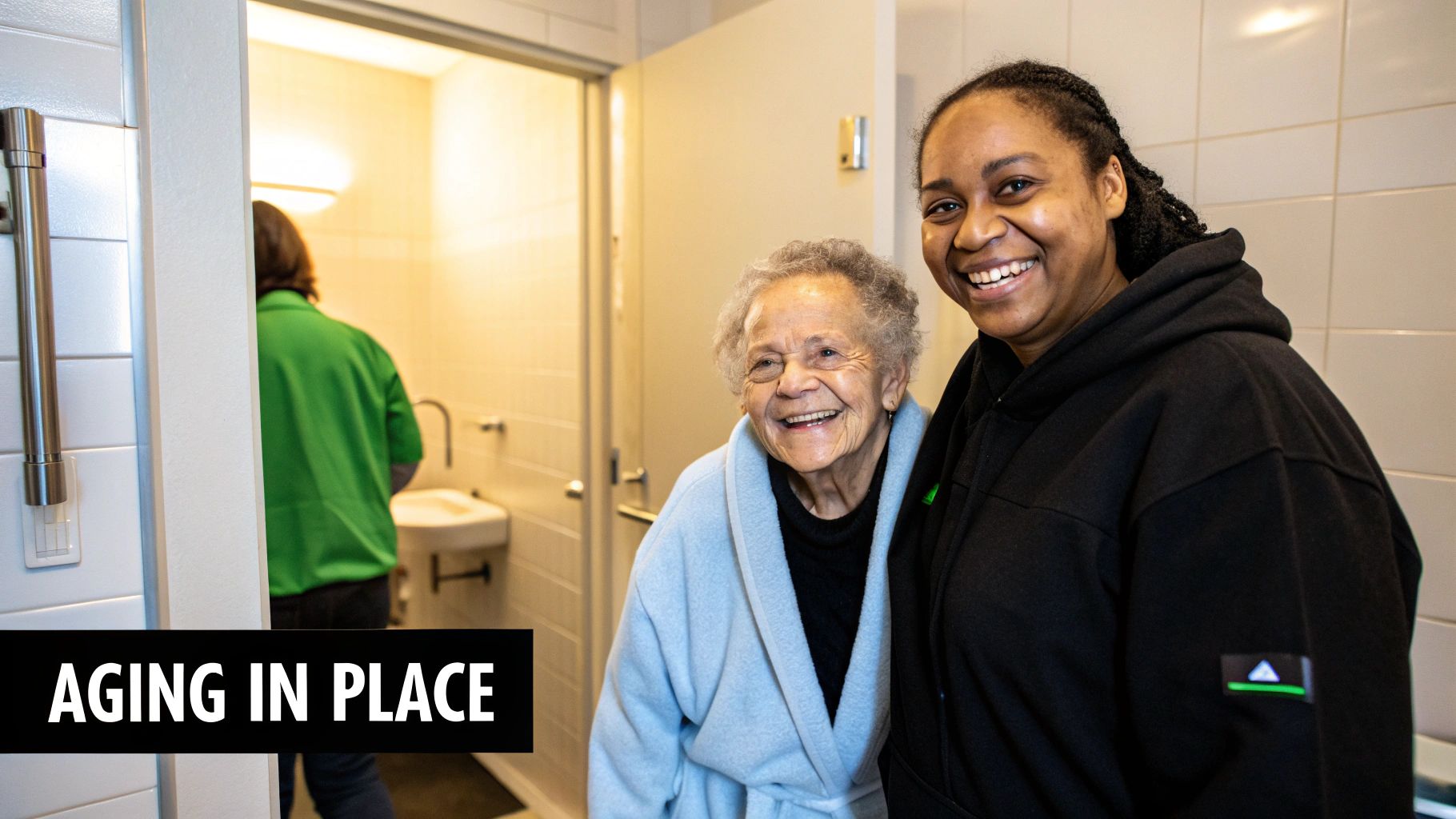
Statistically, the bathroom is the most dangerous room in the house for seniors. It's a perfect storm of hard surfaces, water, and the constant need to bend, balance, and maneuver. One slip on a wet floor or a moment of unsteadiness while stepping over a high tub wall can lead to serious injuries, a hospital stay, and a sudden, devastating loss of confidence.
This isn't just some abstract risk. I've seen this play out time and again. A family in Willis, TX, might notice their dad is getting a little less steady on his feet. Then one night, he has a close call trying to get out of the tub. Suddenly, the whole conversation changes. The fear of what could have happened makes the need for a change feel immediate and urgent.
The True Cost of Inaction
Many families put off remodeling because they're worried about the cost, but it's critical to weigh that against the alternative. A single fall that leads to an emergency room visit can easily run into thousands of dollars, and that's before you even consider the emotional toll and the potential for a long, difficult recovery.
A proactive bathroom remodel is a financial investment in prevention. It’s about creating a space that supports independence now, rather than scrambling to react to a crisis later. This forward-thinking approach is the heart of two important concepts:
- Aging in Place: This simply means having the ability to live in one’s own home and community safely, independently, and comfortably, regardless of age or ability level.
- Universal Design: This is a design philosophy that focuses on making spaces and products usable by everyone, to the greatest extent possible, without needing special adaptations.
When we embrace these principles, a bathroom remodel for an elderly loved one stops being about "fixing" a problem. Instead, it becomes about creating a supportive, empowering space that can adapt as their needs change over time.
More Than Just Grab Bars
An accessible bathroom is fundamentally about preserving dignity. When a senior can manage their own personal care safely and in private, it has a profound impact on their self-esteem and overall mental health. The fear or inability to bathe without help can quickly lead to feelings of dependence and isolation.
A thoughtfully designed space empowers them and reinforces their sense of autonomy. It’s a tangible way to show you care about their emotional well-being just as much as their physical safety. It gives them the confidence to continue living in the home they love, surrounded by a lifetime of memories.
Of course, there may come a time when even the most accessible home isn't enough. It's important to understand the signs, which is why resources on knowing when your parents need assisted living can be so valuable for long-term planning. For many, though, a strategic remodel is the key that unlocks many more years of safe, comfortable independence at home—a powerful step toward ensuring their golden years are spent with security and grace.
Non-Negotiable Safety Features for an Accessible Bathroom
When you're planning a bathroom remodel for an elderly loved one, it's easy to get lost in all the options. But this isn't about adding every gadget you see. The real goal is to zero in on the core features that tackle the most common risks head-on—the things that provide genuine, everyday safety and build confidence.
There's a huge demand for these kinds of upgrades, and it's not hard to see why. The global market for aging-in-place bathroom products, like walk-in tubs and grab bars, is projected to hit USD 8.31 billion by 2030. That massive number shows just how widespread the need for safer home environments has become. You can discover more about these market trends and their drivers from Grand View Research.
The Foundation of Safety A Zero-Threshold Shower
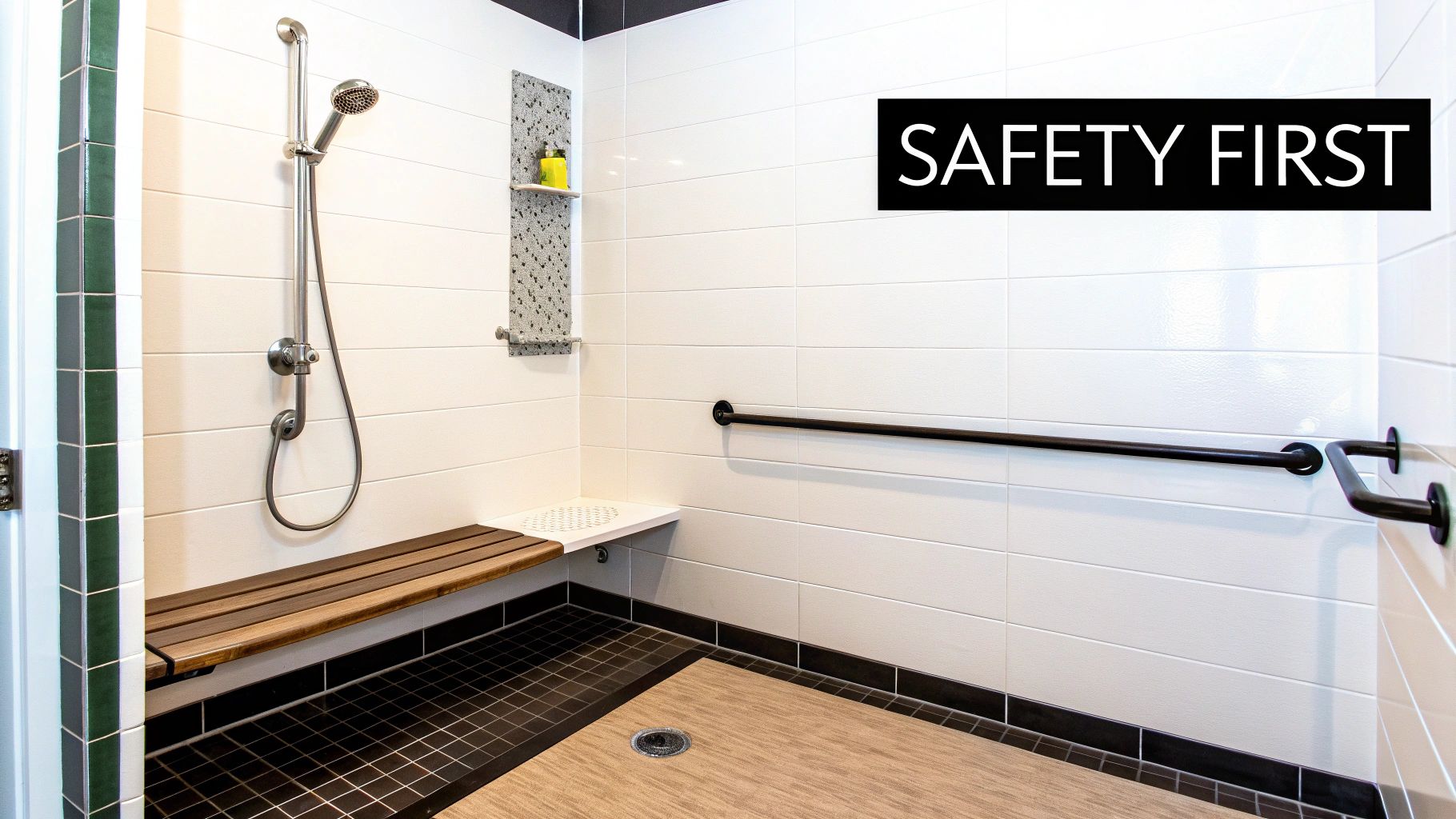
If I could recommend only one change, this would be it. The single most impactful upgrade you can make in a senior’s bathroom is to rip out the traditional bathtub and install a zero-threshold or curbless walk-in shower. That high tub wall is a major trip-and-fall hazard, demanding a level of strength and balance that often diminishes with age. Removing that barrier eliminates the riskiest part of bathing. Period.
A curbless design means someone using a walker or wheelchair can move right into the shower. This simple change can preserve independence and dignity, turning what was once an anxiety-filled task into a manageable daily routine.
To make it truly functional, a walk-in shower needs a couple of key components:
- A Built-In or Fold-Down Shower Seat: This gives a stable place to sit, which cuts down on fatigue and the risk of slipping. A professionally installed, wall-mounted seat is worlds safer than a plastic stool that can slide around on a wet floor.
- A Handheld, Adjustable Showerhead: Putting this on a sliding bar allows the user to aim the water while seated, so there’s no need to stand or reach awkwardly. It’s also a huge help for any caregivers who might be assisting.
Strategically Placed Grab Bars
Let’s be clear: professionally installed grab bars are not optional; they are a necessity. Forget about those suction-cup models you see at the store. They are notoriously unreliable and have a nasty habit of failing right when they're needed most, creating a dangerous false sense of security.
Proper grab bars have to be anchored directly into wall studs to support hundreds of pounds of force. But where you put them is just as important as how they're installed.
Think of grab bars as a stable pathway. They should be installed where a person will naturally reach for support during movement—not just inside the shower, but around the entire bathroom.
Here are the critical spots I always recommend:
- Inside the Shower: You'll want one vertical bar near the entrance for getting in and out, plus one or two horizontal bars along the side and back walls for stability while washing.
- Around the Toilet: Place one bar on the wall next to the toilet and another behind it. These assist with the motions of sitting and standing, which can often cause dizziness or instability.
- Along Pathways: A horizontal bar along a clear wall can provide a steadying handhold when moving between the sink, toilet, and shower.
To help you get a clearer picture of these essential upgrades, I've put together a quick summary table. This breaks down the most critical safety features, their main purpose, and a rough idea of what they might cost. It's a great starting point for prioritizing your budget.
Priority Safety Features at a Glance
| Feature | Primary Safety Benefit | Estimated Cost Range |
|---|---|---|
| Curbless Shower | Eliminates the single biggest trip hazard (the tub wall). | $4,000 – $8,500+ |
| Grab Bars | Provides stable support during movement and transfers. | $250 – $600 (per set, installed) |
| Comfort-Height Toilet | Reduces strain on knees and back when sitting or standing. | $400 – $800 (installed) |
| Shower Seat | Allows for safe, seated bathing to prevent slips and fatigue. | $200 – $500 (installed) |
| Anti-Scald Faucet | Prevents accidental burns from dangerously hot water. | $150 – $400 (installed) |
| Layered Lighting | Eliminates shadows and improves visibility to prevent trips. | $300 – $1,000+ |
These features are the building blocks of a truly safe bathroom. Focusing on them first ensures you’re addressing the most pressing risks before moving on to other nice-to-have items.
Elevated Comfort and Smart Fixtures
Beyond the big items, a few other fixtures play a surprisingly huge role in bathroom safety. A comfort-height toilet, for instance, is a game-changer. These toilets are typically 17-19 inches high, similar to a standard chair, which makes a world of difference. That extra height dramatically reduces the strain on knees and backs, making sitting and standing much easier and safer.
Another non-negotiable is an anti-scald faucet. Seniors can sometimes have reduced sensitivity to temperature or slower reaction times. An anti-scald mixing valve automatically balances the hot and cold water pressure to keep the water from ever getting dangerously hot. It’s a simple, behind-the-scenes upgrade that offers profound protection against accidental burns. Prioritizing these thoughtful elements is a huge part of promoting overall health and wellness in a senior living environment.
Layered Lighting to Eliminate Shadows
Poor lighting can turn even the safest room into a hazard zone. A single overhead fixture is a common mistake; it creates harsh shadows that can hide trip hazards or make it tough to judge distances. A layered lighting strategy is the way to go for a truly safe space.
Start with a bright, ambient light source overhead to light up the whole room. Then, add task lighting—think sconces on either side of the mirror or a dedicated, waterproof light over the shower.
Finally, I always recommend installing low-level night lights or motion-activated lights. These are perfect for guiding the way during nighttime visits when people are most likely to be disoriented. This combination ensures the room is evenly lit, clear of shadows, and easy to navigate at any hour of the day or night.
Choosing Materials That Blend Safety with Style
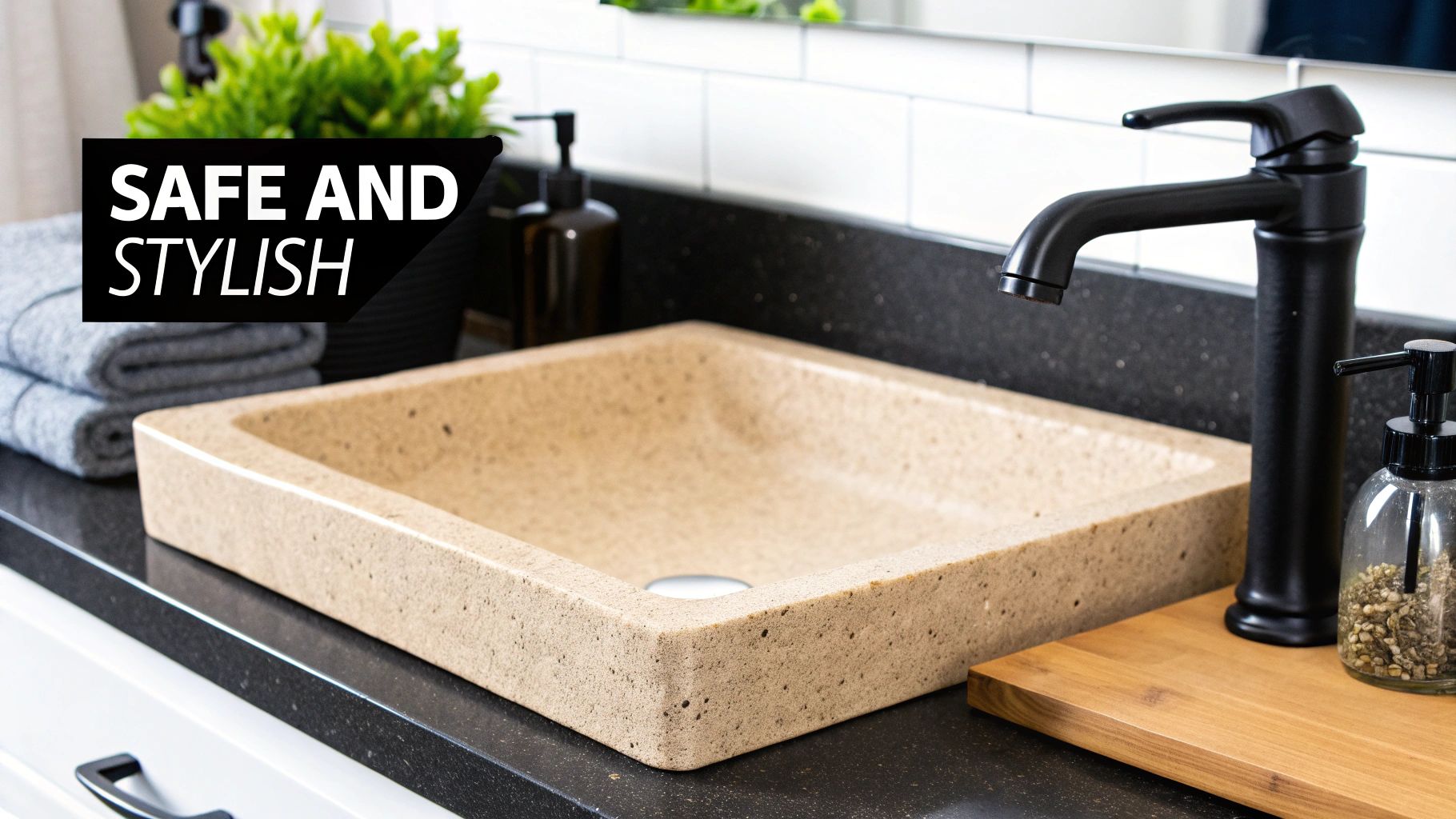
There’s a common myth that making a bathroom safe for an older adult means it has to look cold and clinical. I’ve heard this concern from families countless times. The good news is, that couldn't be further from the truth.
Today's materials are amazing—they offer incredible performance and beautiful design. You can absolutely create a space that feels both welcoming and secure. The secret is making intentional choices that put safety first without giving up that warm, comfortable feeling of home.
Secure Footing Starts with the Right Flooring
If there's one place to focus your attention, it's the floor. A wet, slippery surface is one of the biggest fall risks in any home, especially the bathroom. Choosing a non-slip material is your top priority, but that doesn’t mean you’re stuck with ugly, industrial options.
Here are two excellent choices that get the job done beautifully:
- Luxury Vinyl Tile (LVT): Forget the old sheet vinyl you might be picturing. Modern LVT is tough, 100% waterproof, and often has a subtle texture that provides great grip. It's also a bit softer and warmer under your feet than ceramic tile, which is a nice comfort bonus.
- High-Traction Ceramic or Porcelain Tile: If you love the timeless look of tile, just get specific with your contractor. You’ll want to ask for tile with a high DCOF (Dynamic Coefficient of Friction) rating. The industry standard for wet areas is 0.42 or higher. Pro tip: Using smaller tiles creates more grout lines, which can also improve traction.
From my experience, it's always better to prioritize long-term function over a fleeting trend. A floor with a matte, textured finish will always provide better grip and reduce glare, making it a much safer bet than a popular but slippery high-gloss tile.
Surfaces That Simplify Cleaning and Reduce Glare
Beyond the floor, the materials you pick for your shower walls and countertops can make a huge difference in daily life. The goal is simple: make things easier to clean and reduce visual confusion.
Instead of small tiles with endless grout lines to scrub, consider using large-format, non-porous panels for the shower walls. Materials like solid surface or cultured marble are a breeze to wipe down and are fantastic at resisting mold and mildew. This is a huge help for anyone with limited mobility or energy.
The same idea applies to countertops. A smooth, seamless surface like quartz is not only stylish but also incredibly hygienic and easy to maintain.
The Importance of Matte Finishes
Here's something people often overlook: glare. Aging eyes can be very sensitive to bright, reflective surfaces. That shine can cause disorientation or, worse, hide a hazard like a puddle of water on the floor.
That’s why matte finishes are your best friend in a senior-friendly bathroom:
- For Fixtures: Go for brushed nickel, matte black, or oil-rubbed bronze for faucets and grab bars. They don’t reflect harsh light nearly as much as polished chrome.
- For Surfaces: Choose matte or eggshell paint for the walls and look for countertops and tiles with a low-sheen finish. It all works together to create a much softer and more calming environment.
Faucets and Handles Designed for Dexterity
Finally, let's think about the little things. Turning a traditional round faucet knob can be a painful task for someone with arthritis or limited hand strength. This is one of those small changes that has a massive impact.
Look for lever-style faucet handles. They’re a game-changer because they can be operated with the palm of the hand or even an elbow, requiring almost no grip strength. The same goes for door handles and cabinet pulls—levers are always a better choice than small knobs. By making these thoughtful selections, you create a space that feels elegant and is effortlessly usable—much like the carefully designed environments you can see in our community gallery.
Navigating Remodel Costs and Financial Assistance
Taking on a bathroom remodel for a senior family member is a huge investment in their safety and quality of life. Before you start knocking down walls, it's crucial to understand the costs and what funding options are out there. This helps you plan without any nasty financial surprises down the road.
A few basic upgrades—like installing grab bars, a comfort-height toilet, and a handheld showerhead—might run you between $1,500 and $3,000. If you're looking at a bigger project, like a full tub-to-shower conversion with new non-slip floors, the cost can easily jump to $8,000 to $15,000 or more. These projects are part of a massive trend toward aging-in-place solutions. In fact, the global market for bathroom remodeling is projected to hit $593.7 billion by 2035, with accessibility being a major driver. You can discover more about these market trends from Future Market Insights.
Breaking Down a Sample Budget
Let's make this real. A common and highly impactful project is converting a standard bathtub into a curbless, walk-in shower. Here’s what that might look like financially:
- Labor and Demolition: Expect to pay $3,000 – $5,000. This covers taking out the old tub, prepping the floor for a zero-threshold entry, and making any plumbing tweaks.
- Fixtures and Materials: This is where you’ll spend $4,000 – $8,000. It includes the new shower system, non-slip tile, waterproof wall panels, a fold-down bench, grab bars, and a critical anti-scald valve.
- Permits and Contingency: Set aside $500 – $2,000. You'll need permits for this kind of work in Montgomery County, and you should always have a 15-20% contingency fund for those "just in case" issues that pop up.
Exploring Financial Assistance Options
Seeing those numbers can feel a bit overwhelming, but don't panic. There are several programs and financial tools that can help soften the blow. You'll need to do your homework, as every program has its own set of rules.
Government and VA Programs
A lot of families think Medicare will chip in, but that’s rarely the case. Original Medicare doesn't typically pay for home modifications. However, it's worth checking your policy if you have a Medicare Advantage (Part C) plan, as some offer supplemental benefits for home safety upgrades.
For veterans, the Department of Veterans Affairs (VA) is an incredible resource. Two grants are worth looking into immediately:
- Home Improvements and Structural Alterations (HISA) Grant: This helps veterans with service-connected disabilities make medically necessary changes to their homes, and bathroom mods are a perfect fit.
- Specially Adapted Housing (SAH) Grant: This is for veterans with certain severe, service-connected disabilities. It can help them buy, build, or significantly modify a permanent home to meet their needs.
It's a common misconception that funding for home modifications is readily available through standard insurance. The reality is that you often have to seek out specific grants, waiver programs, or alternative financing to make a project affordable.
State and Local Resources
Here in Texas, the Medicaid Waiver program can sometimes provide funds for home modifications that allow someone to stay in their own home. Be aware that these programs are very specific and often have long waiting lists, so it’s smart to get the ball rolling early. For folks in Willis, TX, a great first call is to the Area Agency on Aging of the Houston-Galveston Area Council. They know the local landscape inside and out.
Home Equity and Insurance
Tapping into home equity is another popular route. A Home Equity Line of Credit (HELOC) or a cash-out refinance lets you borrow against your home's value. These options give you quick access to cash, but remember, it’s a loan that has to be paid back with interest.
Finally, some families can use funds from a long-term care insurance policy. It's definitely worth pulling out the policy and reading the fine print to see what's covered. For more on that, you can read our guide on long-term care insurance coverage for assisted living to get a better handle on how these policies work.
How to Find and Vet the Right Willis, TX Contractor
Let's be blunt: choosing your contractor is the single most important decision you'll make for this entire project. A great professional brings not just skill, but a genuine understanding of the safety needs of older adults. The wrong one can leave you with costly mistakes, an unsafe bathroom, and a world of frustration. You aren't just looking for a builder—you're looking for a partner who gets it.
This is a specialized field. The market for aging-in-place renovations, which is dominated by bathroom projects, was valued at a staggering USD 78.12 billion in 2024. That massive number tells you one thing: this isn't general construction. You can read the full research on this growing market to see just how critical true expertise has become.
Where to Begin Your Search in the Willis Area
A great first stop is checking with local organizations that keep lists of vetted members. For anyone in Willis and the broader Montgomery County area, the Greater Houston Builders Association (GHBA) is an excellent resource. Their members are typically established, insured, and committed to a higher professional standard.
Don't underestimate the power of a good old-fashioned referral. Ask friends, neighbors, or folks at your local senior center if they've had similar work done. A personal recommendation gives you insights you simply can't find in an online review.
Must-Have Credentials for a Senior-Focused Remodel
Once you have a few names, it's time to dig into their qualifications. A general contractor might build a beautiful bathroom, but that doesn't mean they understand the specific, non-negotiable requirements for an older user.
Keep an eye out for a contractor with a Certified Aging-in-Place Specialist (CAPS) designation. This certification, offered by the National Association of Home Builders (NAHB), isn't just a piece of paper. It means they've completed specific training on:
- The unique needs of the older adult population.
- Universal design principles for creating safe and functional homes.
- Proven solutions for common aging-in-place challenges.
Hiring a CAPS-certified pro brings peace of mind, knowing their advice is based on specialized education, not just guesswork.
Vetting Your Candidates: The Critical Questions
Before you even think about signing a contract, you need to interview at least three different contractors. Treat it like a job interview, because that's exactly what it is.
Here are the questions you absolutely must ask:
- "Are you licensed and insured in the state of Texas?" Ask to see physical proof of both general liability insurance and workers' compensation. You can even verify their license status with the local building department.
- "Can you show me a portfolio of past accessible bathroom projects?" Look for examples that feel similar to what you have in mind. Have they installed curbless showers and properly anchored grab bars before?
- "Can I speak with a few of your recent clients?" Talking to past customers is the best way to get a real feel for their professionalism, communication style, and the quality of their finished work.
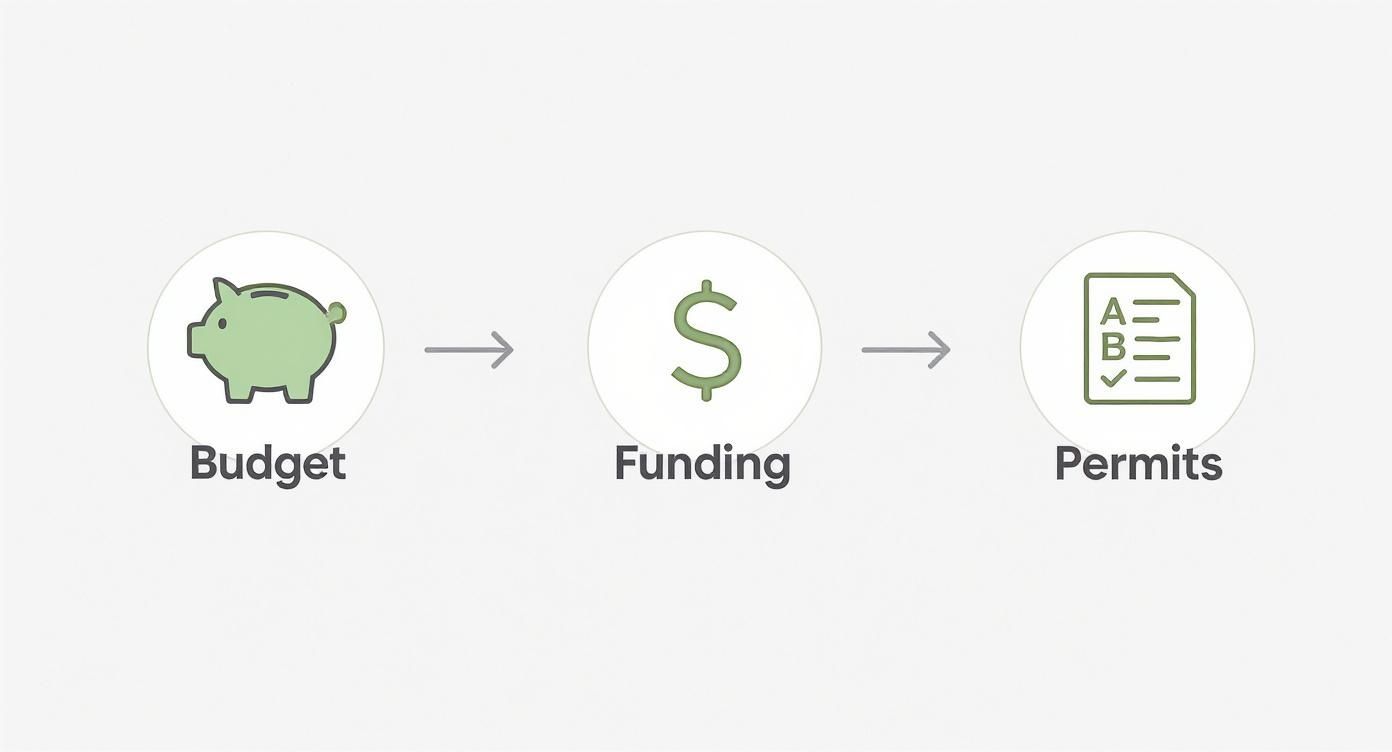
As this process flow shows, securing permits is a formal, critical step that a true professional will handle as part of the project's financial planning.
Red Flags to Watch Out For
Knowing what to look for is only half the battle; you also need to know what to avoid. Be very cautious of any contractor who:
- Pressures you for a fast decision.
- Demands a large cash deposit upfront.
- Gives you a vague or suspiciously low bid.
- Is hesitant to provide a detailed written contract.
A professional contractor will always insist on a comprehensive written agreement. This document is your protection. It must clearly outline the full scope of work, a detailed list of materials, a specific payment schedule tied to project milestones, and a realistic start and completion date.
Common Questions About Senior Bathroom Remodels
As you start turning your plans into reality, questions are bound to pop up. Remodeling a bathroom for a loved one is a big deal, and it's completely normal to want every detail ironed out before the work begins. We've compiled some of the most frequent questions we hear from families right here in Willis, TX, to give you clear, practical answers.
How Long Does This Type of Remodel Take?
One of the first things families want to know is how long the bathroom will be out of commission. A typical accessible bathroom remodel can take anywhere from two to five weeks, but this really hinges on the scope of the project.
If you’re just doing some straightforward upgrades—think installing grab bars, a comfort-height toilet, and a handheld showerhead—a good contractor could be in and out in just a few days. But if you're planning a full-gut renovation to convert a tub to a walk-in shower, which involves moving plumbing and laying new tile, you'll be looking at the longer end of that timeline. It’s crucial to have a frank conversation with your contractor about their schedule and to figure out an alternative bathroom plan for that period.
Is Financial Assistance Available for the Project?
Yes, but you usually have to do some digging. Original Medicare is unlikely to cover remodeling projects, but some Medicare Advantage plans might offer benefits for home safety modifications. It never hurts to check the specifics of your policy.
For veterans, it's a must to look into VA grants, especially the Home Improvements and Structural Alterations (HISA) grant, which is specifically for medically necessary home mods. Don't forget to research Texas state and local programs that support aging in place, too. Many families find answers to these kinds of financial questions on our senior care FAQ page, which is a great place to start.
What Is the Single Most Important Safety Feature?
If you have the budget for only one major change, put it all into the shower. From my experience, a zero-threshold, walk-in shower is the most impactful upgrade you can possibly make. This one feature directly tackles the riskiest moment in the bathroom: stepping over a high tub wall, which is where a huge number of senior falls happen.
To really make it count, you'll want to pair it with two other critical items:
- Professionally installed grab bars both inside the shower and at the entrance.
- A built-in or securely mounted shower seat to help with balance and prevent fatigue.
This trio works together to create a truly secure bathing space, which can make a world of difference in a senior's confidence and ability to live independently.
While many features contribute to safety, eliminating the need to step over a high tub wall removes the single greatest physical barrier and hazard in most bathrooms. It's the foundation of a successful aging-in-place remodel.
Is a Certified Contractor Really Necessary?
While there's no law that says you have to, I strongly recommend hiring a Certified Aging-in-Place Specialist (CAPS). These aren't just any contractors; they've gone through specialized training focused on the unique needs of older adults and the principles of smart, universal design.
A CAPS-certified pro does more than just install new fixtures. They bring a deeper understanding of how things like mobility, vision, and strength can change with age. This means they can provide smarter recommendations that will meet your loved one’s needs not just today, but for years to come. That kind of foresight makes your investment far more valuable in the long run.
At Forest Cottage Senior Care, we understand that creating a safe home environment is just one part of ensuring a high quality of life. If you're exploring all available care options, we invite you to learn more about our supportive community. Visit us at http://44.202.110.106.