
When you first see the price tag for independent living, it’s easy to get a little sticker shock. The median monthly cost of independent living in the U.S. is about $3,065, but that number is just a starting point.
It’s much more helpful to think of it less like a simple rent payment and more like an all-inclusive resort package. Everything you need for a comfortable, active lifestyle gets bundled into one predictable monthly fee. This approach doesn't just simplify your budget—it often reveals a surprising amount of value compared to juggling all those separate household bills.
Demystifying the All-Inclusive Lifestyle Package

When families start exploring retirement communities, that single monthly fee can feel high. But to get a true "apples-to-apples" comparison, you have to look at what it replaces.
Think about it: back at home, you’re juggling a mortgage or rent, property taxes, utilities, groceries, home maintenance, yard work, and entertainment costs. Each of these has its own bill and the potential for a sudden, expensive surprise.
Independent living rolls all those unpredictable expenses into one stable payment. This financial predictability is honestly one of its biggest perks. You’re no longer on the hook for a surprise roof repair or a shocking winter heating bill.
What Your Monthly Fee Typically Includes
To truly grasp the value, it helps to see a side-by-side comparison of what you're already paying for at home versus what’s included in a typical independent living fee. It’s a real eye-opener for many families.
| Service or Amenity | Typically Included in Fee | Common Standalone Household Cost |
|---|---|---|
| Housing & Property Taxes | ✔️ Yes | Mortgage/Rent & Annual Tax Bills |
| Home Maintenance | ✔️ Yes (Interior & Exterior) | Plumber, Electrician, Landscaper, etc. |
| All Major Utilities | ✔️ Yes (Gas, Water, Electric) | Separate Monthly Bills |
| Restaurant-Style Meals | ✔️ Yes (Often 1-3 Daily) | Groceries, Dining Out |
| Scheduled Transportation | ✔️ Yes | Gas, Car Maintenance, Insurance |
| Social & Wellness Programs | ✔️ Yes (Classes, Events, Outings) | Gym Memberships, Entertainment |
| 24/7 Security & Staff | ✔️ Yes | Home Security System Fees |
| Housekeeping Services | ✔️ Yes (Weekly or Bi-Weekly) | Cleaning Service or Your Own Time/Supplies |
Seeing it all laid out like this really drives the point home. You're not just paying for a place to live; you're investing in a service-rich environment that handles all the chores so you can focus on enjoying life.
Understanding the National Financial Landscape
Nationally, the median monthly cost for independent living communities is $3,065, which adds up to about $36,780 a year. This makes it a significantly more affordable option compared to other types of senior care. For instance, assisted living costs are often nearly double that amount.
Of course, this national average can swing wildly depending on where you live. Costs can soar to over $6,100 per month in a state like Maine or dip below $1,300 in Mississippi. That’s why local context is so important.
It’s also critical not to mix up independent living with assisted living. While they're both community-based, the biggest difference between independent living and assisted living is the level of hands-on personal care provided, which is the main driver of cost differences.
Independent living is designed for active, self-sufficient seniors who don't need daily medical or personal help, which is what keeps the price point lower. Our goal with this guide is to help families right here in Willis, TX, understand these costs so you can plan with total confidence.
Key Factors That Drive Independent Living Prices
Knowing the national average for independent living is a good starting point, but it really doesn't paint the full picture. The actual price you'll pay is shaped by a handful of key elements, much like how a car's sticker price changes based on its make, model, and all the optional features you add.
Once you break down these core components, you can see exactly where your money is going. It helps you decide what’s truly important for your lifestyle and what fits your budget. Let's unpack the five biggest drivers that determine that final monthly fee.
Geographic Location Matters Most
Without a doubt, the single biggest factor influencing cost is location. It’s the same principle as real estate: a home in a bustling city center is always going to cost more than one in a quiet suburb. An independent living community in a high-cost-of-living area will naturally have higher fees.
Local real estate values, property taxes, and even labor costs all get baked into the price. For example, a community in Montgomery County, TX, will almost always be more affordable than a similar one right in downtown Houston. This is why doing your homework on your specific area is so critical for accurate budgeting.
Community Size and Type
The vibe and scale of the community also play a huge role in the price. Those large, resort-style campuses with hundreds of residents often carry a higher price tag. It makes sense when you consider the cost of maintaining extensive grounds and massive infrastructure.
On the flip side, smaller, more intimate communities can sometimes offer more competitive pricing. Their focus might be less on grand scale and more on creating a cozy, home-like atmosphere. The choice really boils down to what you prefer—a sprawling campus with endless options or a close-knit environment where everyone feels like family.
The right community isn’t just about the price; it’s about the environment. A smaller, personal setting can offer a different kind of value—a sense of true belonging and individualized attention that can't be measured in square footage alone.
Apartment Size and Layout
Inside any community, your choice of residence is one of the main cost variables. The pricing works just like it does in a typical apartment building—the bigger the living space, the higher the monthly fee.
Here’s a general breakdown of what you can expect:
- Studio apartments are usually the most budget-friendly option, perfect for a single person who wants simplicity and efficiency.
- One-bedroom apartments give you more space and a nice separation between living and sleeping areas, making them a very popular mid-range choice.
- Two-bedroom apartments or cottages sit at the premium end. They’re ideal for couples or anyone wanting extra room for a home office, hobbies, or visiting family.
Opting for a smaller unit is one of the most straightforward ways to manage your overall cost without giving up access to all the great lifestyle benefits the community offers.
Included Services and Amenities
The level of service and the quality of the amenities are where the "all-inclusive" lifestyle really shines—and where costs can vary quite a bit. Think of it like choosing between a standard hotel and a five-star resort.
A community offering basics like one meal a day, weekly housekeeping, and scheduled transportation will be on the more affordable side. In contrast, a premium community might roll out the red carpet with things like:
- Gourmet dining with multiple restaurant-style venues.
- State-of-the-art fitness centers, complete with personal trainers.
- On-site spas, swimming pools, and even movie theaters.
- A full-time activities director curating a jam-packed calendar of events.
These premium offerings add incredible value, but they also contribute to a higher monthly fee. You can check out a great example of the kinds of lifestyle-enhancing amenities that create a truly vibrant community atmosphere.
Level of Hospitality and Care
Finally, the quality of the staff and the level of personalized attention you receive absolutely contribute to the overall cost. A community that invests in a highly trained, long-tenured team and maintains a high staff-to-resident ratio simply has higher operational expenses.
But that investment pays off in the resident experience. It means you get prompt service, a warm and welcoming atmosphere, and the peace of mind that comes from knowing a compassionate team is always there for you. This "hospitality factor" is a crucial, though less tangible, part of what you're paying for each month.
Comparing Costs From National Averages to Willis, Texas
It’s one thing to hear about national averages for independent living, but those numbers can feel a bit abstract. To get a real handle on your financial planning, you have to bring that bird's-eye view down to the street level—right here in Texas, and more specifically, in Montgomery County. This is where the numbers stop being statistics and start being relevant to your family.
You might be surprised by the financial advantages you find when you zoom in on local figures. While major hubs like Dallas or Houston can really inflate the statewide average, smaller, welcoming communities like Willis often offer a much more approachable price point without asking you to sacrifice a thing.
Monthly Cost Comparison for Independent Living
To put things in perspective, let’s look at the numbers side-by-side. This table gives a quick snapshot of what you can expect to see as you move from the national picture down to our local community.
| Geographic Area | Median Monthly Cost | Key Considerations |
|---|---|---|
| United States | $3,000+ | Varies widely by state; coastal regions and major cities are typically higher. |
| Texas | $2,800 – $3,000 | Influenced by high costs in metro areas like Dallas, Austin, and Houston. |
| Willis/Montgomery Co. | $2,500 – $2,900 | Offers significant value compared to nearby Houston and state averages. |
As you can see, zeroing in on a specific region makes a big difference. The local market is where you'll find the most realistic numbers for your budget.
The Texas Cost Landscape
Across Texas, the average monthly cost for independent living usually lands somewhere between $2,800 and $3,000. That’s a bit more affordable than the national median, which is great news.
But remember, that’s just an average. In big cities like Dallas and Austin, it’s not uncommon to see prices climb well over $3,500 per month. Relying only on a statewide number can be misleading, which is why drilling down to the local level is so important.
Zeroing In on Willis and Montgomery County
This is where the story gets really good for families in our area. Here in Montgomery County, monthly fees for independent living typically range from $2,500 to $2,900. That puts us comfortably below both the state and national averages, offering a real financial advantage over the pricier Houston metro area just down the road.
Choosing a community in Willis means your retirement savings can stretch further. You're gaining access to a peaceful, high-quality lifestyle without the premium price tag that comes with big-city living, making it a financially sound decision for long-term planning.
The infographic below highlights the key factors that shape these local costs.
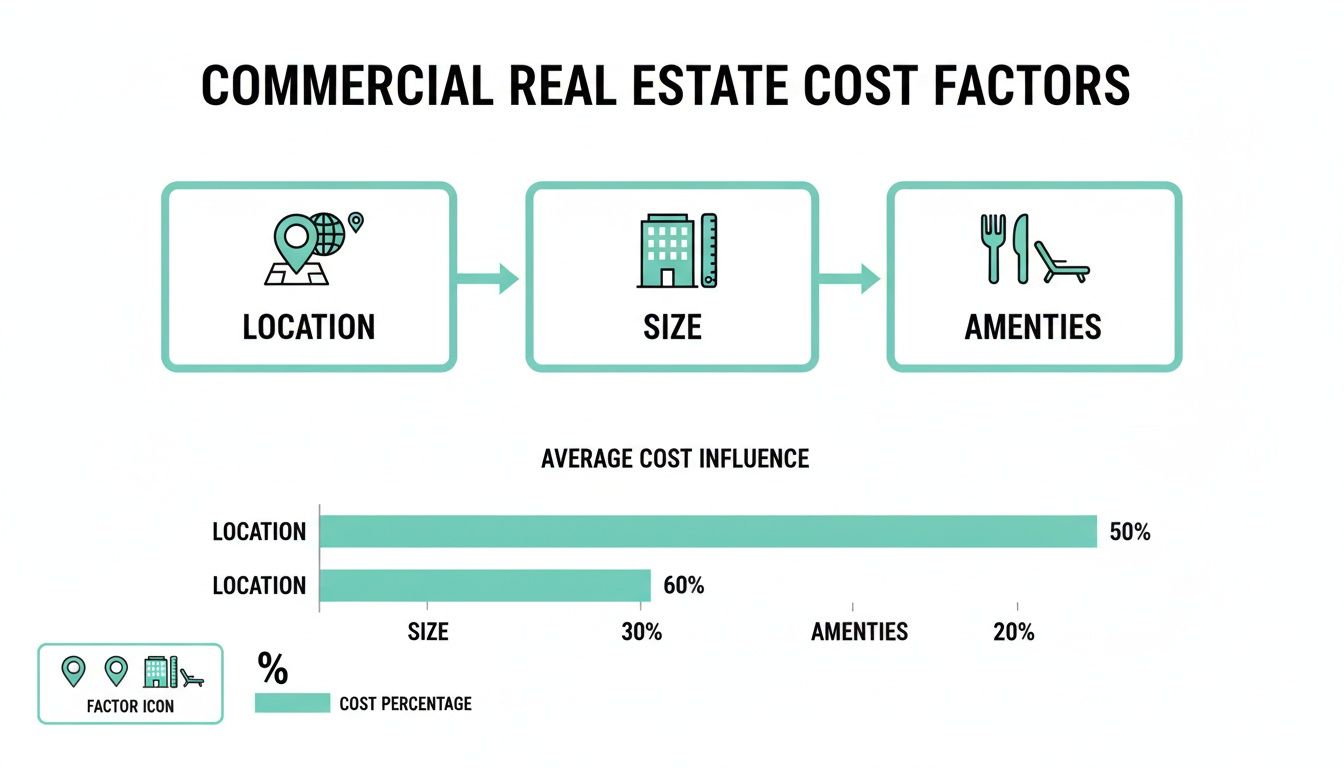
As it shows, things like more reasonable real estate values and a focus on essential, meaningful amenities—rather than expensive, rarely used extras—help keep monthly costs manageable in communities like ours.
How Local Value Translates to Your Bottom Line
So, what does all this mean for you? It means a community like Forest Cottage Senior Care can provide an exceptional, supportive environment at a price that makes sense. We’ve built our services around what truly matters—safety, genuine connection, and personalized support—which allows us to deliver incredible value within this affordable local range.
Understanding these local cost dynamics also helps clarify the financial difference between independent living and higher levels of care. As you explore your options, it's a good idea to research the typical costs for assisted living in my area to see how prices and services shift when more hands-on support is needed.
This kind of local knowledge empowers you. You can build a realistic budget based on what things actually cost here, not on broad national estimates. It changes the conversation from a generic "What does it cost?" to a much more meaningful "What kind of value will we get for our investment right here at home?"
How Market Trends Are Shaping Senior Housing Prices
The cost of independent living doesn’t exist in a bubble. It’s tied directly to the same economic forces that move the price of everything from groceries to gasoline. Knowing what’s happening in the broader market gives you a realistic view of why costs change and highlights why planning ahead is so important.
At its heart, this is a classic story of supply and demand. The number of retirees in the U.S. is growing fast, which means demand for quality senior housing is surging. The problem? The supply of new independent living communities just isn't keeping up. That imbalance naturally pushes occupancy rates higher and, you guessed it, monthly fees go up, too.
The Growing Demand for Senior Living
As more and more seniors look for the convenience and social life that independent living offers, the competition for available apartments heats up. This gives existing communities what's called "pricing power"—they can fill their spaces without much trouble.
The recent numbers really tell the story. Senior housing occupancy in major U.S. markets recently hit 87.7%, a solid jump from 85.6% the year before. This intense demand has kept annual rent growth for independent living steady at 4% year-over-year. Some experts are even predicting it could climb over 5% annually in the near future. If you want to dive into the details, the senior housing and care investor survey from CBRE breaks it all down.
This isn’t just a temporary spike; it’s a long-term shift in our country's demographics. For families planning ahead, the takeaway is clear: the cost of independent living will likely keep climbing, pushed by this fundamental supply-and-demand dynamic.
It’s a lot like the housing market. When you have more people looking to buy than there are homes available, prices rise. The senior living world is feeling that same squeeze, which makes getting a plan in place early more critical than ever.
Operational Costs and Inflationary Pressures
Beyond simple demand, the day-to-day costs of running a great community are also rising, and those expenses inevitably get passed on to residents. Just think about everything that goes into making a community hum:
- Construction and Maintenance: The cost to build new communities or even just renovate existing ones has shot up. Materials like lumber, steel, and concrete are much more expensive, which puts a big dent in a community’s budget.
- Labor Costs: To attract and keep top-notch staff—from the chefs in the kitchen and the housekeeping team to the wellness coordinators—you have to offer competitive wages and benefits. When the job market is tight, those costs go up.
- Utilities and Food: Good old-fashioned inflation affects everything else. The price of food for the dining hall, the electricity to keep the lights on, and the gas for the community shuttle all add up to a higher bottom line.
When a community’s own expenses increase because of these outside factors, they have to adjust their monthly fees to maintain the high standard of service residents expect. This context helps families see that price changes aren’t random but are often a direct response to real-world economic pressures. Knowing about these trends helps you plan for the future with your eyes wide open.
Smart Financial Strategies for Independent Living
Figuring out the cost of independent living is the first hurdle. But the real question on everyone's mind is, "How do we actually pay for it?" Thankfully, you probably have more options than you realize. Beyond your personal savings and retirement funds, several practical financial strategies can help make this next chapter a comfortable and affordable reality.
Think of it as a financial toolkit. Each tool serves a different purpose for different situations. Whether it's leveraging your biggest asset or tapping into specific insurance benefits, a proactive approach can open doors and bring a whole lot of peace of mind.
Unlocking Home Equity
For most older adults, their home isn’t just a collection of memories—it's their most significant financial asset. Selling the family home is one of the most common and direct ways to fund a move into independent living. All that equity you've built up over the years can be turned into the cash needed to cover monthly fees for a long time.
This approach offers a clean financial break. It completely wipes out the ongoing headaches of homeownership—property taxes, insurance, surprise roof leaks—and provides the money for a maintenance-free lifestyle. For families who want a straightforward path, using home equity is often the clearest route.
Exploring Long-Term Care Insurance
Long-term care (LTC) insurance is designed to cover care costs as you get older, but how it applies to independent living can be a bit tricky. Many policies are aimed more at assisted living or skilled nursing, but some might have benefits you can use for certain services in an independent living community.
The trick is to read your policy with a magnifying glass. Look for phrases like "home care" or "lifestyle support," because these clauses can sometimes be used to cover non-medical services like meals and housekeeping that the community provides. Your best bet is always to call your insurance provider directly to confirm exactly what your benefits cover. To get a better feel for how these policies work, you can dig into the details of long-term care insurance coverage for assisted living and see how the same ideas might apply.
It's so important to confirm your benefits before you make any moves. Never assume your policy will cover independent living; get it in writing from your provider so you have a clear financial picture.
Leveraging Veterans Benefits
For those who have served our country, the Department of Veterans Affairs (VA) offers a powerful benefit that can help with senior living costs. The Aid & Attendance pension is a monthly payment on top of a standard VA pension, created specifically for veterans (and their surviving spouses) who need a hand with daily activities.
While independent living on its own doesn't qualify you, if a resident needs the kind of help they'd get in an assisted living setting—even while living in an independent apartment—they may be eligible. This benefit can provide a significant monthly check that makes senior living much more affordable.
Understanding Medicare and Medicaid Limitations
It's absolutely essential to be clear on what government health programs do and don't do. Medicare will not pay for the non-medical room and board costs of independent living. Period. It's health insurance for hospital stays, doctor visits, and short-term skilled nursing care after a hospital stay—not long-term housing.
Medicaid's role is also very limited here. While some states have waiver programs that might cover certain personal care services, Medicaid generally does not cover the monthly rent for independent living. These communities are primarily funded through private pay.
When you're building out your financial plan, don't forget to account for estate planning costs, like understanding trust and will pricing.
How Forest Cottage Senior Care Provides Exceptional Value

We get it. Looking at the cost of independent living is a big part of the picture, but the numbers only tell half the story. Real value is about finding that sweet spot where a comfortable price meets a genuinely happy life. Here at Forest Cottage Senior Care, we’ve built our entire approach around connecting those dots for families in Willis, TX.
We just don't believe an incredible lifestyle has to come with a staggering price tag. Our philosophy is a world away from those huge, resort-style communities. You won't find sprawling campuses or expensive amenities that sound great but are rarely used. Instead, we put all our energy into what really counts: a warm, intimate, home-like setting where every single resident is known by name and truly feels valued.
An All-Inclusive Model for Peace of Mind
The last thing anyone needs is a financial surprise when planning for their future. That’s why we’ve always stuck to a simple, all-inclusive pricing model. Your one monthly fee covers everything needed for a comfortable, engaging, and worry-free life. It’s that straightforward.
This single payment includes:
- Comfortable Accommodations with all utilities rolled in.
- Three Freshly Prepared Meals Daily, always served family-style.
- Housekeeping and Laundry Services for a truly maintenance-free lifestyle.
- Daily Social Activities that spark friendships and keep life interesting.
This approach gives you the financial stability we've been talking about, allowing you to budget with complete confidence. No hidden fees, no unexpected charges.
At Forest Cottage, value isn't measured in square footage—it's measured in the quality of our care and the strength of our community. We provide the essential services you actually need without making you pay for the ones you don't. It's a choice that's both smart and heartfelt.
Our model is all about providing just the right amount of support. By focusing on personalized care in a close-knit environment, we deliver a high-value solution that feels less like a facility and more like coming home. We're proud to offer this kind of life right here within the accessible cost range of Montgomery County.
Common Questions About the Cost of Independent Living
When you start planning for the future, it’s only natural for the financial side of independent living to bring up a lot of questions. Getting clear, straightforward answers is the very first step toward making a decision that feels both comfortable and confident.
Let's dive into some of the most common questions we hear from families exploring their options. Each answer is designed to give you practical insights you can actually use.
Is Independent Living Cheaper Than Staying at Home?
This is often the most surprising answer for families: in many cases, yes. It might seem like the single monthly fee for independent living is higher than your mortgage, but that one number replaces a whole laundry list of separate, often unpredictable household expenses.
To get a true side-by-side comparison, you have to add up everything you currently spend on your home. This includes:
- Mortgage or rent payments
- Property taxes and homeowner's insurance
- Monthly utilities like electricity, water, gas, and trash
- Groceries and money spent dining out
- Home maintenance and surprise repairs (think plumbing, HVAC, or roof issues)
- Lawn care and landscaping services
- Transportation costs like gas, car insurance, and maintenance
When you weigh that grand total against a single, all-inclusive independent living fee, the value becomes much clearer. The predictability alone can be a huge relief, completely eliminating the financial stress of a sudden, expensive home repair.
What Is the Main Cost Difference Between Independent and Assisted Living?
The biggest factor driving the cost difference between independent and assisted living boils down to one thing: hands-on personal care.
Independent living is built for active seniors who don't need daily help with activities like bathing, dressing, or managing their medications. The cost is based on lifestyle, hospitality, and amenities.
Assisted living includes all those same lifestyle elements but adds the cost of clinical oversight and personalized care from trained staff. That extra layer of support is what accounts for the higher monthly fee. Think of it as adding a personal care plan on top of an all-inclusive lifestyle package.
The core difference is simple: you pay for lifestyle and convenience in independent living, and you pay for lifestyle, convenience, and personal care in assisted living. Understanding this distinction is crucial for choosing the right level of support.
Are There Hidden Fees to Watch Out For?
Reputable communities are transparent about their pricing, but it's always smart to ask about any potential costs that fall outside the main monthly fee. Before you sign any agreement, make sure you ask about one-time or optional charges.
These can sometimes include things like:
- A one-time community fee, which is a non-refundable fee paid when you move in to cover administrative and apartment prep costs.
- Pet fees or deposits if you're bringing a furry friend along.
- Charges for premium services, such as a personal garage, guest meals, or specialized salon services.
Asking direct questions upfront is the best way to make sure there are no surprises down the road. For more answers, you can always explore our comprehensive FAQ page for additional details.
At Forest Cottage Senior Care, we believe in complete transparency and providing exceptional value. Our all-inclusive pricing ensures you know exactly what to expect, allowing you to plan your future with confidence and peace of mind. Learn more about our approach by visiting us at http://44.202.110.106.