
One of the biggest worries families have is that a loved one will have to move out of their assisted living home just to receive end-of-life support. But that’s a common misconception. The truth is, hospice care in assisted living isn’t a place at all—it’s a specialized service that comes directly to your loved one. It simply adds another layer of compassionate, comfort-focused care right within their familiar community.
What Hospice Care in Assisted Living Really Means

When a resident’s health journey shifts from seeking a cure to focusing on comfort, the thought of another disruptive move can be overwhelming. Hospice services are designed to prevent exactly that. Think of it as bringing a team of specialists to join your loved one’s existing support system, not replace it.
This approach allows residents to stay in a comfortable and known environment, surrounded by the caregivers and friends they see every day. It provides incredible peace of mind, knowing an expert team is dedicated to managing pain, easing symptoms, and improving quality of life when it matters most.
A Partnership Focused on Comfort
The true value of hospice in an assisted living setting comes from its collaborative nature. The two teams—the familiar assisted living staff and the specialized hospice professionals—work hand-in-hand, each playing a distinct but complementary role.
This kind of integrated care is becoming more critical than ever. As the long-term care sector continues to grow, with the assisted living market expected to jump from USD 166.09 billion to USD 323.68 billion by 2034, it’s vital to understand how these services work together.
To put it simply, here’s how the primary roles break down:
- Assisted Living Staff: They continue to provide the essential daily support they always have. This includes help with personal care, preparing meals, managing medication schedules, housekeeping, and coordinating social activities. They are the consistent, familiar faces providing day-to-day comfort.
- Hospice Care Team: This group brings specialized medical, emotional, and spiritual support to the table. It’s an interdisciplinary team that includes nurses skilled in pain and symptom management, social workers, spiritual counselors, and aides who focus entirely on the resident's end-of-life needs and the family's well-being.
To make the roles even clearer, here's a simple comparison of how the two teams collaborate:
Comparing Hospice and Assisted Living Staff Roles
| Area of Responsibility | Hospice Care Team Focus | Assisted Living Staff Focus |
|---|---|---|
| Medical Oversight | Pain and symptom management, clinical assessments, medication adjustments for comfort. | Administering prescribed medications, observing for changes in condition, daily health monitoring. |
| Personal Care | Supplemental assistance with bathing and personal care related to comfort. | Primary assistance with daily activities like dressing, bathing, grooming, and mobility. |
| Emotional & Spiritual Support | Provides counseling, grief support, and spiritual guidance for the resident and family. | Offers companionship, social engagement, and emotional encouragement through daily interaction. |
| Care Planning | Develops and manages the comprehensive hospice plan of care centered on the resident's wishes. | Implements the resident's daily service plan and coordinates with the hospice team. |
| Family Communication | Regular updates on the resident’s condition, education on the dying process, and bereavement support. | Daily communication about the resident's well-being, activities, and general needs. |
This coordinated approach ensures nothing falls through the cracks. It prevents fragmented communication and guarantees that everyone is working from a single, unified care plan centered on the resident's dignity and wishes.
The Resident's Home Stays Home
Ultimately, this model honors the resident's home. The goal is to provide the highest level of comfort care without the trauma of uprooting them from their community. The assisted living facility provides the stable foundation of daily life and social connection, which you can learn more about in our guide on what assisted living is. Hospice then builds upon that foundation with specialized, compassionate services, creating a complete circle of support.
Understanding Hospice and Palliative Care Options
When you start looking into comfort-focused support, you’ll often hear the terms ‘palliative care’ and ‘hospice care’ used almost interchangeably. While they both share the wonderful goal of improving quality of life, they actually play very different roles in a person's health journey. Getting this distinction right is the key to choosing the best support for your loved one at the right time.
Think of palliative care as a broad, supportive umbrella. It can start at any point during a serious illness, even right from the day of diagnosis. The main goal is to relieve symptoms, pain, and the stress that comes with the illness, no matter what the long-term outlook is. A resident can absolutely receive palliative care while still getting treatments meant to cure, like chemotherapy or physical therapy.
Palliative Care: An Extra Layer of Support
Palliative care is like bringing a comfort expert onto the existing medical team. This specialized team works right alongside the resident’s primary doctors to tackle symptoms like pain, fatigue, or anxiety that are so common with a serious illness or its treatments. It’s all about adding comfort and making life easier every step of the way, not just at the end.
This kind of care is readily available within an assisted living community. It can make a huge difference in a resident's ability to tolerate medical treatments and just enjoy their day-to-day life. It's a proactive approach to comfort that can be in place for years if needed.
Palliative care isn’t about giving up; it’s about gaining control. By focusing on symptom relief and stress reduction, it empowers residents to live more fully and comfortably, even while navigating a complex illness.
Hospice Care: A Specific Focus on Comfort
Hospice care is a very specific kind of palliative care, designed for a particular time. It begins when the focus of medical care shifts away from trying to find a cure and toward maximizing comfort and quality of life for the time that remains. Typically, hospice is for someone who a doctor has certified has a life expectancy of six months or less.
To put it another way, if palliative care is like having all-season tires on your car—helpful anytime—hospice is like putting on specialized snow tires for a specific, challenging season. It provides intensive, all-encompassing support that’s tailored to the unique physical and emotional needs of someone approaching the end of their life.
The Key Differences at a Glance
Both options put comfort first, but when they start and what they cover are different. Here’s a simple way to break it down:
- Palliative Care:
- Can begin at any stage of a serious illness.
- Can be provided right alongside curative treatments.
- Focuses on relieving symptoms and improving quality of life during treatment.
- Hospice Care:
- Starts when curative treatments are no longer being pursued.
- Requires a prognosis of six months or less to live.
- Focuses entirely on comfort, dignity, and emotional support at the end of life.
Both hospice care in assisted living and palliative services can be brought directly to a resident's room. This continuity is so important—it ensures they get the right level of support without the stress of moving, allowing them to stay in their familiar home, surrounded by a community that cares. It makes for a gentle, seamless transition if and when the need for hospice arises.
How the Care Teams Work Together for Your Loved One
When your loved one receives hospice care in assisted living, it doesn't mean a new team simply takes over. Think of it more like two expert teams merging their skills to form a "coordinated care circle," all focused on a single plan for the resident's comfort and dignity. This partnership is the secret to providing seamless, compassionate support without overwhelming the resident or their family.
The hospice agency and the assisted living staff don't operate in separate worlds. They're in constant communication to make sure everyone is on the same page. This prevents the kind of fragmented care that can happen when multiple providers aren't talking to each other.
The Daily Dance of Collaboration
Imagine a well-choreographed dance where each partner knows their steps perfectly. The hospice nurse, who is a specialist in pain management, might visit to adjust medications for better symptom control. They then immediately communicate this change to the assisted living staff.
The familiar caregiver at the assisted living community—the one who helps your loved one every day—now knows exactly how to support this new plan during routine activities like bathing, meals, or repositioning for comfort. It’s a fluid exchange of information and expertise.
This concept map helps visualize how both palliative and hospice care are designed to support someone facing a serious illness.
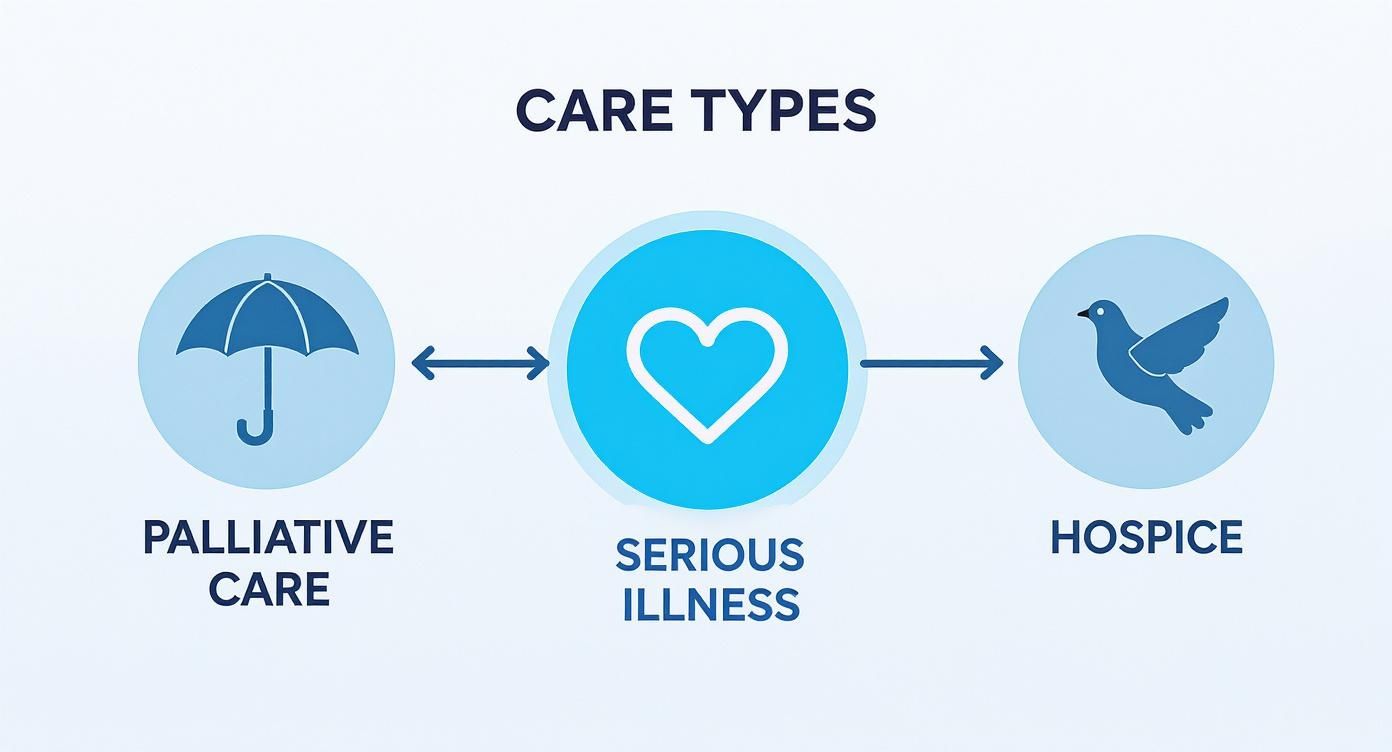
As you can see, hospice is a specialized form of care that falls under the broader palliative approach, focused specifically on the end-of-life journey.
Defining Roles for Seamless Support
To make sure nothing gets missed, the roles are clearly defined yet deeply collaborative. The hospice team takes the lead on the clinical side of end-of-life care, while the assisted living team provides the consistent, daily support that makes the community feel like home.
Here’s a practical look at how responsibilities are shared:
- Clinical and Medical Management: The hospice team handles all medical care related to the terminal diagnosis. This means managing pain, treating symptoms like shortness of breath or nausea, and overseeing all related medications and medical equipment.
- Daily Living and Personal Care: The assisted living staff continues to provide the hands-on, day-to-day support they always have. This includes help with bathing, dressing, grooming, meals, and mobility—all guided by the hospice plan of care.
- Communication and Planning: Both teams participate in regular care conferences. They share notes, discuss the resident's condition, and make collective decisions with the family so the resident's wishes always remain the top priority.
This powerful partnership is why about one in four hospice patients can comfortably reside in assisted living communities, receiving integrated care that addresses all their needs.
By working together, the hospice and assisted living teams create a safety net of support. This ensures that a resident’s physical, emotional, and spiritual needs are met by the right professional at the right time, providing immense peace of mind for families.
A Real-World Scenario in Action
Let’s walk through a common situation. Suppose a resident on hospice care experiences a sudden increase in anxiety. The assisted living aide notices this change during their morning routine and immediately reports it.
The assisted living nurse contacts the hospice case manager, who can then send the hospice social worker or spiritual counselor for a visit right away. At the same time, the hospice nurse might consult with the physician to see if a medication adjustment could help. The entire response is coordinated, swift, and focused on easing the resident’s distress without a disruptive trip to the emergency room.
This seamless collaboration is the heart of effective hospice care in assisted living. It ensures your loved one is surrounded by a circle of support, allowing them to live their final months with grace, dignity, and the comfort of being in a place they call home.
What Hospice Actually Brings to the Community

When a hospice team joins a resident’s care circle, they bring far more than just medical management. Think of it as a holistic layer of support wrapped around both the resident and their family, right within the comfort of their assisted living home. The entire focus shifts to ensuring comfort, preserving dignity, and making every remaining day as meaningful as possible.
This approach is becoming more and more essential. The global hospice care market, currently valued at around USD 4.66 billion, is expected to nearly double by 2032. This isn't just a business trend; it reflects a deeper public understanding of how vital these services are for individuals navigating serious illness.
The Interdisciplinary Care Team
At the very heart of hospice care in assisted living is the interdisciplinary team. This isn't just a list of names; it's a dedicated group of professionals who collaborate to create one unified care plan, completely centered on the resident's specific needs and personal wishes.
This team is a powerhouse of expertise, typically including:
- Skilled Nurses: These are the true experts in managing pain and other difficult symptoms. They visit regularly to assess the resident, adjust medications for maximum comfort, and provide direct clinical care.
- Social Workers: A terminal illness is an emotional journey, not just a physical one. Social workers provide that crucial emotional support, helping families navigate tough conversations and connecting them with practical community resources they might not know about.
- Spiritual Care Coordinators: Offering non-denominational spiritual comfort, these coordinators help residents and families find peace and meaning during a profound time. They're there to listen, offer guidance, and honor personal beliefs.
- Hospice Aides: Aides pitch in with supplemental personal care, like bathing and grooming, that is directly tied to the resident's comfort and well-being.
- Volunteers: These are often the unsung heroes. Trained volunteers offer the simple, powerful gift of companionship—reading a book aloud, playing cards, or just being a quiet, comforting presence.
Practical Support and Equipment
Beyond the professional team, hospice provides tangible support that makes a world of difference in a resident's daily comfort. For many families, one of the biggest reliefs is learning that the hospice benefit covers all the necessary medical supplies and equipment related to the terminal diagnosis.
This means the hospice agency arranges for and delivers essential items directly to the assisted living community, including things like:
- A hospital bed for better comfort and easy repositioning
- Oxygen equipment to help with breathing
- Wheelchairs or walkers to maintain mobility
- Specialized wound care supplies
- All medications needed to manage pain and symptoms of the illness
Hospice care is about adding life to a person’s days, not just days to their life. By managing symptoms and providing holistic support, the team allows residents to focus on what matters most: spending meaningful time with their loved ones.
This comprehensive approach takes the logistical burden off the family's shoulders. You won't have to worry about tracking down equipment or figuring out how to pay for expensive medications. While hospice handles this clinical support, the daily assistance from the assisted living staff remains a key part of the resident’s overall comfort. You can learn more about that partnership in our overview of assisted living services.
Navigating Hospice Eligibility and Payment
Figuring out the financial and logistical side of arranging hospice care in assisted living is a big step for any family. It can seem incredibly complex, but the process is often more straightforward than people think. Getting a clear picture of who qualifies and how it’s all paid for can give you the confidence to make the best, most compassionate decisions.
The journey starts with one key requirement: eligibility. Before any services can begin, a physician must certify that your loved one has a terminal illness with a life expectancy of six months or less, assuming the disease follows its usual course. This isn’t about setting a timer on someone's life; it's a clinical guideline that opens the door to this specialized kind of comfort care.
Who Pays for Hospice Services
Once a loved one is eligible, the next question is almost always about the cost. Thankfully, the way hospice is paid for is designed to relieve stress, not add to it. The vast majority of hospice services in the U.S. are covered by a single, comprehensive benefit.
This is because more and more people recognize the incredible value of comfort-focused care. In fact, hospice use among Medicare beneficiaries recently hit an all-time high of 51.7% of all people who passed away. Medicare payments for this care reached USD 25.7 billion, showing a clear trend toward embracing hospice. These payments are projected to more than double by 2033 as more families choose this path. You can dig into these trends over at Hospice News to see what this means for the future of end-of-life care.
The Medicare Hospice Benefit
For most families, the Medicare Hospice Benefit is the primary way hospice is paid for. This benefit is remarkably inclusive, designed to cover just about everything related to the terminal diagnosis. It’s like an all-in-one package, making sure you aren't buried under a mountain of medical bills.
Here’s a snapshot of what the Medicare Hospice Benefit usually covers:
- Skilled Nursing Care: Regular visits from a hospice nurse to manage pain and other symptoms.
- Medical Equipment: Things like a hospital bed, oxygen, or a wheelchair delivered right to the assisted living community.
- Medical Supplies: All the necessary supplies, from wound care dressings to catheters.
- Medications: All prescriptions for pain relief and symptom management tied to the terminal illness.
- Therapies: Physical, occupational, or speech therapy if it helps with comfort.
- Support Services: Visits from a social worker, spiritual care coordinator, and a hospice aide.
It's essential to understand a critical distinction: the Medicare Hospice Benefit pays for the clinical, comfort-focused care provided by the hospice agency. It does not, however, cover the separate room and board costs associated with the assisted living facility itself.
This means your family is still responsible for the monthly fee that covers housing, meals, and the non-medical support provided by the assisted living staff. It helps to think of it as two separate arrangements: one with the hospice provider for medical services and one with the community for daily living support.
Exploring Other Payment Avenues
While Medicare is the most common route, it's not the only one. Understanding the other options can open up additional paths to getting your loved one the care they need.
To make things a little clearer, here’s a quick breakdown of how different payors typically handle hospice costs in an assisted living setting.
Understanding Hospice Payment Options
| Service Component | Medicare Hospice Benefit | Medicaid Coverage | Private Insurance |
|---|---|---|---|
| Nursing & Physician Services | Fully covered. | Typically fully covered, mirroring Medicare. | Usually covered, but check for co-pays or deductibles. |
| Medical Equipment & Supplies | Fully covered. | Covered, similar to Medicare. | Most policies cover this, but verify specifics. |
| Prescription Drugs | Fully covered for symptom and pain management. | Covered for related conditions. | Coverage varies; review your policy for details. |
| Support Services | Social work, spiritual care, and aide services are fully covered. | Generally covered. | Often covered, but confirm with your provider. |
| Assisted Living Room & Board | Not covered. | Not covered by the hospice benefit, but some state waivers may help. | Not covered. |
As you can see, the core hospice services are well-covered across the board, but the cost of the assisted living facility itself is a separate expense.
Medicaid Coverage
In many states, Medicaid also offers a hospice benefit that looks a lot like what Medicare provides. The specific rules and coverage can vary by state, so it’s always best to check your local guidelines. For some residents, Medicaid might also help cover the costs of assisted living, which can be a huge financial relief. If you're looking into this, it helps to understand the details, and you can learn more by checking out our guide on whether assisted living is covered by Medicaid.
Private Insurance and VA Benefits
Most private health insurance plans have a hospice benefit similar to Medicare's. It's always a good idea to call the insurance company directly to confirm the specifics of the policy, including any copayments or deductibles that might apply.
Additionally, the Department of Veterans Affairs (VA) provides a comprehensive hospice benefit for eligible veterans. This care can be received in many settings, including an assisted living community. The hospice agency can help coordinate with the VA to make sure all benefits are accessed, honoring the veteran's service with compassionate end-of-life care.
How Forest Cottage Partners in Compassionate Care
At Forest Cottage, we don’t just "allow" hospice care in assisted living—we embrace it as a vital partnership. It's our promise of compassion in action. We see our role as the steady, supportive foundation that allows hospice professionals to do their best work, ensuring your loved one’s final journey is one of dignity and peace.
Our philosophy is simple: we are a key part of the circle of care. It all starts with our staff, who are specially trained in the unique needs of end-of-life support. They know exactly how to blend the clinical expertise of the hospice team with the warm, consistent care that truly makes a place feel like home.
Creating a Peaceful and Dignified Environment
From the moment a hospice agency gets involved, we are in close coordination with them. Our team keeps the lines of communication wide open, sharing observations and joining in on care planning. This teamwork ensures nothing falls through the cracks and that everyone is pulling in the same direction.
Comfort is at the heart of everything we do, and we’ve designed our community to be a peaceful refuge. Here’s how we specifically complement the hospice mission:
- Private and Welcoming Rooms: Our spaces are designed to feel like a real home, creating a calm setting where family can visit comfortably and share precious time together.
- Flexible Dining Services: We coordinate with the hospice team to accommodate changing appetites and special dietary needs, making sure every meal is both comforting and nourishing.
- 24/7 Staff Availability: Day or night, our caregivers are always here to offer hands-on help, respond to immediate needs, and provide a reassuring presence.
We don't just provide a room; we provide a sanctuary. Our commitment is to manage the daily details so families can focus on what truly matters: cherishing the time they have left with their loved one.
This approach is central to our belief in letting residents truly age in place. The transition to hospice shouldn't involve the stress of another move. Instead, it should feel like a gentle layering of expert support right here in the familiar, loving environment of Forest Cottage.
We are more than just a facility; we are a dedicated partner in your loved one’s journey. Our goal is to provide unwavering support, allowing them to live their final chapter with the grace, comfort, and respect they so profoundly deserve.
Common Questions About Hospice in Assisted Living
Making the shift to hospice care naturally brings up a lot of questions—some practical, some deeply personal. Getting clear, straightforward answers can bring a sense of peace and help your family move forward with confidence. Let's walk through some of the most common concerns families have when thinking about hospice care in assisted living.
This last part of the care journey is often surrounded by uncertainty. Our goal is to demystify the process so you can focus on what truly matters: your loved one’s comfort and quality of life.
Can My Loved One Keep Their Personal Doctor?
Yes, absolutely. This is one of the first things families worry about, but hospice is designed to be a collaborative effort, not a replacement for trusted medical relationships. Your loved one's primary doctor can stay just as involved as they'd like to be, often continuing to direct the overall plan of care.
The hospice team works hand-in-hand with your family doctor. They maintain constant, open communication, honoring that long-standing relationship while adding their own specialized expertise in managing symptoms and ensuring comfort.
What Happens If Their Condition Improves?
It's actually not uncommon for someone's health to stabilize or even get a bit better once the focused, attentive comfort care of hospice begins. When pain and other difficult symptoms are finally under control, a person can really rally.
If they improve to the point where they no longer meet the six-month eligibility guideline, they can be discharged from hospice. The great thing is that hospice is flexible. Care can be resumed later if and when their condition declines again. It’s a system that adapts to the resident’s personal journey.
Does Choosing Hospice Mean We Are Giving Up Hope?
This is probably the toughest and most profound question a family has to face. Choosing hospice isn’t about giving up; it’s about redefining what you’re hoping for. The focus simply shifts from the hope of finding a cure to the hope for quality of life.
It becomes hope for days filled with comfort instead of pain. Hope for dignity. And hope for meaningful time spent together with the people they love. It’s a powerful choice to make the very most of the time that remains.
Who Pays for Room and Board While on Hospice?
This is a key financial detail that often causes confusion, so it's important to be clear. The Medicare Hospice Benefit (or a similar private insurance plan) is what pays for all the clinical services the hospice agency provides. This includes the nurses, aides, social worker visits, medical equipment, and medications related to the terminal illness.
However, the family continues to be responsible for the separate room and board costs at the assisted living community. Those fees cover housing, meals, housekeeping, and all the daily non-medical support and personal care that our own staff provides.
At Forest Cottage Senior Care, we see ourselves as a steadfast partner in your loved one’s journey. We’re committed to making sure they receive seamless, compassionate care every step of the way. To learn more about our supportive environment, we invite you to schedule a tour by visiting http://44.202.110.106.