
Hospice care isn't a place you go to; it's a philosophy of care that brings comfort, dignity, and support right to where a resident lives. In assisted living, it means layering specialized medical and emotional services on top of the daily care someone is already receiving. This approach lets a resident stay in a familiar, comfortable home during their final chapter.
Demystifying Hospice Care in Assisted Living
When a loved one’s health is declining, the word "hospice" can feel scary. Many people associate it with giving up. But when hospice care is brought into an assisted living setting, it's actually about embracing a new goal: putting quality of life first, ahead of curative treatments. It's a compassionate shift in focus, making sure a person's final months are filled with peace, comfort, and respect.
Think of your loved one's care as a strong, supportive circle. The assisted living community is the foundation of that circle, providing:
- A stable and familiar home environment.
- Help with daily activities like meals, personal care, and housekeeping.
- Social engagement and companionship.
- Ongoing medication management and safety checks.
When hospice is introduced, it doesn't take over; it reinforces this circle. A dedicated hospice team—nurses, aides, social workers, and spiritual counselors—joins the existing caregivers, adding another layer of very specific support. This teamwork provides truly comprehensive care without the disruptive and often traumatic experience of moving to a new, unfamiliar place.
The Growing Need for Integrated Care
The need for this kind of seamless hospice care in assisted living facilities is bigger than ever. Assisted living is now home for a huge number of older adults. With over 30,000 assisted living communities and nearly 1.2 million licensed beds in the U.S., these communities are where life is happening. At the same time, over 5,000 hospice agencies serve about 1.5 million patients, which shows just how much these two essential services overlap. It's a reality that highlights why a coordinated approach that honors a resident's wish to age in place is so important.
By bringing hospice services into the assisted living environment, families can ensure their loved one receives expert end-of-life care in the place they already call home. It’s about adding support, not changing location.
A Partnership Focused on Comfort
I like to think of the assisted living team as the "home life" experts and the hospice team as the "comfort care" specialists. The assisted living staff already knows the resident’s personality, their daily routines, and what they like and dislike. They continue to provide that hands-on, day-to-day support that makes the community feel like home. You can learn more about this foundational role in our guide on what is assisted living.
The hospice team then layers its clinical expertise on top, focusing entirely on managing symptoms of the terminal illness. This integrated model is designed for one single purpose: to allow the resident to live as fully and comfortably as possible. At communities like Forest Cottage Senior Care, we see this partnership as fundamental to our mission of providing continuous, compassionate support through every stage of a resident's journey.
How Assisted Living and Hospice Teams Collaborate
When hospice care starts at an assisted living facility, it doesn't mean the old care team is out. Far from it. Think of it as bringing in a specialized support crew to enhance the amazing team that's already in place. It’s a partnership where two groups, each with their own unique skills, come together for one goal: making sure the resident is as comfortable and supported as possible.
The assisted living staff are the bedrock of a resident’s day-to-day life. They’re the familiar faces, the ones who know just how a resident likes their coffee or which chair is their favorite. Their job is to keep that sense of normalcy and routine going, which is incredibly important.
The hospice team then layers in their own expertise, focusing specifically on the clinical and emotional needs tied to a terminal diagnosis. They are the comfort specialists, bringing a wealth of knowledge in pain management, symptom control, and family support during what is an undeniably tough time.
Defining the Roles in the Care Partnership
To really get how this works, it helps to look at who does what. The assisted living team is in charge of the "home," while the hospice team manages the specialized end-of-life care.
Here’s a practical breakdown of how those responsibilities are divided:
- The Assisted Living Team: They handle the daily rhythm of life. This includes personal care like help with bathing and dressing, providing meals, keeping the living space clean and safe, and encouraging social connections within the community. They are the constant, steady presence.
- The Hospice Team: They bring a focused, clinical skillset. This includes a registered nurse for expert pain and symptom management, a hospice aide for supplemental personal care, a social worker to help the family with emotional challenges, and a chaplain for spiritual support tailored to the family's beliefs.
This infographic does a great job of showing how these two teams wrap their services around the resident, creating a unified circle of care.
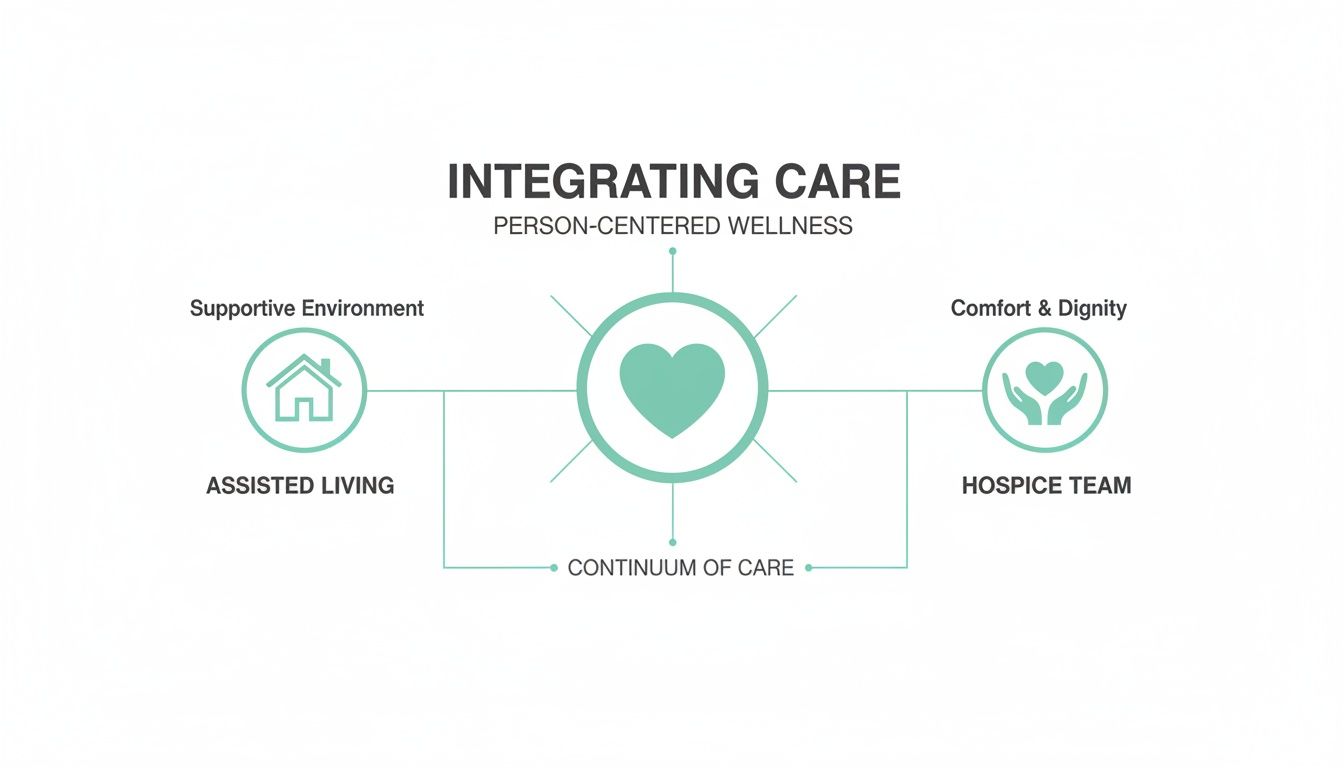
As you can see, both teams are essential pillars supporting the resident's overall well-being. It’s all about working together.
To make this clearer, let's look at a side-by-side comparison of how these teams coordinate their efforts for a resident.
Roles and Responsibilities in Coordinated Care
| Care Aspect | Assisted Living Facility Role (e.g., Forest Cottage) | Hospice Agency Role |
|---|---|---|
| Daily Personal Care | Provides primary assistance with bathing, dressing, grooming, and toileting. | Supplements care with a hospice aide for additional bathing or personal needs. |
| Medication Management | Administers routine medications as prescribed and documented in the resident's chart. | Manages and adjusts medications specifically for pain and symptom control. Communicates changes to facility staff. |
| Meal Service | Prepares and serves daily meals, accommodating dietary restrictions and preferences. | Assesses for changes in appetite or swallowing difficulties; may recommend dietary modifications for comfort. |
| Emotional Support | Offers daily companionship, encourages social interaction, and maintains a familiar environment. | Provides specialized counseling for the resident and family through a social worker and spiritual support via a chaplain. |
| Clinical Oversight | Monitors general health, observes for changes, and communicates with family and primary physician. | A Registered Nurse makes regular visits to assess and manage symptoms related to the terminal illness. |
| Communication | Acts as the primary daily contact for the family regarding routine updates and social well-being. | Leads care plan meetings and communicates all clinical changes and updates to the facility team and family. |
This table shows there’s no overlap, only collaboration. Each team has its lane, but they’re all driving toward the same destination: the resident's peace and comfort.
The Coordinated Care Plan: The Roadmap for Success
The secret sauce to making this partnership work is a single, unified care plan. This document is the roadmap that both teams follow, and it’s created together by the hospice nurse, the facility's care director, the resident, and their family.
This plan covers everything—from the schedule for pain medication to small but important preferences for daily routines. It’s not a static document; it’s updated regularly as the resident's needs evolve. Clear and constant communication is what keeps this plan on track. Regular meetings and shared notes ensure that everyone, from the overnight caregiver to the hospice social worker, is on the exact same page.
For instance, if a hospice nurse changes a pain medication, that update is immediately shared with the assisted living staff who will be giving the dose. This simple act of communication prevents any mix-ups and makes sure the resident gets relief quickly. If you want to learn more about the crucial role of care staff, it’s helpful to understand the different types of facilities where CNAs work, including assisted living environments.
At Forest Cottage Senior Care, we’ve been working with this collaborative model for years. We view our role as being the resident's steadfast advocate, partnering closely with hospice providers to ensure their comfort and dignity are always the top priority. Our approach to comprehensive assisted living services is built on this very foundation of teamwork, ensuring our residents feel supported and cared for right here in the place they call home.
Determining Eligibility for Hospice in Assisted Living
Figuring out who qualifies for hospice care in assisted living facilities is one of the first, and most important, steps for any family considering this path. It’s a common misconception that hospice means giving up. The truth is, it’s about shifting focus—moving from curative treatments to prioritizing comfort, dignity, and making the most of the time that remains.
The main requirement for hospice is a doctor’s certification. This simply means a physician has determined that a person has a life expectancy of six months or less, assuming their illness runs its natural course.
The Physician's Certification Explained
That "six-month" window often causes confusion. It isn't a hard deadline or some kind of countdown. Instead, think of it as a clinical guideline that opens the door to a more compassionate and supportive kind of care. If a resident's health continues to decline after six months, a doctor can simply recertify their eligibility, and hospice services continue without a hitch.
Making this shift can be a tough conversation, but it's an important one. For families trying to figure out the right next step, it helps to know the signs that a loved one might be ready for this supportive model. You can find more guidance in our article on how to know when your parents need assisted living.
Some of the most common diagnoses that lead to hospice care include:
- Advanced Dementia: When memory loss is significant and a person needs a great deal of help with daily life.
- Late-Stage Cancer: When the disease is no longer responding to treatments aimed at a cure.
- End-Stage Heart or Lung Disease: Marked by frequent hospital visits and severe symptoms that are hard to manage.
- General Decline: A steady, noticeable decline in overall health, often due to several chronic conditions at once.
At its heart, hospice eligibility is about moving from curative care to comfort care. It's an active choice to improve the quality of the time someone has left, making sure their final months are filled with peace and dignity, not defined by aggressive medical procedures.
A Growing Trend in Senior Care
As our population ages, more and more families are seeing the value in this supportive approach. The numbers back this up. Hospice use among Medicare decedents has been climbing, hitting 51.7% in 2023—the highest rate seen since 2019.
This trend reversed a dip during the pandemic, with total Medicare hospice payments reaching $25.7 billion that year. It’s a reflection of both more patients choosing hospice and people staying in hospice care longer. With the 65+ population now at 61.2 million, the need for well-coordinated hospice services inside assisted living communities is only going to grow.
Making the Compassionate Choice
The decision to start hospice is a deeply personal one. It comes down to recognizing that enhancing quality of life is a powerful and valid medical goal in itself. The focus shifts away from invasive procedures and instead turns to managing symptoms like pain, anxiety, and shortness of breath.
This allows a resident to spend their time with family, find peace, and stay in the familiar, comfortable setting of their assisted living home. It's a choice made from a place of love, aimed at making someone's final chapter as peaceful and meaningful as it can be.
Navigating Costs for Hospice and Assisted Living

Talking about the financial side of combined care can feel like a heavy burden, but the way payments are structured is often more straightforward than families think. The easiest way to look at it is as two separate bills for two very different services, even though they're being delivered in the same place.
The first bill is for the hospice care itself. And here’s the great news for families: this part is almost always fully covered. Medicare Part A is the primary payer for hospice, and it typically covers 100% of all related costs. That means the clinical team, the medications for the terminal illness, and any necessary medical equipment are all taken care of.
Most Medicaid and private insurance plans follow Medicare’s lead, offering comprehensive hospice coverage as well. This is a huge relief, freeing up families to focus on their loved one’s comfort instead of worrying about mounting medical bills.
Understanding Separate Payment Responsibilities
The second bill is for the assisted living facility's room and board. It's really important to understand that hospice benefits do not pay for the day-to-day cost of living in the community. These fees cover the essentials like rent, meals, housekeeping, and the 24/7 non-medical support from the facility’s staff.
Families typically cover the assisted living portion through:
- Private funds: Using personal savings, retirement income, or contributions from family.
- Long-term care insurance: Policies specifically designed to help with assisted living costs. You can learn more in our detailed guide on long-term care insurance coverage for assisted living.
- Asset conversion: This often involves the sale of a home.
For families concerned about the financial strain, it can be really helpful to look into strategies to protect assets from Medicaid in Texas when planning for long-term costs.
The key takeaway is this: Medicare covers the medical (hospice), while the family covers the residential (assisted living). This separation of costs simplifies the financial planning process.
The Role of VA Benefits for Veterans
For veterans, there’s another important layer of support available through the Department of Veterans Affairs (VA). While Medicare still handles the hospice component, certain VA benefits, like the Aid and Attendance pension, can be a game-changer for helping pay the assisted living facility's room and board fees.
This benefit is for qualifying veterans and surviving spouses who need help with daily activities. It provides a monthly, tax-free payment that can be put directly toward assisted living costs, significantly easing the financial load on families.
We know the application process for VA benefits can be complex. At Forest Cottage Senior Care, we're deeply committed to our veterans. We actively help families figure out their eligibility and connect them with the right resources to get the paperwork done, ensuring they receive every benefit they’ve rightfully earned. This hands-on support is part of our promise to make hospice care in assisted living facilities as seamless and stress-free as we can.
Questions to Ask Your Care Providers
Choosing the right partners for this journey is one of the most important decisions your family will make. When you're looking at hospice care in assisted living facilities, you aren't just picking a service. You're building a team that will surround your loved one.
To get this right, you need to ask direct, insightful questions to both the assisted living community and the hospice agencies you're considering. The real goal here is to find out how these two separate groups will truly work together. Their ability to communicate and coordinate will make all the difference for your loved one's comfort and your family's peace of mind.
Think of yourself as the team manager. Your job is to make sure every player knows their role and is committed to the same goal. These questions are your playbook for building that strong, compassionate team.
Questions for the Assisted Living Facility
Before you even think about bringing in a hospice agency, you have to be confident that the assisted living community is ready and able to handle this type of partnership. Their role is to be the stable, supportive home base while the hospice team adds their specialized clinical skills.
Here are the key things you need to ask the facility’s leadership:
- Experience and Partnerships: How many residents have you supported with hospice services in the past year? Do you have specific hospice agencies you prefer to work with, and why?
- Staff Training: What kind of training does your staff get on end-of-life care? Do they know how to spot symptoms and communicate with families during this incredibly sensitive time?
- Communication Protocol: How do you and the hospice team stay on the same page? Is there a shared chart, daily meetings, or a specific point person who handles all the coordination?
- After-Hours Support: What happens if my loved one is in distress overnight or on a weekend? What’s your process for getting in touch with the hospice’s on-call nurse and managing things until they arrive?
- Family Involvement: How are we, the family, included in care planning once hospice starts? How will you keep us in the loop about our loved one’s day-to-day well-being?
A facility's answers should show you they truly understand their role as the consistent, daily support system. They need to be able to explain exactly how they integrate hospice care without making the resident feel like they're in a hospital instead of their home.
Questions for the Hospice Agency
Once you’re comfortable with the assisted living community, it's time to vet the hospice provider. Their team will be guests in your loved one’s home, so you need to be sure they are not only clinically skilled but also respectful of the assisted living environment.
Ask these questions to get a feel for their approach:
- Facility Experience: How often do your nurses and aides work inside assisted living communities? What are the common challenges you run into, and how do you handle them?
- Staffing Model: What’s a typical caseload for one of your nurses? How often can we realistically expect a visit from the nurse, aide, social worker, or chaplain?
- After-Hours Response: If we have an urgent after-hours call, what is your guaranteed response time? And who answers the phone—is it a nurse who can help right away, or an answering service?
- Care Coordination: How do you share notes and updates with the assisted living staff? We need to know everyone is on the same page if medications change or new symptoms appear.
- Family Support: What specific bereavement and counseling services do you offer our family, both before and after our loved one passes?
Asking these tough questions upfront empowers you. It helps you find a partnership built on transparency, experience, and genuine compassion, ensuring your family member is wrapped in a seamless circle of support when they need it most.
Essential Questions Checklist for Families
Navigating this process means keeping track of a lot of details. It's easy to forget a critical question in the moment. This checklist is designed to help you organize your thoughts and ensure you get clear, comparable answers from every potential partner. Use it as your guide during tours and interviews.
| Category | Question to Ask the Assisted Living Facility | Question to Ask the Hospice Agency |
|---|---|---|
| Teamwork & Communication | How do you communicate daily updates and changes with the hospice team? | What is your process for sharing care plan updates with the facility staff? |
| Staff Expertise | What specific training on end-of-life care do your caregivers receive? | How much experience does your team have working within an assisted living setting? |
| After-Hours Care | What is your protocol for urgent needs on nights and weekends? | What is your average response time for an emergency call after business hours? |
| Care Planning | How will our family be involved in ongoing care plan meetings? | How often do you re-evaluate the care plan, and who is included in that process? |
| Family Support | What resources or support do you offer families during this time? | What bereavement and counseling services are available to our family? |
Taking the time to ask these questions will give you the confidence that you're building the best possible team. This isn't just about logistics; it's about creating a peaceful, supportive, and dignified experience for your loved one and your entire family.
How Forest Cottage Creates a Supportive Hospice Environment

Here at Forest Cottage Senior Care, the idea of compassionate hospice care in assisted living facilities isn't just a service we offer—it’s woven into the very fabric of our community. We firmly believe that end-of-life care shouldn't feel like an interruption. Instead, it should be a natural, gentle extension of the life a resident is already living with us.
Our entire approach is built on creating a true home where comfort and dignity always come first.
This commitment is something you can feel the moment you walk in. We’ve worked hard to cultivate a warm, homelike atmosphere, which is supported around the clock by our 24/7 nursing staff. This means that as a resident's needs evolve, they are always surrounded by familiar, caring faces who know them personally. Our care plans are intentionally flexible, so we can seamlessly integrate hospice services when the time comes, without ever needing to uproot someone from the place they call home.
Fostering Seamless Collaboration and Comfort
Over the years, we've built strong, trusted partnerships with the best local hospice agencies right here in the Willis, TX, area. This isn't just a name in a contact list; it’s an active, hands-on collaboration. Our own team receives specialized training in compassionate end-of-life support, which allows us to work hand-in-hand with hospice clinicians. The result is clear communication and perfectly synchronized care.
We know that quality of life is found in the details, both big and small. It's about making sure a resident’s favorite all-inclusive amenities and daily joys continue. This philosophy is at the heart of our unique offerings, including our signature programs, which are all designed to support holistic well-being.
Our unwavering goal is to honor each resident's journey. This means every day is lived with dignity, surrounded by a support system that feels less like a facility and more like family, ensuring a peaceful experience in a place that truly is home.
A Growing Need for Compassionate Care
It's clear there's a major shift happening in how we approach end-of-life care, with a much-needed focus on comfort and quality of life. The hospice sector is growing significantly to meet this demand. The U.S. market is projected to hit around $39.0 billion in 2025, a number that reflects just how many families are seeking out these integrated services.
This trend is driven by our aging population and a deeper, more widespread understanding of the benefits of palliative support. You can explore more insights on this growing market on ResearchAndMarkets.com.
At Forest Cottage, we see ourselves as part of this compassionate movement. Whether it’s through the simple comfort of a visit from our resident Goldendoodle or the careful coordination of clinical services, our focus is always the same: making every single moment matter. We are dedicated to being a place where residents and their families feel heard, respected, and genuinely cared for, right to the very end.
Your Questions About Hospice in Assisted Living, Answered
Working through the details of hospice care in an assisted living facility can bring up a lot of practical questions. Getting clear, straightforward answers is one of the best ways to find peace of mind during what is already a sensitive time. Let's walk through some of the most common concerns families have.
Think of this process as adding a compassionate layer of specialized support, not creating a disruption. When you understand how it all works together, you can feel much more confident and prepared for the journey ahead.
Does My Loved One Have to Move Rooms?
No, they don't. This is actually one of the greatest comforts of combining these two types of care. Your loved one stays right where they are, in their familiar apartment or room within the community they already call home.
The hospice team comes directly to them. They gently blend their services into your loved one's established routine and environment. This continuity makes a huge difference, reducing the stress and anxiety that almost always comes with a move.
What if a Resident on Hospice Lives Longer Than Six Months?
That six-month timeframe is a guideline for a doctor to certify that someone is eligible for hospice, not a hard stop on care. In fact, it's quite common—and wonderful—when someone lives beyond that initial period.
As long as a physician and the hospice medical director re-certify that the resident's condition still meets the criteria for a terminal illness, they can continue receiving hospice services indefinitely. The care is simply renewed in benefit periods, ensuring support is there for as long as it's needed.
The goal of hospice isn't to put a date on the calendar. It's to make the quality of life as rich as possible for whatever time remains, focusing on comfort and dignity every step of the way.
Can We Stop Hospice Care if Their Condition Improves?
Absolutely. A resident always has the right to stop their hospice benefit at any time, for any reason. Sometimes a condition unexpectedly stabilizes, or a family decides to pursue a new curative treatment.
If that happens, they can be discharged from hospice care. It's not a one-way street. And if their situation changes again down the road, they can always re-enroll.
How Do the Facility and Hospice Nurse Coordinate Medications?
This is where seamless communication becomes the foundation for everything. The hospice team takes the lead on prescribing and managing all medications related to the terminal illness and its symptoms, like pain or anxiety.
The hospice nurse communicates any new orders or changes directly to the assisted living facility's own nursing staff. This usually happens through a shared care plan, regular team meetings, and consistent updates. The facility's staff then handles the day-to-day administration of those medications just as the hospice nurse directed, making sure everyone is working together perfectly.
At Forest Cottage Senior Care, we pride ourselves on creating a seamless and supportive environment where residents can receive compassionate end-of-life care without leaving the comfort of home. To learn more about our approach, please visit us at http://44.202.110.106.