
Respite care is, quite simply, a short-term break for family caregivers. It’s planned, temporary relief from the demanding, around-the-clock responsibilities of looking after a loved one. Think of it like a relief pitcher in a baseball game—they come in to give the starting pitcher a crucial rest, ensuring the team can stay strong until the end. This isn't a luxury; it's a fundamental part of a sustainable long-term care plan.
Unpacking the Role of Respite Care
Anyone who has been a primary caregiver knows it's an incredibly rewarding role, but it's also physically and emotionally draining. It quickly becomes a 24/7 job, leaving almost no time for your own needs, whether it's running errands, visiting a doctor, or just taking a moment to breathe. This is exactly where respite care comes in to share the load.
Respite care arranges for qualified, temporary support for your loved one, which gives you the confidence and peace of mind to step away. This support can look different for every family, ranging from a few hours a week to a couple of weeks for a much-needed vacation. The global market for respite care has been growing steadily at about 5.48% annually, which really underscores how vital this service is becoming for families everywhere.
Before we dive deeper, here's a quick summary of what respite care is all about.
Respite Care at a Glance
| Key Aspect | Description |
|---|---|
| What It Is | A planned, short-term care service that provides temporary relief to family caregivers. |
| Who It's For | Primarily for the primary family caregiver, but also benefits the person receiving care. |
| Primary Purpose | To prevent caregiver burnout, reduce stress, and support the overall well-being of the entire family. |
This table provides a snapshot, but the benefits run much deeper for everyone involved.
A Support System for the Whole Family
It’s easy to think of respite care as being only for the caregiver, but it truly benefits everyone. While the main goal is to prevent caregiver burnout, it also gives the person receiving care some wonderful advantages. They get a change of scenery, a chance to interact with new people, and receive professional care from someone with fresh energy and a different perspective.
This temporary support system ensures your loved one’s care continues without interruption, all while promoting well-being for both of you. The key here is flexibility. You can create a schedule that fits your family's unique needs. For a closer look at how this works in practice, you can find more information about the benefits of temporary senior care in our detailed guide.
Respite care is a proactive choice that strengthens a caregiver's ability to provide compassionate, consistent support over the long haul. It acknowledges that to care for others effectively, you must first take care of yourself.
Understanding the Different Types of Respite Care
Picking the right kind of support is a huge step when you're figuring out how respite care can work for your family. Not all respite solutions are built the same; they’re designed to fit different needs, schedules, and personalities. It’s a bit like choosing how to get around—sometimes you just need a taxi for a quick trip across town, but other times, you need to book a flight for a long journey.
The whole point is to find the option that gives your loved one the best experience while giving you the specific break you need. Let’s walk through the three main types of respite care you’ll find.
In-Home Respite Care
This is usually the most familiar and comfortable choice for families. In-home respite care is exactly what it sounds like: a professional caregiver comes directly to your home. They can help with daily activities, offer companionship, and handle personal care tasks, all within the comforting, known environment of home.
This type of care is perfect for shorter breaks. Think of an afternoon to run errands, get to a doctor's appointment, or just have a few hours to yourself to recharge. It creates minimal disruption for your loved one since their routine and surroundings stay exactly the same. The focus is simply on maintaining normalcy while ensuring they have professional, compassionate support.
This quick flowchart can help you decide if now is the right time to explore these options more seriously.
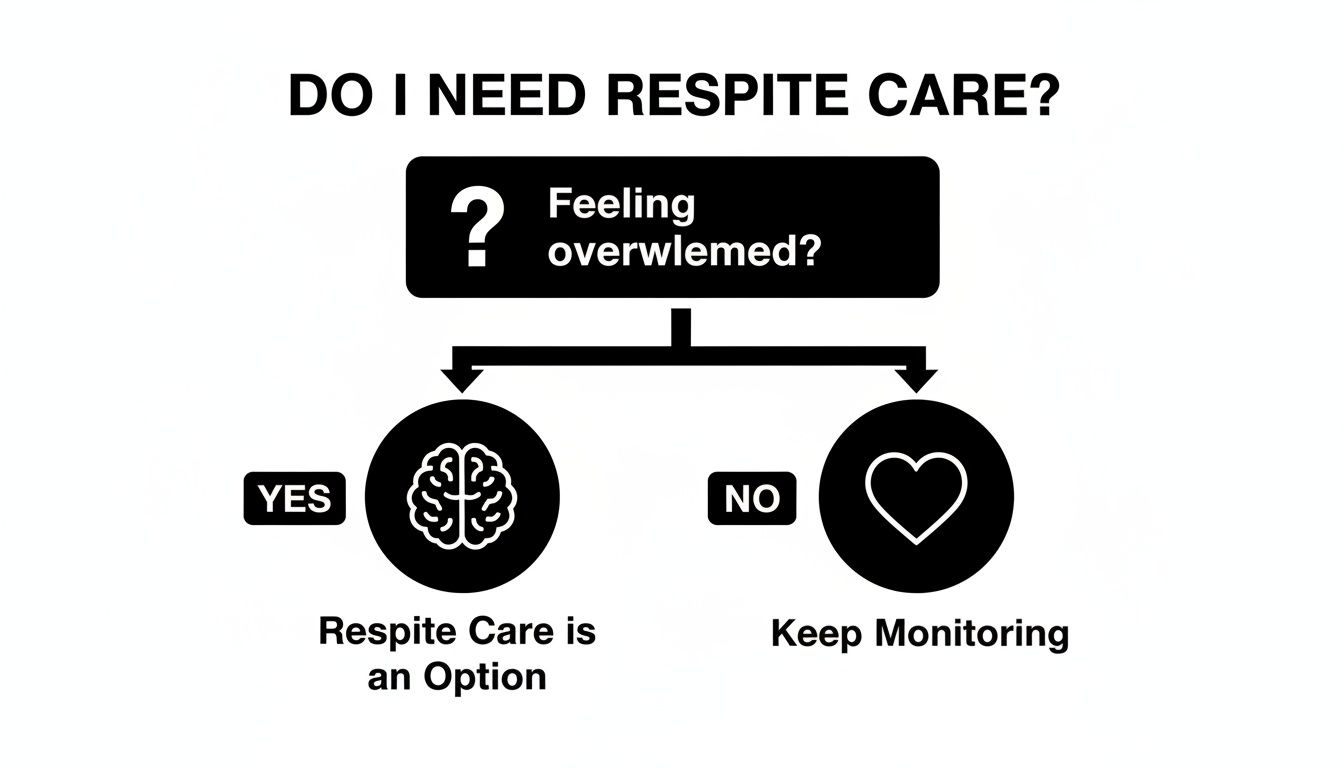
As the flowchart shows, that feeling of being overwhelmed is a clear sign that looking into respite care is a genuinely beneficial next step.
Adult Day Centers
For caregivers who work during the day or need a structured, full-day break, adult day centers are a fantastic solution. These centers typically operate during standard business hours and provide a safe, engaging, and social environment for seniors. They are hubs of activity, offering meals, social interaction, and a variety of programs.
Participants can get involved in activities like art classes, gentle exercise, and group games, which can really boost their quality of life and fight off feelings of isolation. These centers offer a mix of social and health services. To see how they work in practice, you can learn more about how our adult day care program fosters a real sense of community and well-being. It’s an ideal option for caregivers who need reliable, consistent daytime support.
“The time spent with my parents is more visiting now, instead of me trying to [do all the chores, yard work, etc.]. Now I’m not as tired.” – Respite Care Participant
Short-Term Residential Stays
When you need a longer break—maybe for a vacation, a work trip, or to recover from your own health issue—a short-term residential stay is the answer. With this option, your loved one temporarily moves into an assisted living or skilled nursing community for a few days or even a couple of weeks.
During their stay, they receive 24/7 care and have full access to all the amenities and services the full-time residents enjoy. This usually includes:
- Professionally prepared meals and dining services
- A full calendar of social and recreational activities
- Medication management and personal care assistance
- Constant supervision from trained staff in a secure environment
This option provides the highest level of support and gives you complete peace of mind, knowing your loved one is in a safe and stimulating place while you take a well-deserved extended break. It’s an immersive experience that can also double as a trial run if you're considering long-term care down the road.
To make sense of these options at a glance, we've put together a simple comparison.
Comparing Respite Care Options
| Feature | In-Home Care | Adult Day Center | Facility-Based Stay |
|---|---|---|---|
| Location | In your own home. | A dedicated community center. | An assisted living community. |
| Typical Cost | Moderate to high (per hour). | Lower (per day). | High (per day/week). |
| Social Interaction | One-on-one with a caregiver. | High; group activities and peers. | High; interaction with residents and staff. |
| Ideal Duration | A few hours to a full day. | A full day, on a regular schedule. | Several days to a few weeks. |
Each type of care has its own strengths. The best choice really comes down to the length of the break you need, your loved one's comfort level, and your budget.
Why Respite Care Is a Necessity, Not a Luxury
It’s easy to think of respite care as an optional add-on, something to consider "if you have the time." But that's a dangerous misunderstanding. For millions of families, caregiving is a high-stakes marathon with no finish line in sight.
In this race, respite care isn't a luxury—it's the water station, the fresh pair of running shoes, and the cheering crowd all rolled into one. It’s what keeps caregivers from collapsing long before the race is over.
The sheer weight carried by unpaid family caregivers—both economically and emotionally—is staggering. They are an invisible workforce propping up our entire healthcare system. In California, for example, the estimated value of this care is $122.3 billion, more than double the state's massive agricultural sector. Down in Texas, caregivers contribute $62.4 billion in unpaid labor, dwarfing its famous cattle industry.
These aren't just numbers. As detailed in this insightful report, they show that supporting caregivers isn't just a family issue; it’s a critical economic one.
The True Cost of Caregiver Burnout
When caregivers push themselves to their absolute limits without a break, they risk caregiver burnout. This is so much more than just feeling tired; it's a state of total emotional, physical, and mental exhaustion. It’s that feeling of being completely overwhelmed, drained, and unable to meet the constant demands of caregiving.
Spotting the signs early is the key to preventing long-term problems for both you and your loved one.
- Emotional Exhaustion: Are you feeling persistently irritable, anxious, or depressed?
- Physical Symptoms: Have you noticed changes in your sleep, frequent headaches, or that you're getting sick more often?
- Detachment: Are you losing interest in hobbies you once enjoyed or feeling distant from the person you're caring for?
When a caregiver hits burnout, the quality of care they can provide inevitably suffers. Patience wears thin, compassion is harder to find, and the risk of making mistakes goes way up.
Taking a break isn't a sign of weakness or failure. It's a proactive, strategic move that shows strength and a deep commitment to providing the best possible care for the long haul.
Shifting the Mindset from Guilt to Empowerment
So many caregivers wrestle with guilt when they even think about taking time for themselves. They worry they’re abandoning their loved one or failing at their duties. But truly understanding how does respite care work means flipping that perspective completely.
Think of it this way: you are the most important tool in your loved one's care plan.
If that tool becomes worn down, cracked, or broken, the whole plan falls apart. Taking a break to rest, recharge, and focus on your own well-being is the most responsible thing you can do. It allows you to come back to your role with fresh energy, a clearer mind, and the patience you need to be compassionate and effective. Respite care empowers you to be a better, more resilient caregiver.
How to Pay for Respite Care Services
Understanding that you need a break is one thing, but figuring out how to pay for it can feel like a whole separate challenge. For most families, the cost of respite care is a huge factor. The price tag can swing quite a bit depending on the type of care, where you live, and just how much support your loved one needs.
You’ll see costs broken down in a few common ways. In-home care is almost always billed by the hour, while adult day centers typically charge a flat daily rate. If you're looking at a short-term residential stay, that's usually priced per day or per week. The good news is, you don't have to shoulder this alone—several options can help make respite care financially manageable.
Medicare and Medicaid Coverage
It's a common myth that Medicare pays for respite care, but that's rarely the case. Original Medicare (Part A and B) generally does not cover long-term care or standard respite services. There is one important exception: for a loved one receiving hospice benefits, Medicare will cover up to five consecutive days of inpatient respite care. This is specifically designed to give the family caregiver a much-needed short break.
Medicaid, on the other hand, can be a much bigger help. Since Medicaid is a joint federal and state program, the rules change from state to state. Many offer Home and Community-Based Services (HCBS) waivers, which are a game-changer for families. These waivers are designed to help pay for services—including respite care—that allow someone to get support at home instead of moving into a nursing facility.
Veterans Affairs (VA) Benefits
For families of those who have served our country, the Department of Veterans Affairs offers some fantastic support. The VA’s standard medical benefits package includes respite care services for enrolled Veterans, recognizing the immense pressure on family caregivers.
The VA can provide up to 30 days of respite care each year. This isn't an all-or-nothing deal; you can use it in different ways to fit your family's needs:
- In-Home Care: A professional caregiver can come right to the Veteran’s home.
- Adult Day Health Care: The Veteran can spend the day at a VA-contracted center.
- Temporary Residential Stay: The Veteran can have a short stay in a VA community living center or another contracted facility.
This benefit is a genuine lifeline for countless military families, acknowledging the incredible dedication of both the Veteran and their caregiver.
Long-Term Care Insurance and Private Pay
Of course, many families use their own funds—often called private pay—to cover the cost of respite care. This route offers the most freedom and flexibility, as you can choose any provider you like without having to jump through eligibility hoops.
Another powerful option is long-term care insurance. These policies are built specifically to pay for the kinds of services that regular health insurance won't, like assisted living and respite care. Every policy is different, so it's vital to pull yours out and see exactly what it covers. To get a better feel for what these plans can do, check out our guide on how long-term care insurance covers assisted living.
"I’m able to hire care to come into the home and be with my mother while I’m at work, so I can be focused at my job and not be distracted.” – Respite Care Grant Recipient
Finally, don't forget to look into local resources. Organizations like the Area Agency on Aging, non-profits, and disease-specific groups (such as the Alzheimer's Association) sometimes offer small grants or subsidies to help families get that essential break.
A Step-by-Step Guide to Arranging Respite Care
Knowing you need a break is one thing, but figuring out how to arrange respite care can feel like another full-time job. It doesn’t have to be so complicated. By breaking it down into a few clear, manageable actions, you can find the right support for your family and finally get that much-needed time to recharge.
Think of it like planning a special trip for your loved one. First, you need to understand their needs, find a great destination, book the arrangements, and make sure they have everything required for a comfortable, enjoyable stay. This guide will walk you through that exact process, step by step.

Step 1: Start with a Needs Assessment
Before you start calling providers, take a moment to get clear on what you actually need. A solid understanding of your requirements will make your search much more focused and effective. Answering these questions is the perfect place to start:
- Duration and Frequency: Are you looking for a few hours of help each week? A full day? Or do you need a longer period, like for a week-long vacation?
- Level of Care: What specific tasks does your loved one need help with? This could range from simple companionship and meal preparation to medication reminders or more hands-on personal care like bathing and dressing.
- Location: Would your loved one be most comfortable with care at home, or would they enjoy the social setting of an adult day center or a short stay in an assisted living community?
Jotting these details down transforms the vague idea of "needing help" into a concrete checklist for your search.
Step 2: Research and Vet Local Providers
Once you know what you’re looking for, it’s time to find who can provide it. You can begin by searching online for "respite care near me" or dive into more specific options by exploring guides on local elder care facilities near me.
As you build a list, look for providers with a strong reputation in the community, positive online reviews, and clear, upfront information about their services and staff qualifications. Don't be shy about picking up the phone during this stage; a quick call can reveal a lot about a provider's professionalism and compassion.
Step 3: Schedule Consultations and Ask Questions
Your next move is to set up consultations or tours with your top choices. This is your chance to really interview them and see if it's a good fit. At Forest Cottage Senior Care, for example, we always encourage families to visit our community, meet our team, and get a feel for the environment.
Come prepared with a list of questions:
- What kind of qualifications and background checks do your caregivers have?
- How do you develop a personalized care plan for each person?
- What is your protocol for handling emergencies?
- Can you provide references from other families who have used your services?
- What are your rates, and are there any extra fees I should know about?
A trustworthy provider will be happy to answer your questions and will provide transparent, thorough answers.
Despite the obvious need, many caregivers put off asking for help. In fact, while about 39% of caregivers report high emotional stress, the use of respite services is still surprisingly low. Getting past this hesitation is a huge step toward making caregiving sustainable in the long run.
Step 4: Prepare for a Smooth Transition
After you’ve selected a provider, the final step is to prepare your loved one for the new experience. Try to frame it in a positive light, focusing on new activities they can try or people they will meet.
Give the caregiver all the essential information they'll need. This includes emergency contacts, medication schedules, and notes about your loved one’s daily routine, personal preferences, and even their favorite conversation starters. This little bit of prep work makes for a smooth, comfortable experience for everyone and allows you to take your break with true peace of mind.
Common Questions About Respite Care
Thinking about how respite care might fit into your family's life naturally brings up a lot of questions. This is a big step, one that involves both your well-being and your loved one's, so getting clear answers is everything. We’ve pulled together some of the most common concerns we hear from families just starting to explore this essential support.

How Do I Know It Is the Right Time?
Honestly, the best time to look into respite care is often before you feel like you're at the end of your rope. Learning to spot the early signs of caregiver burnout is the key, as it's a major signal that you need to bring in some backup.
Keep an eye out for these tell-tale signs:
- Constant Fatigue: You feel physically and emotionally wiped out, even after what should have been a good night's sleep.
- Increased Irritability: You find yourself getting short-tempered or impatient with your loved one, or just about anyone else.
- Loss of Interest: Hobbies and social gatherings you used to love now feel like a chore you’d rather skip.
If any of this sounds painfully familiar, it's a strong sign that getting some respite support is the best thing you can do to keep providing compassionate care for the long haul.
How Can I Help My Loved One Adjust?
One of the biggest worries for caregivers is that their loved one will feel abandoned or left behind. The secret to a smooth transition is open, positive communication. Try framing the experience as a good thing for them, too—a chance to chat with someone new or enjoy a different activity.
Focus on the positives. Saying something like, “A friendly helper is coming over so I can finally get those errands done, and they can’t wait to hear your stories about the garden,” makes the change feel like a team effort, not an interruption.
The most important thing is to make sure your loved one feels heard and respected through it all. Their comfort and peace of mind are just as vital as your need for a break.
What Qualifications Should a Provider Have?
When it comes to care, trust is everything. As you look into different respite providers, you should be looking for very specific credentials and safety measures. Any reputable community or agency will be completely upfront about their hiring process and staff qualifications.
Always make sure their caregivers have:
- Completed thorough background checks.
- Received proper training in senior care, CPR, and first aid.
- The right certifications for your loved one's needs, like being a Certified Nursing Assistant (CNA).
Is Respite Care Available for Emergencies?
Life happens, and while most respite care is scheduled in advance, emergencies are a reality. Some providers do offer crisis or emergency respite care for urgent situations, like a caregiver suddenly falling ill. But you can't always count on it being available at the last minute.
Your best bet is to plan ahead. By getting to know a trusted provider like Forest Cottage Senior Care before an emergency hits, you'll have a reliable, pre-vetted team ready to step in whenever you need them most. For more detailed answers to your questions, you can always explore our list of frequently asked questions to feel even more prepared.