

When you're a caregiver and desperately need a break, one of the first questions is always, "How long can I get help for?" The great news is that respite care is incredibly flexible. It can be as short as a few hours to run errands or stretch for several weeks if you need to travel or recover from an illness yourself.
Think of it not as a rigid service, but as a temporary support system built around your family’s specific situation. The ‘right’ amount of time is simply whatever you need to rest and recharge, knowing your loved one is in great hands.
Understanding the Spectrum of Respite Care Durations

The single most important feature of respite care is its adaptability. It isn't a one-size-fits-all program. Instead, it’s a spectrum of options designed to fit into the unique rhythm of your life as a caregiver.
Whether you just need an afternoon off, a full day to focus on work, or a couple of weeks for a much-needed vacation, there’s a respite solution that fits.
Hourly care is often the go-to for many families because it's so convenient and affordable. It allows you to step away for those short, crucial periods without a major commitment. With over 53% of caregivers providing more than 20 hours of unpaid care each week, these brief breaks are absolutely essential for preventing burnout. You can find more details in Coherent Market Insights's report on the respite care for the elderly market.
This flexibility is what empowers caregivers to look after their own well-being, which is just as important as the compassionate, professional support their loved one receives.
Common Respite Care Durations at a Glance
To give you a clearer picture of how these options work in the real world, it helps to see them side-by-side. Each duration is designed to solve a different kind of problem for a caregiver, from offering a quick breather to providing substantial, long-term relief.
This table breaks down the most common lengths and what they're typically used for.
| Duration | Typical Length | Best For |
|---|---|---|
| Hourly | 2-4 Hours | Attending appointments, running errands, or just taking a personal outing. |
| Daily | Full Day (8-12 Hours) | Covering a full workday or giving a senior a day of structured social engagement. |
| Overnight | 1-2 Nights | Allowing a caregiver to get away for the weekend or recover from a minor illness. |
| Weekly | 1-4 Weeks | Supporting a family vacation, a planned medical procedure, or a full recovery from caregiver burnout. |
As you can see, the goal is to provide the right level of support at the right time, ensuring both the caregiver and the senior have their needs met.
Exploring Different Lengths of Respite Stays
Respite care isn't a one-size-fits-all solution; it's a flexible support system designed to meet you right where you are. To really get a feel for what it offers, let's break down the different stay lengths and see how they fit into the real, day-to-day life of a caregiver. Each duration serves a completely different purpose, whether it's giving you a few hours of freedom or several weeks of comprehensive support.
Think of these options like different tools in a toolbox. You wouldn't use a sledgehammer for a finishing nail, right? In the same way, the length of a respite stay should be the right fit for the job at hand.
Short-Term Relief: In-Home and Day Programs
Often, the most common type of respite care is also the shortest. These brief but incredibly important breaks are all about handling routine needs and helping caregivers keep some balance in their lives.
- Hourly Care (A Few Hours): This is a lifesaver when you need to run to the store, get to your own doctor's appointment, or just take an afternoon for yourself to recharge. An in-home caregiver might come for 2 to 4 hours, making sure your loved one is safe and sound while you step out.
- Adult Day Programs (A Full Day): If you work full-time or just need consistent daytime support, an adult day program can be a fantastic option. They provide a structured and social environment for your loved one, which means you can focus on your workday knowing they are engaged and well-cared for.
These shorter breaks are really the foundation of sustainable caregiving. They offer that regular, predictable relief that prevents you from burning out completely.
Overnight and Extended Respite Stays
Sometimes, a few hours just won't cut it. For bigger life events, a much-needed vacation, or recovery from your own health issue, longer stays in a residential setting like an assisted living community provide a more substantial break.
A planned respite stay can be a complete game-changer for a caregiver's well-being. It’s a real chance to disconnect and recharge, knowing your loved one isn't just safe, but is actually thriving in a supportive, social environment.
An overnight or weekend stay is the perfect answer when you need to attend a wedding out of town or just want a short getaway. It lets you rest and come back refreshed, without the headache of coordinating complex care on your own.
When the need is greater, a longer stay is the way to go.
- A Week-Long Stay: This is an ideal solution for a family vacation. It allows everyone, including you, to truly relax and make memories, all while knowing your family member is receiving 24/7 professional care and enjoying a change of scenery themselves.
- A Multi-Week Stay (2-4 Weeks): If you're recovering from a medical procedure or are dealing with serious caregiver burnout, an extended stay gives you the time you need to get back on your feet. It also works beautifully as a trial run for families who are starting to consider a permanent move to assisted living.
Deciding on the Right Respite Care Duration
When families ask, "How long is respite care?", they're often looking for a specific number. But the truth is, there's no one-size-fits-all answer. The right length for a respite stay is all about what your family needs right now. It's a careful balance between the caregiver's well-being, the senior's health requirements, and of course, practical things like your budget.
Think about it like planning any other kind of break. You wouldn't book a two-week vacation if you just needed a day to run errands, and a few hours of help won't cut it if you need to recover from your own surgery. The first step is always an honest look at what you and your loved one really need to thrive.
What Does the Caregiver Need?
Let's start with you, the caregiver. Your well-being is the engine that keeps everything running. Are you just starting to feel the strain and need a weekend to recharge before burnout sets in? Or are you planning that long-overdue family vacation that will require a full week or two of dedicated care for your loved one?
Getting specific about your goals is key. I always advise families to jot down exactly what they hope to get out of the break.
- A Quick Breather: Sometimes, all you need is a few hours or a full day. This is perfect for getting to your own appointments, enjoying a lunch with friends, or just catching up on some much-needed sleep.
- A Real Vacation: This is for the bigger stuff—travel, personal medical procedures, or simply taking a substantial block of time to recover from the accumulated stress of caregiving.
Answering the question, "What do I need to be a better caregiver?" will point you toward the right timeframe. Remember, this isn't selfish. It's an essential part of sustaining your ability to provide great care long-term.
This decision tree can help you visualize how your core need connects to a specific type of respite stay.
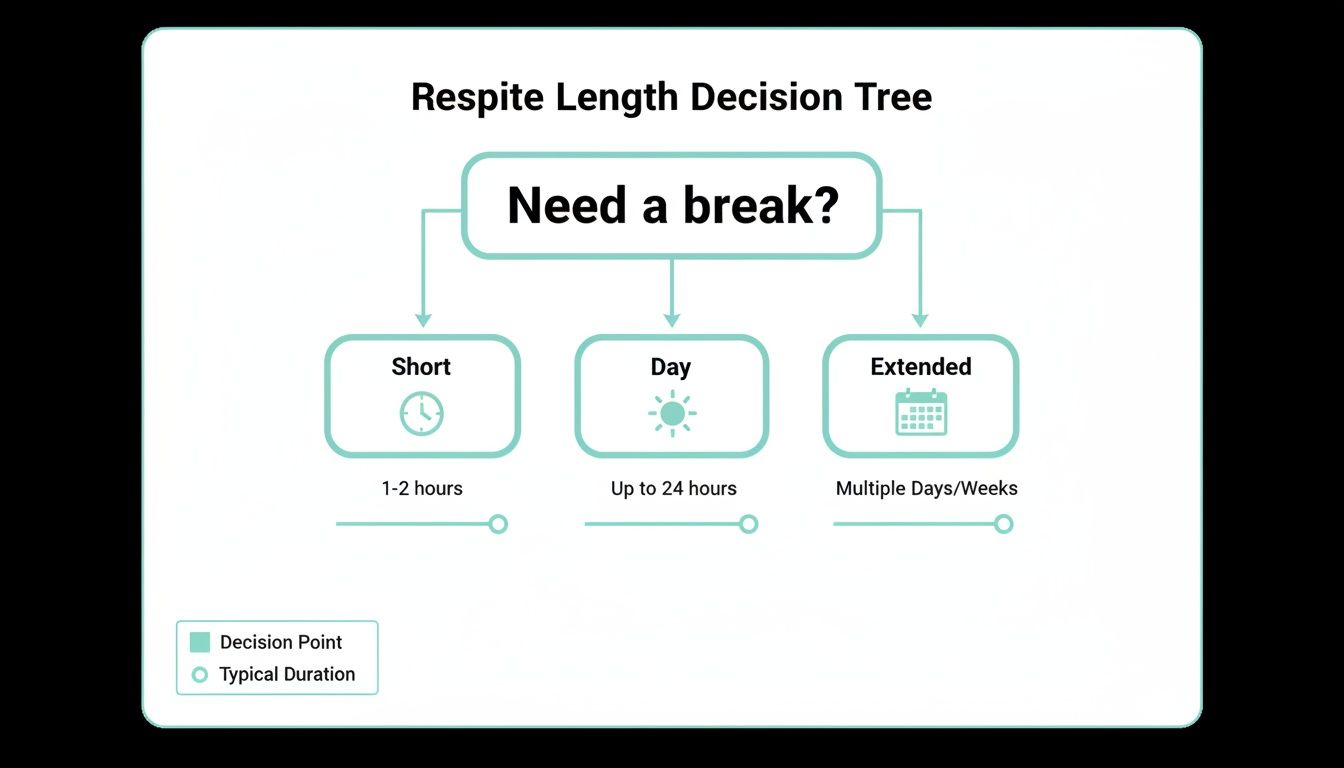
As you can see, whether you need a short break, daily support, or an extended stay, there's a respite solution designed to match that need.
Considering the Senior's Health and Routine
The other side of the coin is your loved one's condition. A senior who is mostly independent but just needs some supervision and companionship will have very different needs from someone coming out of the hospital.
A senior’s transition from a hospital back home can be a vulnerable time. Respite care often serves as a crucial bridge, offering a safe, supportive environment that can significantly reduce the risk of preventable readmissions.
Think about their specific situation:
- Post-Hospital Recovery: After surgery or a major medical event, a stay of 1-2 weeks can be just what the doctor ordered, ensuring they heal properly with professional oversight.
- Managing a Chronic Illness: If a long-term condition like diabetes or COPD has a flare-up, a short stay can provide the expert care needed to get things back on track.
- Memory Care Support: For seniors living with dementia, a consistent and safe routine is everything. A respite stay in a memory care setting gives you a break, confident they are engaged and secure.
Finally, the practical realities of your family's budget and any insurance or VA benefits will help shape the final decision. Getting a clear picture of the costs upfront helps you plan a stay that gives everyone the maximum benefit without adding financial stress to the situation.
How Forest Cottage Accommodates Flexible Stays

Here at Forest Cottage Senior Care, we’ve learned that no two families in the Willis, Texas community are alike. Everyone has a different story and a unique set of needs. That’s why we don't try to fit you into a rigid schedule. Instead, our respite care is all about creating a flexible stay that gives you the right support for the right amount of time. Adaptability is at the heart of everything we do.
Whether a caregiver just needs a single day to run errands or a few weeks for a long-overdue vacation, we make sure the entire experience is seamless and welcoming. The question of how long is respite care should be answered by what gives you peace of mind, not by what’s convenient for us.
Tailored Care for Every Length of Stay
It doesn’t matter if your loved one is with us for a day or a month—every respite guest receives the full Forest Cottage experience. This isn't some watered-down version of our services. It's the same complete, compassionate care our long-term residents enjoy every single day.
From the second they walk through our doors, your loved one is welcomed as a cherished member of our family. This commitment to personalized care ensures their stay is not just safe but also genuinely comfortable and enriching.
Every respite stay includes:
- A Personalized Care Plan: We start with a thorough assessment to understand your loved one’s health needs, personal preferences, and daily routines, making sure their care is consistent.
- Full Access to Amenities: Guests get to enjoy everything we offer, from our chef-prepared meals and engaging social activities to our beautiful common areas and unique programs like Goldendoodle pet therapy.
- 24/7 Professional Support: Our nursing staff is on-site around the clock, ready to help with medication management, safety checks, and any other needs that come up.
This all-inclusive approach also makes a short stay the perfect bridge between the hospital and home. It provides a safe, supportive place to recover, which can significantly reduce the risk of a preventable readmission.
A Homelike Environment from Day One
The secret to a great respite stay is helping your loved one feel truly at home, even if it's just for a little while. We’ve worked hard to create a warm, inviting atmosphere that makes the transition easier and helps foster a real sense of belonging. Our goal is to make every moment count.
At Forest Cottage, we believe respite care should be a positive experience for everyone. It’s a chance for a caregiver to rest and a chance for a senior to experience a new, supportive social setting.
Whether a guest needs a hand with semi-assisted living tasks or requires more comprehensive memory care, our dedicated team is here to help. We coordinate with outside clinicians and provide dignified assistance with mobility and hygiene, ensuring every need is met with respect. We always encourage families to schedule a visit and see for themselves how our flexible stays can be the perfect solution.
Funding Your Respite Stay with Insurance and VA Benefits
Let's be honest: figuring out how to pay for a respite stay is often one of the biggest hurdles for families. It can feel like a maze of policies and programs, but a little upfront knowledge can make a world of difference. Most families find a way to make it work, often by combining their own funds with insurance benefits, so their loved one gets the care they need without creating a financial crisis.
Before diving in, it’s a good idea to get comfortable with understanding health insurance premiums and what your specific plan covers. While paying out-of-pocket is always an option, you owe it to yourself to explore every avenue for support.
Common Ways to Cover Respite Care Costs
For many, a long-term care insurance policy is the first place to look. These plans are designed for this exact purpose, and many specifically list respite care as a covered benefit. They know how critical it is for preventing caregiver burnout. You'll want to pull out your policy and get familiar with the specifics—what are the daily limits, how many days are covered, and what do you need to do to get a claim approved?
Medicare and Medicaid are a bit trickier. Medicare generally won't cover a respite stay in an assisted living community like ours. The main exception is when it’s part of hospice care. Medicaid rules are different in every state, but it's possible it could provide some help if your loved one has a very low income and meets the state's eligibility rules.
Here's a quick rundown of the most common payment sources:
- Private Pay: This is the most straightforward route, using personal savings or other assets. It gives you maximum flexibility.
- Long-Term Care Insurance: Your best bet for dedicated coverage. Check your policy for the details.
- Medicare/Medicaid: Coverage is very limited and only applies in specific, narrow circumstances.
Looking into each of these will help you piece together a financial plan that works for you.
Leveraging VA Benefits for Extended Stays
For veterans and their families, the Department of Veterans Affairs (VA) can be an incredible resource. The VA truly understands the strain on caregivers and offers a respite care benefit that can be a lifesaver.
VA benefits can be a game-changer for caregiver well-being, providing the means for a substantial, restorative break. This support acknowledges that caring for the caregiver is essential to providing quality long-term care for our nation's veterans.
If your loved one is an eligible veteran, they can receive financial assistance for up to 30 days of respite care each calendar year. This benefit can be used at a VA-approved community like Forest Cottage, potentially covering the entire cost of a month-long stay. That's enough time for a real break—to travel, recover from your own health issue, or just truly disconnect and recharge.
It’s surprising how underused this benefit is. Even though 73% of VA caregivers know about the program, only 7% actually use it, according to some recent caregiver support findings on rti.org. Here at Forest Cottage, we're proud to help our local Willis-area veterans access these hard-earned benefits, making longer, more impactful respite stays a realistic and affordable option.
Your Top Questions About Respite Care Stays, Answered

When you start digging into the details of respite care, practical questions always pop up. It's completely normal. Understanding the nuts and bolts helps you plan confidently, ensuring everything goes smoothly for both you and your loved one.
This section tackles the most common questions we hear from families about how long a respite stay can be and how flexible the arrangements are. We want to give you clear, straightforward answers so you can make the best decision.
Can I Extend a Respite Care Stay if Our Plans Change?
Life happens, and we get that. So, the short answer is yes, you can almost always extend a respite stay. Maybe your flight home was cancelled, or you realize you just need a few more days to fully recharge. Flexibility is a cornerstone of good respite care.
The key is to let the community know as soon as you think your plans might change. Availability can be a factor, of course, especially during busy times of the year. But most providers will bend over backward to accommodate your new timeline. Keeping those lines of communication open is the best way to ensure your loved one continues to receive seamless care without any hiccups.
How Far in Advance Should We Book a Respite Stay?
It’s always a smart move to plan ahead, especially if you need care during a popular travel period. Think of it like booking a hotel for a vacation—the sooner you book, the better your chances are, particularly around the holidays or in the summer.
- For Holidays (like Christmas or Thanksgiving): We recommend booking 2-3 months in advance. These spots fill up fast as other families make their own travel and gathering plans.
- For Summer Vacations: A good rule of thumb is to arrange the stay 1-2 months ahead of time to lock in the dates that work for you.
- For Unplanned Needs: Don't panic if something comes up out of the blue. Communities often have rooms available for more immediate, urgent needs. It never hurts to call and ask—you might be pleasantly surprised.
"Respite care isn't just a safety net for emergencies; it's a proactive tool for sustainable caregiving. Scheduling planned breaks throughout the year is one of the most effective ways to prevent burnout and maintain your own health."
By booking in advance, you not only guarantee a spot but also give your loved one more time to get used to the idea, which can make the actual transition feel much easier for everyone.
What Should My Loved One Pack for a Longer Stay?
Packing for a respite stay is all about creating comfort and a sense of familiarity. The goal is to bring items that make a new space feel a little more like home. While the community provides the big things—bedding, towels, meals—it’s the personal touches that truly make a difference.
Here’s a simple checklist to get you started:
- Clothing: Pack enough comfortable, easy-to-wear outfits for the entire stay, plus an extra set or two just in case. Don't forget sleepwear, plenty of socks, and weather-appropriate outerwear.
- Medications: This is a big one. Bring all prescription and over-the-counter medications in their original, labeled bottles. The care team needs these to manage their health schedule safely and accurately.
- Personal Items: Pack everyday toiletries like a toothbrush, toothpaste, and any specific lotions or soaps they prefer.
- Comfort Objects: A favorite blanket, a few framed family photos, or a well-loved book can provide a huge sense of security and a grounding connection to home.
Is Respite Care Only for Emergencies?
Not at all. This is probably the single biggest myth about respite care. While it’s an absolute lifesaver during a crisis, its real power often comes from using it proactively.
Think of it as preventative maintenance for a caregiver. You don’t wait for your car to break down on the side of the road to get an oil change, right? In the same way, you shouldn't wait until you're completely exhausted and burned out to take a break. Scheduling regular respite stays allows you to rest and recharge, making you a more patient, present, and effective caregiver for the long haul.
At Forest Cottage Senior Care, we're here to answer all your questions and help you find the perfect respite solution for your family's needs. Explore our flexible options by visiting us at https://www.forestcottageseniorcare.com.