
At its core, the choice between memory care and assisted living boils down to one thing: the level of specialized support your loved one needs. Assisted living is all about promoting independence with a helping hand for daily activities. On the other hand, memory care provides a secure, structured environment built from the ground up for individuals with dementia or Alzheimer's. The right path depends on whether the main need is for social connection and daily help, or for specialized cognitive support and safety.
Defining Memory Care and Assisted Living
To make the best decision, you have to understand the philosophy behind each care model. While both offer housing, meals, and support, their fundamental goals, physical environments, and staff expertise are tailored for very different residents. Assisted living is for seniors who are still largely independent but could use some help with activities of daily living (ADLs), like managing medications or keeping up with housekeeping.
Memory care is a whole different ballgame. It's a highly specialized form of care designed for individuals navigating cognitive decline. This means everything—from the way the building is laid out to the daily activities—is intentionally designed to support memory, minimize confusion, and ensure the safety of residents who might wander or become disoriented.
Core Differences Between Assisted Living and Memory Care
Here’s a quick table to break down the primary distinctions between these two senior care options. It helps to see the core differences side-by-side.
| Feature | Assisted Living | Memory Care |
|---|---|---|
| Primary Goal | Supporting independence and a social lifestyle. | Providing safety and specialized cognitive support. |
| Typical Resident | Needs help with ADLs but is cognitively sound. | Has Alzheimer’s, dementia, or other memory loss. |
| Staff Training | General caregiving and assistance training. | Specialized dementia and behavior management training. |
| Environment | Open, social layout with private apartments. | Secure, easy-to-navigate layout with safety features. |
Seeing it laid out like this really clarifies where each type of community focuses its energy and resources.
This infographic does a great job of visually summarizing the key services and benefits of each care type.

The image drives home how assisted living centers on independence with support, while memory care builds a comprehensive, secure framework for cognitive health.
Interestingly, the lines can sometimes get blurry. In the United States, an estimated 70% of residents in assisted living facilities have some form of cognitive impairment, yet most don't live in dedicated memory care units. While there are over 1.1 million licensed assisted living units, only about 255,100 are specifically for memory care, according to ConsumerAffairs.
The crucial takeaway is this: while many assisted living communities can accommodate mild cognitive decline, they simply are not a substitute for the specialized, 24/7 supervision and therapeutic programming you’ll find in a true memory care setting.
Understanding what memory care assisted living entails can bring even more clarity. At communities like Forest Cottage Senior Care here in Willis, TX, our focus is always on matching the right level of care to each person's specific, individual needs.
A Day in the Life Comparing Resident Experiences
Beyond feature lists and pricing tables, the most telling difference between memory care and assisted living is what the day-to-day actually feels like. To really get a sense of which setting is right for your loved one, it helps to walk through a typical day in each environment. The structure, pace, and purpose of daily life are fundamentally different, and that’s by design.
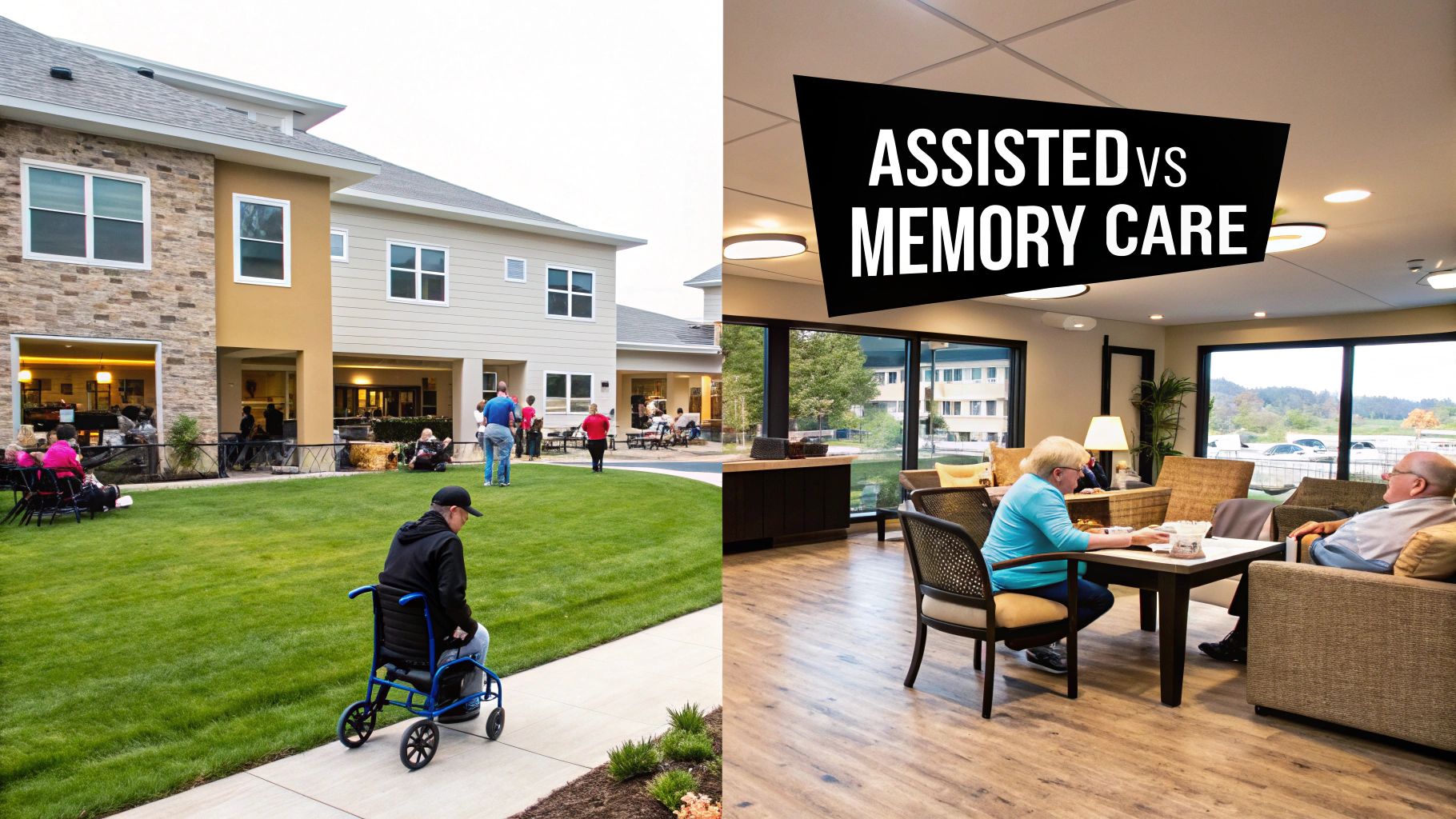
For someone in assisted living, the day is largely theirs to shape. The whole philosophy is about empowerment through support, where personal freedom is prized and encouraged.
A Morning in Assisted Living
A morning in an assisted living community like Forest Cottage Senior Care might start with a gentle medication reminder from a staff member or a little help with dressing, if needed. After that, the resident is in the driver's seat. They might head down to the dining room to have breakfast with friends, choosing from several menu options just like they would at a restaurant.
The rest of the morning is guided by a social calendar packed with choices. A typical schedule could include things like:
- Morning Stretch Class: A light fitness session in a common area to keep everyone moving.
- Book Club Meeting: A lively discussion in the library with fellow readers.
- Gardening Club: A chance to get some fresh air while tending to plants in an outdoor courtyard.
Residents can jump into as many activities as they like—or none at all. It’s all about creating a day that feels fulfilling and independent. Lunch is another social event, often followed by an afternoon of personal hobbies, scheduled trips for shopping, or simply relaxing in their own apartment. The day is defined by choice and social connection.
A Structured Day in Memory Care
In stark contrast, a day in memory care is built around structure, routine, and therapeutic engagement. The goal isn’t just to be social; it’s to create a calm, predictable environment that eases anxiety and supports cognitive function. The day is intentionally planned from start to finish.
A resident’s morning begins with consistent, one-on-one support from a caregiver specially trained in dementia communication. This person helps with grooming and dressing in a calm, unhurried way, setting a positive and gentle tone for the day.
Breakfast is served in a smaller, quieter dining area where staff can offer help with eating if needed, making sure everyone gets proper nutrition. Even the meals are often designed to be easy to handle—like finger foods—to preserve dignity and encourage self-sufficiency. After breakfast, the day is filled with carefully chosen therapeutic activities.
The core difference is a shift from social facilitation in assisted living to person-centered therapeutic engagement in memory care. One encourages independence with a safety net, while the other provides a secure, structured world where someone with cognitive decline can feel safe, successful, and calm.
Instead of a broad social calendar, memory care programming is designed to stimulate the senses and engage the mind without causing frustration. These evidence-based activities often include:
- Music Therapy: Listening to or singing familiar songs from their youth to bring back positive memories and emotions.
- Sensory Stations: Engaging with different textures, scents, and objects to stimulate cognitive pathways in a gentle way.
- Simple Puzzles or Sorting Tasks: Activities that offer a sense of purpose and accomplishment.
- Guided Walks: Safe, gentle exercise in a secure outdoor garden to enjoy fresh air without risk.
Every activity is led by staff who know how to adapt to a resident's changing mood and abilities. The predictable rhythm of the day—meals, activities, rest—provides a comforting routine that minimizes confusion and agitation. Families can learn more about what to expect from a memory care facility to see how this daily structure is key to a resident's well-being. This deliberate routine isn't just a schedule; it's the cornerstone of high-quality memory care.
Comparing Environment Safety and Staff Expertise
Beyond the daily schedule, the fundamental differences in the memory care vs assisted living debate become much clearer when you look at the physical space and the people providing the care. These aren't just minor details; they are the core elements that define safety, comfort, and quality of life for your loved one. The approach to both facility design and staff training is intentionally, and necessarily, different.
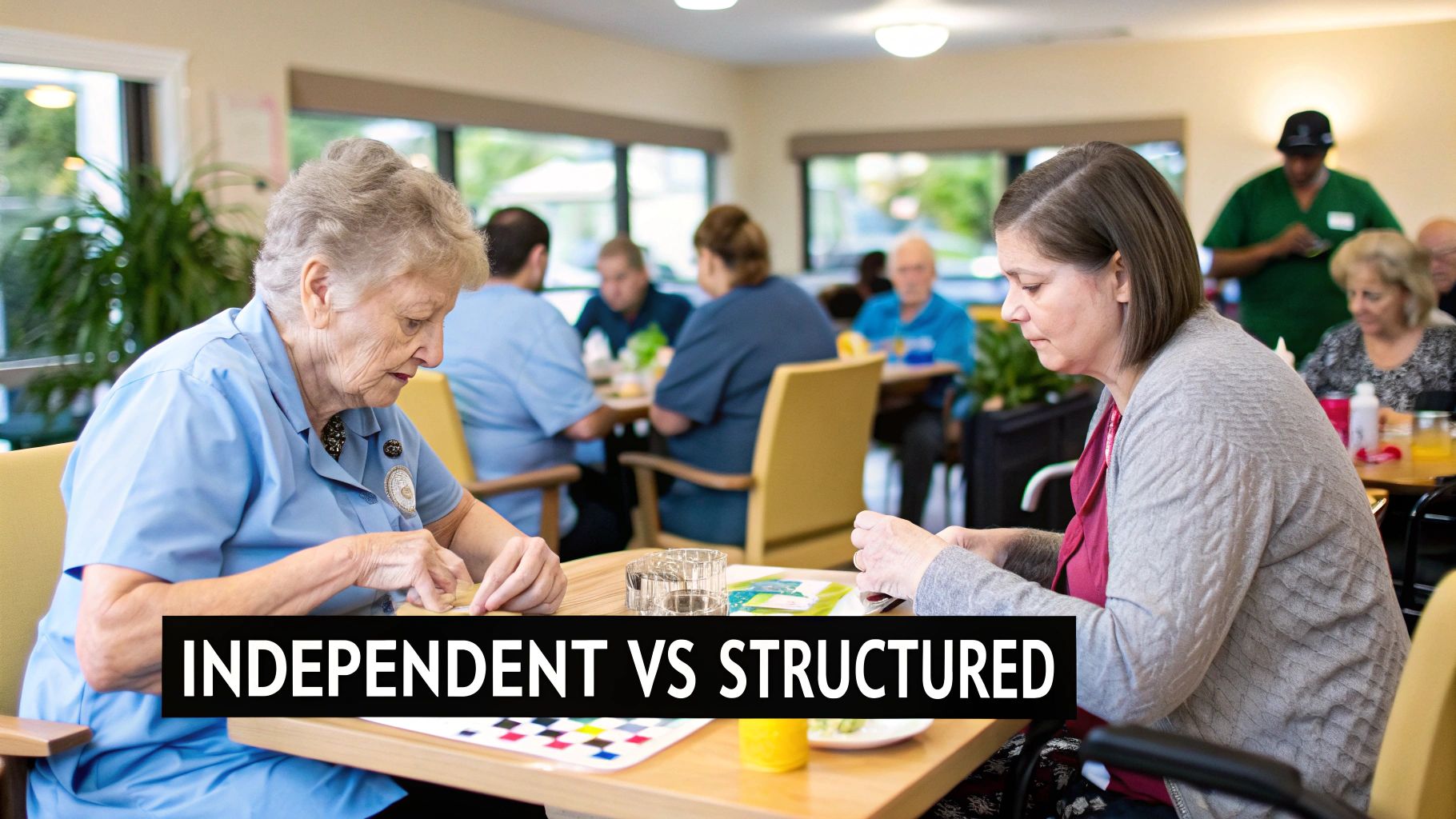
In assisted living, the environment is built to feel like a vibrant, welcoming community. You’ll find open common areas, multiple dining options, and apartment-style living that gives residents the freedom to maintain their independence and social connections. The focus is on accessibility and convenience, not restriction.
The Purposeful Design of Memory Care Environments
Memory care facilities, on the other hand, are built with a therapeutic purpose in mind. Every architectural choice is made to enhance safety and reduce the anxiety that often comes with cognitive decline. This thoughtful design isn't just a feature—it's a critical part of the care itself.
You'll see key environmental differences right away:
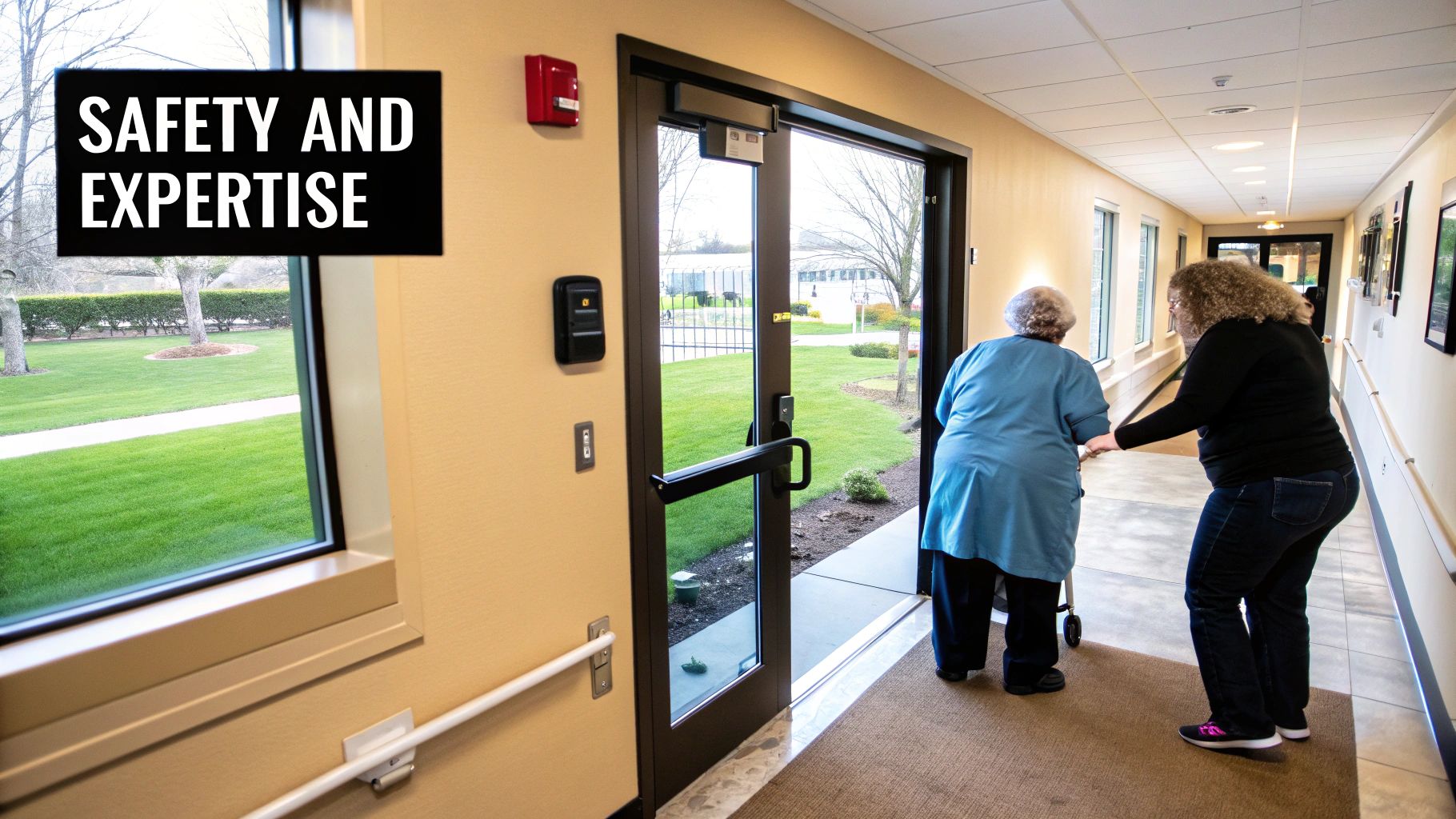
- Secure Perimeters: Memory care units are secured to prevent wandering, which is a common and dangerous behavior associated with dementia. Exits are carefully monitored, and outdoor spaces are enclosed, so residents can get fresh air without any risk.
- Circular Layouts: Many communities are designed with circular or continuous hallways. This simple but brilliant design means a resident never hits a frustrating dead-end; they are gently guided back to familiar common areas, which helps reduce agitation.
- Simplified Navigation: You'll notice visual cues like color-coded walls or memory boxes outside resident rooms that help individuals find their way. The entire environment is kept simple and uncluttered to minimize confusion.
- Safety-First Features: Everything is designed to prevent accidents. From specially designed bathrooms to sturdy furniture without sharp edges, every detail is considered to prevent falls and injuries.
These aren't just amenities. They are essential tools for managing the symptoms of memory loss and making sure residents are safe and comfortable.
The physical layout of a memory care community is an active part of the care plan. It’s designed to be a calming, safe, and easy-to-navigate space that supports residents' cognitive limitations rather than challenging them.
This is a world away from the open, socially-focused design of many assisted living communities. While beautiful and engaging, those layouts might not provide the necessary security for someone prone to wandering. You can get a better feel for this by exploring the various assisted living services available.
Specialized Staff Training and Ratios
The expertise of the staff is arguably the single most important difference. While caregivers in both settings are compassionate people, those working in memory care need a completely different skill set and a much higher level of specialized training.
Assisted living staff are pros at helping with Activities of Daily Living (ADLs)—things like bathing, dressing, and medication reminders. They excel at providing support while respecting a resident's independence.
In memory care, that's just the beginning. Staff members receive intensive, ongoing training specifically in dementia care. This includes:
- Communication Strategies: Learning how to connect with residents who may be non-verbal or struggle to express their needs.
- Behavior Management: Understanding what causes behaviors like agitation or sundowning and knowing how to use de-escalation techniques that work.
- Person-Centered Care: Building care plans from a deep understanding of each resident's life story, preferences, and personality.
This specialized expertise has a direct impact on staffing. Memory care communities simply need more staff on hand to provide the constant supervision and one-on-one engagement these residents require. In fact, research shows that in facilities where over 75% of residents have dementia, the hours of care provided by aides and activities staff are significantly higher. It’s a reflection of the intensive support that is the bedrock of quality memory care. This commitment is what ensures a safe and supportive atmosphere for people navigating cognitive challenges.
Understanding The Costs And Payment Options
Let's talk about the financial side of things. It's one of the biggest parts of the puzzle when choosing between senior care options. A question I hear all the time from families is why memory care has a higher price tag than assisted living. The answer really comes down to the specialized, intensive nature of the care.
You can generally expect memory care to cost 20% to 30% more than a traditional assisted living community. This isn't just a random number; it's a direct reflection of the higher staffing levels, specialized training, and secure environments that are absolutely essential for residents with dementia.
This cost difference is something families and even policymakers are watching closely. The demand for memory care is projected to triple by 2050 as the baby boomer generation ages and the rates of cognitive impairment rise, a trend detailed by Fortune Business Insights.
That premium you pay directly funds the higher staff-to-resident ratios, continuous dementia-specific training for our team, and the physical security of the building itself. While assisted living offers wonderful support, memory care provides a much more intensive, round-the-clock level of supervision and therapeutic programming.
Exploring Avenues Beyond Private Pay
Many families use private funds, like personal savings or proceeds from selling a home, to pay for care. But it's so important to know what other resources might be out there. Looking into these options can make the high-quality care your loved one deserves much more manageable.
A common tool is Long-Term Care Insurance. If your loved one has a policy, now is the time to pull it out and read the fine print. Most policies do cover both assisted living and memory care, but the daily benefit amounts, waiting periods, and eligibility rules can be dramatically different from one plan to another.
Government programs are another area where there's often a lot of confusion. It’s critical to know what they do—and don't—cover:
Medicare: This is probably the biggest misconception. Medicare, the federal health insurance for seniors, does not pay for the long-term room and board costs of either assisted living or memory care. It’s designed for short-term, skilled nursing care after a qualifying hospital stay.
Medicaida: As a joint federal and state program, Medicaid rules can feel like a maze. Here in Texas, there are specific waiver programs that can help cover the cost of care services for eligible low-income seniors, but they typically don't cover the rent. Figuring out whether assisted living is covered by Medicaid is a crucial first step for many Texas families.
Before we move on, here’s a quick table to break down the most common funding sources.
| Payment Option | Typically Covers Assisted Living? | Typically Covers Memory Care? | Key Considerations |
|---|---|---|---|
| Private Pay | Yes | Yes | The most common method, using savings, assets, or investments. |
| Long-Term Care Insurance | Yes | Yes | Coverage depends entirely on the specific policy details. |
| Medicare | No | No | Only covers short-term, post-hospital skilled nursing care. |
| Medicaid (Texas) | Services only (via waivers) | Services only (via waivers) | Strict income/asset limits apply; does not cover room and board. |
| Veterans Benefits | Yes | Yes | The Aid & Attendance pension can significantly offset costs for eligible vets. |
This table provides a starting point, but always dig into the details for your specific situation, as eligibility and coverage can vary widely.
Honoring Service With Veterans Benefits
For those who have served our country, the Department of Veterans Affairs (VA) provides a fantastic benefit that can make a real difference. It’s called the Aid & Attendance pension, and it's an extra payment on top of the basic VA pension.
The Aid & Attendance benefit is specifically for veterans and their surviving spouses who need help with daily activities. For many families trying to figure out how to afford assisted living or memory care, this benefit can be a true game-changer.
To qualify, a veteran has to meet certain service, income, and asset criteria, and also have a documented need for help with daily living activities. The benefit is paid right to the veteran, and they can use that money to pay for care in any setting they choose, including at a community like Forest Cottage Senior Care.
We're proud to support our local veterans here in the Willis, TX, area. To make it easier for them to access these well-deserved funds, we cover the legal fees involved in applying for the Aid & Attendance benefit. It's our way of helping families get the support they've earned.
Knowing When to Transition to Memory Care
Deciding that assisted living isn’t quite enough anymore is one of the hardest moments in a caregiver's journey. It’s almost never a single event that makes the choice clear. Instead, it's usually a series of small, subtle shifts that suggest a more specialized environment is needed. Catching these signs early is key to keeping your loved one safe and supported before a crisis happens.
Making the move from a more independent assisted living setting to the structured support of memory care is a big step. It’s usually triggered by changes in safety, behavior, and overall well-being. This decision is less about a specific diagnosis and more about what you're observing day-to-day—the real-world challenges that point to a need for a higher level of skilled supervision.
Escalating Safety Concerns
The most pressing signs are the ones that put your loved one’s physical safety at risk. While assisted living offers a great deal of support, it's generally not set up to handle the more advanced symptoms of dementia. If you or the staff start noticing the following behaviors, it’s a strong signal that a change is needed.
Key safety red flags include:
- Wandering or Getting Lost: Has your loved one started wandering, even just within the assisted living community? This is a serious safety risk, and memory care communities are secured specifically to prevent it.
- Medication Management Issues: Are they missing doses or taking the wrong amount, even with reminders from staff? Consistent mistakes with medication can lead to serious health problems and show a need for direct administration by trained professionals.
- Frequent Falls or Unexplained Injuries: If you notice a sudden increase in falls or find bruises you can't explain, it could mean they're struggling with balance, perception, or simply getting around their own space safely.
These issues are more than just simple forgetfulness; they point to a level of cognitive decline that requires constant, specialized oversight.
Noticeable Behavioral and Social Changes
Dementia doesn't just affect memory. It can profoundly change a person's personality, mood, and how they interact with others. Someone who was once the life of the party might start pulling away, or a typically calm person may become easily agitated. These shifts often mean their current environment is starting to feel overwhelming or confusing.
It's important to remember that behavioral changes like agitation or withdrawal are often a form of communication. They can be a sign that your loved one feels stressed, frightened, or can't process their surroundings—a clue that the less structured social setting of assisted living no longer feels comfortable.
Keep an eye out for changes like:
- Increased Agitation or Anxiety: Do they seem restless, anxious, or easily upset by small things that didn't used to bother them?
- Social Withdrawal: Have they stopped going to the social activities they used to love? This kind of isolation can actually speed up cognitive decline.
- Sundowning: Do their confusion and agitation get worse in the late afternoon and evening? This is a common symptom that is best managed in a structured environment with staff trained in de-escalation techniques.
Decline in Personal Care and Daily Functioning
Perhaps the clearest sign is a visible decline in their ability to manage Activities of Daily Living (ADLs), even with the help they get in assisted living. When reminders to get dressed or help with bathing are no longer enough, and a person needs more hands-on, step-by-step guidance, it’s a sign their needs have grown.
Look for an increasing dependency in areas like eating, personal hygiene, or just getting around their own apartment. If your loved one is struggling to maintain their personal care routines and dignity even with help, the person-centered, specialized support of memory care is the most compassionate next step. Starting this conversation with them and their current care team can pave the way to a safer, more supportive future.
How to Choose the Right Care in Willis TX
Figuring out the right path in the memory care vs assisted living debate means shifting gears from online research to actually seeing these places for yourself. The best way to do this is by arming yourself with the right questions. This helps you look past the glossy brochures and get a real feel for how a community operates, ensuring it's the right fit for your loved one today and down the road.
As you start touring different communities in the Willis, TX, area, pay close attention to the little things. Do the residents look happy and engaged? How is the staff talking to them—with warmth and respect? You can learn more from just watching these interactions than from any piece of marketing material.
Key Questions to Ask on Your Tour
To really dig in and make a confident choice, here are a few essential questions you should ask every assisted living and memory care provider. Their answers will tell you everything you need to know about their approach to care, safety, and daily life.
- Staffing & Training: "What kind of dementia-specific training does your memory care staff go through? Also, what's your staff-to-resident ratio during the day, and does that change at night?"
- Daily Engagement: "Could I see this month's activity calendar? How do you tailor activities for someone with cognitive challenges versus your general assisted living residents?"
- Safety & Environment: "What security measures do you have in place to prevent wandering? How is the building itself designed to help residents with dementia feel less confused?"
- Care Planning: "Walk me through how you develop an individual care plan. How often do you sit down with families to talk about a resident's changing needs?"
The real tell is in the details of their answers. A genuine memory care provider won't hesitate. They'll give you specific, confident answers about their specialized training, therapeutic programs, and safety protocols.
At Forest Cottage Senior Care, we're built to answer these questions directly. We offer a true continuum of care with both supportive assisted living and dedicated memory care under one roof. This allows residents to transition smoothly if their needs evolve over time. Our entire philosophy is built around creating a personalized plan for every single person who calls our community home.
We know this process can feel like a lot, but you don't have to figure it all out on your own. The next step is seeing these differences in person. To explore some of the best elder care facilities near me in the Willis area, we invite you to schedule a personalized consultation. Let’s sit down, discuss your family's unique situation, and find the most compassionate and supportive solution together.
Frequently Asked Questions
Even after comparing everything side-by-side, you probably still have a few specific questions. That’s completely normal. Here are some of the most common things we hear from families, with direct answers to help you feel more confident about your next steps.
Can Someone with Early-Stage Dementia Live in Assisted Living?
Yes, absolutely. Many people with early-stage dementia or mild cognitive impairment do quite well in an assisted living setting. The social opportunities, gentle reminders for medications, and support with daily tasks can be a perfect fit when their symptoms are still manageable.
The key, though, is to be realistic about the future. As dementia progresses, the need for heightened supervision, specialized activities, and a secure environment will grow. Eventually, a dedicated memory care community will become the safer and more supportive choice.
What Specialized Training Does Memory care Staff Have?
The training memory care staff receive goes far beyond what’s required for standard caregiving. It’s a deep dive into the very specific challenges that come with cognitive decline.
This advanced training almost always includes:
- Dementia Stages and Progression: A clinical understanding of diseases like Alzheimer's and how they affect the brain over time.
- Communication Techniques: Learning how to connect with residents who might be non-verbal or struggle to find the right words.
- Behavior Management: Using proven, compassionate strategies to de-escalate agitation or manage behaviors like sundowning without causing distress.
- Person-Centered Care: Knowing how to use a resident's life story, preferences, and history to build a care plan that preserves their identity and dignity.
This specialized skill set is what makes a memory care community a therapeutic and respectful place for residents to live.
At its core, the difference in training is simple: assisted living staff are experts at supporting independence, while memory care staff are experts at managing cognitive challenges with specialized skill and empathy.
How Can You Make the Move to Memory Care Easier?
A smooth transition comes down to two things: preparation and personalization. Start by making the new space feel like home. Bring familiar, comforting items—a favorite armchair, family photos, a well-loved quilt—that can make the room feel instantly more personal and less intimidating.
Before moving day, talk to the staff. Share your loved one’s life story, their daily routines, what they love, and what upsets them. This gives the care team the information they need to provide consistent, personalized support right from the start. If you can, plan the move for a time of day when your loved one is usually at their best, and stay for a while to help them settle in before you go.
At Forest Cottage Senior Care, we know these questions are just the beginning of a much bigger conversation. Our team is here to walk you through every part of this journey, offering our expertise with genuine compassion.
The best way to get answers is to see our community for yourself. Schedule a tour with us, and let’s talk about your family's unique situation in person.