
If you're a primary caregiver for someone with dementia, you know it's a role that demands everything you have—physically, mentally, and emotionally. The idea of taking a break can feel impossible, even selfish. But let me reframe that: taking a break isn't giving up. It's a strategic, necessary part of the journey. That break is called respite care.
What Is Dementia Respite Care, Really?

Think of caregiving as running a marathon with no clear finish line. Respite care for dementia is your water station. It’s that planned, essential stop where you get to refuel, rehydrate, and catch your breath so you can keep going strong. It’s a support service designed with the well-being of both you and your loved one in mind.
This relief can be as short as a few hours, a full day, or even stretch over a few weeks. The key is that a trained professional steps in, giving you that precious time to handle your own appointments, reconnect with friends, or simply rest and recharge your batteries.
Why This Break Is a Necessity, Not a Luxury
The toll of full-time caregiving is immense. Sooner or later, it wears you down. Respite care isn't just a "nice-to-have"—it's a critical tool for preventing caregiver burnout and protecting your own health.
The need for this kind of support is growing fast. The global respite care market is expanding, and the segment for dementia and Alzheimer's care makes up over 40% of it. That’s because everyone recognizes the specialized, around-the-clock support these conditions demand. This isn’t just a trend; it's a reflection of a real, pressing need.
A well-structured break is a win-win, creating a positive ripple effect.
Let's look at the core benefits for everyone involved. The table below breaks down how respite care supports both the person giving care and the person receiving it.
At a Glance: Why Respite Care Is a Win-Win
| Benefit for Caregiver | Benefit for Person with Dementia |
|---|---|
| Reduces stress and prevents burnout | Offers a change of scenery and routine |
| Provides time for personal needs and errands | Creates opportunities for social interaction |
| Allows for rest and emotional recharging | Provides engagement in safe, structured activities |
| Helps maintain personal health and well-being | Ensures consistent, quality care from a fresh perspective |
As you can see, respite care is about more than just giving a caregiver a day off. It’s about enhancing the quality of life for the person with dementia while ensuring their primary caregiver can continue providing the best possible support for the long haul.
A Lifeline for the Whole Family
Ultimately, a rested caregiver is a better caregiver—more patient, more present, and more effective. By taking care of yourself, you're better equipped to take care of your loved one, which strengthens the entire family dynamic.
Interestingly, the challenges of caregiving are universal. For instance, many families find themselves recognizing signs of aging and cognitive decline in companion animals, which brings a different but related perspective on the journey of caring for an aging loved one. The core principle remains the same: sustainable care requires support and regular breaks for the caregiver.
The Hidden Costs of Caregiving Without a Break
Caring for a loved one with dementia is one of the most profound acts of love you can undertake. But let's be honest—it comes with a price, and I'm not just talking about money. The real cost is often invisible, woven into the fabric of your daily life. It’s the exhaustion from sleepless nights spent listening for a wandering parent. It's the emotional weight of constant worry.
This responsibility is like a silent, second job that never clocks out. You feel the physical strain of helping with bathing and dressing, and the mental drain from managing medications and a revolving door of appointments. It’s easy for relationships to feel the pressure as your personal time vanishes, replaced by the relentless needs of the person you're caring for. It’s a heavy, deeply personal burden to carry.
If you’re feeling this pressure, you might think you’re completely alone. But the truth is, millions of people are walking this same path, providing an incredible amount of unpaid care that holds up the entire dementia care system in our country.
The Staggering Reality of Unpaid Care
The sheer scale of this commitment is hard to wrap your head around. In the United States, nearly 12 million caregivers provide an astounding 19.2 billion hours of unpaid care every single year for people with Alzheimer’s and other dementias. That's a contribution valued at an estimated $413 billion. This is the main reason why a staggering 80% of dementia care happens right at home. As detailed in recent analyses of dementia care challenges, this immense strain is exactly why support systems like respite care dementia services are so critical.
When you're under that kind of constant pressure, it’s no surprise that it can lead to caregiver burnout. This isn't just about feeling tired. It's a state of total emotional, physical, and mental depletion that can have serious consequences if left unaddressed.
Recognizing the Signs of Burnout
Burnout doesn't mean you've failed or you're not strong enough. It's a completely natural response to being in a high-stress role for a long time. The key is to recognize the signs in yourself so you can get the help you deserve.
Look out for these common red flags:
- Persistent Fatigue: A deep, bone-weary exhaustion that sleep just doesn't seem to touch.
- Increased Irritability: Finding yourself short-tempered or feeling resentful, even toward the person you love.
- Social Withdrawal: You've lost interest in hobbies and are pulling away from friends and family.
- Changes in Health: You’re getting sick more often, or dealing with new headaches and chronic pain.
- Feelings of Hopelessness: A nagging sense that nothing you do is making a difference.
Seeking help isn't a failure; it’s a courageous act of self-preservation. Acknowledging that you cannot do it all alone is a sign of strength and the most crucial step in creating a sustainable care plan for both you and your loved one.
This is precisely where respite care becomes an essential lifeline. It gives you that much-needed pause to step back, recharge, and come back to your role with the renewed energy and patience you both need.
Finding the Right Type of Respite Care for Your Family
Picking the right kind of respite care might seem overwhelming at first, but it really just boils down to what works best for your family's specific situation. It’s a bit like choosing a babysitter—sometimes you just need someone for a few hours to run to the store, and other times you need overnight care for a weekend away. The right choice depends on your needs at that moment.
Similarly, respite care for dementia isn't a one-size-fits-all solution. There are three main paths you can take: in-home care, adult day centers, and short-term residential stays. Each one offers unique advantages. Let’s break them down so you can find the perfect fit for your loved one and, just as importantly, for yourself.
In-Home Respite Care: Comfort in Familiar Surroundings
Probably the most straightforward option is in-home care, where a trained professional comes right into your home. This is often the best choice for people with dementia who are deeply attached to their familiar environment. A new face might take a little getting used to, but keeping everything else the same—their favorite chair, the view from the window—can dramatically reduce stress and confusion.
The beauty of this model is its flexibility. You can book a caregiver for a few hours to catch a movie or for an entire day to get a much-needed, longer break. It’s a fantastic way to keep your loved one’s daily routine intact with almost no disruption.
Adult Day Centers: A Place for Social Connection
Think of adult day centers as community hubs designed for engagement. These programs offer a safe, supervised environment where your loved one can spend part of the day, giving you a reliable and consistent block of free time. They are an excellent option for anyone who still thrives on social interaction and enjoys structured activities.
At a day center, your loved one gets:
- Socialization: A chance to connect with others, which is a powerful antidote to the loneliness that can creep in.
- Structured Activities: Things like music therapy, art projects, and gentle exercise keep the mind and body active.
- Professional Oversight: The staff is trained specifically in dementia care, creating a supportive and secure setting.
This flowchart really hits home for caregivers who are feeling the pressure build. It illustrates that critical moment when you have to decide to take care of yourself.
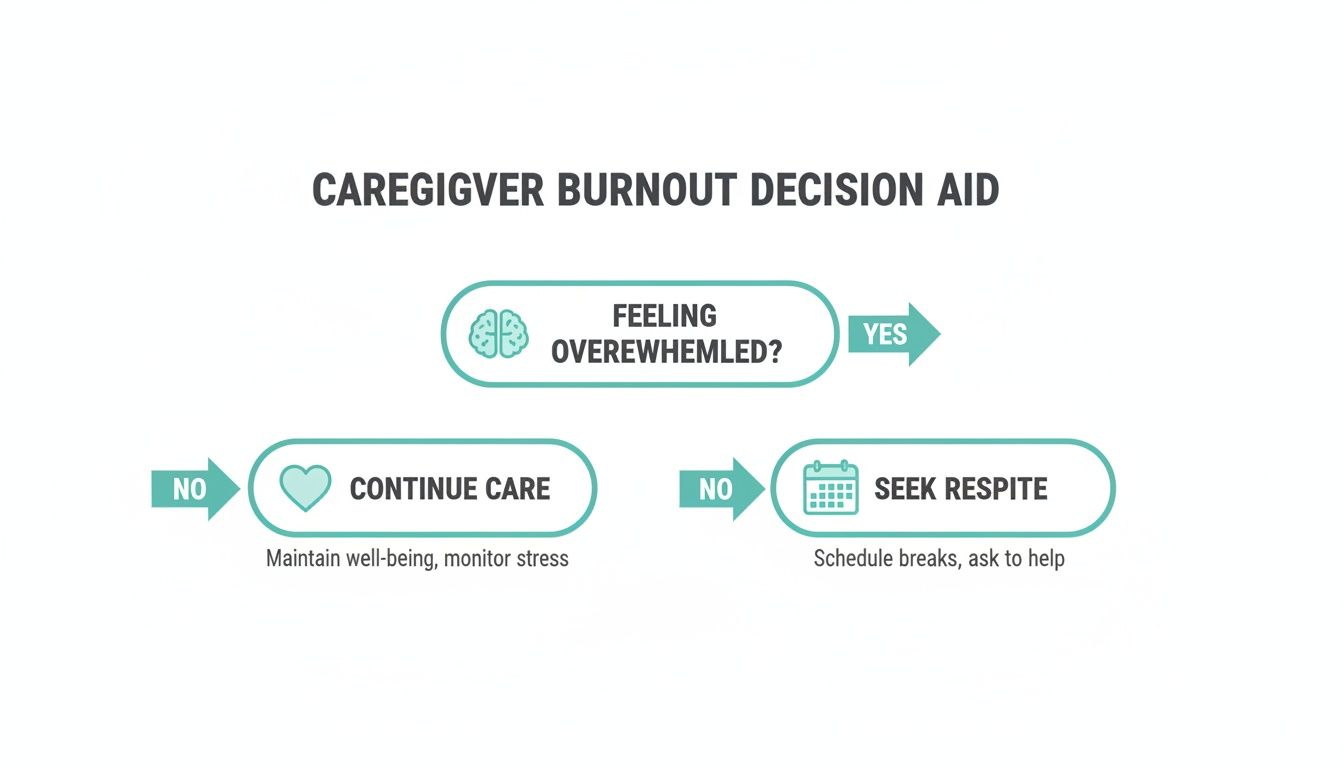
As you can see, when burnout is on the horizon, seeking respite isn't a luxury—it's the essential path to staying healthy and effective as a caregiver.
Short-Term Residential Stays: Comprehensive, Around-the-Clock Support
When you need a more significant break—maybe for a family vacation, a planned surgery, or just to recover from pure exhaustion—a short-term residential stay is a lifesaver. Your loved one temporarily moves into a memory care community, like Forest Cottage Senior Care, for a few days or even a couple of weeks. This gives you a true, complete break, knowing they are receiving 24/7 care from an experienced team.
A short-term stay provides total peace of mind. It ensures continuous, expert care in a secure environment while you take the extended time you need to fully recharge.
There’s another hidden benefit here: it’s a great trial run. It gives your loved one a chance to get a feel for the community, meet the staff, and see what daily life is like. This experience can make a potential future move into full-time care feel much less daunting for everyone involved.
How a Short Break Creates Long-Term Benefits
Taking a break with respite care for dementia isn't just about catching your breath for a moment. It's a powerful strategy that builds resilience for the long road ahead, benefiting both you and the person you're caring for.
Think of it this way: you can't pour from an empty cup. Respite care is how you refill that cup. By taking a planned, intentional break, you prevent the kind of deep exhaustion that leads to burnout, ensuring you can continue to provide loving, patient care. When you’re not running on fumes, you’re simply a better caregiver.
Strengthening the Caregiver
Let's be honest—caring for someone with dementia is demanding. The most immediate and profound benefit of respite care is the relief it gives you. It’s your chance to step back from the constant vigilance and put your own well-being first for a change.
For caregivers, a break is a lifeline. It's an opportunity to:
- Ease Chronic Stress: The mental weight of 24/7 responsibility is immense. Stepping away allows you to decompress and clear your head.
- Tend to Your Own Health: You finally have time to schedule your own doctor's appointments, get a full night of uninterrupted sleep, or even just go for a quiet walk.
- Reconnect with Your Own Life: Remember your hobbies? Your friends? Respite gives you the space to be yourself again, not just a caregiver.
This isn’t just a nice idea; the positive effects are real. A recent study involving a mobile app for dementia caregivers discovered that those who set and met respite goals reported a significant boost in happiness. You can read more about these important findings on caregiver well-being.
Enriching Life for the Person with Dementia
While caregivers get a much-needed rest, the person with dementia gets a valuable and enriching experience of their own. A change of pace and a new environment with trained professionals can be a wonderful thing.
Respite care provides a safe, stimulating environment where your loved one can engage in structured activities tailored to their abilities. This social engagement helps combat isolation and can even improve mood and cognitive function.
Instead of being in the same familiar setting, they have the chance to meet new people, try different activities, and receive care from a fresh, skilled team. A high-quality respite stay offers them dignity, engagement, and a sense of belonging, making it a positive chapter in their own journey.
How to Arrange and Pay for Dementia Respite Services
Taking that first step to get help is often the hardest part, but arranging for respite care dementia support doesn't have to feel overwhelming. It really comes down to a few key steps: finding the right people, asking the right questions, and figuring out the finances.
Think of it as a practical roadmap. We'll walk through each stage to make this transition as smooth as possible for you and the person you care for.
Your journey will likely start with a bit of research. A great place to begin is by asking for recommendations from people you trust, like your loved one's doctor, a hospital social worker, or even friends who have walked this path before. Of course, an online search for "respite care near me" will give you a list of local options, but that's just the starting point—you'll want to vet them carefully.
Finding and Vetting Providers
Once you have a shortlist of potential providers, it’s time to dig a little deeper. Treat this like an interview. After all, you’re looking for someone to entrust with the safety and well-being of a family member.
Before you start making calls, jot down a list of questions. Having a consistent set of questions for each provider makes it much easier to compare your options and find the best fit.
Here are a few essential things to ask:
- Specialized Training: "What specific training does your staff have in dementia and memory care?"
- Staffing Ratios: "What is your staff-to-resident ratio, especially during evenings and weekends?"
- Emergency Procedures: "How do you handle medical emergencies or behavioral challenges like agitation?"
- Daily Activities: "Can you describe a typical day? What activities are offered to keep residents engaged and stimulated?"
The most important step is an in-person tour. Visiting a community like Forest Cottage Senior Care in Willis, TX, allows you to observe the environment, see how staff interacts with residents, and get a true feel for the atmosphere. Trust your instincts—a warm, compassionate setting is non-negotiable.
Navigating the Costs of Respite Care
Let’s be honest: figuring out how to pay for care is a major concern for most families. The cost of respite care can vary quite a bit depending on the type of service, your location, and the specific level of care needed. The good news is that several funding sources might be available to help lighten the load.
It's smart to explore every avenue. Often, a combination of different resources can make care much more affordable. A good plan is to start by reviewing any existing insurance policies and then look into public assistance programs.
Key Funding Sources to Explore
Medicare and Medicaid
- Medicare: In most cases, Original Medicare does not cover respite care. The main exception is when it's part of hospice care. Some Medicare Advantage (Part C) plans, however, might offer limited benefits for short-term stays, so it’s definitely worth checking the details of your specific plan.
- Medicaid: This is where things can really differ from state to state. Many state Medicaid programs have "waiver" programs designed to help pay for services like adult day care or in-home respite, with the goal of supporting caregivers at home.
Other Financial Avenues
- Long-Term Care Insurance: If your loved one has a long-term care policy, it will likely cover respite services. Pull out the policy documents and review the coverage limits and any requirements for qualifying.
- VA Benefits: For veterans, the Department of Veterans Affairs offers some solid programs. The VA's Standard Health Benefits Package includes respite care. On top of that, programs like Aid and Attendance can provide a monthly pension to help cover care-related costs.
For those wanting to understand the financial side from a provider's perspective, especially when mental health services are part of dementia care, this guide to medical billing for mental health can offer some interesting context. Sorting through these options takes time, but the support you'll gain for yourself is absolutely invaluable for your long-term well-being.
Your Essential Respite Care Preparation Checklist
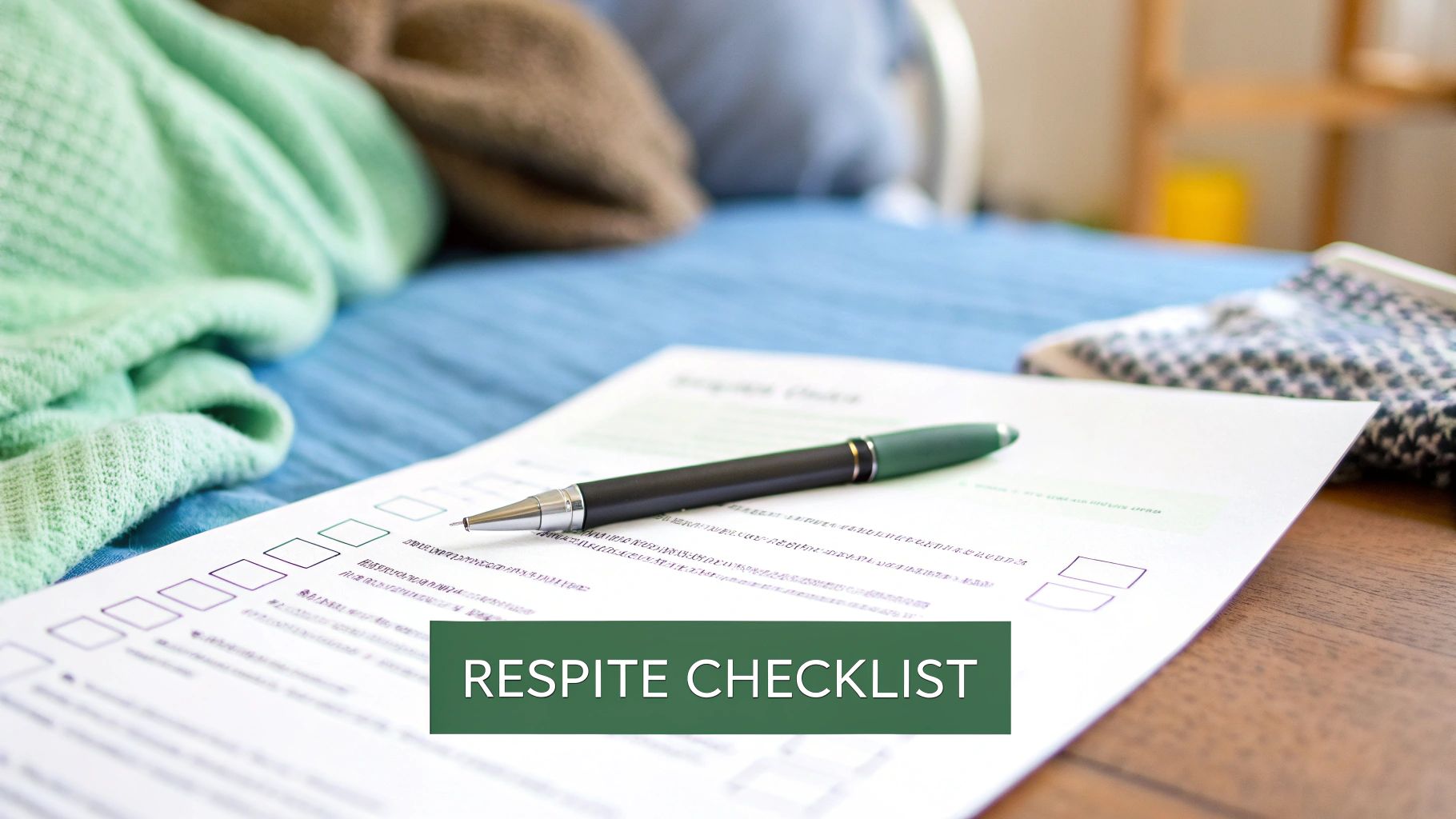
A successful respite care for dementia stay really begins before your loved one even walks through the door. A little bit of thoughtful preparation can make all the difference, ensuring the care team has everything they need and giving you genuine peace of mind while you take your break.
Think of it as creating a personalized "user guide" for your loved one. This simple step ensures continuity of care and helps the staff understand the little things that make your family member feel safe and understood, which is a huge relief for everyone.
Key Documents and Information
The first step is getting all the critical paperwork organized and ready to go. Having this information handy from the moment they arrive allows the care team to get up to speed on your loved one's specific health needs immediately.
Comfort Items and Personal Touches
Never underestimate the power of familiarity, especially for someone living with dementia. Packing a few items that feel like home can transform a new space from feeling clinical to feeling comforting and secure.
Packing a few beloved items can transform an unfamiliar room into a personal sanctuary. The goal is to create a sense of continuity and emotional safety, making the respite stay a positive experience.
It doesn’t have to be a lot, just a few meaningful things. Consider bringing their favorite cozy blanket, a small photo album with familiar faces, or even their go-to recliner pillow. These small touches provide a powerful sense of comfort.
Caregiver Insights for Personalized Care
Finally, and this is so important, share your expert knowledge. Nobody knows your loved one's daily rhythms, preferences, and triggers better than you do. Your insights are invaluable.
Jot down a few notes about their daily routine, what soothes them when they're anxious, or specific things that might cause confusion. This information is gold for the care staff, helping them provide a level of personalized care that makes all the difference.
To make this easier, we've put together a simple checklist to help you gather everything you'll need.
Essential Respite Care Preparation Checklist
| Category | Items to Prepare |
|---|---|
| Important Documents | Medical history summary, current medication/supplement list (with dosage & times), emergency contacts, doctor's information, and copies of legal papers like a healthcare proxy. |
| Personal Items | At least 5-7 days' worth of comfortable, easy-to-wear clothing, non-slip shoes/slippers, toiletries (toothbrush, comb, etc.), and any necessary incontinence supplies. |
| Comfort from Home | A favorite blanket or pillow, a few family photos, a cherished book or music player with headphones, or any small object that provides them with a sense of security. |
| Caregiver Notes | A brief write-up of their daily routine (wake-up time, meals, bedtime), their likes and dislikes, calming techniques that work for them, and any known triggers for agitation. |
Using a checklist like this helps ensure nothing gets missed, which lets you step away for your break knowing you've set your loved one up for a comfortable and safe stay.
Answering Your Questions About Dementia Respite Care
Even when you know all the benefits, taking that first step toward respite care can feel daunting. It's completely normal to have a long list of questions and a few worries bubbling under the surface. Let's walk through some of the most common concerns we hear from caregivers just like you.
"Will my loved one think I'm abandoning them?"
This is, without a doubt, the biggest fear we hear. It comes from a place of deep love and responsibility. The best way to think about respite care is not as leaving someone behind, but as giving them a safe, engaging new place to be for a little while. It's an act of love for both of you.
Professionals who specialize in memory care are experts at making people feel welcome and at ease. Remember, a short, positive stay can be a wonderful change of pace for them. And for you? It's absolutely essential. A caregiver who has had a chance to rest is a more patient, loving, and present caregiver.
"How do I know they can actually handle dementia-related behaviors?"
This is a practical and crucial question. When you're looking at a respite provider, don't be shy. Ask them directly about their staff's training and hands-on experience with respite care for dementia. Ask how they approach common situations like agitation, sundowning, confusion, or wandering.
The key is to look for dedicated memory care programs that are designed for safety and security. An in-person tour is a must—it's your chance to see how the staff interacts with residents and to trust your gut. You can feel the compassion in a place.
"Can we just try it for a day or two?"
Of course. You don't have to jump into a week-long stay from the get-go. Most communities are very flexible and offer options ranging from adult day programs to short stays of just a couple of days.
Starting with a brief "test run" is a great strategy. It lets your loved one get a feel for the new environment and the people without feeling overwhelmed. It also gives you a chance to take a much-needed breath, knowing they are in good hands.
At Forest Cottage Senior Care, we've talked with hundreds of families and understand every one of these concerns. We're here to provide the reassurance and support you need. The best way to quiet your worries is to see our compassionate approach for yourself and discover how we truly make every moment matter. Schedule a visit with us today.