
Respite care is a short-term break for caregivers. Simple as that. It’s not a luxury—it's an absolute lifeline for anyone caring for a loved one. Think of it as a planned pause, giving you anywhere from a few hours to a few weeks to step away, rest, and handle your own life.
The Unspoken Need for a Caregiver's Break

Being a family caregiver is a role you fill with love, no doubt. You’re juggling medications, doctor's appointments, and endless emotional support, always putting your loved one first. It’s deeply meaningful work, but it's also incredibly draining, both physically and emotionally.
The numbers don't lie. More than 11 million caregivers in the U.S. are looking after someone with dementia alone. That adds up to billions of hours of unpaid, demanding work. The immense weight of that responsibility often leads to stress, exhaustion, and a profound sense of being alone. It's the quiet reality of caregiving—those moments of overwhelm when you feel like you've got nothing left in the tank.
Recognizing the Signs of Burnout
It's so easy to push your own needs to the back burner when you're focused on someone else. But ignoring the warning signs of burnout is a fast track to compromising your own health. Seeing these feelings for what they are is the first real step toward getting the help you deserve.
- Persistent Fatigue: You feel bone-tired all the time, even when you get some sleep.
- Increased Irritability: You find yourself snapping or getting frustrated more easily, with your loved one or others.
- Feeling Overwhelmed: It’s that constant, nagging sense that it’s all just too much to handle.
- Neglecting Your Own Health: You're skipping your own appointments, eating poorly, or have no energy for a simple walk.
If any of this sounds familiar, that’s your cue. It’s a clear signal that you need and deserve a break. This is exactly where respite care comes in.
"I would have never taken those classes. I would have never gone for a massage. I would not have done the self-care stuff. That’s huge for me. That’s my respite.” – A Respite Program Participant
The Oxygen Mask Analogy
You know the safety speech on an airplane: put on your own oxygen mask before helping others. This couldn’t be more true for caregiving. You simply cannot give your best if you are running on empty. Taking time for yourself isn't selfish; it's what makes you a sustainable, patient, and effective caregiver.
Taking a break is essential for your physical and emotional health and wellness, which in turn, directly benefits the person you're caring for.
Respite care is that oxygen mask. It gives you the space to just breathe, recharge your batteries, and come back to your role with renewed patience and energy. In this guide, we'll walk you through how to find and set up the right support so both you and your loved one can truly thrive.
Understanding What Respite Care Actually Means
At its heart, respite care for family caregivers is a simple idea with a profound impact. Think of it as a planned, temporary stand-in—a scheduled break that gives you permission to step away from your caregiving duties to rest, recharge, or simply handle your own life. It’s not about replacing you; it’s about supporting you so you can keep being the amazing caregiver you are.
The need for this kind of support is massive and growing. By 2025, an estimated 63 million adults in the United States are expected to be caregivers. That’s nearly one in four Americans providing an average of 27 hours of care each week, a commitment that makes accessible relief not just a luxury, but a necessity. You can dive deeper into these numbers in this study on the state of caregiving in the US.
This planned relief is designed to be incredibly flexible, fitting into the unique rhythm of your family’s life and your loved one’s specific needs.
What Respite Care Looks Like in Practice
Respite care isn't a one-size-fits-all service. It’s tailored to provide the exact amount of support you need, precisely when you need it. The entire goal is to offer a safe, warm, and engaging environment for your loved one while you take that essential time for yourself.
Here are a few common ways families use it:
- A Few Hours: Maybe you need to get to your own doctor's appointment, run errands without constantly checking your watch, or just sit down for coffee with a friend. Respite care can cover this short window, giving you total peace of mind.
- A Full Day: Adult day programs are a fantastic option. They provide a structured setting with activities and social time for your loved one, which means you can get through a full workday or simply have a day to completely reset.
- A Weekend or Longer: Planning a vacation? Have a work trip? Or maybe you're recovering from an illness yourself. This is where short-term residential stays come in, offering overnight care in a secure, professional community.
This flexibility is what makes it work. It ensures you can find a solution that feels right, whether you need a hand for a few hours a week or a couple of weeks out of the year.
Respite care is a strategic tool for sustainability. It’s the proactive step you take to prevent burnout, ensuring you can provide compassionate, patient care for the long haul. A rested caregiver is a more effective caregiver.
More Than Just a Break
While giving you a much-needed break is the main goal, the benefits of respite care absolutely extend to your loved one. A change of scenery, new faces, and different activities can be wonderfully stimulating and enjoyable. It gives them a chance to connect with new people and join programs designed for their own interests and abilities.
For example, a day program might offer art therapy, music, and gentle exercise, providing both mental and physical engagement. For many seniors, this interaction can reduce feelings of isolation and genuinely boost their overall mood. It’s a win-win for everyone involved.
Ultimately, using respite services is an act of profound care—for both your loved one and yourself. It’s an acknowledgment that your well-being is central to the entire caregiving equation. Exploring options like temporary senior care is a practical first step toward building a more balanced and sustainable life for your family.
Exploring the Different Types of Respite Care
Finding the right kind of respite care for family caregivers is a bit like finding the perfect tool for a specific job—it has to be the right fit for your unique situation. Not all respite is created equal. The real benefit of these services is their variety, offering different levels of support depending on how long or what kind of break you need. Getting familiar with your options is the first real step toward choosing with confidence.
It helps to think of respite care as a spectrum. On one end, you have short, flexible bursts of help that can easily fit into your regular week. On the other, you’ll find more immersive, overnight solutions for when you really need a longer period to recharge. Each type has a distinct purpose, making sure both you and your loved one get the support you need.
In-Home Respite Care
Probably the most common and flexible option is in-home care. This is exactly what it sounds like: a professional caregiver, companion, or health aide comes directly to your home. This service is a lifesaver for caregivers whose loved one feels most comfortable in familiar surroundings, as it keeps disruptions to their daily routine at a minimum.
In-home respite can cover a surprising range of needs:
- Companion Care: A caregiver provides some much-needed social interaction, maybe by playing games, reading aloud, or simply offering a friendly presence while you’re out.
- Personal Care Assistance: For loved ones who need a hand with daily activities, an aide can assist with bathing, dressing, and getting around safely.
- Skilled Nursing Care: If your loved one has more complex medical needs, a registered nurse can come to the home to manage medications or provide specialized medical attention.
This type of care is perfect for those shorter breaks—letting you run to an appointment, go grocery shopping, or meet a friend for lunch with total peace of mind.
Adult Day Centers
For caregivers who need a reliable break during typical workday hours, adult day centers are an incredible resource. These are structured, community-based programs that provide a safe, supervised, and engaging environment for older adults. You can think of it as a social club for seniors, offering a great mix of activities, meals, and companionship.
The biggest benefit here is the social stimulation it gives your loved one. Instead of being at home, they get to interact with peers, join planned activities like art classes or music therapy, and just enjoy a change of scenery. This kind of engagement can do wonders for their mood and cognitive function. For you, it offers a solid block of time—often up to eight hours a day—to work, rest, or handle personal business. If a lively community setting sounds like a good fit, you can look into the benefits of a well-run adult day care program.
Respite care isn't a one-size-fits-all solution. It's a collection of tools. The key is to match the right tool to the specific need, whether it's for a few hours of personal time or a few weeks of restorative vacation.
This little decision tree can help you visualize how to choose between short and long-term options.
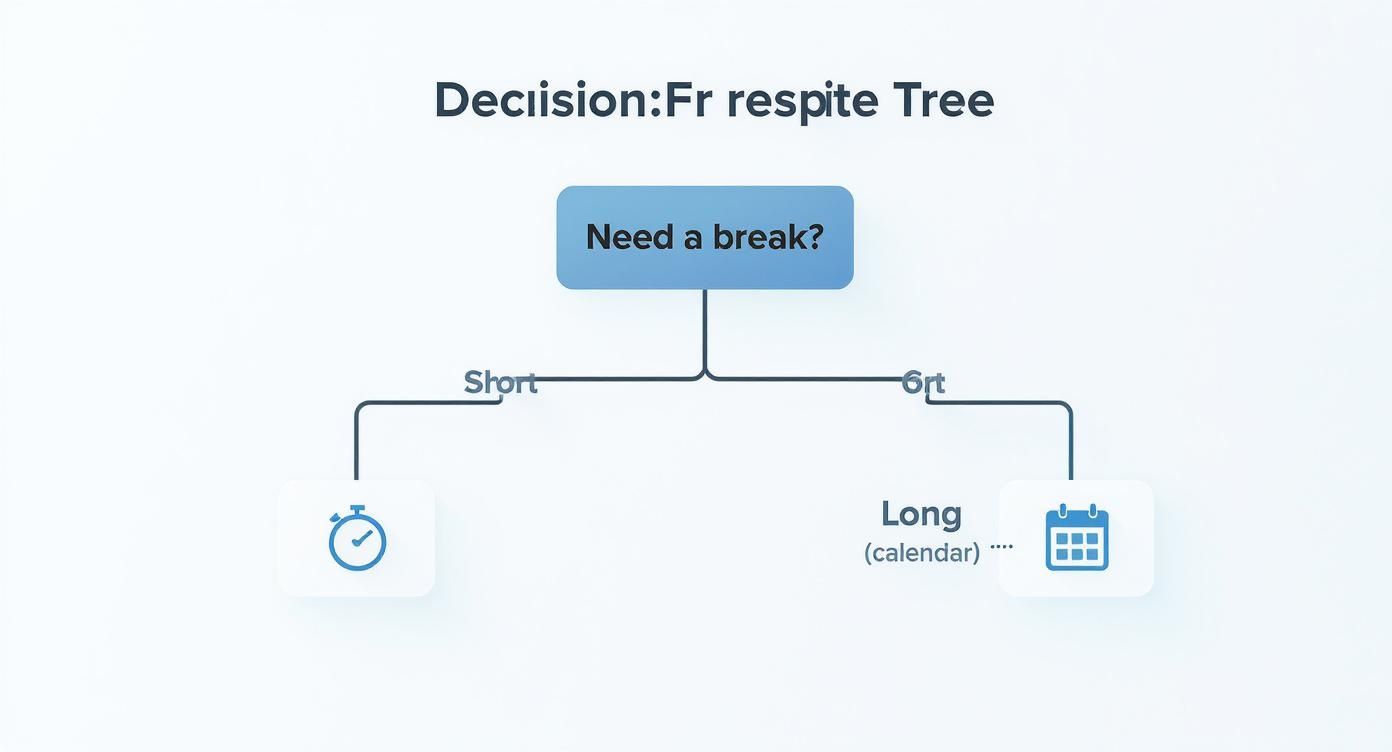
As you can see, the length of the break you need—whether it’s a few hours or a few days—is really the main factor that guides you toward the right type of care.
Short-Term Residential Stays
When you need a much longer break—maybe for a vacation, a work trip, or your own medical procedure—a short-term residential stay is the answer. Many assisted living communities, including Forest Cottage Senior Care, offer furnished rooms or apartments where your loved one can stay for several days or even a few weeks.
This option provides 24/7 care and supervision in a safe, professional environment. Your loved one gets to enjoy all the community’s amenities, like chef-prepared meals, social activities, and access to round-the-clock support. It’s an immersive experience that ensures their needs are completely met while you take a well-deserved, extended break.
The need for all these different services really hits home when you look at the pressure on family caregivers. In the U.S., caregivers provide an average of over 20 hours of direct care each week. When they turn to formal services, the help is most often in-home relief (68%), followed by adult day services (31%) and a smaller portion using overnight stays (6%). This really highlights how vital diverse respite options are in supporting the nearly $500 billion in unpaid care that families provide every year.
How to Find and Arrange Respite Care
Realizing you need a break is the easy part. Actually finding and setting up the right support can feel like a whole new job piled on top of the one you already have. But don't worry—with a clear plan, you can tackle this process and feel confident about your choice.
It all begins with figuring out what you and your loved one truly need before you even start searching. Think of it like a blueprint. You wouldn’t start building a house without one, and you shouldn’t look for care without a clear picture of what's required. Getting this right from the start makes everything else fall into place.
First Assess Your Family's Needs
Before jumping into calls and tours, take a quiet moment to map out your family’s specific situation. This simple step is absolutely critical. It helps you focus your search and immediately weed out the options that just won't work, saving you a ton of time and energy.
Think through these key areas:
- Level of Care Required: Is your loved one mostly looking for companionship, or do they need hands-on help with personal tasks like bathing and getting dressed? Are there more complex medical needs to consider, like managing medications or help with mobility that requires skilled care?
- Timing and Duration: What does your ideal break look like? Is it a few hours a week to handle errands? A full day to catch your breath? Or are you planning a much-needed vacation that requires several days of care?
- Budget: Be honest about what you can comfortably afford. Having a clear budget in mind helps you zero in on providers you can actually consider and explore the right funding options from the get-go.
Once you have a good handle on these details, you’re ready to start exploring who can provide that high-quality care.
Where to Find Trusted Local Providers
Finding the right provider for respite care for family caregivers means knowing where to look. The good news is, you don't have to do it alone. There are several fantastic organizations out there dedicated to connecting families with reliable, vetted local services.
Kick off your search with these trusted resources:
- National Respite Locator Service: This is a phenomenal starting point. It's a searchable database that can help you find respite care providers all across the country.
- Area Agency on Aging (AAA): Your local AAA is a goldmine of information. They can offer referrals to trusted local providers and clue you in on financial assistance programs you might not know about.
- Condition-Specific Organizations: If your loved one has a specific condition, check with organizations like the Alzheimer's Association or the American Parkinson Disease Association. They often keep lists of respite providers who specialize in the exact kind of care you need.
Using these resources can save you a ton of legwork and give you peace of mind. And if you need more guidance, our guide on choosing from top-rated elder care facilities near me can offer some extra local perspective.
"I’m able to hire care to come into the home and be with my mother while I’m at work, so I can be focused at my job and not be distracted." – A Respite Program Participant
Key Questions to Ask Potential Providers
Once you have a short list of potential providers, it's time to dig in and ask the tough questions. This is your opportunity to make sure they're the perfect match for your loved one. A great provider will welcome your questions and be completely transparent with their answers.
Be sure to cover these essential topics:
- Staff Training and Screening: What kind of training do your caregivers have? Are they certified? Do you run thorough background checks on every single staff member?
- Emergency Plans: What's your protocol if there's a medical emergency? How do you communicate with families when something comes up?
- Daily Activities and Routines: Can you walk me through a typical day? What kinds of activities do you offer, and how do you tailor them to different abilities and preferences?
- Communication Protocols: How will you keep me in the loop while I'm away? Do you provide daily updates or have a specific person I can contact?
Asking these questions helps you make a decision you can feel good about. It builds the trust you need to finally step away, take that deep breath, and truly recharge, knowing your loved one is in great hands.
Navigating the Costs and Funding for Respite Care
Worrying about how to pay for respite care shouldn’t be another source of stress on your plate. While the costs might seem intimidating at first, understanding your options can make this essential support feel much more within reach.
The price tag for respite care can vary quite a bit, depending on the type of service, how much help your loved one needs, and even where you live. But the good news is, there are numerous ways families can manage these expenses.
Why Funding Respite Care Matters
Thinking about these costs is part of a much bigger conversation. State-level analyses are revealing a growing caregiving crisis. In Texas alone, unpaid family labor is valued at a staggering $62.4 billion every year. This unpaid work, often driven by the demands of dementia care, highlights the immense personal and financial pressure on families.
As these responsibilities grow, figuring out how to fund a vital break like respite care becomes more critical than ever. You can dig deeper into this national challenge and its economic ripple effects in a recent report on the issue.
Common Ways to Pay for Respite Services
Most families end up using a mix of resources to cover the costs. It's pretty rare for one source to pay for everything, so your best bet is to explore all the possibilities.
The most straightforward path is private pay—using personal savings or income. This route gives you the most freedom, letting you choose any provider you like without having to jump through eligibility hoops.
Another powerful resource can be a long-term care insurance policy. These plans are specifically designed to cover services like assisted living and respite stays. If your loved one has a policy, it's essential to dust it off and review the details. Find out exactly what types of respite are covered and for how long. Understanding your plan can unlock some serious financial support.
To get a better handle on how these policies work, check out our guide on long-term care insurance coverage for assisted living and see how it might apply to your situation.
Exploring Government and Veteran Benefits
Beyond your own funds, several government programs can offer a helping hand. While standard Medicare doesn't typically cover respite care on its own, some specific benefits can provide relief.
- Medicare Hospice Benefit: If your loved one is enrolled in hospice, Medicare will cover up to five consecutive days of inpatient respite care at a Medicare-approved facility. This is specifically designed to give you a much-needed break during what can be a very challenging time.
- Medicaid Waivers: Many states have Home and Community-Based Services (HCBS) waiver programs. These waivers can help foot the bill for services like adult day programs or in-home help, making it possible for your loved one to stay at home longer.
- Veterans Affairs (VA) Benefits: If your loved one is a veteran, the VA offers some excellent respite care benefits. Eligible vets can receive up to 30 days of respite care each year. This care can be provided at home, in a VA community living center, or at an adult day health care center.
Think of funding respite care like building a bridge. You might use several different materials—private pay for the foundation, insurance for the supports, and government programs for the walkway—to create a strong, stable path to the break you need.
Finding State and Local Assistance
Finally, don't forget about the support that might be available right in your own backyard. Many states and local non-profits offer grants and programs specifically for family caregivers.
Your local Area Agency on Aging is the absolute best place to start. They can connect you with state-funded caregiver support programs that may offer financial help or vouchers to pay for respite. These local resources were created to help families just like yours make that essential break a reality.
Preparing for a Successful Respite Experience

A great respite care experience doesn’t just happen—it’s built on thoughtful preparation. A little planning up front is what gives you true peace of mind, knowing your loved one will have a comfortable, positive stay. Honestly, this prep work is what allows you to confidently step away and really recharge.
The whole point is to create a seamless handover. You're giving the respite provider all the tools and insights they need to deliver exceptional, personalized care. Think of it as creating a "user guide" for your loved one.
Building the Essential Information Packet
The single most important thing you can do is put together a comprehensive information packet. This document is the provider's go-to resource, ensuring everything stays consistent and safe. It's your chance to share all that invaluable knowledge you carry in your head so their routine and needs are perfectly understood.
Make sure your packet is organized and easy to scan, with all the vital details in one spot.
- Medical Information: A complete list of medical conditions, any allergies, and the contact info for all their doctors.
- Medication Schedule: Detail every single medication—the dose, what time it's taken, and any special instructions, like whether it needs to be with food.
- Emergency Contacts: Don't just list one person. Include a few family members and maybe a trusted neighbor, along with all their phone numbers.
- Daily Routine: Outline their typical day from morning to night. When do they wake up? What are their mealtimes, nap schedules, and bedtime rituals?
Sharing these details helps the respite staff keep things feeling normal for your loved one, which can dramatically reduce any anxiety or confusion. This consistency is a cornerstone of quality respite care for family caregivers.
Addressing Preferences and Emotional Needs
Beyond the medical charts and schedules, a successful respite experience comes down to knowing the person. What makes your loved one happy? What makes them feel comfortable or anxious? Sharing these personal insights is just as crucial as the medication list.
A successful respite stay is built on clear communication and detailed preparation. This empowers the care provider to not just meet medical needs, but to also create a genuinely positive and reassuring experience for your loved one.
Consider adding a little section on their personal preferences:
- Favorite foods and snacks, and just as importantly, anything they really dislike.
- Hobbies and interests, like their go-to TV shows, favorite music, or if they enjoy puzzles or reading.
- Comforting routines, like that cup of tea they love in the afternoon or listening to the radio before bed.
- Triggers or sources of anxiety, such as loud noises, big crowds, or anything else that might upset them.
Passing along these little details helps the care team connect with your loved one on a human level. Before the stay, have a gentle, positive chat about the upcoming break. Frame it as a little vacation for them and a chance for you to rest up, so everyone feels good about it. This thoughtful approach really is the key to making sure the experience is supportive and successful for everyone involved.
Got Questions About Respite Care? We've Got Answers
Even when you know deep down that you need a break, taking that first step toward respite care can stir up a lot of emotions and questions. That’s completely normal. Let’s tackle some of those common worries head-on, so you can feel confident getting the support you and your family member deserve.
How Do I Know When I Really Need a Break?
Recognizing the need for a break is probably the most important first step. Caregiver burnout doesn’t just show up one day; it creeps in slowly. If you find yourself feeling constantly irritable, exhausted even after a full night's sleep, or pushing off your own doctor's appointments, those are some pretty clear signs.
Another big tell is that feeling of being completely overwhelmed, or maybe you've lost interest in hobbies you used to love. These aren't just bad moods—they're your body's way of sending up a flare, letting you know it's time to recharge. Listening to those signals isn't weakness; it’s self-awareness, and it's absolutely vital if you want to be a caregiver for the long haul.
Will My Loved One Feel Like I'm Abandoning Them?
This is easily the biggest fear we hear from family caregivers. The best way to navigate this is with honest, open, and reassuring communication. Try to frame the respite stay as something positive—a chance for you to rest up so you can come back refreshed and be the best caregiver you can be.
You could say something like, "I need to take a few days to rest and handle some things, so you'll be staying with some wonderful people who will take great care of you. I can't wait to hear all about it when I get back." Just emphasizing that it’s temporary and that you are coming back makes all the difference in the world.
What if They Refuse to Go?
It's pretty common for older adults to resist new situations, especially when they value their independence so highly. If your loved one is hesitant, the key is to introduce the idea gently. You might start with a short visit or a trial run, like spending an afternoon at a local adult day program.
Try focusing on the benefits for them. You can talk about the social activities, the chance to meet new people, or the beautiful gardens at the community. When you present it as an exciting new experience for them, rather than just a break for you, they're often much more open to the idea.
The whole point of respite care isn’t to replace you; it’s to support you. Think of it as a temporary pause that allows both you and your loved one to get the care and attention you need to thrive together long-term.
Is Respite Care Just Another Name for Assisted Living?
That’s a great question, and it's an important difference to understand. While a respite stay might take place in an assisted living community, the two are fundamentally different. Assisted living is a long-term housing solution, while respite care is a short-term, temporary stay.
Think of it this way: respite care is like booking a hotel room, whereas assisted living is like signing a lease. Respite care is designed for a specific, limited time to provide a safe and supportive environment while the primary caregiver is away.
At Forest Cottage Senior Care, we truly get it. We understand all these concerns and are here to walk you through the process with compassion. Our short-term respite stays offer a warm, safe, and engaging place for your loved one, giving you the complete peace of mind you need to take that well-deserved break. To learn more about how we can support your family, visit us at http://44.202.110.106.