

If you're searching for "respite care for seniors near me," you're looking for more than just a service—you're looking for a lifeline. Think of it as calling in a trusted relief pitcher during a long and demanding game. It’s a planned, temporary break that gives you a chance to catch your breath, knowing your family member is in professional, compassionate hands.
What Is Respite Care and Why It Matters for Families
At its heart, respite care is a short-term care solution designed to give primary caregivers a much-needed break. It's not about giving up; it's a smart, sustainable way to manage the marathon of long-term care at home by preventing caregiver burnout. This service can step in for a few hours, a few days, or even a few weeks, offering a crucial pause from the constant demands of caregiving.
The need for this kind of support is bigger than ever. Family caregiving has become incredibly intense, with over 24 million unpaid caregivers in the U.S. alone—that's a shocking 32% increase in just the last decade. Despite caregivers putting in an average of 17 hours a week, the use of respite care has actually gone down, fueling a widespread 'caregiver crisis' that impacts millions. You can learn more about the growing need for caregiver support on PRB.org.
The Dual Benefits of a Well-Deserved Break
Respite care is one of those rare situations where everyone wins. It's not just about having someone watch over your loved one; it's a truly restorative experience for everyone involved.
- For the Caregiver: You finally get essential time to focus on your own health, tackle that long list of errands, take a vacation, or just simply rest. This break is critical for reducing stress, helping you return to your role with renewed energy and patience.
- For the Senior: Your loved one gets a welcome change of scenery. They have new opportunities to socialize and engage with others, and they can participate in structured activities that can lift their spirits and even boost their cognitive function.
This positive approach gives the entire family more strength to navigate the caregiving journey. Many families find that exploring different options for temporary senior care helps them find the perfect fit for their specific needs.
By providing a safe and engaging environment for seniors, respite care gives caregivers the peace of mind they need to truly disconnect and recharge. It’s a powerful acknowledgment that to care for others, you must first care for yourself.
When you start seeing respite care as a strategic part of your toolkit, not a last resort, it empowers your family to build a more balanced and sustainable care plan. It’s an investment in the well-being of both the person giving care and the person receiving it, leading to a healthier, more positive relationship for the long haul.
The Different Types of Senior Respite Care Available
Figuring out the right kind of respite care for your loved one feels a lot less complicated once you understand the main options. Think of it like booking a trip—the best choice hinges on how long you'll be away, the level of support needed, and what feels most comfortable for everyone involved.
Each type of care is built for different situations, from a few hours of help at home to a few weeks of full-time support in a community. Let's walk through the three most common models of senior respite care so you can match your family’s needs with the service that fits just right.
This concept map helps visualize how respite care acts as a crucial support system for both the caregiver and the senior.
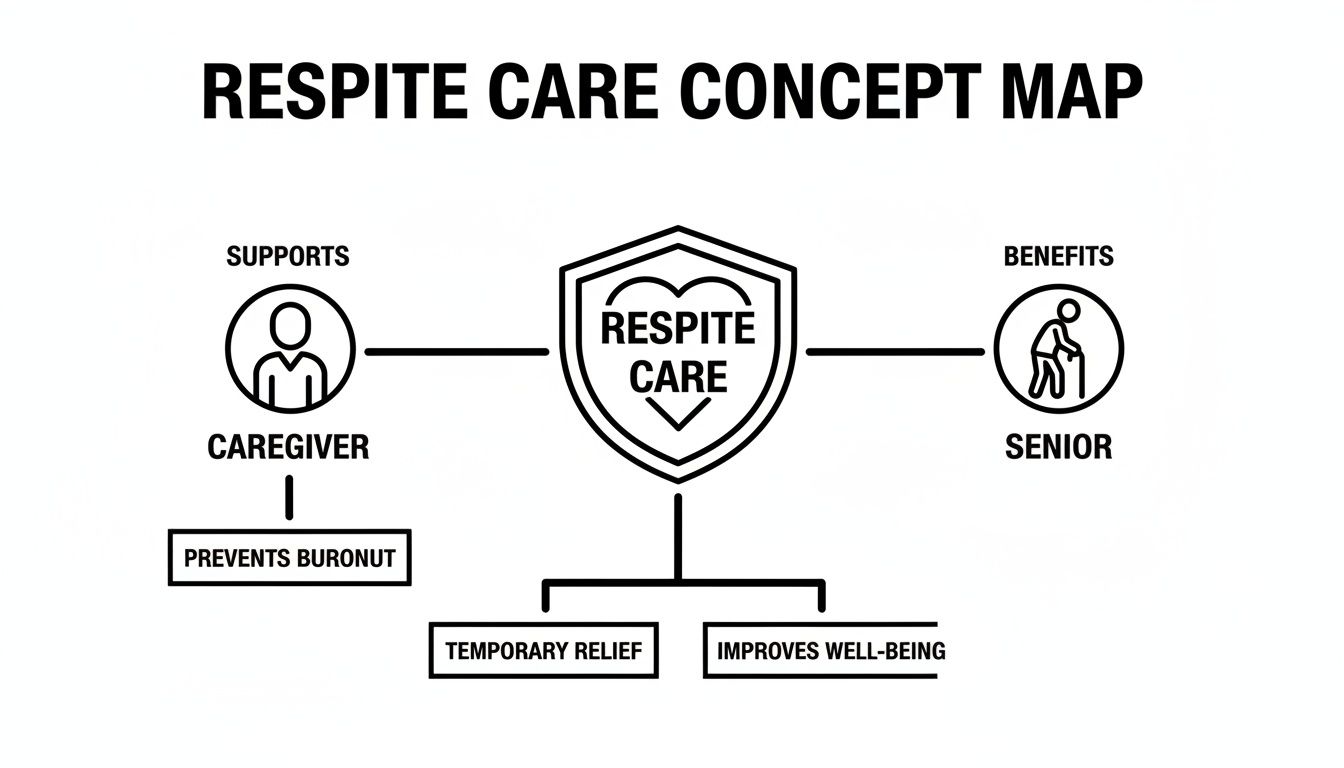
As you can see, the whole point is to restore balance and well-being for the entire family.
In-Home Respite Care
For many families, in-home care is the go-to choice, especially when a loved one feels most secure in their own familiar space. With this option, a professional caregiver comes directly to the senior’s home for a set period—whether that's a few hours, a full day, or even overnight.
This service is incredibly flexible. You can arrange for simple companionship, hands-on help with personal care like bathing and dressing, meal preparation, or medication reminders. It’s the perfect solution for caregivers who need to get to appointments, run errands, or just take a quiet afternoon for themselves without upending their loved one's daily routine.
Adult Day Centers
For seniors who might be feeling a bit isolated, an adult day center offers a fantastic change of scenery and a chance to socialize. These centers provide a safe, structured, and supervised environment during daytime hours, usually on weekdays. They are a powerful way to combat the loneliness that can so easily creep in for older adults.
Participants get to join in on all sorts of activities, from group exercises and games to arts and crafts. Many centers also provide meals and are equipped to handle specific health needs, including cognitive challenges. Checking out a local adult day care program can show you firsthand how this option boosts social well-being while giving you a reliable daytime break.
Short-Term Stays in a Community
When you need a more substantial break—for a vacation, a work trip, or to recover from an illness yourself—a short-term stay at an assisted living or residential care community is a lifesaver. Often just called "respite stays," this option provides 24/7 care and complete peace of mind.
During their stay, your loved one essentially becomes a temporary resident, with full access to all the community's amenities. This usually includes:
- A Private or Semi-Private Room: Fully furnished and comfortable for their stay.
- Professional Care and Support: Help with medication management, daily living activities, and access to on-site staff.
- Social and Recreational Activities: Opportunities to mingle with other residents and join in on community events.
- Nutritious Meals: Well-planned dining that can cater to specific dietary needs.
This immersive approach not only keeps your family member safe and well-cared-for but also gives them a chance to "test drive" community living in a friendly, low-pressure way.
To help you see the differences more clearly, here's a quick comparison of these three main types of respite care.
Comparing Respite Care Options at a Glance
This table breaks down the key features of each respite care model, helping you quickly see which one might be the best fit for your family's unique situation.
| Type of Care | Location | Typical Duration | Best For |
|---|---|---|---|
| In-Home Care | The senior's own home | A few hours to overnight | Seniors who are most comfortable in a familiar environment; caregivers needing short, flexible breaks. |
| Adult Day Center | A community-based facility | Daytime hours, typically weekdays | Seniors who would benefit from social interaction and structured activities; caregivers who work or need a regular daytime break. |
| Short-Term Stay | An assisted living community | A few days to several weeks | Caregivers needing a longer break (e.g., vacation, surgery); seniors who need 24/7 supervision for a limited time. |
Ultimately, the best choice is the one that respects your loved one’s comfort while giving you the meaningful break you need to recharge.
The Real Benefits for Both Seniors and Caregivers
Respite care is so much more than a quick break—it’s a powerful tool that brings a sense of renewal to the entire family. For caregivers, it's the release valve that prevents the slow creep of stress from turning into full-blown burnout. For seniors, it's a refreshing change of pace and an opportunity for new experiences.

It’s this two-way street of benefits that explains why demand is on the rise. The global market jumped from USD 325.23 million in 2024 to an estimated USD 342.86 million in 2025, and it’s not slowing down. This growth isn't just a statistic; it shows a real shift in understanding that taking care of caregivers is just as important as taking care of our loved ones. If you're interested in the market trends, Research and Markets has some great insights.
A Win for Caregivers
Being the main caregiver for someone you love is one of the most demanding jobs out there, and it's incredibly easy to let your own needs fall by the wayside. Respite care hits this problem head-on by giving you a real chance to recharge and regroup.
The upsides are clear and almost immediate:
- Reduced Stress and Burnout: Stepping away, even for a short time, dramatically lowers stress. It helps prevent that emotional and physical exhaustion that too many caregivers know all too well.
- Time for Personal Needs: It carves out precious time for you to finally get to your own doctor's appointments, run errands without rushing, or just sit down with a cup of coffee and a good book.
- Renewed Energy and Patience: You'd be surprised what a little time off can do. Coming back to your duties after a break often brings a fresh outlook and a deeper well of patience, which can make all the difference in your relationship with your loved one.
This time to rest isn't a luxury. It's an absolute necessity for protecting your own health, which in turn lets you provide the best possible care.
A Win for Seniors
While the caregiver gets a much-needed break, the senior gets their own set of fantastic benefits. A temporary stay in a new environment can be an incredibly stimulating and happy experience.
Respite care offers a safe, engaging setting that can push back against loneliness and give a senior’s mood and cognitive function a real boost through new activities and friendships.
For a senior, a respite stay can mean:
- Social Engagement: The opportunity to meet new people and join in on group activities is a breath of fresh air, especially for those who may feel isolated at home.
- Mental Stimulation: From arts and crafts to gentle exercise classes, structured programs keep the mind sharp and active.
- A Safe Change of Scenery: Sometimes just being in a new, supportive place can be exciting and refreshing, all while providing total peace of mind and security.
When you get down to it, deciding to use respite care for seniors near me is a positive, proactive choice that lifts everyone up. It helps create a healthier, more sustainable caregiving dynamic that makes the whole journey better for the long haul.
How to Find Great Respite Care for Seniors Near You
Once you’ve decided that respite care is the right move, the next step is finding a provider you can trust. Kicking off a search for "respite care for seniors near me" can feel like a huge undertaking, but breaking it down into manageable steps makes all the difference. The real goal is to find a place that not only meets your loved one's specific care needs but also feels like a safe, welcoming second home.
Think of it like putting together a trusted team. You're going to gather information from a few key experts and resources to make a choice you can feel truly confident about.
Starting Your Local Search
The best way to get the ball rolling is to simply create a list of potential options in your area. You're not making any commitments yet—just gathering names to build a foundation for your research.
Here are the most effective places to start:
- Your Local Area Agency on Aging (AAA): This is a fantastic first call. These government-backed organizations are dedicated to helping seniors and their families, and they can give you a list of vetted, reputable respite providers in your community.
- Online Directories and Reviews: Websites like the Eldercare Locator or A Place for Mom are great for filtering options by location and services offered. Make sure to read the family reviews—they offer firsthand insights you can't get anywhere else.
- Trusted Professional Referrals: Don't overlook the experts you already know. Your loved one’s primary doctor, a geriatric care manager, or a hospital social worker can be invaluable. They often have direct experience with local facilities and can give you recommendations they stand behind.
- Word-of-Mouth: Talk to people who have been in your shoes. Friends, neighbors, or members of a local caregiver support group can share personal experiences that provide a level of detail you just won’t find online.
As you build your list, it's also a good idea to start looking into what different elder care facilities near me actually offer, since the services can vary quite a bit from one place to the next.
Vetting Potential Providers
With your list in hand, it’s time to start digging a little deeper. This is where you ask the tough questions that will help you narrow down your choices and zero in on the best fit. A phone call is a good first step, but for any facility-based care, an in-person tour is absolutely non-negotiable.
A provider's willingness to answer your questions transparently is a key indicator of their quality and commitment. Don't hesitate to ask about anything that matters to you and your loved one.
Go in prepared with a checklist of questions. This little bit of prep work ensures you cover all the important bases and helps you compare your options fairly and consistently.
Key Questions to Ask Every Provider:
- Staffing and Training: What is your staff-to-resident ratio during the day and at night? What kind of specialized training does your team have, particularly for things like dementia care or managing medications?
- Safety and Emergency Protocols: How do you keep residents safe? What’s your procedure if there’s a medical emergency? Do you have security measures in place to prevent wandering?
- Daily Life and Activities: Could I see a sample weekly activity calendar? How do you encourage residents to socialize, and how do you accommodate people with different mobility levels?
- Meals and Nutrition: How are meals planned and prepared? Are you able to handle special dietary needs, like low-sodium or diabetic-friendly meals?
- The Intake Process: What kind of paperwork is needed for a short-term respite stay? How do you develop a personalized care plan for a new resident?
By taking these deliberate steps—gathering your options, asking smart questions, and visiting in person—you’ll move from a simple online search to finding a genuinely great respite care provider. And that brings peace of mind to the whole family.
Breaking Down the Costs and Finding Help
Let's be honest: figuring out the financial side of respite care is often the biggest headache for families. The costs can swing wildly. In-home help might charge by the hour, but a short-term stay at a community like Forest Cottage is usually a set daily rate. Getting a handle on these numbers and knowing where to turn for support can make all the difference.
The good news? You probably don't have to carry the entire financial load yourself. There are several programs out there specifically designed to give caregivers a financial break. It's all about knowing which doors to knock on and what questions to ask.
Exploring Your Financial Options
While it’s easy to assume respite care is always an out-of-pocket expense, several paths for financial support exist. It's smart to look into each one, because the eligibility rules can be very specific.
Here are the most common sources of funding:
- Long-Term Care Insurance: If your loved one has a long-term care policy, there's a good chance it includes a provision for respite care. Dig out that policy or give the provider a call to see if short-term stays are covered.
- Veterans Affairs (VA) Benefits: The VA provides incredible support for caregivers of eligible veterans. Their programs can often cover in-home help, adult day services, or even short-term stays in a community to give you that much-needed relief.
- Medicare and Medicaid: This is where things can get a bit tricky. Medicare might cover respite care, but only in very specific situations, usually as part of hospice benefits. Medicaid rules are different in every state, but many now offer waivers that help pay for respite services to keep seniors living at home longer.
It’s a common myth that government programs won’t touch temporary care. The truth is, many states realize that supporting caregivers with respite is a smart, cost-effective way to prevent the need for more expensive, long-term facility placements down the road.
For families looking into government help, the details are everything. You can learn more about how Medicaid may cover assisted living costs in our detailed guide, which breaks down the entire process from eligibility to applying.
Taking Action to Lower Costs
Beyond these main sources, don't forget about local and nonprofit organizations. Your local Area Agency on Aging is a goldmine of information on state-specific grants or other programs you might not know about.
For example, some successful pilot programs have given grants directly to caregivers, giving them the freedom to pick services that truly reduce their stress—whether that's help with chores or even self-care classes. A little bit of research now can help you build a care plan that’s financially sustainable, ensuring you get the break you absolutely deserve without breaking the bank.
Spotlight on a Local Care Option: Forest Cottage
If you're looking for "respite care for seniors near me," you know how important it is to find a place that feels like home, even for a short while. Here in our community, Forest Cottage Senior Care offers just that—a welcoming and compassionate solution for families. We’ve designed our short-term stays to be more than just a place to receive care; they’re a chance to experience real comfort, connection, and peace of mind.
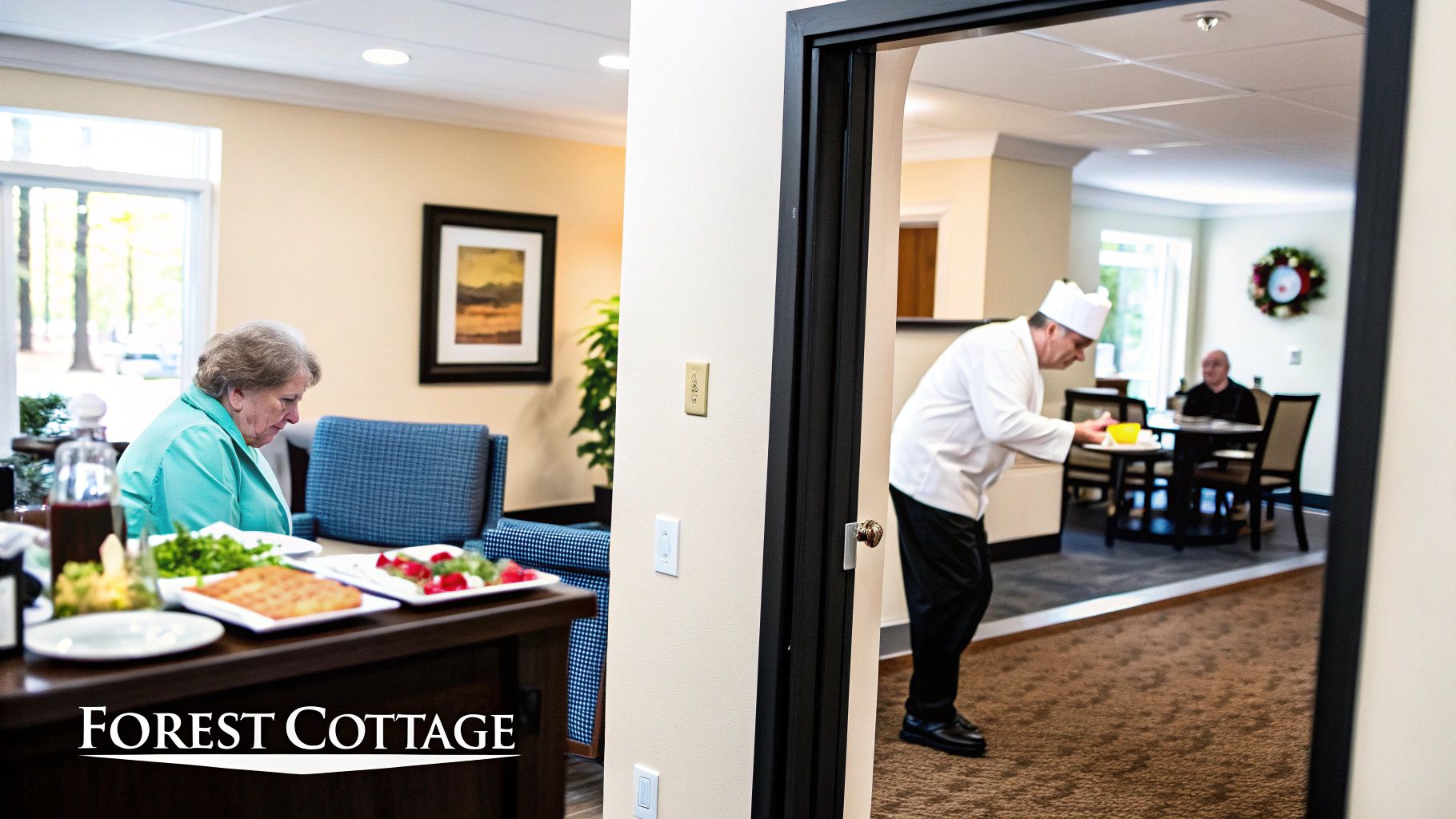
From the moment a guest arrives, we focus on making the transition seamless and supportive. They settle into a fully-furnished private suite, giving them a personal and restful space to call their own. Our dedicated team sits down with each family to create a personalized care plan, making sure every specific need and preference is met.
What a Respite Stay Includes
A short-term stay with us means becoming a part of our vibrant community life. We truly believe in nurturing the whole person—mind, body, and spirit.
Here’s a glimpse of what our guests enjoy:
- Chef-Prepared Dining: Every day, our friendly dining room serves up nutritious and delicious meals, turning every meal into a pleasant social occasion.
- Engaging Activities: There's always something going on, from lively social events to wellness programs designed to stimulate and entertain.
- A Safe Environment: With 24/7 support from our caring staff and a secure setting, families can finally relax, knowing their loved one is in great hands.
This all-in approach is why so many local families have come to trust us. It’s worth noting that in the Western U.S., 41% of assisted living communities are concentrated, which gives families like yours more established, quality options for short-term care.
At Forest Cottage, we see respite care as an opportunity for seniors to thrive in a new setting while their caregivers get the essential break they deserve.
Our goal is simple: to make every guest feel like a valued member of our family. You can learn more about our community’s mission and see for yourself what makes Forest Cottage unique.
Ready to see the difference for yourself? Give our team a call today to schedule a personal tour. We’d love to show you how our respite care services can support your family.
Answering Your Top Questions About Respite Care
Even after you've learned about the benefits of respite care, a few practical questions always seem to pop up as you get closer to making a decision. Getting straight answers to these common concerns can give you the confidence you need for a smooth, worry-free experience for everyone involved.
Let’s dig into some of the most common questions we hear from caregivers.
How Far in Advance Should I Book Care?
Ideally, planning 4-6 weeks ahead is your best bet. This is especially true if you’re looking at a stay during a busy time of year, like summer vacation or over the holidays. Booking early gives you the most options and pretty much guarantees you’ll get the spot you want.
That said, life doesn't always go according to plan, and senior communities know this. Many places, including home care agencies, can often accommodate urgent needs with just a few days' notice if they have an opening. The best first step is always to just pick up the phone and ask.
What Should I Pack for a Short-Term Stay?
Most communities will give you a helpful checklist to go by. A good rule of thumb is to pack several days of comfortable clothes, any personal toiletries, and of course, all medications in their original prescription bottles. Don't forget essentials like glasses, hearing aids, or walkers.
To help the space feel a little more like home, bringing a few personal items can make a world of difference:
- Family photos to set on a nightstand
- A favorite book, puzzle, or tablet
- A cherished blanket or their go-to pillow
Just be sure to label everything clearly to make sure it all finds its way back home.
Is Respite Care an Option for Someone with Dementia?
Absolutely. Many respite care providers offer specialized memory care services for individuals with Alzheimer's or other forms of dementia. When you're searching for respite care for seniors near me, make it a point to ask specifically about staff training in memory care, the security of the environment, and the types of structured activities they offer.
This is the key to ensuring your loved one receives safe, appropriate, and compassionate support that's truly designed for their unique cognitive needs.
At Forest Cottage Senior Care, our team is here to answer every question and guide you through the process, making it as simple as possible. Contact us today to learn more or schedule a visit.