Think of senior monitoring systems as a modern digital safety net. They’re designed to help older adults maintain their independence by keeping an eye on daily activity, detecting emergencies like falls, and letting caregivers know when something seems off. Using smart sensors and clever technology, these systems offer proactive support that goes way beyond a simple panic button.
How Modern Senior Monitoring Systems Work
Let's get one thing straight: this isn't about that old, single emergency button anymore. Today's senior monitoring systems are more like a supportive partner in care, boosting safety and bringing peace of mind without taking away anyone's freedom. They're built to help seniors live confidently and comfortably right where they want to be—at home.
The whole point is to use technology to enable independence. Imagine a smart home that’s specifically tuned in to a person's well-being. The technology has jumped from basic, reactive alerts to smart systems that use sensors and AI to notice tiny changes in daily routines. Spotting these small shifts can help predict potential issues and sometimes even prevent an emergency before it happens.
The Building Blocks of a Modern System
These systems work by weaving together a few key components into a seamless safety network. And while the tech is pretty advanced, the idea behind it is straightforward and easy for families to use.
- Smart Sensors: These are the discreet eyes and ears of the system. We're talking motion detectors, door contact sensors, and even pressure mats for beds. They’re placed in key areas to get a sense of daily activity patterns, all without using cameras.
- A Central Hub: Every sensor communicates with a central hub, which is connected to the internet. This hub is the brain of the operation, gathering all the data and sending it securely to a caregiver's app.
- Caregiver App: This is your window into your loved one's day. From a smartphone, family members can get updates, receive notifications about unusual activity, and check on routines at a glance.
From Reactive Alerts to Proactive Care
The real magic of today's senior monitoring systems is their ability to look ahead. Instead of just reacting after a fall, they learn an individual's unique daily rhythm.
By understanding what’s normal—like when a person usually wakes up, how often they go to the kitchen, or their typical sleep quality—the system can flag subtle changes that might hint at a health concern. For instance, a sudden increase in nighttime bathroom trips could be an early warning sign, giving you a chance to step in early.
This move toward proactive care is a big reason the market is growing so fast. The global elderly safety monitoring device market is expected to jump from around USD 754.1 million in 2025 to over USD 1,350.5 million by 2035. This growth is being driven by new AI-powered platforms that blend health tracking and fall detection, with home-based setups leading the charge. You can read the full research about elderly safety monitoring to get a better handle on these trends. And for families considering a community setting, you can explore the assisted living services that often integrate similar helpful technologies.
Comparing the Different Types of Monitoring Technology
Stepping into the world of senior monitoring systems can feel a bit like learning a new language. With so many choices out there, it’s crucial to understand what makes each technology different to find the right fit for your family. The best option really boils down to your loved one’s specific health needs, their lifestyle, and what they’re comfortable with.
Think of these technologies as different tools in a toolbox. You wouldn't use a hammer for a screw, right? In the same way, a simple medical alert pendant might be perfect for an active senior, while a more comprehensive sensor-based system is a better safety net for someone with memory challenges. Let's break down the main categories to help you pick the right tool for the job.
The goal here is to create a powerful combination of proactive care, greater independence for your loved one, and genuine peace of mind for everyone involved.
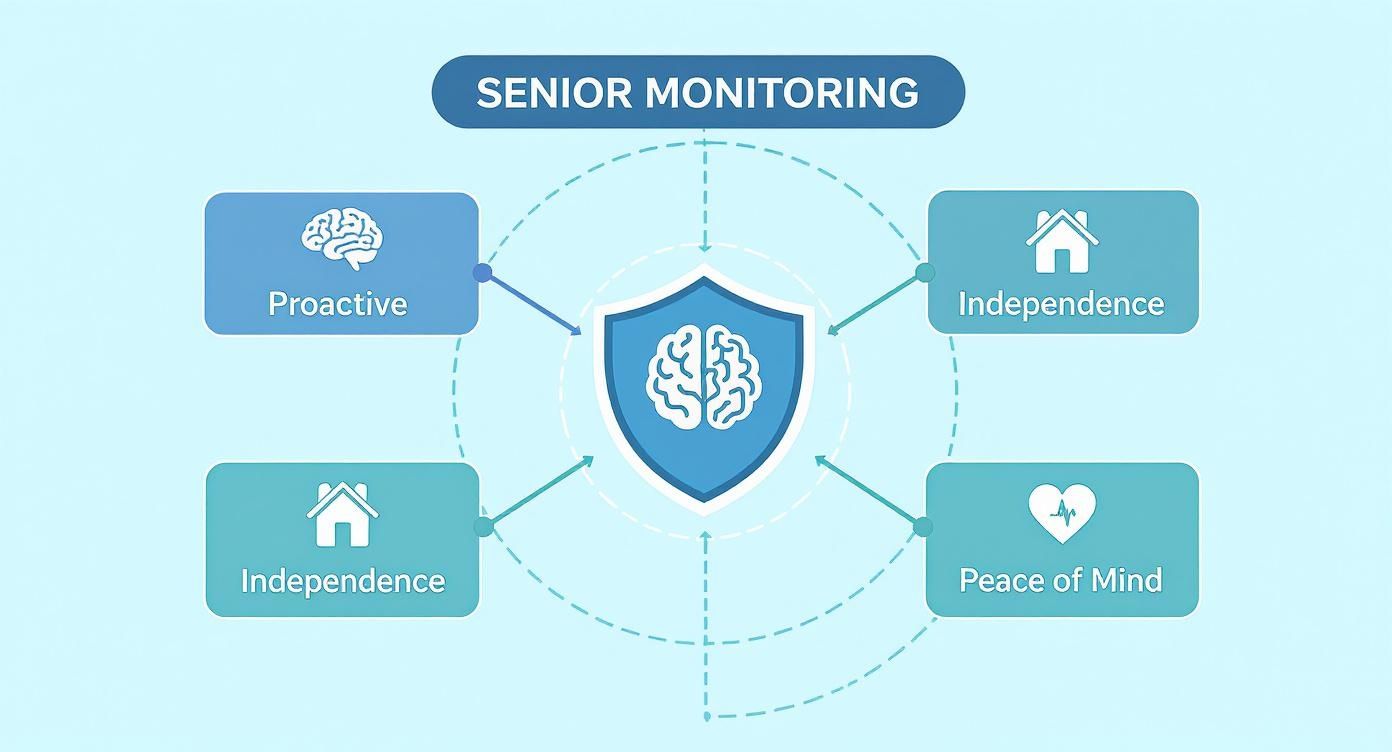
As you can see, it's all about building a supportive ecosystem where safety features empower seniors to live more freely and securely. To help you sort through the options, we've put together a quick comparison table.
Comparison of Senior Monitoring System Types
This table breaks down the main types of monitoring systems to give you a clear, at-a-glance look at how they work, who they're best for, and what features to expect.
| System Type | Primary Function | Ideal for Seniors Who… | Key Features |
|---|---|---|---|
| Medical Alert (PERS) | Emergency Response | Are active and want a simple way to call for help. | Wearable button, 24/7 monitoring, optional fall detection, GPS. |
| Ambient Sensors | Behavioral Monitoring | May not reliably use a wearable; have early cognitive decline. | Motion sensors, door contacts, bed sensors, routine tracking. |
| Health Trackers | Vital Sign Monitoring | Are managing chronic conditions and want to be proactive. | Heart rate, sleep tracking, medication reminders, ECG. |
| Video Monitoring | Visual Confirmation | Have caregivers living far away who need to check in visually. | Live camera feeds for common areas (with consent). |
This table is just a starting point. Now, let's dig a little deeper into what each of these really means for your family.
Medical Alert Systems (PERS)
These are probably what you picture first. Personal Emergency Response Systems (PERS) are the classic wearable pendants or wristbands with a help button. When pressed, it connects the user directly to a 24/7 monitoring center.
But today's PERS devices are much more advanced. Many now include:
- Automatic Fall Detection: Using tiny sensors called accelerometers, these devices can sense a sudden fall and call for help on their own. This is a game-changer if a senior is unable to press the button themselves.
- GPS Tracking: For seniors who still drive, garden, or enjoy walks around Willis, a mobile PERS with GPS is fantastic. If there's an emergency away from home, the monitoring center can pinpoint their exact location.
These systems are wonderfully straightforward, making them a great starting point for families who need a reliable, easy-to-use safety net.
Ambient Activity Sensors
For a much less intrusive approach, ambient activity sensors are a powerful option. These are small, camera-free devices placed discreetly around the home—think motion sensors, sensors on doors or the refrigerator, and pressure pads on a bed or chair. Their job is to learn a senior’s daily routines.
Instead of just reacting to emergencies, this technology works proactively by spotting subtle changes in behavior. It figures out what's "normal" and alerts caregivers when something is off, which can be an early warning sign of a health issue.
For instance, the system might notice more trips to the bathroom at night, which could signal a UTI. Or it might flag that the fridge hasn't been opened all day, hinting at a loss of appetite. This kind of data gives you a chance to step in before a small problem becomes a big one. These are especially valuable for individuals with cognitive decline, and understanding what is memory care assisted living can put this need for extra support into context.
Wearable Health Trackers
Taking things a step further, wearable health trackers give you continuous insight into a senior's well-being. These are often smartwatches or sophisticated wristbands that monitor key health data in real-time.
Some of the most common features include:
- Vital Sign Monitoring: Many trackers can measure heart rate, blood oxygen levels, and even perform a simple electrocardiogram (ECG). This information can be shared with doctors to better manage chronic conditions.
- Sleep Tracking: We all know a bad night's sleep can affect everything. These wearables track sleep quality and duration, offering clues to other potential health problems.
- Medication Reminders: Helping a loved one stick to their medication schedule is a huge relief. These devices can send gentle vibration alerts right on their wrist when it's time for a pill.
These trackers empower seniors to be more involved in their own health while keeping the family looped in.
Video Monitoring
Now, this one requires a conversation about privacy. When used ethically and with full consent, video monitoring can be a helpful tool. Cameras should only be placed in common areas—like the living room or kitchen—and never in private spaces like a bedroom or bathroom.
The biggest benefit of video is immediate visual confirmation. If a fall detector goes off, a caregiver can quickly check the camera feed to see what happened, assess the situation, and avoid false alarms. This is especially reassuring for families who live far away, offering a quick and direct way to see that their loved one is okay. Open communication is absolutely essential if you consider this option.
Navigating the Privacy and Ethical Questions
Let's be honest, introducing a monitoring system into a loved one's life brings up some tough conversations. It’s completely natural to worry about privacy, dignity, and personal boundaries. The goal isn't surveillance; it's about using technology as a supportive tool to enhance their safety and help them stay independent longer.
The absolute key is open and honest communication, long before any devices show up. This conversation needs to be framed around a shared goal: helping your parent live safely and confidently in their own space.
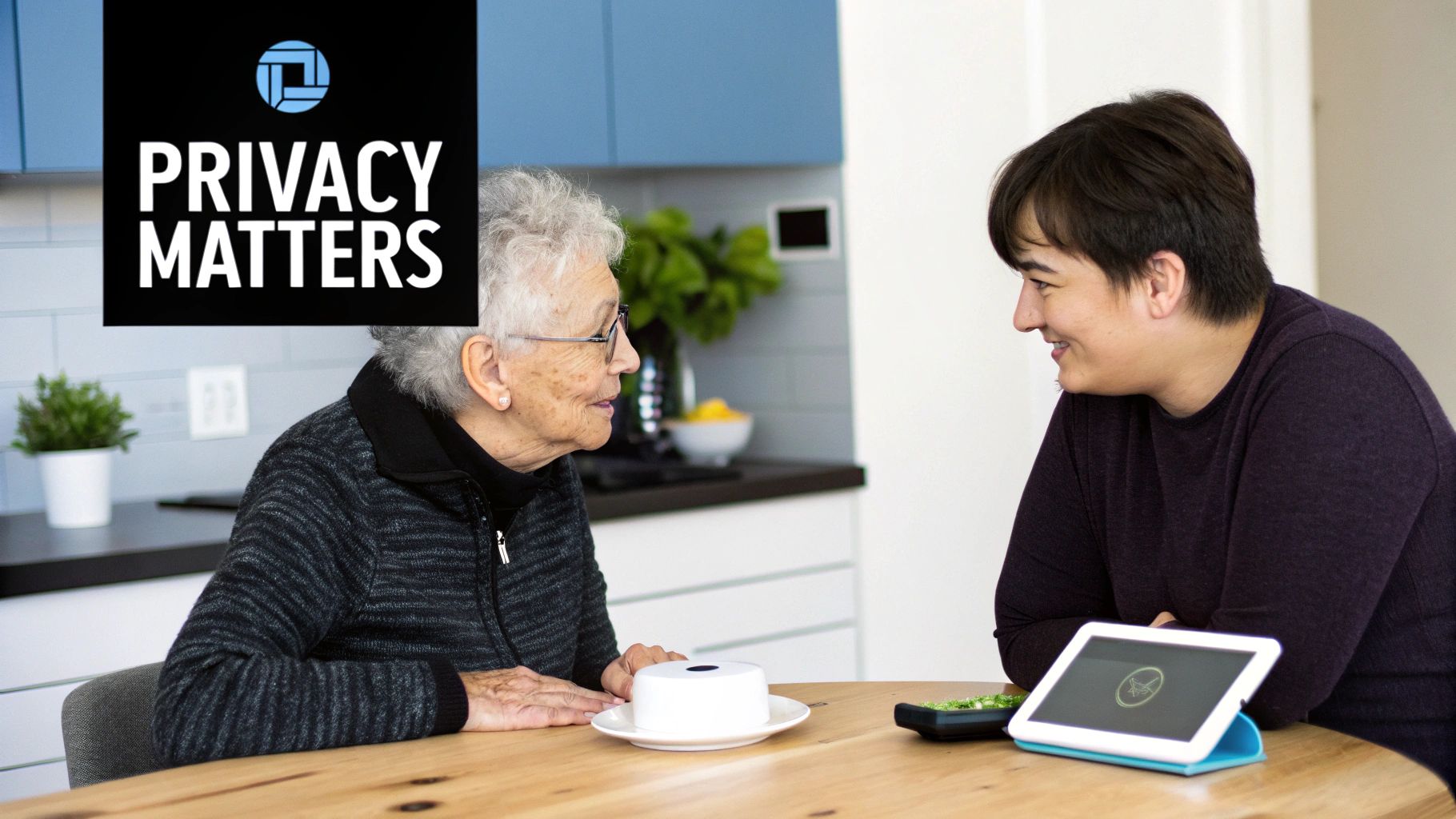
This whole process should feel like a collaboration, not you imposing control. When you involve them in the decision-making—looking at options together, talking about what features they’re comfortable with, and setting clear ground rules—it becomes a team effort. This empowers them and makes sure they feel respected every step of the way.
Building Trust Through Transparency
One of the biggest fears is the feeling of being "watched." That's why it's so important to be clear about the different types of monitoring available. In fact, many of the most effective systems today don't use cameras at all.
- Passive Activity Monitoring: This technology is incredibly discreet. It uses camera-free sensors to learn daily routines. It can tell when your mom gets out of bed or when your dad opens the fridge, but it never records video or audio. The aim is simply to spot big changes from their normal patterns that might signal a problem.
- Video Surveillance: Cameras are a more direct approach and should only ever be used with their full, explicit consent. They’re best for common areas, like a living room, to visually check on an alert (like a fall). They should never be placed in private spaces like bedrooms or bathrooms.
By choosing the right kind of tech, you can build a solid safety net that honors their personal space and preserves their dignity. The focus stays on their well-being, not on constant observation.
Protecting Data Like a Digital Medical Chart
Another perfectly valid concern is data security. Where does all this information go, and who gets to see it? A good way to think about it is like a digital medical chart. It’s sensitive, private information that demands the highest level of protection.
Reputable companies treat this data with extreme care. They use encryption and secure servers to shield it from prying eyes, making sure only designated family members or caregivers can see it through a secure app.
Before you commit to any provider, you absolutely have to ask about their data security policies. You need to feel confident that your loved one’s information is being handled with the same level of confidentiality as their medical records. To get a sense of the legal side, you can review a provider’s terms and conditions page, which should spell out their commitment to user security.
Ultimately, putting these systems in place ethically boils down to one simple thing: respect. When you introduce this technology with empathy, transparency, and a shared goal of independence, it becomes a powerful ally. It gives families here in Willis and beyond peace of mind, knowing their loved ones have an extra layer of support while living life on their own terms.
How to Choose the Right Monitoring System
Choosing the right senior monitoring system is a big decision, balancing safety, independence, and your own peace of mind. With so many options out there, the key is to cut through the marketing fluff and focus on what truly matters for your loved one's specific situation. This guide will give you the right questions to ask, helping you find a system that’s a perfect fit.
Think of yourself as a detective for a moment. Your job is to gather clues about your loved one's daily life, their home, and the companies you’re looking at. Asking the right questions helps you piece everything together and make a confident choice that provides a real safety net.
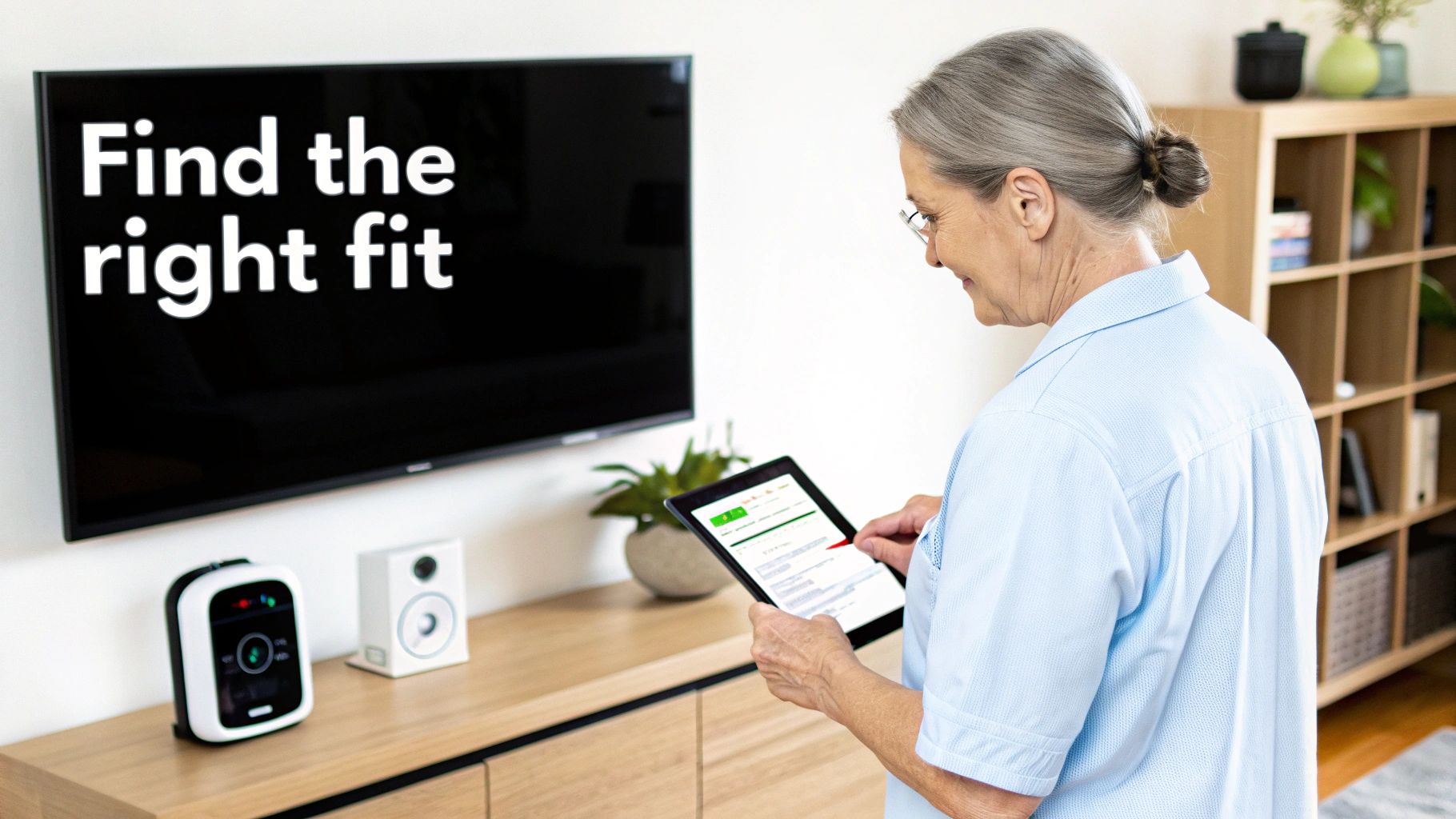
Assessing Your Loved One’s Needs
Before you even look at a single product, the first step is to thoughtfully assess your loved one. Every senior is different, and the "best" system is simply the one that aligns with their health, lifestyle, and comfort level. A system that’s great for an active senior could be a terrible choice for someone with mobility challenges.
Start by thinking about these critical areas:
- Mobility and Fall Risk: Is your loved one steady on their feet, or is falling a major worry? If it is, then automatic fall detection isn't just a nice-to-have; it's a must-have.
- Cognitive Health: For a parent dealing with memory issues, a system that needs to be remembered—like charging a device or putting on a pendant—might not be reliable. In these cases, passive ambient sensors that just work in the background are a much smarter solution.
- Medical Conditions: Are they managing a chronic condition like heart disease or diabetes? Some systems can integrate with health trackers to keep an eye on vital signs, which could be incredibly valuable.
- Daily Routine: Do they spend most of their time at home, or are they out and about in the Willis community? A senior who drives, gardens, or visits friends needs a mobile system with GPS tracking.
Evaluating the Home Environment
A monitoring system is only as good as the home it's in. Technical glitches like a weak Wi-Fi signal or a power outage can create dangerous gaps in coverage. It's so important to understand how the system handles these real-world problems before you commit.
A question you absolutely must ask any provider is, "What happens if the power goes out or the Wi-Fi drops?" The best systems have a built-in battery backup lasting 24-48 hours and can switch to a cellular connection if the internet fails. This ensures that safety net stays strong, no matter what.
Here are a few more technical questions to add to your list:
- Connectivity: Does it need a landline, or does it use a cellular network? Cellular is almost always the more reliable option.
- Wi-Fi Strength: If it relies on Wi-Fi, is the signal strong everywhere in the house?
- Installation: Is it a simple DIY setup you can handle in minutes, or does it need a professional installer?
- Range: For wearable devices, how far from the base station does it work? Can your loved one get help if they're out by the mailbox or in the backyard?
Scrutinizing the Service Provider
The technology is only half the story. The people and the policies behind it are just as important. When an alert goes off, you have to trust that a fast, professional, and compassionate person is on the other end of the line.
The senior tech services market is exploding—it's projected to jump from USD 194 billion in 2025 to over USD 2,101 billion by 2035. This incredible growth, as detailed by market research from Fact.MR, means more companies are jumping in. While that gives you more choices, it also means you have to be extra careful about who you trust.
Ask potential providers these direct questions:
- Monitoring Center: Is your monitoring center staffed 24/7 by certified professionals? Are they located in the U.S.?
- Response Time: What's your average response time from an alert to a live person speaking? You should be looking for something under 60 seconds.
- Contracts and Fees: Are there long-term contracts or hidden fees I should know about? What’s your cancellation policy?
- Customer Support: When can I reach a real person for technical help?
By working through these questions, you go from being a worried family member to an empowered advocate. You'll be able to confidently compare senior monitoring systems, ignore the noise, and pick a solution that truly supports your loved one’s independence and gives your family genuine peace of mind.
Understanding the Costs and Financial Assistance
Let's be honest: affordability is one of the first things families think about when looking for ways to keep a loved one safe. When it comes to senior monitoring systems, the costs usually break down into two main buckets, which makes it much easier to figure out a budget.
First, you've got the one-time equipment fees. This is the upfront cost for the actual hardware—the sensors, the central hub, or maybe a wearable pendant. These can run anywhere from under $100 for a simple medical alert button to several hundred dollars if you're getting a full suite of ambient sensors for the home.
After that, nearly every system has a monthly subscription fee. This ongoing charge is what pays for the professional 24/7 monitoring service, the cellular connection that keeps the system online, and your access to the family caregiver app. You can expect these fees to be somewhere in the $20 to $60 range, depending on the features you choose, like automatic fall detection or GPS tracking.
Exploring Financial Support Options
The good news? You might not have to shoulder these costs all on your own. There are several ways to get financial help that can make these life-saving systems much more affordable, though it does take a bit of digging.
Typically, Original Medicare (Part A and Part B) won't cover medical alert systems because they aren't classified as "durable medical equipment." However, some Medicare Advantage (Part C) plans are starting to offer partial or even full coverage as an extra benefit. The only way to know for sure is to call your specific plan provider and ask them directly what's covered.
It's a common misconception that all senior-related technology is covered by standard insurance. Always verify your benefits, as coverage for senior monitoring systems often depends on the specific policy and the documented medical need.
Private insurance policies are another story and can vary quite a bit. Some long-term care insurance coverage for assisted living plans may reimburse you for these systems, especially if they are considered necessary to help a policyholder stay safely in their home.
Additional Avenues for Assistance
Beyond the usual insurance routes, there are a few other valuable resources to look into, especially for those who have served our country.
- Veterans Affairs (VA) Benefits: The VA often provides medical alert systems and other monitoring devices for veterans who qualify for their programs. Your best bet is to contact your local VA office to ask about eligibility and how to apply.
- Local Area Agencies on Aging (AAA): These are fantastic local resources. They can often connect you with state or community programs that might offer grants or subsidies for this kind of assistive technology.
- Flexible Spending Accounts (FSA) or Health Savings Accounts (HSA): If you have an FSA or HSA, you can likely use those pre-tax dollars to pay for both the equipment and the monthly service fees.
The need for these systems is absolutely exploding. The global market for elderly monitors was valued at USD 3.50 billion and is projected to hit USD 7.24 billion by 2032, driven by our aging population and the rise of chronic health conditions. You can see more details about the elderly monitors market on databridgemarketresearch.com. This incredible growth just shows how important it is for families to find practical ways to fund this essential technology.
Frequently Asked Questions About Senior Monitoring Systems
Choosing the right technology for a loved one is a big step, and it's natural to have practical questions. Let's walk through some of the most common concerns we hear from families, so you can feel more confident in your decision.
Do These Systems Still Need a Landline Phone?
Not anymore, thankfully. While the older models you might remember absolutely required a landline, the vast majority of modern senior monitoring systems run on reliable cellular networks.
This is a huge improvement. It gives you far more flexibility and ensures the system keeps working even if a phone line goes down in a storm. Just make sure the provider uses a cellular carrier with a strong signal in your loved one's specific neighborhood, right here in Willis, TX.
How Do I Suggest This Without Offending My Parent?
This is probably the trickiest part, but it’s a conversation worth having. The key is to frame it around empowerment and independence, not decline or surveillance. Talk about how this is a tool to help them live safely in their own home for as long as possible—something everyone wants.
Don't just present a solution; involve them directly in the research and selection process. When you make it a collaborative decision, it gives them a real sense of control and shows you're a team working toward the same goal.
The most successful conversations focus on shared peace of mind. Let them know it’s not just for them; it’s for you, too. Explain that it will allow you to worry less while respecting their independence even more.
What Happens During a False Alarm?
This is a great question. Professional monitoring companies have very clear, calm procedures for this exact scenario. If an alarm gets triggered by accident, the first thing the monitoring center does is try to establish two-way communication through the device's built-in speaker.
If they can talk to your loved one and confirm everything is okay, they simply cancel the alarm. No drama. If they can't get in touch, they move to the next step in the emergency plan, which almost always means calling the family contacts on file before dispatching local emergency services. For more ideas on supporting your loved one, you can find some great information in our resident resource section.
At Forest Cottage Senior Care, we help families navigate these decisions with compassion and real-world experience. To see how our community supports resident safety and independence, visit us online or schedule a tour of our Willis, TX, home.