
When you hear "assisted living," it's easy to picture a permanent, long-term move. But what if your family only needs support for a little while? That's where short-term assisted living comes in. It’s a temporary stay in a senior living community—often called respite care—that provides all the support an older adult needs without the long-term commitment.
Think of it as a supportive 'home away from home' during a specific season, whether that's for recovery, giving a family caregiver a much-needed break, or even just to test the waters of community living.
What Short Term Assisted Living Really Means
Let's clear up a common misconception: moving into an assisted living community doesn't have to be a final decision. Short-term stays are designed to be a flexible bridge during times of transition.
This temporary option offers all the same benefits you'd expect from long-term care—like 24/7 support, meals, and social activities—but for a limited, defined period. A stay can last anywhere from a few days to several months, depending on what your family needs. It’s a practical solution for immediate challenges, not a complete lifestyle overhaul.
Three Primary Reasons for a Short Stay
Most families find themselves exploring a short-term assisted living arrangement for one of three key reasons. Seeing if one of these scenarios sounds familiar can help you decide if it's the right fit for your loved one.
- Caregiver Relief: Let's be honest, being a family caregiver is demanding. Sometimes you just need a break to avoid burnout, go on a vacation, or handle your own life's demands. A short-term stay ensures your loved one is safe and wonderfully cared for, giving you invaluable peace of mind.
- Post-Hospital Recovery: After a surgery, a bad fall, or a serious illness, a senior might not be quite ready to return home alone. A temporary stay provides a safe, professional environment where they can regain their strength with support right down the hall, making the transition back to full independence much smoother.
- A Trial Period: If you're considering a permanent move to assisted living, a short stay is the perfect trial run. It gives your loved one a chance to actually experience the community, meet the staff and other residents, and see how it feels. It’s a low-pressure way to decide if it’s the right long-term fit.
This kind of temporary arrangement offers a structured yet flexible solution. It empowers families to check out different care settings and make informed decisions without feeling rushed. At communities like Forest Cottage Senior Care in Willis, Texas, these stays are intentionally designed to be warm, welcoming, and seamless.
At the end of the day, short-term care is all about providing the right level of support at exactly the right time. To get a better feel for how it all works, you can learn more about what respite care involves and see the benefits for both seniors and their families. This flexible option ensures that every senior gets compassionate, personalized assistance—whether for a week or a few months—in a setting that truly feels like home.
Comparing Your Senior Care Choices
Trying to figure out senior care can feel like reading a map without a legend. There are so many different paths, and it's tough to know which one is right. The key is understanding that short term assisted living is a very specific solution for temporary needs, and it's quite different from other, more permanent or medically intensive options.
The goal is always to match the type of care to the immediate situation. Are you looking for recovery after a hospital stay? Do you need a break from caregiving? Or is it time to consider a long-term lifestyle change? Each option comes with a different environment, level of medical support, and price tag. Getting clear on these differences is the first step to making a confident choice for your loved one.
This quick guide can help you see where a short-term stay fits in.
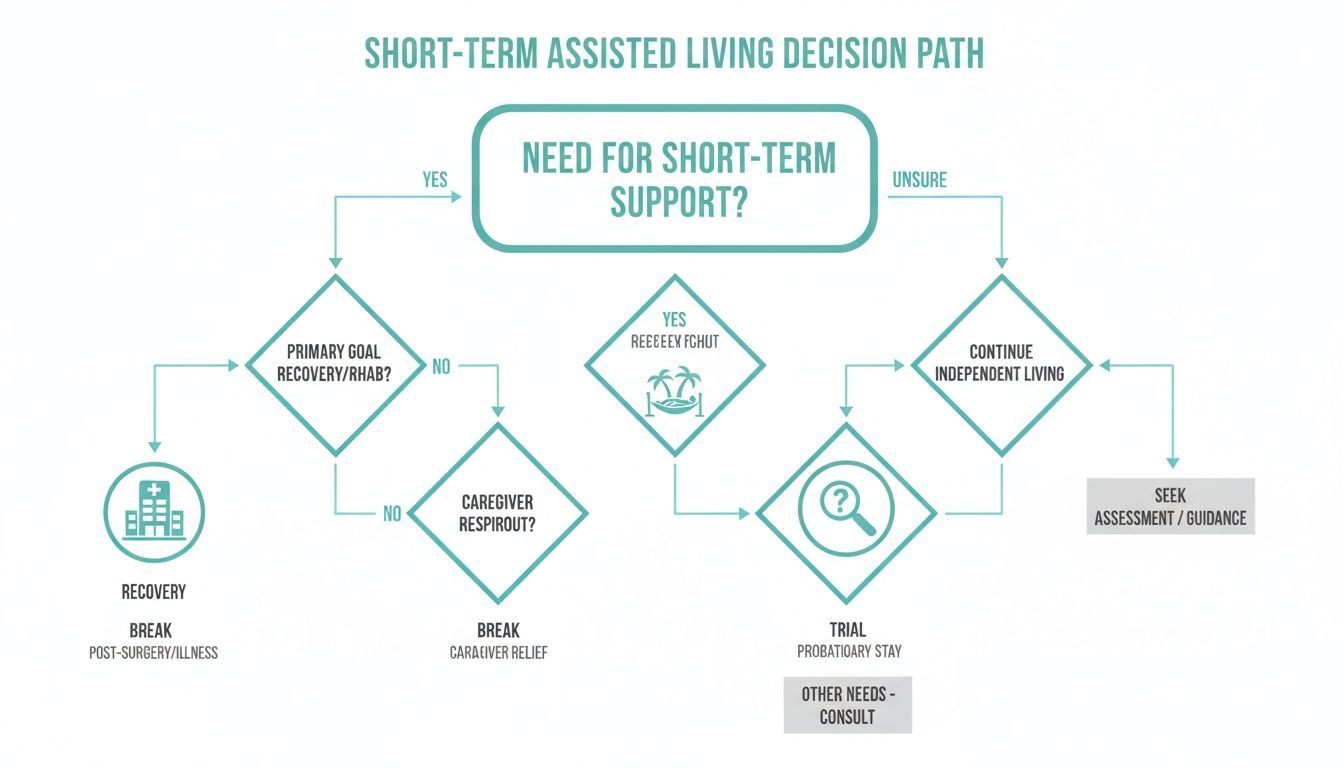
As the chart shows, short-term care is often the perfect answer for someone recovering after a hospital visit, for a caregiver who needs a well-deserved break, or even as a trial run before committing to a long-term move.
Key Differences in Senior Care
Let's break down how these choices really stack up against one another. While they all aim to support seniors, their approach and intensity are worlds apart.
Short Term vs. Long-Term Assisted Living: This one’s pretty straightforward—it's all about the length of stay. A short-term or respite stay is temporary, lasting just a few days or weeks. Long-term care, on the other hand, is a new home. A temporary stay offers a real taste of the community and its benefits without the big commitment.
Short Term Assisted Living vs. Skilled Nursing Facilities: This is a crucial distinction. Assisted living is all about personal care—help with things like bathing, getting dressed, and medication reminders in a warm, homelike setting. A skilled nursing facility (SNF), what most people call a nursing home, provides 24/7 medical care from licensed nurses for serious, complex health conditions. You can get a much more detailed comparison between assisted living and nursing homes to see which level of care makes the most sense.
Short Term Assisted Living vs. In-Home Care: With in-home care, a caregiver comes to the senior's house for a set number of hours. In contrast, short-term assisted living offers around-the-clock support and, just as importantly, a built-in social community. The activities and friendships that form are vital for combating the loneliness that can so easily creep in at home.
To help you visualize these differences, here’s a quick comparison of the most common options.
Comparing Senior Care Options at a Glance
| Feature | Short Term Assisted Living | Long-Term Assisted Living | Skilled Nursing Facility | In-Home Care |
|---|---|---|---|---|
| Primary Goal | Recovery, caregiver respite, or a trial period. | A permanent or semi-permanent new home. | Intensive medical care and rehabilitation. | Support with daily tasks in the senior's own home. |
| Duration of Stay | Days, weeks, or a few months. | Months to years; ongoing. | Days to weeks, focused on recovery. | A few hours per day or week, as needed. |
| Medical Care | Personal care, medication management. | Personal care, wellness programs. | 24/7 skilled nursing and medical oversight. | Varies; can include some health monitoring. |
| Social Environment | Access to community activities and peers. | A vibrant, built-in social community. | Clinical setting; social interaction is secondary. | Isolated; social interaction depends on the caregiver. |
| Best For | Post-hospital transition, caregiver breaks. | Seniors who need daily help but not constant medical care. | Patients with complex, ongoing medical needs. | Seniors who are mostly independent but need some help. |
This table lays out the core purpose of each care type, making it easier to see which path aligns with your current needs.
A Focus on Temporary Support
At its heart, assisted living is built on flexibility. In fact, research shows the median stay in assisted living is under two years, and 60% of residents eventually move on—either back home or to a place that offers a higher level of care. This adaptability is what makes a place like Forest Cottage Senior Care so valuable. We can offer both semi-assisted and full assisted living for short periods, complete with housekeeping, fresh meals, and social events in a warm, welcoming community.
By focusing on personal support and social connection rather than intensive medical intervention, short term assisted living fills a unique gap. It provides a safe, engaging, and supportive environment precisely when it's needed most, acting as a bridge back to independence or a much-deserved rest stop for dedicated family caregivers.
When to Consider a Short Term Stay
Figuring out if short term assisted living is the right move usually boils down to a few key life moments. This isn't about a permanent change, but about getting the right kind of help when it's needed most. Knowing what those situations look like can make the decision a whole lot clearer for you and your family.
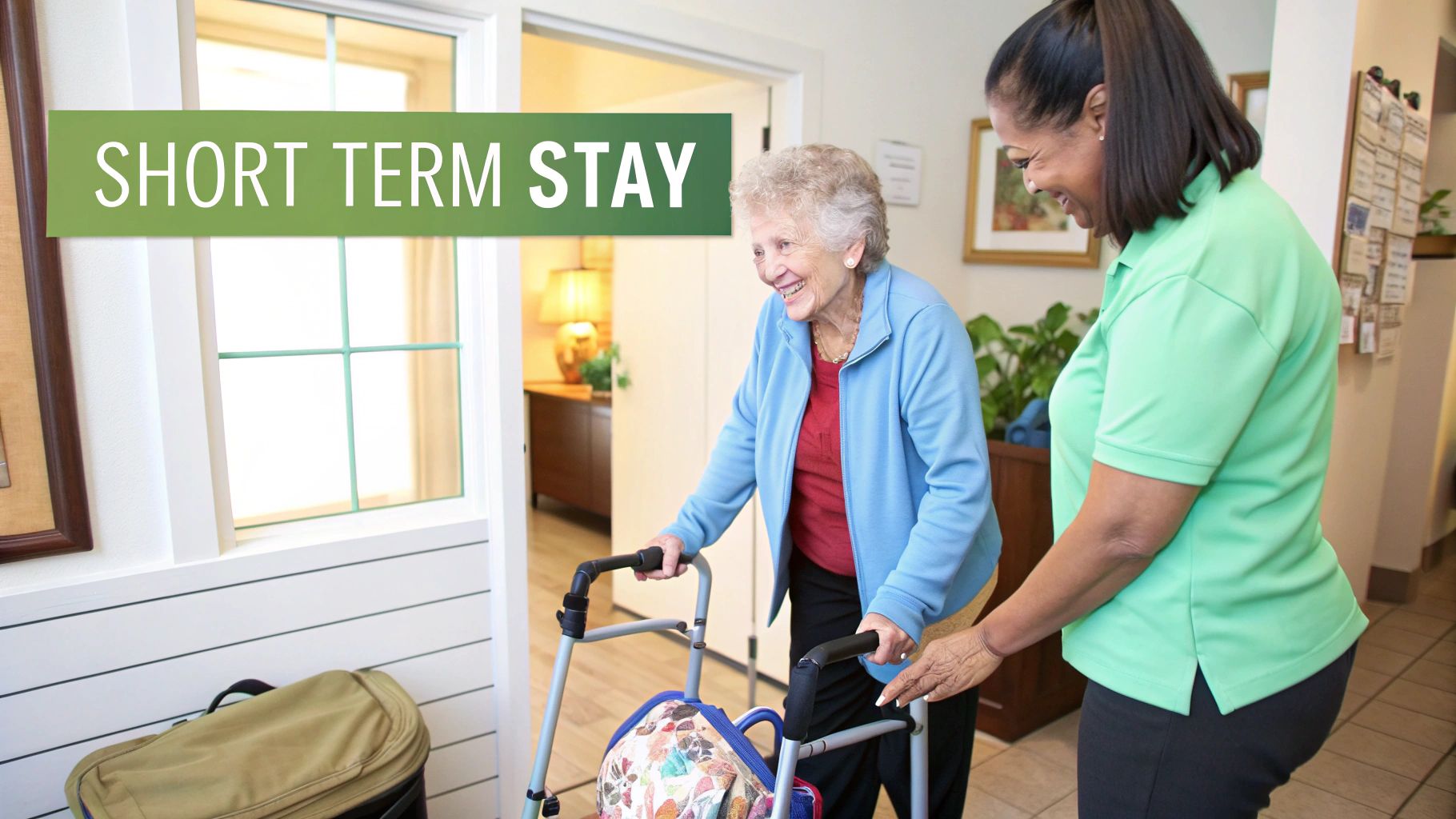
Picture a loved one who’s just had a fall. They’ve been discharged from the hospital, but they’re not quite steady enough on their feet to manage everything at home alone. A temporary stay acts as a safe bridge, offering professional support during that critical recovery period.
Then there’s the family caregiver. If you’re planning a much-needed vacation or just need a chance to catch your breath, a short-term stay ensures your loved one continues to receive compassionate, uninterrupted care. It’s a vital lifeline that provides much-needed relief through dedicated respite care for family caregivers.
Common Scenarios for Temporary Stays
Sometimes, the need is more about connection than medical care. An older adult who is feeling isolated can really blossom with a temporary change of scenery, surrounded by new friends and engaging activities. It's a chance to feel part of a community again.
Think about these common situations where a short-term stay just makes sense:
- Post-Surgery Recovery: A senior needs a helping hand with daily tasks while healing from a procedure.
- Caregiver Vacation: The main caregiver is heading out of town and needs reliable care for their loved one.
- Transitional Care: A senior is between permanent living arrangements and needs a supportive place to land for a bit.
- Trial Period: A family wants to get a real feel for assisted living before making a long-term commitment.
The bottom line is this: a short-term stay is for someone who needs help with daily activities—like bathing, dressing, or medication reminders—but doesn’t need the round-the-clock, intensive medical monitoring you'd find in a nursing home.
Growing Demand for Flexible Care
More and more families are looking for flexible senior living options, and the numbers back it up. In early 2025, U.S. assisted living occupancy hit 85.8%, showing a real preference for this kind of community-based support. The market is growing, too, with North America holding a 35.19% share in 2023. This all points to a clear demand for adaptable solutions like short-term stays.
At communities like Forest Cottage Senior Care, we tailor our services for temporary residents. The goal is always to create a welcoming, homelike atmosphere where every person gets the exact support they need to feel safe, comfortable, and valued during their time with us.
Breaking Down Costs and Payment Options
One of the biggest questions families have is, "How does the billing work?" It's a critical part of the puzzle. Unlike long-term care, which usually involves a monthly bill, short term assisted living is almost always priced on a per diem, or daily, basis. This model is straightforward and gives you the flexibility to pay only for the exact number of days your loved one needs care.
Think of the daily rate as an all-inclusive package, much like a resort stay. It’s not just for the room; it bundles together everything needed for a comfortable and safe experience. This typically covers a private or semi-private room, three daily meals, round-the-clock staff support, help with medications, housekeeping, and access to all of the community’s social events and amenities.
Of course, not every senior needs the same thing, so the final cost can vary. Several factors come into play to make sure the price reflects the actual support your family member requires.
What Influences the Daily Rate
The single biggest factor that shapes the per diem rate is the level of care needed. A senior who is fairly independent but wants the peace of mind that comes with having staff nearby will have a lower daily rate. On the other hand, someone who needs hands-on help with daily activities like bathing, getting dressed, or moving around safely will require a higher level of care, and the rate will reflect that.
Other things that can adjust the price include:
- Room Type: A private suite will naturally cost more than a shared or semi-private room.
- Specialized Care: If a resident needs dedicated memory care or has complex health conditions, the rate might be higher to account for the additional staff training and expertise.
- Length of Stay: Some communities may offer a slightly reduced daily rate for a longer temporary stay, like a full month compared to just a week.
It's essential to get a clear breakdown of what the daily rate includes to avoid any surprise charges. Always ask for a detailed list of included services versus any potential add-ons, like transportation to specialized medical appointments.
How to Pay for a Short Term Stay
When it’s time to figure out payment, families have a few different routes they can take. It’s important to know that Medicare and standard health insurance policies typically do not cover assisted living costs, but other options can provide significant financial help.
The most common method is private pay, where families use personal savings or income to cover the stay. Another fantastic resource is a long-term care insurance policy. Many of these policies specifically include benefits for respite care, so it's always a good idea to review your loved one’s plan to see if it covers a temporary stay. You can get a more detailed look at the financial aspects and typical daily costs by exploring our guide to the per diem cost of respite care.
For veterans and their surviving spouses, VA benefits can be an incredible asset. The Aid and Attendance benefit, in particular, can provide monthly payments that help offset the costs of assisted living. While navigating the application process can feel a bit complicated, communities like Forest Cottage Senior Care are here to help veterans get the benefits they've rightfully earned. We often guide families through the paperwork to make it as smooth as possible.
How to Plan a Short Term Assisted living Stay
Organizing a temporary stay in assisted living doesn't have to be a massive headache. Honestly, with a bit of a roadmap, you can make the whole process smooth and stress-free for everyone involved. Breaking it down into manageable steps is the key to finding the right community and getting your loved one settled in for a comfortable, successful stay.
The very first thing to do is get a real sense of your loved one's specific needs. I'm talking beyond just the basics—think about their personality, how social they are, and what their daily rhythm is like. Do they light up in a busy, social setting, or do they prefer their quiet corners? This initial gut check will be your north star when you start looking at different places.

Researching and Touring Communities
Once you have a clear picture of what you’re looking for, it's time to start researching local options. Focus on communities that explicitly welcome short term assisted living or respite care residents. Make a shortlist and then get those tours on the calendar—there's no substitute for seeing a place with your own eyes.
When you're visiting, really tune into the atmosphere. Does it feel warm and welcoming, or sterile and quiet? Watch how staff members interact with the people who live there. Don't be shy about asking about their staffing ratios, especially for nights and weekends. This is your chance to see if what they say on their glossy brochure matches the day-to-day reality.
When you go on a tour, go in armed with questions. Ask about their emergency plans, what the activities calendar looks like, and how they handle medication management. A truly great community will be open, transparent, and happy to give you clear, reassuring answers.
Gathering Paperwork and Preparing for the Stay
After you've picked a community that feels right, the next phase is gathering all the necessary paperwork. This part is critical for making sure the transition is seamless and that your loved one gets the right care from the moment they walk in the door.
Most communities will need a pretty comprehensive set of documents. You'll typically be asked for:
- Medical Records: This usually means a recent history and physical exam from their main doctor.
- Medication List: A complete, detailed list of every prescription and over-the-counter medication they take.
- Legal Documents: Have copies of the power of attorney for both healthcare and financial matters handy.
- Insurance Information: Any details for policies that might apply, like long-term care insurance.
The need for flexible senior care options like this is absolutely booming. The global assisted living market, which was valued at USD 4.52 billion back in 2025, is expected to jump to USD 8.60 billion by 2034. That's a huge leap, and it shows just how much families worldwide need adaptable solutions like temporary stays.
Finally, help your loved one get ready by packing some familiar comforts from home. Things like family photos, a favorite cozy blanket, or a cherished book can make a world of difference. For a deeper dive into this process, you can check out our guide on how respite care works for more practical tips. And if you're trying to manage their home while they're away, these effective decluttering tips for seniors can be a real lifesaver. Remember, communities like Forest Cottage Senior Care are here to be partners in this journey, ready to offer guidance from your very first phone call to the day of arrival.
Common Questions About Temporary Senior Care
When you’re looking into short term assisted living for a loved one, it’s only natural to have a long list of questions. This kind of care works a little differently than a permanent move, and getting the details straight can give you the confidence you need to move forward.
Let's walk through some of the most common things families ask when they're planning a temporary stay. Getting clear answers is the first step in turning what feels like an overwhelming task into a clear, manageable plan for your family.
How Long Can a Respite Stay Last?
One of the greatest things about short-term care is just how flexible it is. A temporary or respite stay can be as short as a few days or last for several months—it all comes down to what your family needs. There’s really no one-size-fits-all answer.
For instance, if your mom or dad is coming out of the hospital, a stay of two to four weeks might be just the ticket to help them get back on their feet. Or, if you're a caregiver who just needs a well-deserved vacation, a week or two might be perfect.
The bottom line is that the length of the stay is completely customized to your situation. A good community will work with you to figure out a timeline that makes sense, offering that critical support without forcing you into a long-term contract.
This adaptability is what makes it such a practical solution for so many different situations.
What Should We Pack for a Short Stay?
Packing for a temporary stay is all about comfort and familiarity. The community provides the big stuff—the bed, furniture, linens, and meals—so you can focus on the personal items that make a space feel like home.
Here’s a quick checklist to get you started:
- Comfortable Clothing: Pack enough casual, easy-to-wear outfits for the length of the stay. Think comfort first.
- Personal Toiletries: Don't forget their favorite soap, shampoo, lotion, and any other personal items they use daily.
- All Current Medications: This is a big one. Bring all prescription and over-the-counter medications in their original, clearly labeled bottles.
- Important Documents: It’s smart to have copies of essential paperwork handy, like a power of attorney and a list of emergency contacts.
To really help ease the transition, tuck in a few personal touches. A couple of family photos on the nightstand, a favorite book, or a cozy blanket can make a new room feel instantly more welcoming and secure.
Does Short Term Care Include Medical Services?
This is a really important distinction to understand. Short term assisted living is all about personal support and help with daily activities. It’s not the same as the intensive, 24/7 medical treatment you’d find in a hospital or a skilled nursing facility.
While trained staff are on-site around the clock to help manage medications, respond to emergencies, and assist with personal care, the setting is fundamentally a residential one. The focus is on providing a safe, engaging, and supportive place to live.
Communities can often help coordinate with outside healthcare providers, like a visiting physical therapist or a home health nurse. But the core services are geared toward helping with mobility, hygiene, and the routines of daily life, not managing complex medical conditions. Knowing the right questions to ask assisted living facilities about their care capabilities will ensure you find the perfect match.
Are Family and Friends Allowed to Visit?
Absolutely! In fact, we strongly encourage visits from family and friends. Staying connected with loved ones is so important for a person's happiness and well-being, especially during a temporary stay.
Most communities have open visiting hours and love when families join for meals or participate in activities. Regular visits help residents feel supported and grounded, making their entire stay more positive. It also gives you peace of mind when you can see for yourself that your loved one is safe, happy, and thriving.
At Forest Cottage Senior Care, we see families as our partners in care. We invite you to schedule a tour and see how our warm, homelike environment can be the perfect temporary home for your loved one. Visit us online to learn more.