

When you're trying to figure out the right care for a loved one, the terms "skilled nursing" and "assisted living" come up a lot. At first glance, they can sound similar, but the fundamental difference comes down to one thing: the level of medical care involved.
Think of it this way: Assisted living is about supporting a senior's independence with daily activities in a home-like setting. In contrast, a skilled nursing facility is a clinical environment designed to provide intensive, 24/7 medical care for people with serious and complex health needs.
Understanding the Core Differences in Senior Care
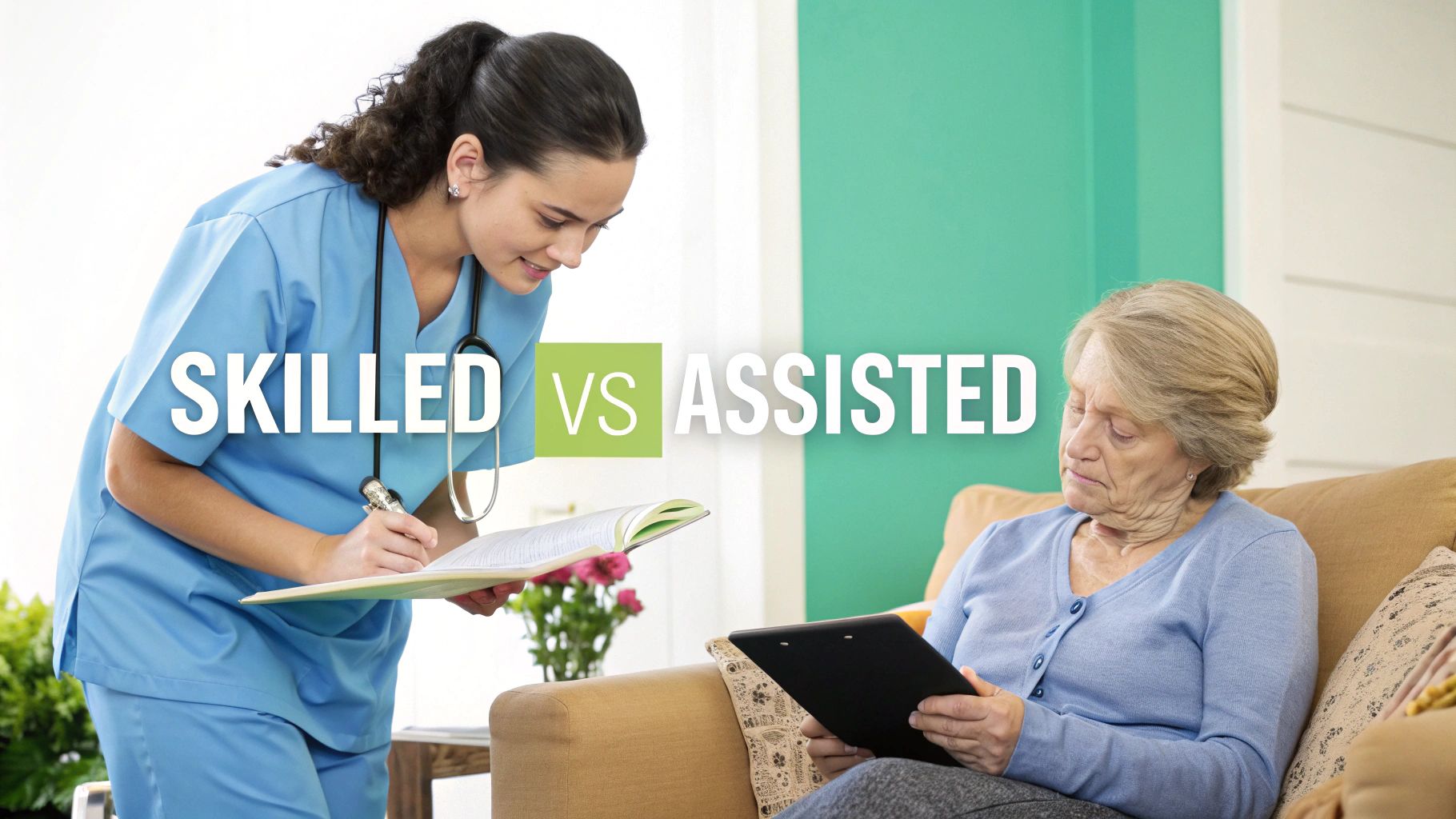
Choosing the right path for a family member is a huge decision, and it’s almost always driven by their specific health requirements. The biggest factor separating these two options is the intensity of care someone needs. One is all about maintaining a lifestyle with some help, while the other is a true medical solution for recovery or managing significant health conditions.
Assisted living is a perfect fit for seniors who are still largely independent but could use a hand with Activities of Daily Living (ADLs). This might include help with things like:
- Bathing and getting dressed
- Preparing meals
- Medication reminders
- Housekeeping and laundry
A skilled nursing facility—what many people still call a nursing home—is very different. It's a medical establishment, plain and simple. It's built for people who need constant medical supervision from licensed professionals like registered nurses (RNs) and physical therapists. This is the right setting for someone recovering from a major surgery, dealing with complex wound care, or managing a severe chronic illness.
While an assisted living community feels like a neighborhood, a skilled nursing facility functions much more like a hospital.
The core distinction is simple: Assisted living provides support for daily living, while skilled nursing delivers direct medical treatment. Think of it as the difference between a supportive home environment and a clinical care setting.
To make things even clearer, the table below gives a quick summary of the essential differences between these two models of senior care. Getting these distinctions straight is the first step toward making a confident and well-informed choice for your family. And if you're leaning toward options that prioritize independence, you might also want to explore the differences between independent living and assisted living to get the full picture.
Quick Comparison Skilled Nursing Vs Assisted Living
| Feature | Assisted Living | Skilled Nursing Facility (SNF) |
|---|---|---|
| Primary Focus | Lifestyle support, social engagement, and assistance with daily activities. | 24/7 medical care, rehabilitation, and management of complex health conditions. |
| Living Environment | Residential, often apartment-style with private rooms and communal areas. | Clinical, similar to a hospital with rooms designed for medical monitoring. |
| Typical Resident | Seniors who need help with ADLs but are otherwise medically stable. | Individuals recovering from surgery, stroke, or illness, or with chronic conditions. |
| Staffing Model | Caregivers, activity coordinators, and access to a nurse. | Registered nurses, licensed practical nurses, CNAs, and therapists on-site 24/7. |
| Length of Stay | Typically long-term, serving as a permanent residence. | Can be short-term for rehabilitation or long-term for ongoing medical needs. |
A Closer Look at Assisted Living Communities

While skilled nursing facilities are all about intensive medical treatment, assisted living communities operate on a completely different philosophy. They are built to champion a resident’s independence while offering a reliable safety net for daily needs. Think of it as the perfect bridge between living completely on your own and requiring round-the-clock medical supervision.
Assisted living is a great fit for seniors who are still largely self-sufficient but could use a consistent hand with Activities of Daily Living (ADLs). The goal isn't to take over, but to provide just enough support to make life safer, simpler, and more fulfilling. It’s a solution that prioritizes lifestyle and well-being.
This has become an increasingly popular choice for families across the country. In fact, over 800,000 Americans now call an assisted living community home, finding that it offers the ideal middle ground. The average stay is about 22 months, which shows its role as a supportive environment that can adapt as needs change over time. For families here in Willis, Texas, places like Forest Cottage Senior Care provide this exact blend of personalized help, social engagement, and peace of mind.
The Core of Assisted Living Support
The support system in an assisted living community is both personal and comprehensive, designed to touch on all aspects of daily life. The care is less about medical procedures and much more about maintaining a high quality of life with practical, everyday help.
Key areas of support usually include:
- Personal Care Assistance: Gentle, respectful help with tasks like bathing, getting dressed, grooming, and moving around safely.
- Medication Management: A critical service that makes sure residents take the correct medications at the right times, preventing dangerous mix-ups.
- Nutritious Dining: Well-balanced, chef-prepared meals served in a social dining room, which also helps fight the isolation that often comes with eating alone.
- Housekeeping and Maintenance: Taking care of laundry, cleaning, and home repairs so residents can save their energy for things they truly enjoy.
This structure allows seniors to focus on hobbies, family, and friendships rather than getting bogged down by the burdensome chores of home upkeep. It's a system designed to empower, not restrict.
Fostering Independence in a Community Setting
One of the defining features of assisted living is its focus on community and social life. It’s a world away from the potential isolation of living at home or the clinical routine of a skilled nursing facility. These communities are intentionally designed to be vibrant social hubs.
Residents typically have their own private or semi-private apartments, giving them a sense of personal space and home. At the same time, they have immediate access to shared common areas, planned activities, and group outings. This setup naturally encourages friendships and helps reduce the risks of senior isolation and depression.
The true value of assisted living lies in its balance. It offers the privacy and dignity of one's own home combined with the security of 24/7 staff and the warmth of a connected community.
For instance, a typical day might start with a morning exercise class, followed by lunch with friends, an afternoon card game, and an evening movie. Transportation services make it easy for residents to get to doctor's appointments or go shopping without having to rely on family. To get a better idea of the specific offerings, check out our guide that details what services are included in assisted living. This unique combination of autonomy and support is what makes the assisted living model so appealing. It’s not just a place to live; it’s a place to thrive.
Defining Skilled Nursing Facilities and Their Role
When we talk about senior care, it’s easy to get terms mixed up. But the difference between assisted living and a skilled nursing facility (SNF) is huge. While assisted living is all about lifestyle and daily support, a skilled nursing facility—what most of us call a nursing home—is a medical-first environment.
This is the most important thing to remember in the skilled nursing vs assisted living debate. An SNF is built for people whose health problems are just too complex for home or even assisted living. They need 24/7 care from licensed medical professionals.
Think of it this way: an SNF isn't a residential community that happens to offer some healthcare. It's a clinical setting designed from the ground up to deliver intensive, around-the-clock medical treatment. The team is led by registered nurses (RNs), licensed practical nurses (LPNs), and certified nursing assistants (CNAs), with doctors often on-site or on call. To keep everything organized, many modern SNFs rely on specialized EMR systems like Point Click Care to manage the complex web of patient records and care plans.
Who Needs Skilled Nursing Care
So, when does someone actually need this level of care? A person usually moves to a skilled nursing facility when their needs go far beyond simple help with daily tasks. It’s for individuals with serious, often chronic health issues who require constant medical supervision.
Here are a few common situations that lead to a stay in an SNF:
- Post-Hospitalization Recovery: After a major surgery, a heart attack, or a stroke, patients are often too weak to go straight home. They need intensive rehab to get back on their feet.
- Complex Wound Care: Serious wounds, like surgical incisions or pressure sores, demand specialized nursing skills to prevent infection and help them heal properly.
- Intravenous (IV) Therapy: Giving medications, fluids, or nutrition through an IV line is a medical procedure that has to be handled by licensed staff.
- Severe Chronic Illness Management: Conditions like advanced congestive heart failure, COPD, or late-stage Parkinson's disease often require a level of medical oversight that can only be provided in a clinical setting.
This is fundamentally different from what you’d find in assisted living. If you want to dig deeper into what makes these facilities unique, check out our detailed article explaining what a nursing home is.
Skilled nursing facilities are a cornerstone of our national healthcare system. Right now, there are about 14,742 nursing facilities certified by CMS, caring for around 1.24 million residents. With occupancy rates now back up to 84.5%, the industry is growing. The government recognizes this, too—the Centers for Medicare & Medicaid Services recently boosted Medicare Part A payments by 4.2%, adding about $1.4 billion in funding. The medical focus is clear: residents in these facilities get an average of 3.85 hours of daily nursing care.
Short-Term Rehabilitation Vs Long-Term Care
It’s also important for families to know that skilled nursing serves two very different purposes, which can sometimes be a point of confusion.
1. Short-Term Rehabilitation: A lot of people are in an SNF for a short, temporary stay, usually right after being in the hospital. The main goal here is rehab—physical, occupational, and speech therapy—to help them regain their strength and abilities so they can return home safely. Medicare often covers these short-term stays for a limited time.
2. Long-Term Custodial Care: For others with severe and persistent medical conditions, an SNF becomes their permanent home. This is for residents who need ongoing medical supervision and help with most, if not all, of their daily activities for the rest of their lives.
At its heart, a skilled nursing facility is either a bridge from the hospital back to home, or it's a permanent medical home for people with the most serious health needs. It's a place for healing and stabilization.
Comparing Care Models, Staff, Environment, and Daily Life
Knowing the big-picture differences between skilled nursing and assisted living is a great start. But to really get it, you have to peel back the layers and see how things work day-to-day. The true contrast in the skilled nursing vs assisted living debate shows up when you look closely at the intensity of medical care, the staff's expertise, the physical setting, and how much personal freedom a resident really has.
These are the factors that truly shape what life is like. One model is built from the ground up for medical recovery and stabilization. The other is designed to help someone keep living an independent, social, and active life.
Medical Care Intensity and Supervision
The single biggest difference is the level of medical care. A skilled nursing facility is, for all intents and purposes, a clinical care center. Medical services aren't just an add-on; they are the entire reason it exists.
This means residents get 24/7 medical supervision from licensed nurses who can handle complex treatments. Think of services like:
- Post-surgery wound care and close monitoring.
- Intravenous (IV) therapy for medications or fluids.
- Managing feeding tubes and ventilators.
- Intensive, daily physical, occupational, and speech therapy sessions.
Assisted living, on the other hand, provides health monitoring and support, not constant medical treatment. The focus is on helping residents manage their own health and wellness within a supportive, home-like setting. This might include medication reminders, helping coordinate doctor's appointments, and having staff ready to jump in if there's an emergency.
Key Takeaway: Skilled nursing is all about constant, hands-on medical care delivered by licensed nurses. Assisted living is about health oversight and assistance, giving residents a strong safety net while they manage their own health.
Staffing Expertise and Structure
It's no surprise that the staffing in these two environments is completely different, reflecting their unique purposes. A skilled nursing facility is legally required to have licensed nursing staff on-site around the clock.
This team usually includes:
- Registered Nurses (RNs), who create and manage complex care plans.
- Licensed Practical Nurses (LPNs), who are hands-on with medications and treatments.
- Certified Nursing Assistants (CNAs), who help with direct personal care under a nurse's watch.
Assisted living communities are primarily staffed by trained caregivers and resident assistants. While a nurse is often on-site or on-call to oversee wellness programs and medications, the day-to-day support comes from a team that's focused on personal care and making life more enjoyable. Looking into the different career paths within health and social care can give you a better sense of the expertise you'll find in various senior living settings.
Living Environment and Atmosphere
The physical space says it all. Skilled nursing facilities are designed for clinical efficiency and safety, and they often feel like a hospital wing. Rooms can be private or shared and come with medical gear like adjustable beds and emergency call buttons. The common areas are functional, built to accommodate medical staff and equipment.
Assisted living communities are intentionally built to feel like home. Residents typically have their own private or semi-private apartments, often with a small kitchenette where they can keep snacks and a coffee maker. The whole vibe is residential and community-oriented, with cozy common areas like dining rooms, lounges, libraries, and garden patios made for socializing.
This graphic really breaks down the core of a skilled nursing facility, driving home its medical focus.

As you can see, the entire model is built on continuous medical care, a team of clinical pros, and a heavy emphasis on rehabilitation.
Resident Autonomy and Daily Life
That difference in environment directly shapes a resident’s independence. In a skilled nursing facility, the day is largely structured around medical needs. Schedules for meals, medications, therapy, and doctor's rounds are set by the clinical staff to make sure care is delivered properly.
In assisted living, the whole point is choice and independence. Residents have much more control over their own schedules. They get to decide when they wake up, which activities they want to join, when friends and family can visit, and how they spend their time. The support services are there to fit into the resident's life, not the other way around.
The approach is centered on helping with Activities of Daily Living (ADLs)—the fundamental tasks of taking care of oneself. If you're not familiar with the term, our guide explains in detail what Activities of Daily Living are and why they’re so critical for figuring out care needs. The goal in assisted living is to take the burdensome tasks off a resident's plate, freeing them up to live a more engaged and fulfilling life on their own terms.
Navigating the Costs and Payment Options
Let’s be honest—figuring out the financial side of senior care is often the most stressful part of the journey. The cost structures for skilled nursing and assisted living are worlds apart because they serve completely different needs. Getting a firm grip on these financial realities is the key to making a plan you can feel confident about.
When you’re comparing the two, it's less about the daily rate and more about who foots the bill. The high price tag of a skilled nursing facility is often covered by government medical programs, whereas assisted living is typically paid for with personal funds. This is a critical distinction for families here in Texas and everywhere else.
How Assisted Living Is Funded
Assisted living is generally seen as a residential choice that focuses on "custodial care" rather than an urgent medical need. Because of this, the funding usually comes from personal sources, paying for a supportive lifestyle instead of clinical treatment.
Here are the most common ways families pay for assisted living:
- Private Pay: The vast majority of residents use personal funds. This can come from savings, retirement accounts, pensions, or the money from selling a home.
- Long-Term Care Insurance: If your loved one has a policy designed to cover senior care, it can be a fantastic resource. Just know that coverage details vary a lot, so you’ll want to review the policy closely to see what it includes.
- Veterans' Benefits: Programs like the VA Aid and Attendance benefit can offer a monthly stipend to help qualifying veterans and their spouses cover assisted living costs.
It's a common misconception, but Medicare does not pay for the room and board part of assisted living. It might cover some specific health services a resident receives while living there, but it won't touch the daily cost of living in the community itself.
The Bottom Line: Think of assisted living as an investment in a higher quality of life, independence, and daily support. Families should plan for it as a private expense, looking at all personal assets and any insurance benefits they might have.
Paying for Skilled Nursing Care
Skilled nursing facilities are deeply integrated into the medical system, and how you pay for them reflects that. Funding is almost always tied to specific health events or strict financial qualifications, making it a totally different ballgame than assisted living.
This is how skilled nursing is usually paid for:
1. Medicare for Short-Term Rehabilitation: After a qualifying hospital stay (at least three days), Medicare Part A can cover up to 100 days of care in a skilled nursing facility. The entire point is rehabilitation—helping someone recover from a major event like surgery, an injury, or a stroke. The coverage is tiered: the first 20 days are often fully covered, but you'll have a hefty daily copay for days 21-100.
2. Medicaid for Long-Term Care: This is the big one for long-term stays. When someone’s medical needs are ongoing and they’ve used up their personal funds, Medicaid often steps in. To qualify, you have to meet very strict income and asset limits. In fact, Medicaid is the single largest payer for nursing home care in the country.
Because of the incredibly high costs, it's very rare for someone to pay out-of-pocket for a long stay in a skilled nursing facility. The typical financial path involves "spending down" personal assets until the individual becomes eligible for Medicaid. If you want to dive deeper into this, our article exploring whether Medicaid pays for assisted living and similar care models has some great information.
To help put it all in perspective, the table below breaks down the average costs and common payment methods for both options right here in Texas. It should give you a more tangible financial baseline to work with.
Cost and Payment Source Comparison
| Factor | Assisted Living (Texas Average) | Skilled Nursing (Texas Average) |
|---|---|---|
| Monthly Cost Range | $3,500 – $5,500 | $5,500 – $8,000+ |
| Primary Payment Source | Private Pay (Savings, Assets) | Medicare (short-term), Medicaid (long-term) |
| Long-Term Care Insurance | Commonly used and accepted | Can be used, but less common than Medicaid |
| Government Funding Focus | Veterans' Benefits (Aid & Attendance) | Medicare (Post-Hospital Rehab), Medicaid |
Seeing the numbers side-by-side makes the financial differences crystal clear. Assisted living relies on personal planning and resources, while skilled nursing is funded primarily through medical insurance programs once certain criteria are met.
How to Make the Right Choice for Your Loved One
Figuring out the right path between skilled nursing and assisted living really comes down to what your loved one needs at this moment. This isn't just about finding a new place to live; it’s about aligning the right kind of support with their current health, safety, and personal preferences. To get from comparing options to making a confident decision, you need a frank, honest look at their daily life.
The biggest difference between skilled nursing and assisted living is medical necessity. One is designed to support a person's independence with daily routines, while the other provides intensive, around-the-clock medical care. Walking through a couple of real-world scenarios usually makes the best choice pretty clear.
Scenario-Based Decision Making
Let's look at two very common situations families find themselves in. These examples show how different needs lead to completely different care solutions.
Situation 1: The Social and Independent Senior
Your mom or dad is generally healthy and gets around well, but living alone is starting to take a toll. Maybe they’re forgetting medications here and there, skipping meals because cooking feels like too much work, or just feeling lonely. They don’t have serious medical issues that need a nurse every day.
- Recommendation: Assisted living is a perfect match. It tackles the main concerns—isolation, meal prep, and medication reminders—while letting them stay as independent as possible. A community like Forest Cottage Senior Care offers that ideal blend of a private, home-like feel with the peace of mind that comes from having staff available 24/7 and plenty of social activities.
Situation 2: The Medically Complex Individual
Your loved one is coming out of the hospital after something serious, like a stroke or a hip replacement. They need daily physical therapy to get their strength back, have complicated wounds that require professional attention, or need a licensed nurse to manage their vitals and medications closely. Their condition just isn't stable enough for them to be on their own.
- Recommendation: A skilled nursing facility (SNF) is the only appropriate choice here. This environment is built from the ground up for medical recovery and managing serious health conditions. The whole point is rehabilitation and getting their health stable, which demands the expertise of RNs, LPNs, and therapists.
The most important question to ask is: "Is the primary need for lifestyle support or for direct medical treatment?" Your answer will guide you to the right type of care community.
An Assessment Checklist for Your Family
Before you start touring any communities, sit down as a family and go through these key questions. It's a simple way to build a clear picture of what your loved one truly needs.
- Mobility and Safety: Can they walk around their home safely by themselves? Have they fallen recently?
- Daily Activities: How much help do they need with things like bathing, getting dressed, personal grooming, or using the bathroom?
- Medical Needs: Do they need wound care, IVs, or injections? Is their medical condition stable, or does it change from day to day?
- Cognitive Health: Is memory loss starting to affect their safety or ability to manage their daily routine?
- Social Well-being: Do they seem lonely or depressed? Do they have regular chances to connect with other people?
Answering these questions honestly will give you the clarity you need to pick a path that genuinely improves your loved one's quality of life—and gives everyone in the family peace of mind.
Answering Your Top Questions
When you're trying to choose between skilled nursing and assisted living, it's natural for questions to pop up. Let's tackle some of the most common concerns we hear from families navigating this important decision.
Can a Resident Move from Assisted Living to Skilled Nursing?
Absolutely. This is a very common and natural progression in senior care. Reputable assisted living communities anticipate this and work hand-in-hand with families and doctors to make the transition to a skilled nursing facility (SNF) as seamless as possible when medical needs change, ensuring there's no gap in care.
What if a Loved One’s Needs Change in Assisted Living?
Good assisted living communities are built to be flexible. Care plans aren't set in stone; they're living documents that are reviewed regularly and updated as a resident's needs evolve. Someone might start out needing just a little help but later require more hands-on support with mobility or personal care, all while staying in a comfortable, familiar setting.
Does Medicare Pay for Assisted Living?
This is a big point of confusion for many families. The short answer is no. Medicare does not cover the room and board costs of assisted living, because it's seen as non-medical, custodial care. Typically, assisted living is paid for with private funds, long-term care insurance, or specific VA benefits, but not through federal health insurance programs.
At Forest Cottage Senior Care, we know that every family's journey is different. We focus on providing personalized assisted living that grows and changes with your loved one, creating a home that’s both supportive and full of life. Schedule your personal tour today to see what makes us different.