
Specialized transportation services are a game-changer for seniors. These programs are designed to help older adults get around safely and reliably, whether it's for a doctor's visit, a trip to the grocery store, or a social outing. Think of them as more than just a ride—they’re a crucial link to the community, often using accessible vehicles and drivers who understand the needs of their passengers. For millions of seniors who no longer drive, these services are an absolute lifeline.
Why Senior Transportation Is a Lifeline, Not a Luxury
For most of us, handing over the car keys for good is a tough moment. It can feel like a major loss of freedom. All of a sudden, simple things like running to the pharmacy or meeting friends for lunch become huge hurdles. This isn't just a matter of convenience; it can quickly lead to loneliness, missed medical appointments, and a real drop in quality of life.
This is exactly where reliable transportation services for seniors step in. They're not like your standard rideshare or the city bus. These services are built from the ground up with older adults in mind. They’re a foundational piece of support that helps seniors live with dignity and stay connected to the world around them.
More Than Just a Ride
It’s easy to think of senior transport as just another taxi service, but that really misses the bigger picture. It's a key part of what makes a community supportive, promoting both health and happiness. The benefits go way beyond just getting from point A to point B.
- Improved Health Outcomes: Getting to the doctor for regular check-ups, seeing specialists, or attending physical therapy is non-negotiable for good health.
- Reduced Social Isolation: Transportation is what makes it possible for seniors to join in community events, visit family and friends, and keep those vital social connections alive. This is so important for mental and emotional health.
- Maintained Independence: Being able to manage your own errands and appointments without having to depend on family creates a powerful sense of self-reliance and worth.
This isn't just a local issue; it's a global one. The World Health Organization estimates that the number of people over the age of 60 will hit 2.1 billion by 2050. That’s a massive demographic shift, and it shines a spotlight on just how critical accessible transportation solutions are becoming.
At its core, senior transportation is about connection. It connects people to their doctors, their friends, and the activities that bring them joy. For families looking for ways to keep a loved one engaged, exploring options like an adult day care program can solve both social and transportation needs at once.
Navigating Your Senior Transportation Options
Trying to choose from the wide array of transportation services for seniors can feel like trying to read a map with no legend. There are so many options out there, each designed for different needs, schedules, and levels of independence. Figuring out these distinctions is the very first step toward finding a solution that’s not just reliable, but comfortable too.
The trick is to match the service to the specific need. Are we talking about a critical doctor's appointment, a weekly grocery run, or a social visit with friends? Each of these situations points toward a different type of ride, from medically-equipped vans to a friendly volunteer driver.
To help clear things up, this little decision tree is a simple place to start if driving has become a challenge.
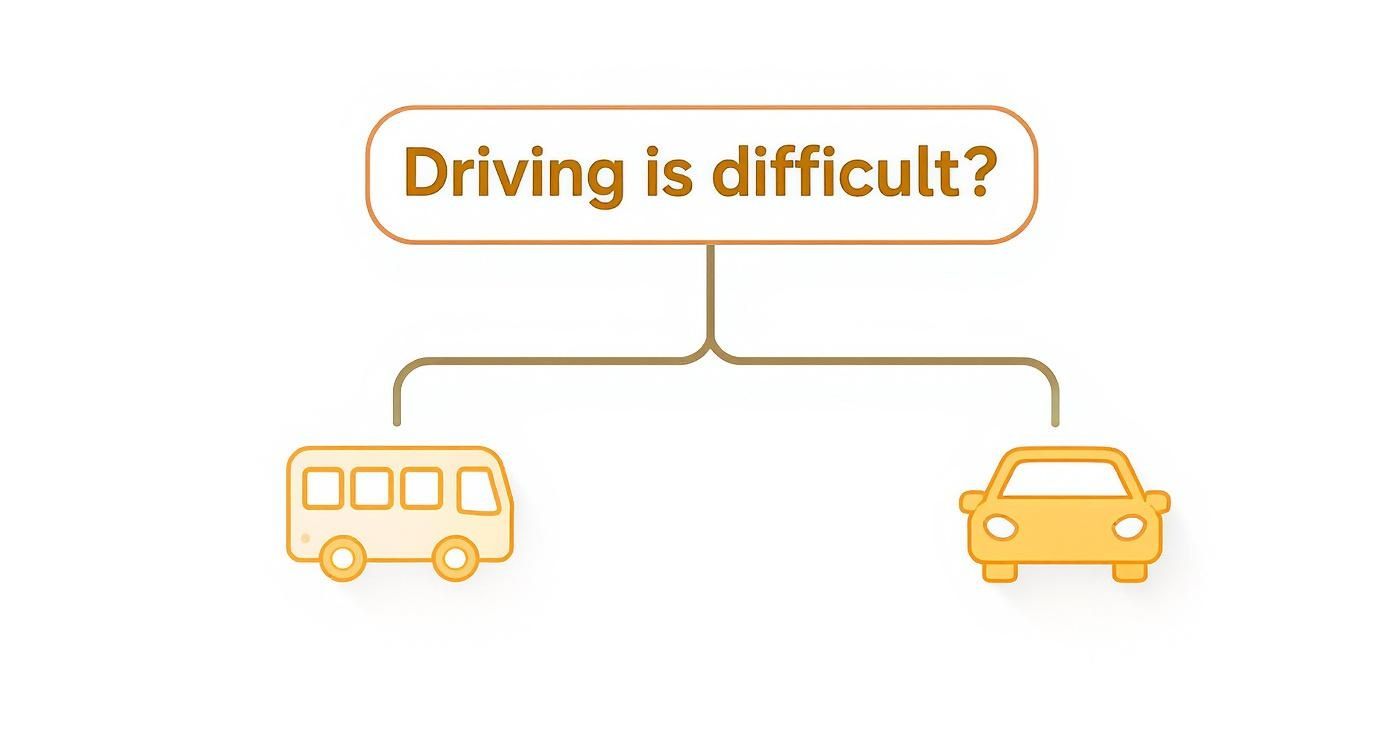
This just goes to show that once driving isn’t the best option anymore, a whole new world of specialized services opens up to help you or your loved one stay mobile and connected.
Medical vs. Non-Medical Transport
The biggest divide to understand is between medical and non-medical transportation. Think of it like the difference between an ambulance and a taxi—both get you somewhere, but their purpose and what they can do are worlds apart.
Non-Emergency Medical Transportation (NEMT) is a specialized service built exclusively for getting to and from healthcare appointments. This isn't for emergencies (that's what 911 is for), but it's perfect for scheduled doctor visits, physical therapy sessions, or trips to the pharmacy. The vehicles are often wheelchair-accessible, and the drivers usually have some training to help passengers who have trouble getting around.
On the flip side, non-medical transport is all about quality of life. These services help seniors stay active, run errands, and remain a part of their communities. Here’s a quick look at the most common types:
- Volunteer Driver Programs: You'll often find these run by non-profits or local faith groups. They're wonderful programs that connect seniors with volunteer drivers for personal trips like errands or visiting friends.
- Public Paratransit Services: These are typically shared-ride services offered by public transit agencies. They’re a lifeline for people who can't use the regular bus or rail system because of a disability.
- Private Shuttles: Many senior living communities have their own shuttle services for residents. They offer scheduled trips for shopping, going out to eat, and hitting local events, which is a fantastic perk.
To help you see the differences at a glance, here’s a simple breakdown of the main options.
Comparison of Senior Transportation Options
| Service Type | Best For | Typical Cost | Level of Assistance |
|---|---|---|---|
| NEMT | Scheduled medical appointments, physical therapy, dialysis, pharmacy trips. | Can be covered by insurance; private pay. | High; drivers trained to assist with mobility devices, door-to-door service. |
| Public Paratransit | General travel for those with disabilities who cannot use fixed-route public transit. | Low-cost fares, often subsidized. | Varies; typically curb-to-curb service. |
| Volunteer Driver Programs | Social visits, errands, non-medical appointments when scheduling flexibility is possible. | Often free or by donation. | Varies by program; usually friendly and supportive, but not medically trained. |
| Community Shuttles | Scheduled group outings for shopping, dining, and local events within a senior living community. | Often included in monthly fees. | Moderate; drivers can assist with boarding, but not extensive personal care. |
| Senior Rideshares | On-demand trips for appointments, errands, or social outings, with drivers trained to assist older adults. | Similar to standard rideshare apps. | Moderate; drivers offer more assistance than typical rideshare services. |
As you can see, the right choice really depends on the purpose of the trip, the budget, and how much hands-on help is needed.
The real goal of non-medical transport is to prevent isolation and support independence. It’s about making sure seniors can keep doing the things that bring them joy and fulfillment.
Modern and Community-Based Solutions
The world of senior transportation is always changing, and new options are popping up to fill specific gaps. For example, some rideshare services now cater specifically to older adults, offering the convenience of an app but with drivers trained to assist seniors. Some even let you book rides for a family member.
Many forward-thinking assisted living communities have recognized just how central transportation is to a resident's well-being. They often provide complimentary transport not just as a nice bonus, but as a core part of their service. For instance, some communities offer comprehensive assisted living services that include coordinating and providing rides for both medical and personal needs, which takes a huge logistical burden off of families.
This kind of integrated approach ensures residents stay connected to their community and their doctors without the stress of arranging every single trip. Finding the right mix of services is the key to a smooth and safe journey, every time.
How to Pay for Senior Transportation Services
Figuring out how to cover the costs of transportation services for seniors is a big step for many families. The good news is there are several paths you can take, from using personal funds to tapping into public programs, all designed to keep essential rides within reach.
The most straightforward route is private pay, where you cover the costs directly. This gives you the most freedom, letting you pick any service you like without worrying about eligibility rules. Some families also find that their long-term care insurance policies include benefits for trips to medical appointments or other necessary outings. It's always a good idea to pull out your policy and review the specifics to see exactly what's covered.
Understanding Public Funding Options
Beyond your own pocketbook, several government and community programs are out there to lighten the financial load. These programs are often laser-focused on making sure seniors can get to critical healthcare appointments.
It's a staggering statistic, but nearly 4 million people in the U.S. miss or delay medical care each year simply because they don't have a ride. This is a huge roadblock to consistent health management, and government initiatives are working hard to close that gap. You can discover more insights about these industry trends on nemtrepreneur.com.
Here are a few of the key programs to look into:
- Medicare Advantage (Part C): Many of these private health plans are now offering supplemental benefits that can include rides to the doctor. Coverage can vary a lot from plan to plan, so you'll need to check the details of your specific policy.
- Medicaid: This is one of the biggest sources of funding for Non-Emergency Medical Transportation (NEMT). State Medicaid programs will typically cover rides to and from medical appointments for people who qualify.
- Older Americans Act (OAA): This federal act provides funds for all sorts of local senior services, including transportation. These are usually run through your local Area Agency on Aging.
Trying to figure out the eligibility for these programs can feel a bit like putting together a puzzle, especially when other care needs are involved. It’s important to see the whole picture. For instance, if you're looking at broader care solutions, our guide on whether assisted living is covered by Medicaid offers some really helpful related information.
Tapping into Community Resources
Don't overlook the incredible resources right in your own backyard. Many non-profits, churches, synagogues, and senior centers run their own volunteer driver programs or offer subsidized rides.
These are fantastic options for non-medical trips—think grocery shopping, social events, or just visiting friends. These outings are just as vital for a senior’s happiness and overall well-being.
To find these local gems, a great first step is to contact your Area Agency on Aging or simply dial 2-1-1. They act as a connector, pointing you to a full directory of resources available in your community and helping you piece together a transportation plan that is both reliable and affordable.
Key Safety and Accessibility Features to Demand
When you’re trusting a company with a loved one’s transportation, peace of mind is everything. It’s not just about getting from point A to point B; the journey itself has to be safe, comfortable, and accommodating. True quality in transportation services for seniors is hidden in the details—the specific features and strict protocols that put a passenger's well-being first.
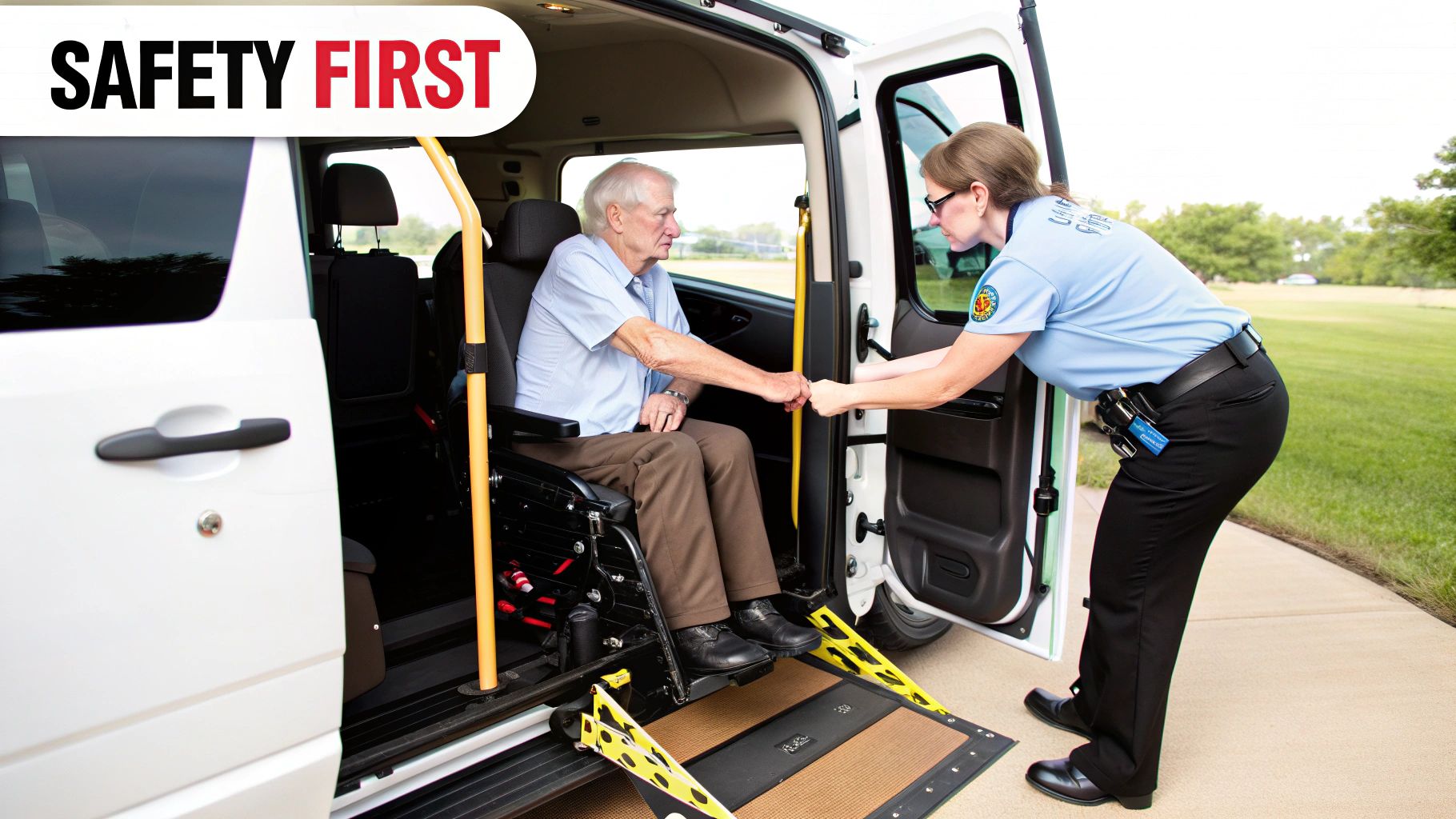
This means you have to look past a clean car and a smiling driver. The best providers invest heavily in their vehicles and their staff to create a secure environment from the moment of pickup to the final drop-off. Knowing what to look for empowers you to ask the right questions and choose a service based on real safety, not just convenience.
The Vehicle Accessibility Checklist
The vehicle is the most concrete part of the service, and it needs to be properly equipped for a wide range of mobility needs. A standard sedan just won’t cut it for many older adults.
When you’re vetting a provider, make sure to ask about these non-negotiable features:
- Wheelchair-Accessible Vehicles (WAVs): The vehicle must have a hydraulic lift or a sturdy, low-angle ramp. You'll also want to confirm they use a proper Q'STRAINT or similar four-point securement system that locks a wheelchair safely in place for the ride.
- Easy Entry and Exit: For passengers who are still walking, simple things like low steps, well-placed grab bars, and non-slip flooring can make all the difference in preventing a fall.
- Regular Maintenance Logs: A reputable service should be completely transparent about its vehicle upkeep. Don't be shy about asking to see records that confirm regular safety checks, brake inspections, and tire rotations.
These physical features are the bedrock of a safe trip, ensuring that passengers using mobility aids are just as secure as anyone else.
Driver Qualifications and Training
A great vehicle is only half the story; the person behind the wheel is just as critical. A driver for seniors is so much more than a chauffeur—they're a temporary caregiver and your first line of defense if something goes wrong.
The level of assistance a driver provides can define the entire experience. It's the difference between a stressful trip and a supportive one. Some services offer "curb-to-curb" help, while more attentive "door-to-door" services ensure the passenger gets safely from their front door into the vehicle and to the entrance of their destination.
Top-tier providers make sure their drivers are thoroughly vetted and continuously trained. Insist on a service whose drivers have passed:
- Comprehensive Background Checks: This should cover both criminal records and their driving history. No exceptions.
- Specialized Training: Look for certifications in CPR and first aid. Sensitivity training for assisting older adults and people with disabilities is also a huge plus.
- Clear Drug-Screening Policies: A zero-tolerance policy for any substance use is absolutely non-negotiable.
This level of professional dedication is often a core value in high-quality senior living communities. For example, the complimentary transportation and other amenities at Forest Cottage Senior Care are handled by staff who genuinely understand and respect residents' needs, weaving safety into every part of their service.
Your Checklist for Choosing the Right Provider
Once you have a good handle on safety and accessibility, you can start vetting potential transportation services for seniors with real confidence. Picking the right provider is a lot like hiring any professional you’d trust with your family—it all comes down to asking the right questions to make sure their standards line up with yours. Doing this homework up front protects your loved one and gives you that all-important peace of mind.
To make it easier, we’ve broken down the key questions into four core areas. Think of this as your playbook for finding a reliable transportation partner for your family.

Driver Training and Qualifications
The person behind the wheel is the most critical part of the service. Their training and professionalism directly affect your loved one's safety and comfort. Don't be shy about digging into how they hire and train their people.
- What are your driver screening requirements? A solid answer should include things like comprehensive criminal background checks and a close look at their driving record.
- What specific training do drivers receive for assisting seniors? You want to hear about training in CPR, first aid, senior sensitivity, and how to properly secure mobility devices like walkers and wheelchairs.
- How do you handle passenger assistance? Get clarity on whether they offer door-to-door or just curb-to-curb service. A good provider will have very clear definitions for what each level of assistance actually means.
Vehicle Safety and Accessibility
The vehicle itself has to be safe, clean, and equipped for the job. While an in-person look is always best, you can learn a lot by asking some direct questions over the phone.
- Are your vehicles equipped with ramps or lifts? Make sure they meet ADA (Americans with Disabilities Act) standards for safety and reliability.
- How often are your vehicles inspected and maintained? Reputable companies have a strict, documented maintenance schedule that they should be happy to share with you.
- What in-vehicle safety features are standard? Ask about essentials like grab bars, proper seatbelts for all passengers (including those in wheelchairs), and first-aid kits.
Service Logistics and Reliability
A transportation service is only as good as its ability to show up on time. Understanding their policies on the day-to-day stuff will help you avoid frustrating surprises and make sure everything runs smoothly.
A provider’s policies on cancellations, delays, and communication are a direct reflection of their customer service philosophy. A company that prioritizes transparency and has clear contingency plans is one you can trust when things don’t go exactly as planned.
Ask them about how things really work:
- What is your booking and cancellation policy? Find out how much notice you need to give for a ride and if there are any fees for changing or canceling.
- How do you communicate with passengers and families? Ask about ride reminders, how they notify you of delays, and whether they confirm a successful drop-off.
- What is your protocol for unexpected delays or emergencies? A solid plan for traffic jams, vehicle breakdowns, or a passenger medical issue is an absolute must.
Cost and Billing Transparency
Last but not least, you need a crystal-clear picture of all the costs involved. Hidden fees can quickly turn an affordable service into a financial headache.
- Can you provide a detailed breakdown of all charges? Ask for a complete fee schedule, including base rates, mileage charges, and any extra costs for things like wait time or special assistance.
- How is billing handled? Find out if they bill per ride, have monthly packages, or can bill insurance providers directly.
- Do you assist with insurance or program reimbursement paperwork? Some providers will help families with the claims process for services that might be covered by Medicare Advantage or Medicaid.
This checklist is a fantastic tool, but it's also smart to think about how transportation fits into the bigger picture of care. Many families discover that looking for the right elder care facilities near them solves several problems at once, since many top-notch communities include transportation and coordination as part of their services. By asking these questions, you can choose a provider with total confidence.
Frequently Asked Questions About Senior Transportation
When you start looking into transportation services for seniors, a lot of practical questions pop up. Getting clear answers from the get-go helps you plan things out and makes sure every ride is as smooth and stress-free as possible. Let's walk through some of the most common things families ask when setting up rides for a loved one.
Figuring these details out ahead of time saves you from any last-minute scrambling and builds real confidence in the service you choose.
Booking and Scheduling Your Ride
Timing is a big deal when it comes to booking a ride. How much notice you need to give can be wildly different from one service to another, so it's smart to ask about booking windows right away.
For instance, Non-Emergency Medical Transportation (NEMT) often requires 48 to 72 hours' notice, especially if you're going through an insurance provider. They need that buffer to verify eligibility and line up the right vehicle and driver. On the other hand, a local volunteer program might ask for a full week's notice just to match a senior with a driver who's available. Private car services tend to be more flexible and might even handle same-day requests, though you'll usually pay a bit more for that convenience.
Always, always confirm the provider’s specific booking and cancellation policies. It'll save you a lot of headaches later.
Passengers and Companionship
Can a family member, caregiver, or a friend come along for the ride? This is a huge question, especially for medical appointments where having an extra set of ears is invaluable, or for social trips where the company is half the fun.
Many services are more than happy to accommodate an extra passenger, and often they won't even charge for it. But this isn't a given everywhere. You absolutely have to confirm this when you book the trip.
When you call, just ask them straight up: "Can a companion ride along, and is there an additional fee?" A simple question like that clears up any confusion and makes sure there's enough space for everyone to ride comfortably and safely.
Understanding Service Levels
The lingo that transportation providers use can sometimes feel like a different language. One of the most important things to get straight is the level of personal help they actually offer.
- Curb-to-Curb Service: This is the most basic option. The driver pulls up to the curb for pickup and drop-off, and the passenger needs to be able to get to and from the vehicle on their own. It's a good fit for seniors who are still quite mobile.
- Door-to-Door Service: This provides a bit more support. The driver will come right to the door of the home to help the passenger into the vehicle, and then from the vehicle to the entrance of their destination.
- Hand-to-Hand Service: This is the highest level of care. The driver doesn't just drop off; they stay with the passenger until they're safely handed off to another responsible person at their destination.
Scope of Transportation Services
Finally, a lot of folks wonder if these services are only for doctor's appointments. While NEMT is specifically for healthcare trips, the world of senior transportation is so much bigger than that. Many providers are all about improving a senior's overall quality of life.
Volunteer driver programs, private companies, and the shuttles run by senior centers are fantastic for:
- Grocery shopping and running other errands
- Getting to religious services
- Visiting with friends and family
- Going to community events or classes
These non-medical outings are crucial. They help prevent social isolation and empower seniors to keep their independence and stay connected to their community.
At Forest Cottage Senior Care, we know that good, reliable transportation is the key to an active and fulfilling life. That's why we offer complimentary transportation services and coordination support for our residents, taking all the stress out of getting to appointments or just enjoying a day out. Find out more about our thoughtful approach to care at http://44.202.110.106.