When you hear the term "skilled nursing care," don't think of general assistance with daily tasks. This is a much higher level of support—essentially, it's hospital-level medical attention provided in a comfortable, residential setting. We're talking about intensive, round-the-clock care from licensed professionals like registered nurses and therapists who manage complex medical needs.
Demystifying Skilled Nursing Care
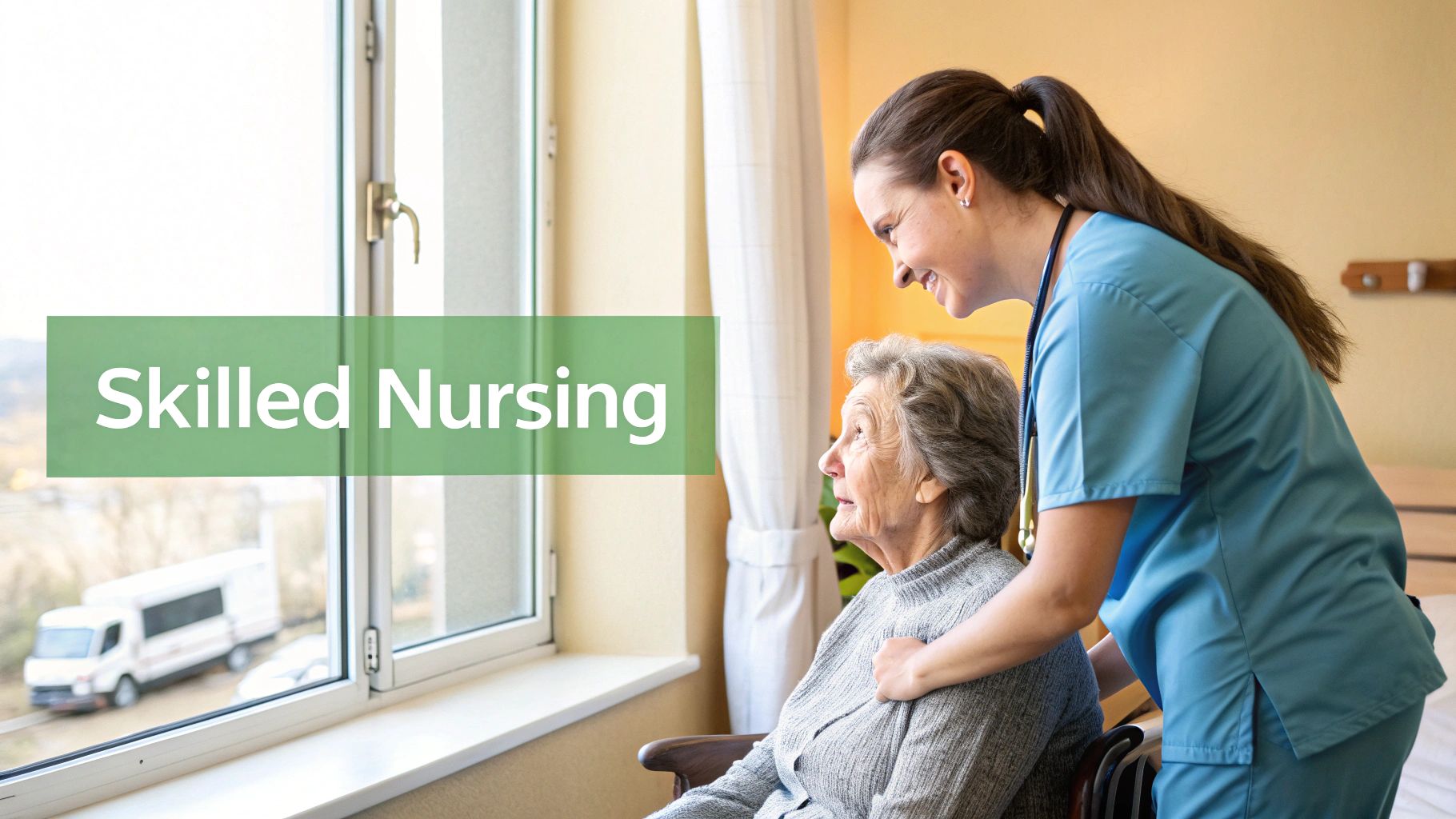
It helps to think of skilled nursing care as a bridge. For some, it’s the bridge between a hospital stay and a safe return home, giving them the intensive rehabilitation needed to get back on their feet. For others, it’s a long-term solution for managing serious chronic illnesses that demand constant, professional medical oversight.
This type of care is worlds away from what you’d find in a typical assisted living community. The key word here is "skilled." This means every aspect of care is either performed by or directly supervised by licensed medical personnel. It’s not about help with routines; it's about executing complex medical procedures and therapies.
Skilled nursing care is defined by one thing: medical necessity. It’s for health issues that require the specific expertise of trained clinicians—things like post-surgical wound care, IV therapy, intensive physical rehabilitation, or monitoring unstable health conditions.
This level of support is non-negotiable when a loved one's medical needs become too much to handle at home or in other senior living settings. For families here in Willis, Texas, and the surrounding areas, really getting this distinction is the first step toward making a confident decision.
To give you a quick snapshot, here are the core components that set skilled nursing care apart.
Key Features of Skilled Nursing Care at a Glance
| Feature | Description |
|---|---|
| Medical Oversight | 24/7 access to registered nurses (RNs), licensed practical nurses (LPNs), and certified nursing assistants (CNAs). |
| Rehabilitative Services | On-site physical, occupational, and speech therapy to restore function and independence. |
| Physician-Directed | All care is ordered and supervised by a physician, who certifies that it's medically necessary. |
| Complex Care | Capable of handling IV therapy, complex wound management, tube feedings, and respiratory care. |
| Medication Management | Administration and monitoring of complex medication regimens, including injections and infusions. |
This table just scratches the surface, but it highlights the intensive, medically-focused nature of this care.
When Is This Level of Care Needed?
The need for skilled nursing care almost always follows a major health event. It’s not something you can just sign up for; a physician has to order it after certifying that it’s medically essential for the patient's condition.
Some of the most common triggers include:
- Post-Surgery Recovery: After a big operation like a hip or knee replacement, patients need focused physical therapy and professional wound care to heal properly.
- Stroke or Heart Attack Rehabilitation: This is an all-hands-on-deck effort to regain mobility, speech, and daily living skills, which requires specialized therapists and close medical supervision.
- Complex Wound Care: For treating stubborn pressure sores, diabetic ulcers, or surgical wounds that just aren't healing on their own.
- Chronic Illness Management: For managing advanced conditions like Parkinson's disease, ALS, or respiratory failure that require ongoing, high-level medical intervention.
Skilled nursing facilities are a vital part of the long-term care landscape, and their role is only getting bigger. The global market, valued at USD 414.74 billion in 2025, is expected to soar to USD 763.53 billion by 2032. You can discover more insights about the skilled nursing market on coherentmarketinsights.com to see the trends.
While these facilities share a residential feel with other senior living options, their core mission remains firmly medical. To get an even clearer picture of how everything fits together, you might find our guide on what defines a nursing home helpful.
Understanding the Core Services in Skilled Nursing
When a doctor recommends skilled nursing care, it’s a sign that someone's needs have gone beyond general support. We're now in the territory of specific medical treatments and targeted therapies. This isn't just about keeping a person safe and comfortable; it’s a medically-driven process aimed at hitting specific health goals. Think of it like a specialized pit crew for the body, with a whole suite of integrated services designed to get a patient back on the road to recovery.
These services generally stand on three core pillars: 24/7 nursing care, intensive rehabilitation, and precise medication management. Each pillar tackles a different piece of the health puzzle, making sure both immediate medical issues and long-term recovery goals are handled with real expertise.
The Foundation: 24/7 Nursing Care
Unlike other senior living options where medical staff might just be on call, skilled nursing facilities provide constant access to licensed nurses. This round-the-clock presence is absolutely critical for patients with complex or unstable conditions that can change in a heartbeat.
These aren't just caregivers; they are licensed clinicians who can perform complex medical tasks that would otherwise land someone in a hospital. This hands-on, minute-by-minute medical attention is what truly defines skilled nursing.
- Wound Management: Nurses are experts at cleaning, dressing, and monitoring everything from surgical wounds to pressure ulcers, all to prevent infection and speed up healing.
- Intravenous (IV) Therapy: They handle the administration of IV antibiotics, fluids, or nutrition—tasks that demand sharp clinical judgment and careful monitoring.
- Ventilator and Respiratory Support: For anyone with breathing difficulties, skilled nurses are there to manage ventilators, tracheostomy tubes, and oxygen therapy.
- Post-Operative Care: After major surgery, nurses keep a close eye on vital signs, manage pain, and watch for any signs of complications to ensure a recovery stays on track.
This constant medical oversight creates a vital safety net. The moment a health issue pops up, day or night, someone is there to intervene immediately.
The Pillars of Rehabilitation Therapy
For many, the primary goal of skilled nursing is rehabilitation—helping them get back as much independence as possible after an injury, illness, or surgery. This is where a coordinated team of licensed therapists comes in, each focusing on a different piece of the recovery puzzle.
You can think of the therapy team as a group of expert coaches. The physical therapist is the strength coach, rebuilding muscle and mobility. The occupational therapist is the skills coach, retraining for everyday life. And the speech therapist is the communication coach, refining speech and swallowing.
These three therapies almost always work together.
- Physical Therapy (PT): This is all about getting movement and strength back. After a knee replacement, for example, a physical therapist will guide a patient through exercises to help them walk, climb stairs, and keep their balance.
- Occupational Therapy (OT): While PT gets you moving, OT helps you function. An occupational therapist might help a stroke survivor relearn how to do essential tasks like getting dressed, bathing, or cooking. It's a practical approach focused on adapting, and you can learn more about these crucial tasks in our guide on the activities of daily living.
- Speech-Language Pathology (SLP): Often just called speech therapy, this service covers more than just talking. A speech therapist can help patients who have trouble speaking after a stroke or work with those who have swallowing problems (dysphagia) so they can learn to eat safely again.
Precision Medication Management
For a lot of residents, just managing a complicated medication schedule is a huge challenge. It’s not uncommon to be on a dozen or more prescriptions—injections, inhalers, and pills that have to be taken at exact times and with specific instructions. One little mistake can lead to serious problems.
In a skilled nursing environment, licensed nurses take over this entire process. They make sure every single dose is given correctly and on time, watch for any side effects, and work directly with the doctor to make adjustments when needed. This takes a massive burden off the patient and their family, preventing dangerous errors and ensuring the treatment plan is followed to the letter. This expert oversight is a cornerstone of skilled nursing care, turning a complex medical routine into a safe, managed process.
Skilled Nursing vs. Other Senior Care Options
The world of senior care can feel like a maze of overlapping terms. When you're trying to make the best decision for a loved one, figuring out the distinct purpose of each option is absolutely critical. An assisted living community, a skilled nursing facility, and home health care all provide support, but they operate on completely different levels of medical intensity.
Choosing the right one isn't just about comfort; it's about ensuring your family member's specific medical and personal needs are met safely and effectively. It’s the difference between needing a helpful hand and needing a licensed medical professional by their side.
Assisted Living: The Focus on Independence
Assisted living is designed for seniors who are largely independent but could use a little help with Activities of Daily Living (ADLs). Think of it as supportive independence. Residents get help with things like meal preparation, housekeeping, medication reminders, and personal grooming, but they don't require round-the-clock medical monitoring.
Communities like Forest Cottage specialize in creating a vibrant, social environment where residents thrive with just the right amount of support. While the staff is available 24/7 to provide assistance and safety checks, the core philosophy is to preserve autonomy. A nurse may be on staff or on call, but the day-to-day care comes from trained caregivers, not licensed professionals delivering complex medical treatments.
This diagram shows the core medical services that truly separate skilled nursing from other options.
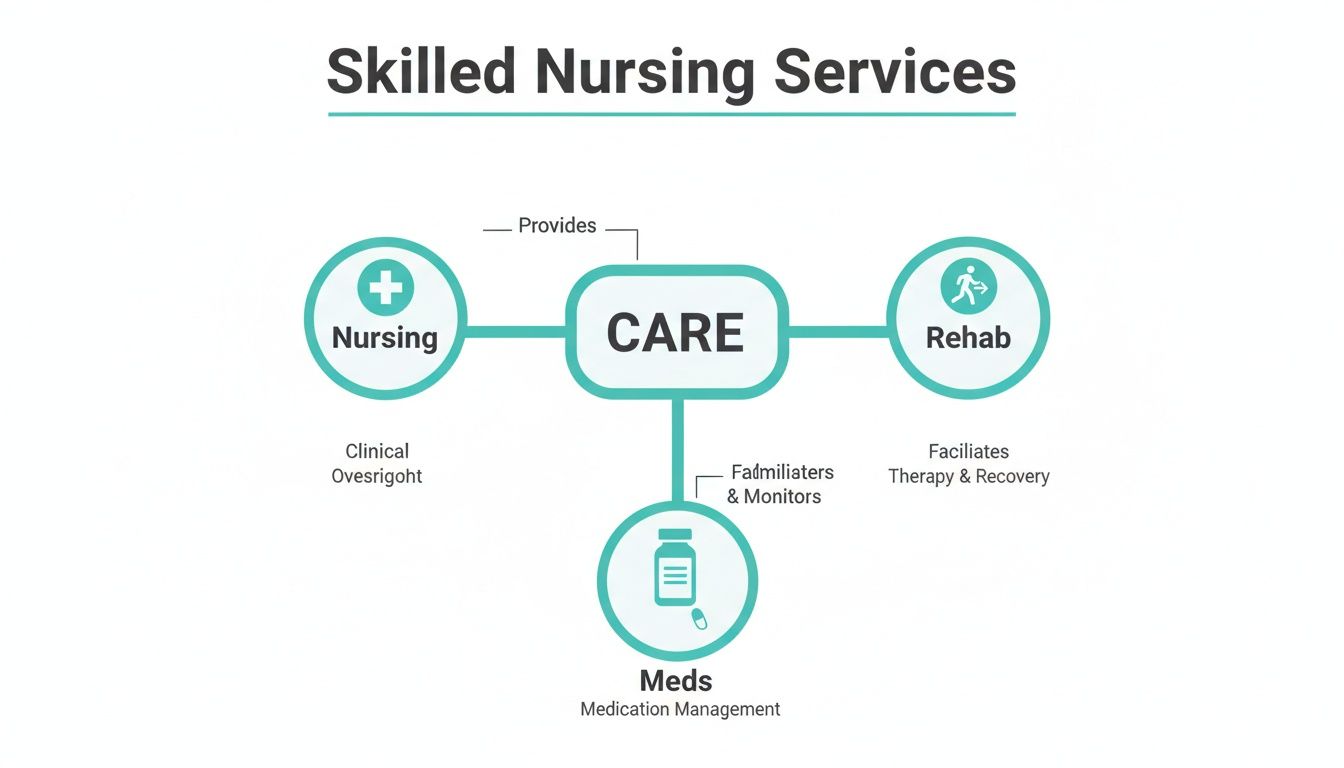
As you can see, it's the combination of constant nursing, dedicated rehabilitation, and precise medication management that forms the clinical foundation of skilled nursing care.
Home Health Care: Bringing Care to You
Home health care is a fantastic option for those who can safely remain at home but still need intermittent medical attention. A registered nurse or therapist might visit a few times a week to help with wound care, administer injections, or lead physical therapy sessions.
The key word here is intermittent. A home health aide provides a scheduled service and then leaves; this care is periodic, not continuous. It simply doesn't provide the 24/7 medical supervision that is the hallmark of a skilled nursing facility. If a medical issue arises between visits, the individual is on their own until the next scheduled appointment or must seek emergency help.
Skilled nursing care is a destination for intensive, constant medical oversight. Assisted living is a supportive home. Home health care brings specific, scheduled services to your current home.
This distinction is crucial. If someone's condition is unstable or requires immediate intervention at any time, day or night, a skilled nursing setting is the only one equipped to handle it. The profound differences in medical capacity are a key takeaway when you're comparing assisted living against nursing home care.
A Side-by-Side Comparison
To make the choice clearer, let’s break down the key differences in a simple table. This helps visualize where each option fits on the spectrum of senior care.
Comparing Senior Care Options
| Feature | Skilled Nursing Care | Assisted Living (e.g., Forest Cottage) | Home Health Care |
|---|---|---|---|
| Level of Medical Care | Intensive, 24/7 medical treatment and monitoring by licensed nurses. | Assistance with daily living; medication reminders. Medical staff is on-call or on-site, not providing constant clinical care. | Intermittent, scheduled skilled care visits from nurses or therapists at home. |
| Primary Goal | Medical rehabilitation, recovery from acute illness/surgery, or managing complex chronic conditions. | To support independence and provide a safe, social living environment with help for daily tasks. | To provide specific medical services at home to support recovery or manage a condition. |
| Staffing | Registered Nurses (RNs), LPNs, and Certified Nursing Assistants (CNAs) on-site 24/7. | Trained caregivers, personal care aides, and support staff. Nurses may be on-site or on-call. | Visiting RNs, LPNs, and therapists who travel to the patient's home for scheduled appointments. |
| Resident Needs | Medically complex patients requiring daily skilled interventions like IV therapy or advanced wound care. | Seniors who need help with ADLs but are generally stable and do not need constant medical supervision. | Patients who are stable enough to live at home but require periodic skilled medical or therapeutic services. |
Looking at the table, you can really see how each setting is built for a different purpose, ensuring families can find the right fit for their loved one's specific journey.
When Is Skilled Nursing the Right Choice?
Figuring out the exact moment a loved one needs skilled nursing care is tough. It rarely happens on a predictable timeline. More often, the need comes on the heels of a sudden health crisis or as a complex illness gradually gets worse. The signs aren't always obvious, but certain events are clear signals that a higher level of medical support is now essential. This is about more than just needing a little extra help—it’s about needing care that only licensed medical professionals can legally and safely provide.
Here’s a good way to think about it: it's the difference between a leaky faucet and a burst pipe. A family caregiver or an assisted living aide can definitely handle the "leaky faucets" of daily life. But a "burst pipe"—like a major surgery, a stroke, or a serious infection—demands an expert with specialized tools and training. Skilled nursing is that expert intervention, and it's always ordered by a doctor when the situation calls for it.
This decision is almost never made alone. A physician’s recommendation is the official green light, confirming that someone's medical needs have gone beyond what can be safely managed at home or even in an assisted living community.
Common Triggers for Needing Skilled Care
Some life events are clear indicators that skilled nursing is the best next step. These situations usually involve either intensive, short-term rehab to get back on their feet or long-term management of an unstable medical condition that requires around-the-clock professional oversight.
These are the moments when the body needs significant medical support to heal properly and avoid setbacks.
- Recovery from Major Surgery: After something big like a hip or knee replacement, open-heart surgery, or major abdominal surgery, patients need professional wound care and intensive physical therapy to get their strength and mobility back.
- A Recent Medical Crisis: A stroke, heart attack, or aneurysm can leave someone with serious physical and cognitive challenges. Skilled nursing provides the integrated therapy—physical, occupational, and speech—that’s crucial for rebuilding skills and preventing future complications.
- Severe Infections or Illness: Conditions that require IV antibiotics, like sepsis or a severe urinary tract infection, demand the kind of 24/7 monitoring and administration that you can only get in a skilled facility.
These scenarios bring into focus the immediate, and often urgent, need for a medically driven environment focused squarely on recovery.
Diagnoses That Frequently Require Skilled Nursing
Beyond sudden events, the progression of certain chronic diseases often reaches a point where skilled nursing becomes essential for safety and quality of life. As these conditions advance, the medical complexity simply becomes too much for other care settings to handle.
The core question is always: "Does this person have a medical need that requires daily assessment and treatment by a licensed professional?" If the answer is yes, skilled nursing is likely the right choice.
This is especially true for conditions with unpredictable symptoms or those that rely on specialized medical equipment.
Some of the most common diagnoses include:
- Advanced Parkinson’s Disease or Multiple Sclerosis (MS): As mobility and motor control decline, these conditions can require complex medication schedules, feeding tubes, and specialized care to manage symptoms and prevent dangerous falls.
- Chronic Obstructive Pulmonary Disease (COPD): In the later stages, people with COPD often need continuous oxygen therapy, nebulizer treatments, and management of respiratory distress by skilled nurses who know what to watch for.
- Amyotrophic Lateral Sclerosis (ALS): This progressive neurological disease eventually requires comprehensive support, including respiratory care and assistance with every aspect of daily living.
In the end, the need for skilled nursing crystallizes when a loved one’s health demands more than just a helping hand. It’s the point where their safety and well-being depend on the constant presence of medical experts—a decision guided by a physician to ensure they receive the highest standard of care possible.
Navigating the Costs and Payment Options for Skilled Care
Figuring out the financial side of skilled nursing care is a huge step for any family. The costs can feel overwhelming at first, but there are several ways to manage them. Creating a clear financial roadmap is the best way to avoid surprises and make sure your loved one gets the care they need without causing a huge financial burden.
The real key is knowing which benefits you’re entitled to and how each one works. The main payers are usually a mix of federal programs, private insurance, and your own funds. Each one has its own set of rules and limits, so let's break them down.
How Medicare Covers Skilled Nursing
For many, Medicare is the first line of defense, but its role is very specific and short-term. Think of it as help for recovery, not a solution for long-term care. For Medicare Part A to kick in, a person must have a qualifying hospital stay—that means being formally admitted as an inpatient for at least three days in a row.
Once that happens, Medicare helps with the bills for a limited time.
- Days 1–20: Medicare covers 100% of the approved cost. No out-of-pocket for you.
- Days 21–100: You'll be responsible for a daily coinsurance payment.
- After Day 100: You are on the hook for all costs.
This structure really highlights that Medicare is meant to be a bridge back to health, not a permanent payment plan. Once that 100-day benefit runs out, families have to switch to other ways to pay.
Medicaid for Long-Term Care Needs
When care is needed for the long haul, way beyond what Medicare covers, Medicaid often steps in. Unlike Medicare, Medicaid is a joint federal and state program built to help low-income individuals, and it can cover long-term custodial care in a skilled nursing facility.
Getting approved for Medicaid is based on strict financial rules about your income and assets. The exact numbers change from state to state, but the general idea is that you have to have very limited resources to qualify. Many people end up "spending down" their savings on care until they become financially eligible for Medicaid to take over payments.
The most significant difference is purpose: Medicare covers short-term, skilled medical care after a hospital stay, while Medicaid can cover long-term care for those who meet financial eligibility requirements.
Understanding this difference is absolutely vital for any long-range planning.
Private Pay and Insurance Options
Before someone qualifies for Medicaid, many families use private funds or insurance policies to cover the costs of skilled nursing care.
- Private Pay: This is pretty straightforward—it just means using personal savings, investments, or other assets to pay for care directly.
- Long-Term Care Insurance: These policies are specifically built to cover the costs of different long-term care services. When you're looking at a longer stay that Medicare won't cover, exploring private options and understanding the real long term care insurance cost is a crucial part of smart financial planning.
These private routes offer more flexibility and can help you protect your assets while still ensuring your loved one gets continuous, quality care.
Exploring VA Benefits for Veterans
Veterans may have access to special benefits that can help pay for skilled nursing. The Department of Veterans Affairs (VA) has programs that can cover nursing home care, especially for vets with service-connected disabilities or other qualifying situations. These benefits can be a huge help for those who've served.
To make sense of the paperwork and see if you're eligible, it's a good idea to look into a detailed breakdown of VA benefits for elderly veterans and figure out how they might apply to your family. These programs offer much-needed support, honoring the service and sacrifice of our nation's veterans.
How to Choose a Quality Skilled Nursing Facility
Finding the right facility is one of the most important decisions your family will make. It goes way beyond the medical services on offer. The environment, the staff, and the overall philosophy of care will have a huge impact on your loved one's well-being. A smart, systematic approach helps you see past the polished brochures and focus on what truly matters.
Start with the absolute basics. Make sure any facility you consider is licensed by the state of Texas and pull up its official inspection reports. These documents give you an unbiased look into a community's history and any deficiencies that have been cited.
Evaluate Staffing and Expertise
The quality of care is a direct reflection of the people providing it. A compassionate, stable, and well-supported team is the heart of any excellent skilled nursing facility. This is where you really need to dig in and ask some pointed questions.
Staffing dynamics are everything in skilled nursing, but shortages create major hurdles. In 2023, turnover shot past 40% in most U.S. facilities, and payrolls have dropped 7.3% since 2020. This is a critical issue that communities like Forest Cottage address by making a stable, compassionate, 24/7 staff a top priority.
When you take a tour, be sure to ask about:
- Staff-to-Resident Ratios: Get the specific numbers for both day and night shifts. You'll want to know the ratios for registered nurses (RNs), LPNs, and certified nursing assistants (CNAs).
- Staff Turnover Rate: A low turnover rate is often a great sign. It usually points to a positive work environment, which translates to more consistent care for residents.
- Ongoing Training: How does the staff stay current on specialized care, like memory support or post-stroke rehabilitation?
The Importance of the On-Site Tour
A personal visit is completely non-negotiable. It's the only way to observe the environment firsthand and really get a feel for the community's culture. Pay close attention to the small details—they often reveal the bigger picture of how a place is run.
While you're there, watch how the staff and residents interact. Do the caregivers seem patient, respectful, and genuinely engaged? A warm, compassionate atmosphere is a strong indicator of a person-centered care philosophy, where every resident is treated with dignity. Facilities using advanced healthcare documentation automation can free up staff from paperwork, giving them more time for that crucial one-on-one interaction.
Use all your senses during the tour. The facility should be clean and free of strong, unpleasant odors. Listen to the sounds—is it chaotic and loud, or does it feel calm and pleasant? Notice if the residents look well-groomed and are participating in activities.
Key Questions to Guide Your Decision
Your tour is the perfect time to get clear answers, so come prepared. Having a list of questions ready ensures you cover all the critical bases. While some questions are similar to what you'd ask at an assisted living facility, the medical focus here is much more intense.
To help you get started, our guide on questions to ask when touring senior living facilities is a fantastic resource. On top of those, be sure to ask specifically about their care planning process, how they communicate with families, and what their procedures are for handling medical emergencies. Choosing a facility is really about finding a trusted partner for your loved one’s care journey.
Frequently Asked Questions About Skilled Nursing Care
When you’re looking into skilled nursing care, it's natural for practical questions to pop up. Getting clear, straightforward answers can give you the confidence you need when deciding on the next steps for a loved one. Here are some of the most common things families ask.
How Long Does a Typical Stay Last?
There's really no "typical" length of stay—it all comes down to the individual's medical needs and what their recovery goals are. Someone bouncing back from joint replacement surgery might only need a few weeks of intensive rehab to get back on their feet.
On the other hand, a person managing a progressive neurological condition might need long-term care indefinitely. It's also worth noting that Medicare’s coverage can influence short-term stays, as its benefits max out at 100 days per benefit period after a qualifying hospital visit.
Can We Still Visit a Loved One?
Absolutely. In fact, it's encouraged! Family involvement is a huge part of the healing and adjustment process. Facilities want families and friends to visit regularly to provide that crucial emotional support and keep important bonds strong.
Most places have set visiting hours, but they’re usually flexible enough to work with family schedules.
The main thing to remember is that skilled nursing isn't meant to be isolating. It's a supportive, medical environment where having family around is seen as essential to a resident's well-being and recovery.
Is Skilled Nursing the Same as a Nursing Home?
People often use these terms interchangeably, but there's a small but important difference. A skilled nursing facility (SNF) is a clinical setting that focuses on short-term, medically necessary rehab or care, which is often what Medicare covers.
A nursing home can provide this type of care, but it also offers long-term custodial care. This is for residents who need 24/7 supervision but don't necessarily require daily skilled medical services. Think of it this way: all SNFs can act as nursing homes, but not all nursing homes are certified to provide the skilled care that Medicare pays for.
At Forest Cottage Senior Care, our expertise is in assisted living, but we know how important it is to have a trusted network for higher levels of care when needed. We're here to help families in Willis, TX, navigate these choices and find the right solution. To see what our supportive community is all about, visit us at https://www.forestcottageseniorcare.com.