

Deciding to move a parent or loved one into assisted living is never easy. It's one of the toughest, most emotional conversations a family can have.
The truth is, it's rarely a single, dramatic event that tells you it's time. Instead, it’s a series of small, quiet moments—a collection of subtle signs that things are changing and more support is needed. It’s about recognizing when the need for safety, consistent care, and social connection starts to outweigh their ability to manage everything on their own at home.
Recognizing When Your Loved One Needs More Support
That moment of clarity often comes unexpectedly. Maybe you notice Mom is having a harder time bringing in the groceries, or Dad seems more withdrawn and lonely than he used to. These are the first whispers that the balance between their independence and their need for support is shifting.
Answering the question, "When is it time for assisted living?" isn't a simple checklist; it's a journey of observation, and it’s heavy with emotion.

Think of this as your starting point for understanding how safety, health, and quality of life all come together to signal that a change might be for the best. It’s a conversation millions of families are having. When daily tasks like cooking a meal or remembering to take medications become a source of stress, that’s often the clearest sign of all.
A Journey of Observation and Care
The first step is simply paying attention to the changes, big and small. For instance, noticing the early signs of memory loss can be a huge wake-up call. Little shifts in personal hygiene, keeping the house tidy, or managing finances can collectively paint a clear picture of growing challenges.
The transition to assisted living is less about losing independence and more about gaining the right kind of support to preserve it safely and joyfully. It’s a proactive step toward enhancing wellbeing.
This is a path many families walk. In fact, America has over one million residents in assisted living facilities. A striking 53% of them—more than half a million people—are aged 85 and older. This number tells an important story: as our loved ones reach their late 80s, the need for support often grows due to increasing frailty, chronic health conditions, or mobility issues.
Compassionate Guidance Through a Complex Time
It's easy to feel alone while navigating this, but you're not. Communities like Forest Cottage Senior Care in Willis, Texas, are here to act as a compassionate guide for families working through this complicated time. The goal is always to find a solution that restores confidence and gives everyone peace of mind.
This journey often shines a light on the needs of the caregiver, too. Sometimes, a temporary stay can be an invaluable part of the planning process, offering much-needed relief and a chance to recharge. You can learn more about how short-term solutions work by exploring the benefits of respite care for family caregivers. This initial phase is all about gathering information, learning to see the signs, and knowing that supportive resources are ready to help you make the best decision for your family.
Spotting the Red Flags in Daily Life and Health
The journey from a vague sense of worry to recognizing a clear need for change often starts by looking at the small details of everyday life. Figuring out "when is it time for assisted living" means paying close attention to the specific, practical challenges that are getting in the way of your loved one's safety and well-being.
These challenges usually fall into two main categories. The first is what we call Activities of Daily Living, or ADLs. Think of these as the absolute basics of self-care: bathing, getting dressed, grooming, and simply getting around the house. When a parent starts to struggle with these fundamental tasks, it’s a major sign that something needs to change.

The second category is Instrumental Activities of Daily Living (IADLs). These are the more complex jobs we all do to live independently—things like managing money, cooking meals, keeping the house tidy, and taking medications on schedule. Difficulties with IADLs often show up before the ADL struggles and can be an early warning that more support is needed. If you want to dive deeper into these terms, we have a simple guide explaining what Activities of Daily Living are.
Tracking Key Changes in Daily Habits
A single off day isn't cause for alarm, but a consistent pattern of difficulty is. Let's say your mom was always a wonderful cook, but now her fridge is mostly empty, and she relies on frozen dinners or even forgets to eat. This isn't just a simple change in habit; it's a strong hint that preparing meals has become too much for her to handle.
This is exactly the kind of problem that assisted living communities like Forest Cottage Senior Care are set up to solve. Our residents enjoy delicious, chef-prepared meals every day. It takes the pressure off them and ensures they’re getting the proper nutrition to stay healthy and energized.
Here are a few other real-world examples of what to watch for:
- Financial Management: Are unpaid bills stacking up? Have you noticed strange purchases or heard them express confusion about balancing their checkbook?
- Housekeeping: Is a once-neat home now cluttered, dusty, or disorganized?
- Personal Hygiene: Have you noticed they're bathing less often, wearing the same clothes for days, or just not keeping up with grooming like they used to?
- Mobility: Do they struggle to get out of a chair? Do they seem unsteady on their feet? Have you seen new, unexplained bruises from bumping into things?
Uncovering Critical Medical Red Flags
Beyond the day-to-day routines, some health-related signs are simply too serious to overlook. Mismanaging medications is one of the biggest risks for seniors living on their own. Forgetting a dose, taking the wrong pill, or failing to get prescriptions refilled can lead to dangerous health crises.
In fact, studies show that a large number of older adults make at least one medication error every single month. This is where the structured environment of assisted living can be a true lifesaver.
At Forest Cottage, our 24/7 nursing staff takes care of all medication administration and monitoring. We make sure every resident gets the right dose at the right time. For families, that simple service provides an incredible amount of peace of mind.
Other medical red flags are just as critical. A sudden, unexplained change in weight—either gaining or losing—can signal anything from depression and nutritional issues to other underlying health problems.
Likewise, if your parent has a chronic condition like diabetes or high blood pressure, look closely at how they're managing it. Are they testing their blood sugar regularly? Are they sticking to the diet their doctor recommended? When someone starts slipping in their ability to manage a long-term illness, it's a clear indicator that they need more consistent medical oversight. This is precisely the support assisted living is designed to provide, helping restore stability and improve their overall health.
Evaluating Safety, Social, and Emotional Needs
When you're trying to figure out if it's the right time for assisted living, it's easy to focus on the obvious things, like trouble with daily chores or managing medications. But there's a whole other side to this decision that’s just as critical: your loved one's safety, their social life, and their overall emotional health.
Think of it this way: a decline in physical ability is often just what you see on the surface. Underneath, a person's entire world can be shrinking due to subtle dangers in their own home and a quiet lack of connection.
It’s like their familiar, beloved home has slowly turned against them. That cozy rug is now a trip hazard. The stairs they’ve climbed for 40 years are now a major obstacle. For a senior, these small changes can lead to big problems.

The Unseen Dangers of an Unsafe Home
For many families, the real tipping point comes when safety becomes a constant worry. A fall, a missed medication—these incidents are clear signals that more support is needed. When you learn that one in four seniors fall annually, costing a shocking $50 billion, the risk feels very real. Or that forgetting medications contributes to 125,000 deaths each year. The need for change becomes undeniable.
This is where the structured environment of assisted living can make a world of difference, cutting emergency room visits by 25%. It’s not just about preventing accidents; it’s about creating a safe harbor. Assisted living communities are built from the ground up to minimize these dangers with features like:
- Accessible Layouts: Think no-step showers, grab bars where you need them, and hallways that are wide and well-lit.
- Emergency Systems: Personal alert buttons and staff available 24/7 mean help is always just a moment away.
- Proactive Support: It’s about more than just reacting. It's regular safety checks and help with mobility to stop falls before they can happen.
If you're curious about how a community actively tackles these issues, take a look at our guide on preventing falls in assisted living facilities. It’s a shift from constant worry to genuine reassurance.
The Silent Epidemic of Social Isolation
Living alone can get lonely. Really lonely. This is especially true when it's harder to get out of the house, transportation is an issue, or friends and spouses have passed away. This isolation isn't just sad; it’s a serious health risk that’s been linked to depression, cognitive decline, and even a shorter lifespan. With nearly 30% of older adults reporting they feel lonely, it’s a quiet problem that can steal the joy from life.
This is where an assisted living community offers one of its greatest gifts. It’s a move from a quiet, empty house to a place buzzing with people, activities, and chances to make new friends.
The move to assisted living can be a powerful antidote to loneliness, reintroducing a sense of belonging, purpose, and daily joy that may have been missing for years.
Imagine your loved one’s day transforming from watching TV alone to joining a morning exercise class, laughing over a meal with new friends, or heading out for a group activity. We see this change happen all the time at Forest Cottage Senior Care. Our residents dive into a rich calendar of social events, from card games and book clubs to shared outings.
Fostering Emotional Wellbeing and Joy
True wellness is about more than just physical health—it's about feeling a sense of purpose and connection. We believe in nurturing the spirit just as much as the body.
This philosophy comes to life in some wonderful ways, like our Goldendoodle pet therapy program. There’s something special about the simple act of petting a friendly dog. It can lower stress, lift spirits, and create a moment of pure, uncomplicated happiness.
When you focus on emotional wellbeing, the whole conversation about assisted living changes. It stops being about an end to independence and starts being about a positive step toward a life that’s richer, safer, and more fulfilling. It’s a new chapter where your loved one isn't just being cared for—they’re happy, engaged, and truly thriving.
How to Have the Assisted Living Conversation
Talking to your mom or dad about assisted living is easily one of the most difficult, emotionally loaded conversations you’ll ever have. It's fraught with fear—mostly the fear of taking away their independence—and that can make it feel downright impossible to even start.
But it doesn't have to be a battle. With a little empathy, a lot of patience, and a mindset of teamwork, you can turn this dreaded talk into a productive plan for their safety and happiness. The secret is to frame it around their well-being, not their supposed shortcomings. Think of it less like a single, high-stakes meeting and more like a series of gentle, ongoing chats.
Setting a Compassionate Tone
Timing and atmosphere are everything. Don't bring it up during a health crisis or right after a bad fall when everyone's emotions are raw. Instead, pick a calm, quiet moment when you both have time to talk without being rushed or stressed.
Start by leading with your love and concern. Using “I” statements is a simple trick that makes a world of difference because it feels less like an accusation. For instance, instead of, "You can't manage this big house anymore," you could try, "I’ve been worrying about you being here all alone, and it would give me so much peace of mind to know you had support right around the corner." This small shift changes the entire dynamic.
Here are a few other ways you might gently open the door:
- "Mom, I was just thinking about the future, and I'd love to talk about some options that could make life a little easier for you down the road."
- "Dad, I know how much you love this house, but I've noticed things like the yard work are becoming a real chore. Have you ever thought about what it would be like to have less to worry about?"
- "I'd love for you to have more chances to see friends and do the things you enjoy. I heard about a place that has some really wonderful activities."
Navigating Common Reactions
Be prepared for pushback. It is completely normal for a parent to react with denial, anger, or fear. They might feel like they are losing control, and that's a terrifying thought for anyone.
Your best response is to simply listen. Don't argue or try to "win." Just acknowledge their feelings and let them know you hear their concerns.
"I understand completely why you feel that way. It's a massive change, and it's okay to be upset about it. Let's just explore the idea for now, no decisions."
This approach reassures them that they are still in charge. The goal here isn't to force a decision; it's just to open a door to the possibility. Remember, this might take several conversations over weeks or even months. Patience is your single greatest tool.
Making Them a Partner in the Process
The absolute best way to get your parent on board is to make them a partner in the entire process. This isn't something that should happen to them; it's something you should figure out with them.
A great first step is just to demystify what modern assisted living is actually like. Most people have an outdated, grim image in their minds. Suggest a casual, no-pressure visit to a community like Forest Cottage Senior Care. Frame it as nothing more than a fact-finding mission. You could say, "Why don't we just go have lunch there one day and see what it's all about? No strings attached."
Seeing a vibrant community with your own eyes can shatter those old stereotypes. When they see other seniors laughing, joining activities, and living in a beautiful, lively environment, it can completely change their perspective. By tackling it together, you can even build a list of important questions to ask assisted living facilities as a team. This turns a dreaded conversation into a shared journey—one that leads to peace of mind for everyone involved.
Navigating the Financial and Legal Landscape
Once you start realizing that assisted living might be on the horizon, the conversation naturally shifts to the practical stuff. For most families, the biggest questions are about money—how much does it cost, and how on earth do we pay for it? The financial side of this can feel pretty daunting, but just understanding your options is the first step to feeling in control.
Think of it like putting a puzzle together. There isn't just one piece that solves everything. Instead, families usually fit several different financial sources together to cover the monthly costs.
Getting this financial plan in place is a huge step. For families here in Willis, Texas, maybe considering a place like Forest Cottage Senior Care, the need for care often becomes clear when safety becomes an issue—things like frequent falls or a parent becoming more and more isolated. Assisted living is built to tackle those problems head-on with 24/7 nursing, help with medications, and social activities. It’s no surprise that a staggering 52% of long-term care was funded by Medicaid in 2020, adding up to $200.1 billion. This just shows how important it is to explore every financial avenue available.
Common Funding Sources for Assisted Living
The price tag on assisted living can swing wildly depending on where you are and how much care is needed. That said, there are a few common routes families take to handle the expenses.
- Personal Savings and Assets: Many people start here, using funds from retirement accounts like IRAs and 401(k)s, pensions, or investment income. Sometimes, selling a family home that’s no longer safe or practical can also provide a major chunk of the funding.
- Long-Term Care Insurance: If your parent was proactive enough to get a long-term care insurance policy, now’s the time to pull it out and read the fine print. These policies are made for exactly this situation, but the benefits and rules for qualifying are different for every plan.
- Social Security and Pension Income: That steady monthly income from Social Security or a pension often forms the foundation of the payment plan, covering a portion of the monthly fees.
Unlocking Veteran Support with VA Benefits
For anyone who served our country, the Department of Veterans Affairs (VA) has some fantastic benefits that can make a real difference. The go-to program for assisted living is the Aid and Attendance benefit. It’s a monthly pension supplement for eligible wartime veterans and their surviving spouses.
This benefit is specifically designed for people who need a hand with daily activities—like bathing, getting dressed, or remembering to take their medicine. These are the exact services an assisted living community provides. The application process can be a bit of a maze, but the financial help it offers is more than worth the effort.
At Forest Cottage Senior Care, we’re serious about helping our veterans get the benefits they’ve earned. We actively walk families through the VA application process and can even help cover the legal fees involved. We want to make sure you get the support you deserve without any extra financial stress.
Preparing the Essential Legal Documents
Beyond the money part, it’s just as important to get the legal ducks in a row. Sorting out these documents before a health crisis hits is a gift to your whole family. It ensures your loved one's wishes are respected and that someone they trust can step in to make decisions.
Two of the most critical legal tools you'll need are:
- Power of Attorney (POA) for Healthcare: This document lets you name a trusted person (an "agent") to make medical decisions if your loved one ever becomes unable to speak for themselves.
- Power of Attorney (POA) for Finances: This works the same way, but it appoints an agent to manage all things financial, from paying bills to handling investments, when your loved one can't.
Having these documents sorted out brings so much clarity and helps you avoid stressful legal battles later on. It smooths the transition and gives your family the power to act with confidence and compassion when it truly counts. As you explore all your funding options, it's also smart to understand how Medicaid can play a role in assisted living payments, as it can be another important piece of the financial puzzle.
Your Next Steps Toward Peace of Mind
Moving from research to real action can feel like the biggest step of all. It's one thing to read and learn, but it's another to actually start making calls and scheduling visits. This is where the path forward truly becomes clear. Deciding it’s time for assisted living is a journey, and now it's about turning all that knowledge into a plan that brings security and comfort to your entire family.
The goal here is to move forward with confidence, not pressure. By taking small, deliberate steps, you can transform that feeling of uncertainty into a clear, manageable direction. This phase is all about gathering personalized information and seeing what a supportive community feels like firsthand. It’s the only way to ensure the decision is right for your loved one.
Creating Your Action Plan
Taking the next step doesn't have to be overwhelming. I find it helps to think of it as a simple, three-part process designed to give you clarity and support. Each action builds on the last, helping you make an informed choice at a comfortable pace.
Here’s a straightforward roadmap to guide you:
- Schedule a Tour: There is no substitute for seeing a place with your own eyes. Scheduling a visit to Forest Cottage Senior Care in Willis, Texas, lets you walk the halls, meet the staff, and feel the atmosphere for yourself. It’s what turns an abstract idea into a real, tangible place.
- Request a Complimentary Assessment: Every person's needs are unique. A no-cost, no-obligation assessment helps pinpoint the exact level of care required—from light supervision to full assistance with daily activities. Getting that professional insight is absolutely invaluable for planning.
- Explore All Care Options: Assisted living isn't a one-size-fits-all solution. Be sure to ask about flexible options like short-term respite care, which can provide temporary support and give your family a firsthand experience of the community's benefits.
As you start to map things out, the financial piece is always a major consideration. This chart breaks down the key financial steps to get you started.
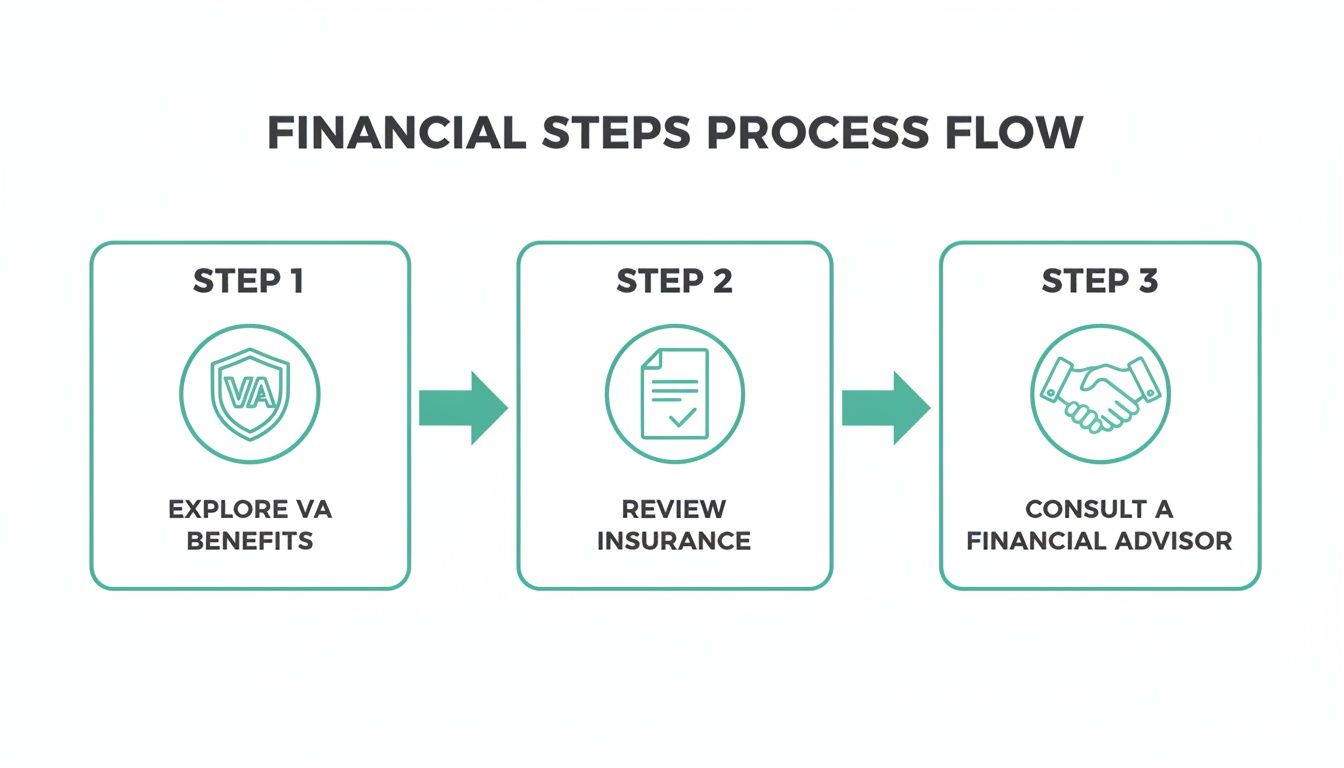
This visual guide emphasizes a structured approach to funding, from exploring VA benefits to consulting with experts, making sure you cover all your bases.
The journey to find the right care is built on information, empathy, and action. By taking these next steps, you are not just making a decision; you are investing in your loved one's future happiness and your own peace of mind.
At Forest Cottage, we are here to walk this path with you, offering guidance and support every step of the way. Reaching out is the first move toward a secure and joyful future for everyone.
Still Have Questions About Assisted Living?
Deciding on assisted living is a huge step, and it’s totally normal to have a long list of questions. This is a major life change, and you deserve to have all the facts. Let's walk through some of the most common things families ask when trying to figure out if it’s the right time.
What Is the Main Difference Between Assisted Living and a Nursing Home?
This is probably the most common question we hear, and the distinction is a big one. Think of assisted living as a supportive bridge—it helps someone keep as much independence as they can while getting a hand with daily activities. The real focus is on quality of life, staying social, and getting personalized help with things like meals, medications, and keeping the house tidy.
A nursing home, on the other hand, is set up for a higher level of medical care. It's designed for people with serious, long-term health issues who need skilled nursing services and medical supervision around the clock.
How Much Independence Will My Parent Lose?
So many families worry that moving to assisted living means giving up all freedom. In reality, the opposite is usually what happens. The goal is to enhance independence, not take it away. When you remove the daily struggles and safety worries that come with living alone, residents are actually freed up to enjoy their lives with more confidence.
In communities like Forest Cottage, residents have their own space and are encouraged to live life on their own terms. They get to decide which activities to join, when to hang out with friends, and how to spend their days—all within a safe and supportive setting.
Will My Loved One Feel Lonely or Isolated?
Loneliness is a real and serious risk for seniors living at home; in fact, nearly 30% of older adults report feeling isolated. Assisted living is designed to combat this head-on by creating a vibrant, built-in community. It’s a ready-made social network.
The move to assisted living often signals the end of social isolation and the start of new friendships, shared meals, and a real sense of belonging again.
From lively dining rooms to a calendar packed with events and activities, there are endless chances for residents to connect with people their own age. At Forest Cottage, our programs—including our much-loved Goldendoodle pet therapy—are all about sparking joy and connection every single day.
Can We Afford Assisted Living?
The cost is, without a doubt, a top concern for every family. The monthly rate for assisted living can vary a lot depending on the location, the type of room, and how much care is needed. Most families piece together the funding from a few different sources:
- Private funds: This usually includes income from pensions, Social Security, and personal savings.
- Long-term care insurance: If your loved one has a policy, it can cover a huge chunk of the cost.
- Veterans benefits: Programs like the VA Aid and Attendance benefit can provide critical financial help for those who qualify.
- Sale of assets: It’s common for families to use the proceeds from selling a home to fund care.
Communities like Forest Cottage have a lot of experience helping families figure out their options, and we can connect you with resources to make the most of programs like VA benefits.
You don't have to navigate this journey alone. At Forest Cottage Senior Care, we're here to help your family find peace of mind and see your loved one thrive. To schedule a tour of our community or get a complimentary care assessment, please visit us at http://44.202.110.106.